
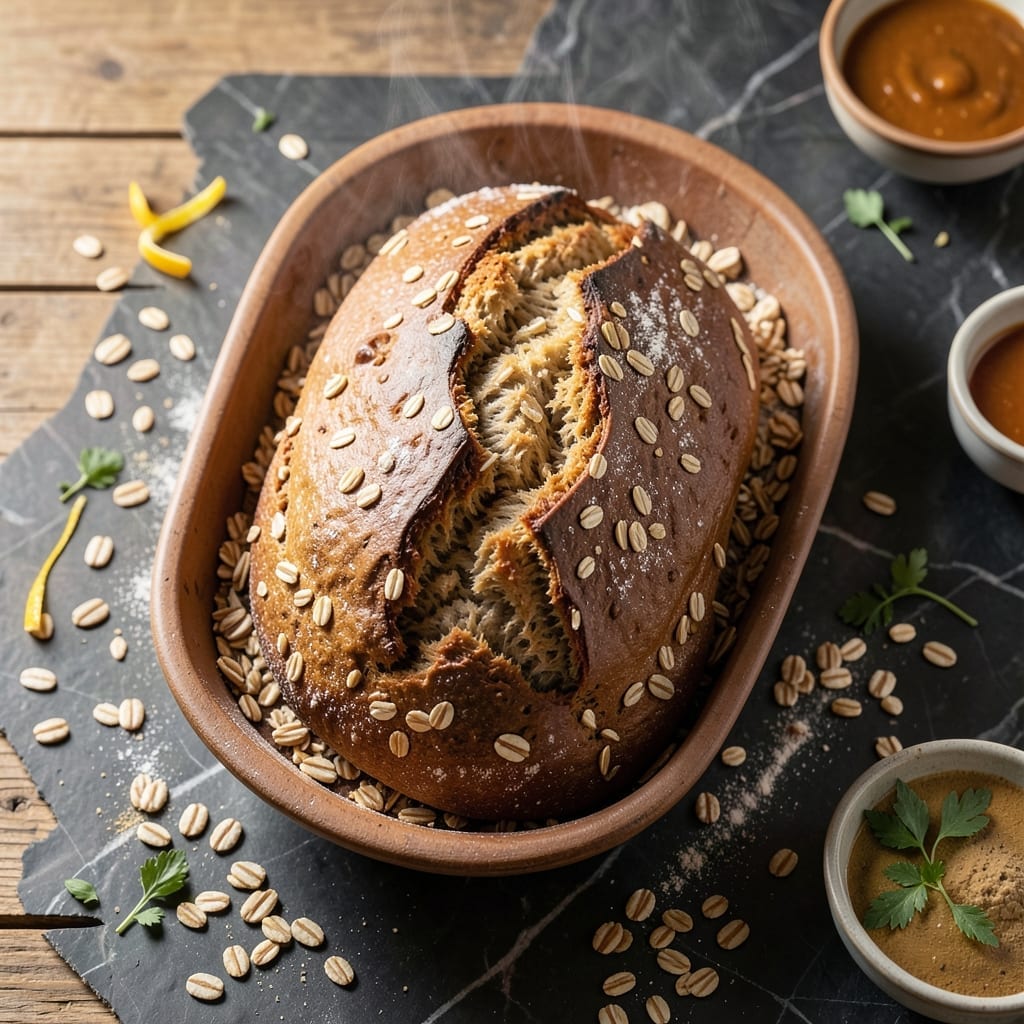
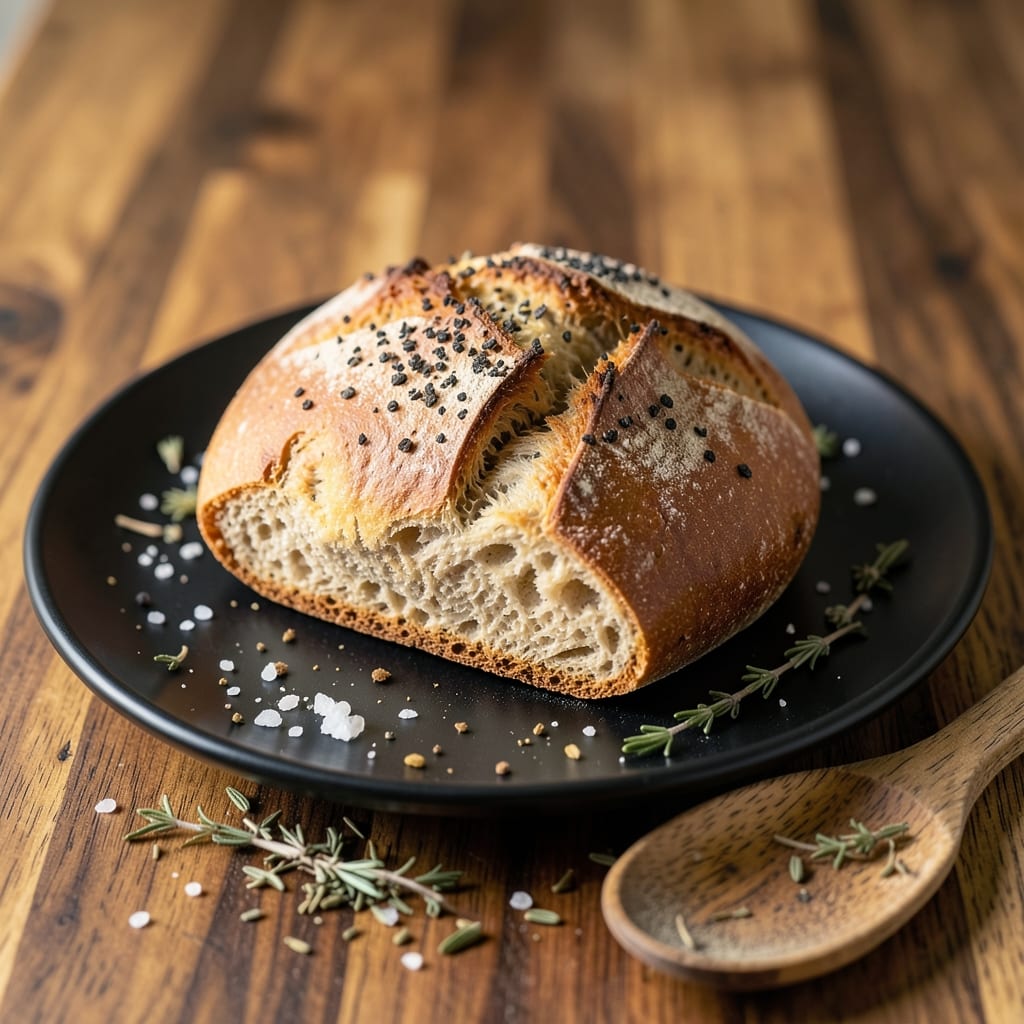
This traditional Irish brown bread captures the essence of authentic baking with its dense, hearty texture and wholesome flavor.
Using simple ingredients like whole wheat flour and buttermilk, this traditional loaf delivers rustic charm with every slice.
Ingredients for Irish Brown Bread Recipe from Ireland
Whole grains and buttermilk create this dense, traditional loaf with rustic Irish character.
| Ingredient | Amount | Notes |
|---|---|---|
| Whole Wheat Flour 🌾 | 3 cups | Stone-ground preferred for texture |
| All-Purpose Flour 🌾 | 1 cup | For lighter crumb structure |
| Old-Fashioned Rolled Oats 🌾 | 1 cup | Plus extra for topping |
| Baking Soda 🧂 | 1 ½ tsp | Fresh for optimal rise |
| Salt 🧂 | 1 tsp | Fine sea salt preferred |
| Buttermilk 🥛 | 1 ¾ cups | Full-fat for richness |
| Molasses 🍯 | 2 tbsp | Dark variety for depth |
| Unsalted Butter 🧈 | 2 tbsp | Melted for moisture |
| Large Egg 🥚 | 1 whole | Room temperature for binding |
| Wheat Bran 🌾 | ½ cup | For authentic texture |
[recipeingredientscaler]
The flours are non-negotiable for authenticity—King Arthur or Bob’s Red Mill whole wheat deliver the right texture. Old-fashioned oats add chew, but don’t substitute instant; they’ll turn to mush. Buttermilk is key (the thicker, the better), and full-fat makes a noticeable difference. Most supermarkets carry it, but if you’re in a pinch, whole milk plus a tbsp of vinegar works. The molasses should be dark and robust—Brer Rabbit is a reliable brand.
No buttermilk? Plain yogurt thinned with milk at a 1:1 ratio gets you close. Short on molasses? Honey at the same amount works, though the flavor shifts slightly. The egg can be omitted (replace with 1 tbsp ground flaxseed plus 3 tbsp water), but the loaf may be a touch denser. All-purpose flour can replace the wheat bran if needed, but the crumb loses some of its signature heartiness.
The loaf stays fresh wrapped in a towel for 2-3 days. For longer storage, slice and freeze—toast straight from frozen works beautifully. Baked loaves also freeze whole for up to 3 months if wrapped tightly in foil and plastic.
Why You’ll Love This Recipe
- No Fuss Mixing: I just stir the whole wheat flour, oats, and baking soda with buttermilk—no yeast, no waiting, no kneading required.
- Warm, Nutty Comfort: The toasted oat flavor and dense, hearty crumb make every bite feel like a hug from an Irish kitchen.
- Breakfast to Midnight: Honestly, it’s as good with morning jam as it is alongside evening stew or as a late-night snack with butter.
- Budget-Friendly Loaf: A handful of pantry staples and less than an hour gives me a fresh, filling loaf that feeds us for days.
Step-by-Step Instructions for Irish Brown Bread
This traditional method ensures a dense, hearty loaf with authentic texture and rich flavor.
Step 1: Prepare the Dry Ingredients and Leavening
In a large mixing bowl, whisk together the 3 cups Whole Wheat Flour, 1 cup All-Purpose Flour, 1 cup Old-Fashioned Rolled Oats, 1.5 tsp Baking Soda, and 1 tsp Salt until evenly combined. The baking soda must be fresh to ensure proper rise—test it by dropping a pinch into vinegar; it should fizz vigorously.
Stir in the 0.5 cup Wheat Bran last. This ingredient is crucial for that authentic, slightly coarse texture that defines traditional Irish brown bread. The mixture should look uniformly speckled with the bran and oats.
Step 2: Combine Wet Ingredients for Moisture and Flavor
In a separate bowl, beat the 1 whole Large Egg lightly, then whisk in the 1.75 cups Buttermilk and 2 tbsp Molasses until smooth. The buttermilk’s acidity reacts with the baking soda, creating the lift needed for this dense bread.
Melt the 2 tbsp Unsalted Butter and let it cool slightly before stirring it into the wet mixture. The butter adds richness without overwhelming the earthy, whole-grain flavors. The wet ingredients should be well combined but not frothy.
Step 3: Mix and Shape the Dough
Pour the wet ingredients into the dry ingredients and stir with a wooden spoon until just combined. The dough will be thick, sticky, and slightly shaggy—do not overmix, as this can toughen the bread. Let the dough rest for 5 minutes to allow the flours to hydrate fully.
After resting, the dough should hold together but still be moist. Turn it onto a lightly floured surface and shape it into a round loaf, about 8 inches in diameter. The top should be slightly domed, with a rustic, uneven appearance.
Step 4: Bake to Golden Perfection
Preheat your oven to 375°F. Place the shaped loaf on a parchment-lined baking sheet. For a traditional look, sprinkle a handful of extra Old-Fashioned Rolled Oats on top and press them in lightly. This adds texture and visual appeal.
Bake on the middle rack for 45-50 minutes, or until the loaf is deep golden brown and sounds hollow when tapped on the bottom. The internal temperature should read 200-205°F on an instant-read thermometer. Avoid opening the oven too early, as the bread needs steady heat to rise properly.
Step 5: Cool Completely Before Slicing
Transfer the loaf to a wire rack and let it cool for at least 1 hour before slicing. This resting period allows the crumb to set, preventing a gummy texture. The bread will still be warm to the touch but firm enough to slice cleanly.
Use a serrated knife to cut thick slices. The bread should have a dense, moist crumb with a slightly crisp crust. Serve it warm or at room temperature, ideally with a spread of butter or alongside a hearty stew for an authentic Irish experience.
Pro Tips For Making Irish Brown Bread Recipe From Ireland
- Preheat Your Oven: Get that oven to 400°F before the loaf goes in—Irish brown bread needs a hot start to rise properly and develop its signature crust.
- Use Buttermilk: Swap regular milk for buttermilk to react with the baking soda; it’s what gives this bread its tender crumb and tangy flavor.
- Don’t Overmix: Stir just until the dough comes together—overworking it makes the bread dense, and nobody wants a brick disguised as soda bread.
- Let It Cool: I learned this the hard way—slicing too soon traps steam and makes the loaf gummy, so give it at least 30 minutes on a rack.
Essential Equipment for This Dish
Must-Have Tools
To bake authentic Irish brown bread, start with a sturdy mixing bowl—preferably stainless steel or ceramic—for combining your dry and wet ingredients. A wooden spoon or dough whisk works best for folding the dough without overmixing. 🥘
You’ll also need a loaf pan (8×4 inches is ideal) to shape and bake your bread evenly. A sharp serrated knife helps score the top for that traditional rustic look.
Nice-to-Have
A kitchen scale ensures precise measurements, especially for wholemeal flour and bran. For an even rise, consider a dough scraper to handle sticky mixtures effortlessly.
A cooling rack prevents the bread from steaming on the counter, keeping the crust crisp. A thermometer can confirm when your loaf reaches the perfect internal temperature of 190°F. 🌡️
Budget Alternatives
No loaf pan? Use a cast-iron skillet or shape the dough into a free-form round on a baking sheet. Swap a wooden spoon for a sturdy plastic spatula if needed.
For measuring, standard measuring cups and spoons work fine, though a scale is more accurate. Let creativity shine—traditional Irish bakers often used what they had on hand! ✨
Nutrition Facts

- 6 Egg Cake Recipe with Oil: Light as Air With Buttery Moisture - October 4, 2026
- 4 Bean Casserole Recipe: One-Pan Heartiness With Smoky Paprika Depth - October 4, 2026
- 3-Ingredient Keto Mug Cake Recipe: Microwave Magic in 2 Minutes - October 4, 2026