
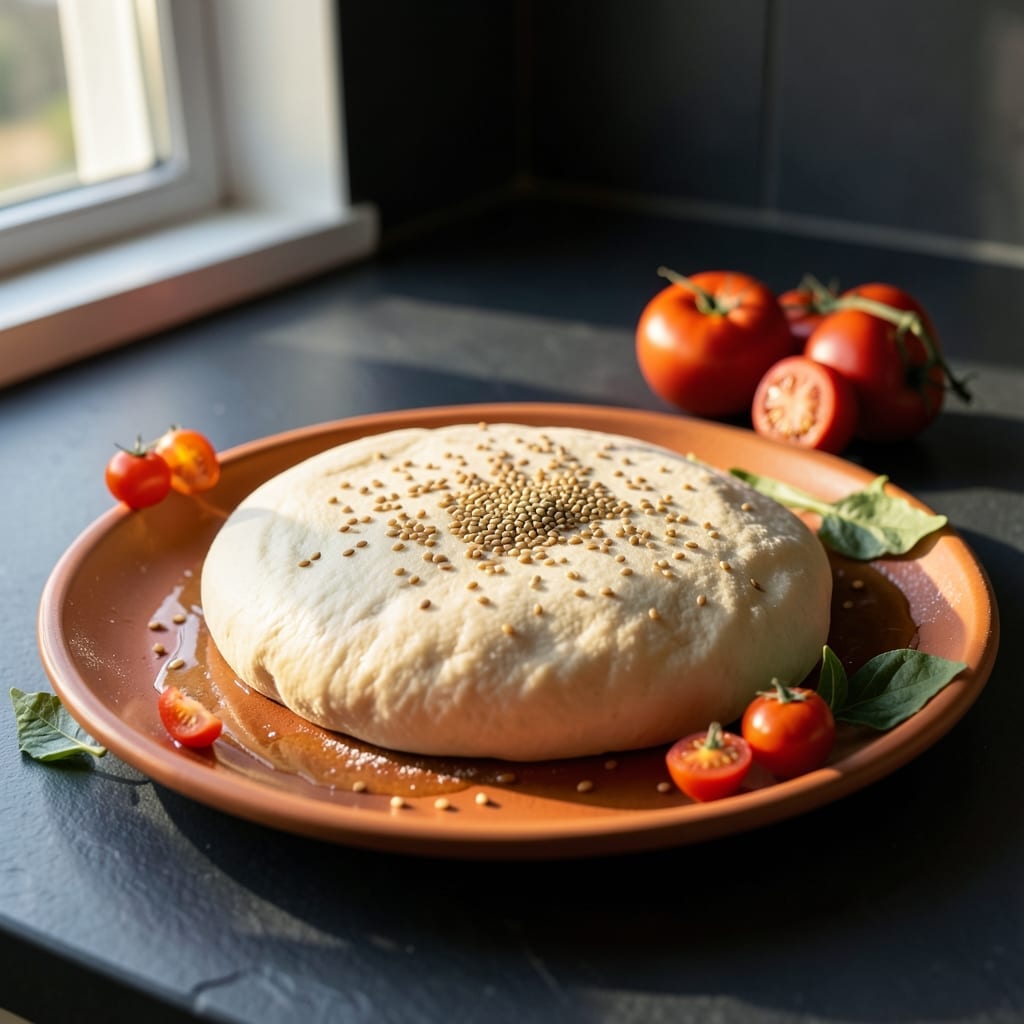
This authentic Neapolitan-style dough delivers the perfect base for any Italian pizza. The secret lies in using 00 flour for that signature tender, elastic texture.
With just a handful of simple ingredients and proper proofing time, you’ll achieve a crust that’s crispy on the outside with a chewy interior—exactly as it should be.
Ingredients for Italian Pizza Dough Recipe 00 Flour
Seven simple ingredients create an authentic Neapolitan-style pizza base with signature texture and flavor.
| Ingredient | Amount | Notes |
|---|---|---|
| 00 Flour 🌾 | 3 ½ cups | Italian-style, finely milled |
| Active Dry Yeast 🍞 | ¼ oz | One packet, proofed in warm water |
| Fine Sea Salt 🧂 | 2 tsp | Diamond Crystal preferred |
| Lukewarm Water 💧 | 1 ¼ cups | 105-110°F for yeast activation |
| Extra-Virgin Olive Oil 🫒 | 2 tbsp | High quality, fruity notes |
| Semolina Flour 🌾 | ¼ cup | For dusting work surface |
| Honey 🍯 | 1 tsp | Optional, feeds yeast slightly faster |
The 00 flour is non-negotiable for authenticity—look for Antimo Caputo or King Arthur brands at specialty markets or online. This finely milled flour creates the tender, elastic crumb that defines Neapolitan dough. Active dry yeast should be fresh (check the expiration date), and Diamond Crystal sea salt provides the cleanest flavor without additive bitterness.
No 00 flour? All-purpose flour works in a pinch but yields a denser crust. For yeast, instant can replace active dry at 25% less quantity. The honey can be omitted entirely, or substituted with sugar. The olive oil can be reduced to 1 tbsp for a leaner dough, though the flavor will be less rich.
Dough can be refrigerated for up to 3 days to develop deeper flavor, or frozen for 1 month. Bring to room temperature before shaping. The semolina prevents sticking and adds texture—store it in an airtight container to keep it fresh.
Why You’ll Love This Recipe
- Minimal Effort: I mix 5 ingredients, let it rise, and that’s it—no fancy techniques.
- Chef-Quality Taste: The 00 flour gives it that soft, airy texture with just the right chew.
- Endless Possibilities: I’ve used it for Margherita, calzones, even focaccia—so versatile.
- Budget-Friendly Base: A bag of 00 flour and yeast make multiple pizzas for less than delivery.
Step-by-Step Instructions for Italian Pizza Dough
Authentic Neapolitan-style dough requires precision and patience for the perfect base.
Step 1: Activate the Yeast Properly
Begin by dissolving the 0.25 oz Active Dry Yeast and 1 tsp Honey in ¼ cup of the 1.25 cups Lukewarm Water (maintained at 105-110°F). The water temperature is critical—too hot kills the yeast, too cold delays activation.
Let this mixture sit undisturbed for 5-7 minutes until it becomes frothy and cloudy. This visual confirmation means the yeast is alive and ready. I always check the expiration date on my yeast packets first—old yeast won’t rise properly no matter the water temperature.
Step 2: Combine and Knead the Dough
In a large mixing bowl, combine the 3.5 cups 00 Flour and 2 tsp Fine Sea Salt. Create a well in the center and pour in the yeast mixture, remaining 1 cup Lukewarm Water, and 2 tbsp Extra-Virgin Olive Oil.
Using a wooden spoon, stir until a shaggy dough forms. Turn it onto a lightly floured surface and knead for 8-10 minutes by hand until smooth and elastic. The dough should spring back when poked gently with a finger. This gluten development is what gives your pizza that perfect chewy texture.
Step 3: First Rise for Flavor Development
Lightly oil a clean bowl with some of the Extra-Virgin Olive Oil, place the dough inside, and turn to coat all sides. Cover with a damp kitchen towel and let rise in a warm, draft-free spot for 1.5-2 hours or until doubled in volume.
I like to place mine near (but not on) a preheating oven set to 200°F then turned off. The ideal environment is 75-80°F. The dough is ready when it holds an indent when lightly pressed with a finger. This first rise develops the complex flavors characteristic of authentic Italian pizza.
Step 4: Shape and Second Rise
Punch down the risen dough to release air, then divide it into 4 equal portions for individual pizzas. On a surface dusted with 0.25 cup Semolina Flour, gently shape each portion into a smooth ball by folding the edges under and rolling between your palms.
Place the dough balls on a semolina-dusted baking sheet, cover loosely, and let rest for another 30-60 minutes. This second rise relaxes the gluten, making the dough easier to stretch into that perfect thin Neapolitan-style crust without springing back. The semolina prevents sticking while adding a subtle texture to the finished crust.
Your dough is now ready to be stretched, topped, and baked into authentic Italian pizza.
Pro Tips For Making Italian Pizza Dough Recipe 00 Flour
- Proof the Yeast: I learned this the hard way—always dissolve the active dry yeast in the lukewarm water with a pinch of sugar first and wait 5-10 minutes for it to foam. If it doesn’t bubble, your dough won’t rise.
- Use Cold Water: Sounds counterintuitive, but using cold water (not lukewarm) for the autolyse phase gives the 00 flour time to hydrate fully before the yeast activates, resulting in a smoother, more elastic dough.
- Skip the Over-Kneading: 00 flour is delicate, and overworking it develops too much gluten, making the crust tough. Mix just until the dough comes together, then let time do the rest during the rise.
- Oil the Bowl Well: Coat your rising bowl with a full tablespoon of extra-virgin olive oil—this keeps the dough from sticking and adds a subtle richness to the crust. I was skeptical until I tried it.
Common Mistakes When Making This Dish
🍕 Using the Wrong Flour Type
Using all-purpose flour instead of Tipo 00 flour results in a denser, less elastic dough. Tipo 00’s fine grind and low protein content create the perfect tender, airy crust for authentic Neapolitan pizza.
Fix: Stick to Tipo 00 flour (like Caputo or Antimo) for the best texture and flavor. If unavailable, blend bread flour with a bit of cake flour as a substitute.
⏰ Over-Kneading the Dough
Kneading too much develops excess gluten, making the dough tough and chewy. Italian pizza dough should be soft and stretchy, not rigid.
Fix: Knead just until the dough is smooth and elastic (about 8-10 minutes by hand or 5-6 in a mixer). Let the autolyse process (resting the dough) do the rest.
🌡️ Skipping the Proper Resting Time
Rushing the fermentation process leads to poor flavor development and a dense crust. Cold fermentation (24-48 hours in the fridge) is key for depth of flavor and texture.
Fix: Allow the dough to rest at room temperature for 1-2 hours first, then refrigerate for at least 24 hours. Patience pays off!
🔥 Overloading with Toppings
Too many toppings weigh down the dough, preventing it from cooking evenly and resulting in a soggy base. Neapolitan pizza thrives on simplicity.
Fix: Use a light hand with toppings—stick to classic combos like Margherita (tomato, mozzarella, basil) or Marinara (tomato, garlic, oregano). Less is more!
Nutrition Facts

- 6 Egg Cake Recipe with Oil: Light as Air With Buttery Moisture - October 4, 2026
- 4 Bean Casserole Recipe: One-Pan Heartiness With Smoky Paprika Depth - October 4, 2026
- 3-Ingredient Keto Mug Cake Recipe: Microwave Magic in 2 Minutes - October 4, 2026