
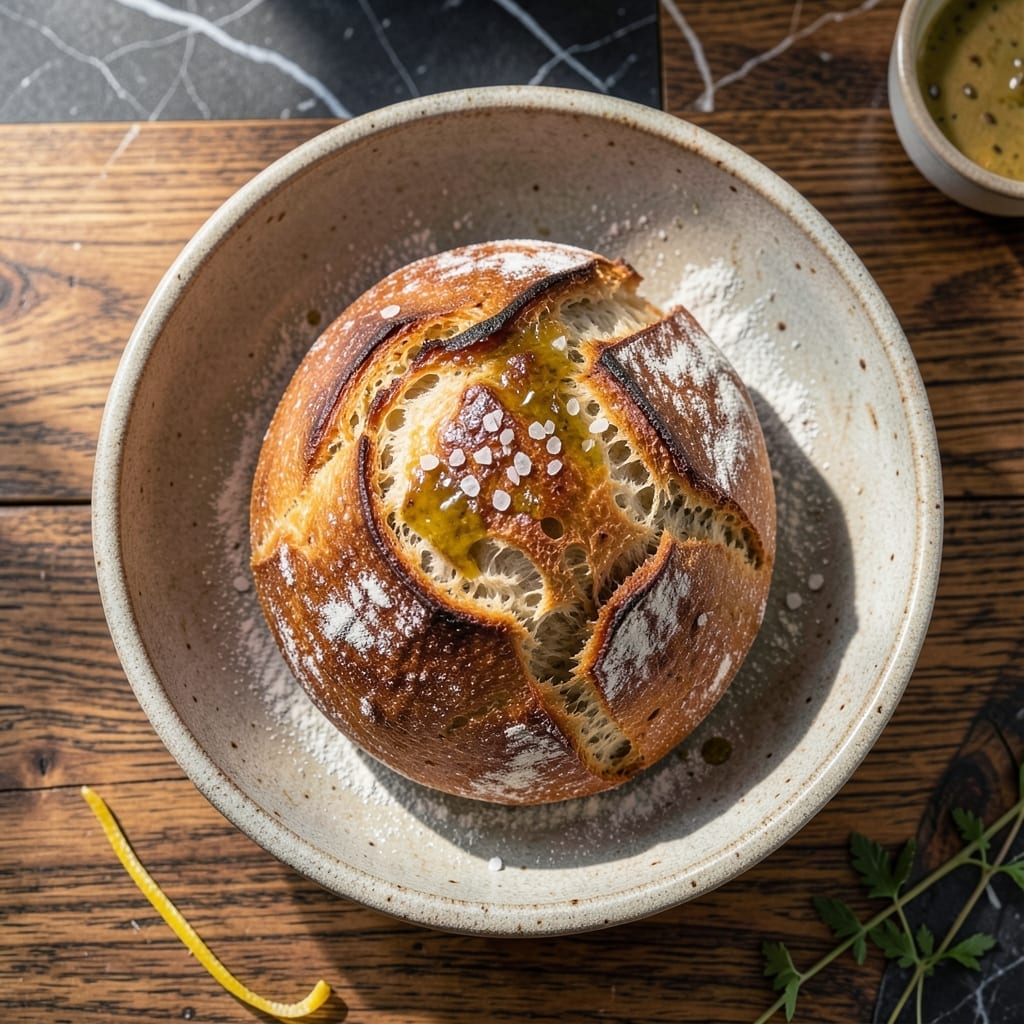
There’s an undeniable artistry in crafting bread that delivers both artisan crust and rustic charm. This method has been refined through years of practice, ensuring a loaf with the perfect balance of chewy interior and crispy exterior.
The process is straightforward yet precise, relying on fundamental techniques that any home baker can master. With just a handful of ingredients and patience, you’ll achieve results that rival any professional bakery.
What emerges from the oven is a golden, fragrant loaf with a shatteringly crisp crust and an airy, open crumb. The aroma alone signals that you’ve created something extraordinary.
This bread is versatile enough for everyday meals or special occasions. Here’s how to bring this timeless recipe to life in your kitchen.
Ingredients for Jacques Pepin Bread
A handful of essential ingredients yields a loaf with artisan quality and rustic character.
| Ingredient | Amount | Notes |
|---|---|---|
| Bread Flour 🌾 | 4 cups | High-protein for structure and chew |
| Active Dry Yeast 🍞 | 2 ¼ tsp | One packet, proofed in warm water |
| Kosher Salt 🧂 | 2 tsp | Diamond Crystal preferred for consistency |
| Granulated Sugar 🍚 | 1 tsp | Activates yeast in proofing stage |
| Warm Water 💧 | 1 ½ cups | 105-110°F for ideal yeast activation |
| Olive Oil 🫒 | 2 tbsp | Extra-virgin for bowl lubrication |
| Cornmeal 🌽 | ¼ cup | For dusting baking surface |
| All-Purpose Flour 🌾 | ½ cup | For dusting work surface |
The flour is critical here. King Arthur Bread Flour delivers consistent protein content (12.7%) for optimal gluten development. Diamond Crystal kosher salt is the standard in professional kitchens for its clean flavor and precise measurement. Yeast freshness matters—check the expiration date and store unopened packets in the freezer. Warm water temperature is non-negotiable: too hot kills yeast, too cool delays proofing.
No bread flour? All-purpose flour plus vital wheat gluten (1 tbsp per cup) works as a substitute. Out of kosher salt? Half the amount of table salt by volume. The olive oil prevents sticking—vegetable oil or melted butter can replace it. Cornmeal adds texture to the crust; semolina or additional flour are acceptable alternatives for dusting.
Store flour in airtight containers to prevent moisture absorption—keeps for 6-12 months. Yeast stays viable at room temperature for 1 month, or 6 months in the freezer. The baked loaf stays fresh for 3-4 days wrapped in a clean kitchen towel.
Why You’ll Love This Recipe
- No-Knead Magic: I love that this comes together with just flour, yeast, salt, sugar, and water—no fancy techniques or stand mixer required.
- Crust & Crumb: That golden crust with a soft, airy interior? It’s all thanks to the simple yeast and sugar working their magic in the warm water.
- Weeknight Hero: Honestly, it’s my go-to for soups, sandwiches, or just slathered in butter—equally great fresh or toasted the next day.
- Pennywise Perfect: A few cents worth of ingredients yields a loaf that tastes like it came from a bakery, and it freezes beautifully for later.
Step-by-Step Instructions for Jacques Pepin’s Bread
Master this straightforward technique for bakery-quality results in your own kitchen.
Step 1: Activate the Yeast and Begin the Dough
In a small bowl, combine the 2.25 tsp Active Dry Yeast, 1 tsp Granulated Sugar, and 1.5 cups Warm Water at 105-110°F. Let stand for 5-10 minutes until the mixture becomes foamy and fragrant—this confirms your yeast is active and ready to work.
In a large mixing bowl, add the 4 cups Bread Flour and 2 tsp Kosher Salt. Create a well in the center and pour in the yeast mixture along with the 2 tbsp Olive Oil. The high-protein bread flour provides the structure needed for that perfect artisan texture.
Step 2: Knead Until Smooth and Elastic
Using a wooden spoon or your hands, mix the ingredients until a shaggy dough forms. Turn it out onto a surface dusted with 0.5 cup All-Purpose Flour and begin kneading. Push the dough away with the heel of your hand, then fold it back over itself.
Knead for 8-10 minutes until the dough becomes smooth and elastic, springing back when lightly pressed. This development of gluten is what gives bread its chewy texture. The dough should feel slightly tacky but not sticky—add more all-purpose flour 1 tbsp at a time if needed.
Step 3: First Rise Until Doubled in Volume
Lightly oil a clean bowl with a bit of the 2 tbsp Olive Oil and place the dough inside, turning to coat all sides. Cover with a damp kitchen towel and let rise in a warm, draft-free spot for 1-1.5 hours or until doubled in size.
This first rise, or bulk fermentation, allows the yeast to work its magic, developing flavor and creating those characteristic air pockets. You’ll know it’s ready when an indent made with your finger springs back slowly but doesn’t completely disappear.
Step 4: Shape and Second Rise
Punch down the dough to release the air, then turn it out onto your floured surface. Shape into a round loaf or oval boules, pulling the edges toward the center and pinching to create surface tension. This tension helps the bread hold its shape during baking.
Place the shaped dough on a baking sheet or banneton dusted with 0.25 cup Cornmeal, which prevents sticking and adds a subtle texture to the crust. Cover and let rise for another 45-60 minutes until nearly doubled again.
Step 5: Bake to Golden Perfection
Preheat your oven to 425°F with a baking stone or inverted baking sheet inside. Just before baking, make a few shallow slashes on the top of the dough with a sharp knife or razor—this allows the bread to expand properly in the oven.
Bake for 25-30 minutes until the crust is deep golden brown and the loaf sounds hollow when tapped on the bottom. The cornmeal will give the bottom crust a delightful crunch. Transfer to a wire rack and let cool for at least 30 minutes before slicing to allow the interior to set.
Pro Tips For Making Jacques Pepin Bread
- Test Your Yeast: Always bloom your active dry yeast in the warm water with sugar first—if it doesn’t foam within 5-10 minutes, your bread won’t rise. I learned this the hard way after wasting a whole batch of flour.
- Use High-Protein Flour: Bread flour’s higher protein content (12-14%) gives Pepin’s recipe the structure it needs. Skip all-purpose—it makes a denser, less chewy loaf.
- Skip Over-Kneading: Jacques’ method relies on minimal kneading—just until the dough comes together. Overworking it makes the bread tough, and nobody wants that.
- Let It Double: Give the dough a full first rise until it’s truly doubled in size, even if it takes longer than expected. Rushing this step leaves you with a flat, sad loaf.
Essential Equipment for This Recipe
Mixing Bowls
A large stainless steel mixing bowl is essential for combining your dough. I prefer 8-quart capacity to give the dough room to rise. The weight of the bowl helps stabilize it during vigorous mixing. 💪
Measuring Tools
Accurate measurements are non-negotiable. I use OXO Good Grips measuring cups for dry ingredients and a liquid measuring cup with clear markings for water. Diamond Crystal kosher salt needs precise measuring for consistent results.
Kitchen Scale
For ultimate precision, a digital kitchen scale is invaluable. I recommend the Escali Primo for its accuracy and easy-to-clean surface. Weighing flour eliminates volume measurement inconsistencies.
Dough Scraper
A bench scraper helps divide dough and clean your work surface. I use a stainless steel model with a comfortable handle. It’s also perfect for portioning the dough before shaping.
Baking Surface
A baking stone or inverted baking sheet mimics a professional bread oven. Preheat it for 30 minutes at 425°F before baking. This creates the ideal environment for a crisp crust.
Cooling Rack
Never skip the cooling rack! A wire cooling rack allows air circulation to prevent a soggy bottom. I let my loaves cool for at least 30 minutes before slicing to maintain structure. 🔥
Nutrition Facts
Frequently Asked Questions
What’s the ideal water temperature for activating yeast?
Use water between 105-110°F. Too hot kills the yeast, while too cool slows activation. A kitchen thermometer ensures precision.
Can I use all-purpose flour instead of bread flour?
Yes, but add 1 tbsp vital wheat gluten per cup to boost protein. Bread flour’s higher protein creates better structure and chew.
Why does my bread have a dense crumb?
Over-kneading or insufficient rising time are likely culprits. Knead just until smooth, and let dough rise until nearly doubled in size.
How do I know when the bread is fully baked?
Tap the bottom—it should sound hollow. The crust should be deep golden brown, and internal temperature should reach 190-200°F.

- 6 Egg Cake Recipe with Oil: Light as Air With Buttery Moisture - October 4, 2026
- 4 Bean Casserole Recipe: One-Pan Heartiness With Smoky Paprika Depth - October 4, 2026
- 3-Ingredient Keto Mug Cake Recipe: Microwave Magic in 2 Minutes - October 4, 2026