
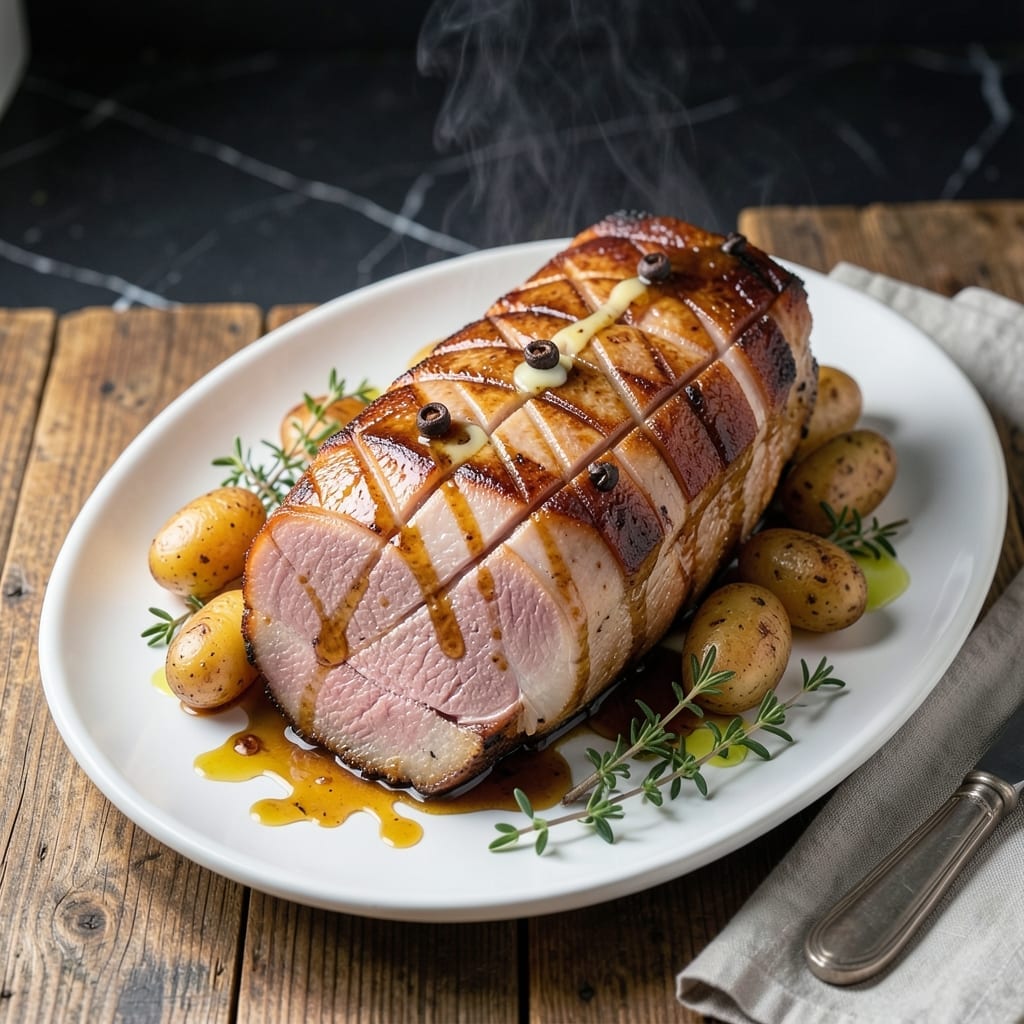
This French-style glazed ham transforms a classic centerpiece into an elegant masterpiece with minimal effort. The technique relies on a simple yet precise method that elevates the flavor without overpowering it.
I’ve refined this approach to ensure the ham stays juicy while developing a caramelized exterior. A mustard and honey glaze adds depth, creating a balance of sweetness and tang that complements the natural richness.
The result is a dish that feels special enough for holidays but remains approachable for everyday cooking. The glaze caramelizes beautifully, forming a glossy, golden crust that locks in moisture.
Serve it as the center of a festive meal or slice it thin for sandwiches the next day.
Ingredients for Jacques Pepin Ham
A few quality ingredients and one spectacular ham create this elegant holiday centerpiece.
| Ingredient | Amount | Notes |
|---|---|---|
| Bone-In Ham 🍖 | 8 lb | Fully cooked, spiral-cut preferred |
| Dijon Mustard 🥄 | ½ cup | Smooth, high-quality French |
| Honey 🍯 | ½ cup | Pure, unprocessed for best flavor |
| Brown Sugar 🍚 | ½ cup | Light or dark, packed |
| Unsalted Butter 🧈 | ½ cup | Melted for glaze consistency |
| Whole Cloves 🌿 | 20 pieces | For studding ham surface |
| Fresh Pineapple 🍍 | 1 whole | Optional, sliced for garnish |
| Apple Cider Vinegar 💧 | 2 tbsp | Balances sweetness in glaze |
| Ground Black Pepper 🌶️ | 1 tsp | Freshly ground preferred |
| Fresh Thyme Sprigs 🍃 | 4 sprigs | Tied with kitchen twine |
| Orange Marmalade 🍊 | ¼ cup | For depth in glaze |
| Dry White Wine 🍷 | ¼ cup | For deglazing pan |
The ham is the star here. Spiral-cut bone-in hams from HoneyBaked Ham or Niman Ranch save time and ensure even cooking. Look for a ham labeled “fully cooked”—this method is about reheating and glazing, not cooking raw meat. The cloves should be whole and aromatic; if they smell musty, they’re past their prime. A good butcher can often source high-quality hams with better marbling.
No Dijon? Whole-grain mustard at half the amount works in a pinch. The honey can be swapped for maple syrup, but the flavor profile will be different. If avoiding alcohol, replace the wine with apple cider. The marmalade is optional but adds a sophisticated citrus note—apricot jam is a fine substitute. For a smoother glaze, strain out the thyme sprigs before applying.
Leftover ham keeps beautifully. Wrap slices tightly in plastic and refrigerate for up to 5 days, or freeze for 2-3 months. The glaze can be made ahead and reheated gently. To serve cold, bring the ham to room temperature first for the best texture and flavor.
Why You’ll Love This Recipe
- 5-Minute Glaze: I just mix the Dijon, honey, and brown sugar while the ham roasts—no fuss, no blender.
- Crispy Sweet Crust: The butter and brown sugar caramelize into a sticky, crackly top that’s downright addictive.
- Holiday or Tuesday: Honestly, it feels fancy enough for Easter but I’ve made it for a random Sunday supper.
- Leftovers for Days: One bone-in ham feeds us twice, then the leftovers turn into sandwiches, soups, even omelets.
Step-by-Step Instructions for French-Style Glazed Ham
Master the technique that transforms ham into an elegant centerpiece with layered flavors.
Step 1: Prepare and Score the Ham
Place the 8 lb bone-in ham fat-side up on a cutting board. Using a sharp knife, score the surface in a diamond pattern by making shallow cuts about ½ inch apart, being careful not to cut into the meat. This creates channels for the glaze to penetrate and crispy edges.
Insert the 20 pieces whole cloves at the intersections of the diamond pattern, pressing them in firmly so they stay in place during cooking. This not only adds visual appeal but infuses the ham with their warm, aromatic flavor as it roasts.
Step 2: Create the Signature Glaze
In a medium saucepan, combine the 0.5 cup Dijon mustard, 0.5 cup honey, 0.5 cup brown sugar, 0.5 cup unsalted butter, 0.25 cup orange marmalade, 2 tbsp apple cider vinegar, and 1 tsp ground black pepper. Cook over medium heat, stirring constantly, until the mixture is smooth and slightly thickened.
The glaze should coat the back of a spoon but still be pourable. This balance ensures it adheres to the ham without running off. Taste and adjust seasoning if needed, though the combination of sweet, tangy, and spicy elements should already harmonize beautifully.
Step 3: Roast and Glaze the Ham
Preheat the oven to 325°F. Place the ham in a roasting pan with the 4 sprigs fresh thyme sprigs and pour 0.25 cup dry white wine into the bottom of the pan. The wine adds moisture and depth to the pan juices, which you can use later for a sauce.
Brush the ham generously with about a third of the glaze. Roast uncovered for 1 hour and 30 minutes, then brush with another layer of glaze. Continue roasting for another 30 to 45 minutes, basting with the remaining glaze and pan juices every 20 minutes until the ham is deeply caramelized and the internal temperature reaches 140°F.
Step 4: Rest and Garnish
Remove the ham from the oven and transfer it to a serving platter. Tent loosely with foil and let it rest for 15 to 20 minutes. This allows the juices to redistribute, ensuring every slice is moist and flavorful.
While the ham rests, slice the 1 whole fresh pineapple into rings or spears for garnish, if using. Arrange the pineapple around the ham just before serving to add a vibrant, fresh contrast to the rich, glazed meat. Carve the ham at the table for a dramatic presentation.
Pro Tips For Making Jacques Pepin Ham
- Score the Ham: Cut a diamond pattern into the fat cap, about 1/4-inch deep—this helps the glaze penetrate and creates those crispy edges everyone fights over.
- Warm the Honey: Microwave the honey for 10-15 seconds before mixing with mustard and sugar; it blends smoother and coats the ham more evenly.
- Skip Boiling the Glaze: I learned this the hard way—mixing the mustard, honey, sugar, and butter cold and spreading it thick prevents burning and saves a pan to wash.
- Rest Before Slicing: Let the ham sit 15 minutes after glazing so the juices redistribute, or you’ll lose half the moisture to the cutting board.
Common Mistakes When Making Perfect Results
Over-Glazing the Ham
Applying too much glaze at once can cause it to run off and pool in the pan instead of creating that perfect caramelized crust. I recommend using about a third of the glaze initially, then adding more in 2-3 layers during roasting. This builds flavor gradually. 💡
Skipping the Scoring
Failing to score the ham surface means the glaze won’t penetrate deeply. Make shallow cuts about ½ inch apart in a diamond pattern. This creates more surface area for the glaze to cling to and crisp up beautifully.
Neglecting the Rest
Cutting into the ham too soon causes all those precious juices to spill out onto the cutting board. Always let it rest for at least 15 minutes after removing from the oven. I tent mine with foil to keep it warm while the juices redistribute.
Wrong Oven Temperature
Too high a temperature can dry out the ham before the glaze has a chance to caramelize. Stick to 325°F for even cooking and perfect glaze development. This lower temp ensures the interior stays moist while the exterior gets that glossy finish.
Ignoring the Pan Juices
Those flavorful juices in the bottom of the pan are liquid gold. I always add ¼ cup white wine to the pan before roasting to create more juices. Use them to baste the ham or make a quick pan sauce for serving.
Using Old Cloves
Dull, old cloves lose their aromatic punch and can taste bitter. Always use fresh whole cloves—they should smell strong and sweet when you open the jar. Press them firmly into the ham so they don’t fall out during cooking.
Nutrition Facts
Frequently Asked Questions
What if I don’t have a spiral-cut ham?
Use a whole bone-in ham and score it yourself in a diamond pattern. This helps the glaze penetrate and creates crispy edges.
Can I make the glaze ahead of time?
Yes! Prepare the glaze up to 2 days ahead and store it in the fridge. Reheat gently before using.
How do I prevent the cloves from falling out?
Press them firmly into the ham at the intersections of your scores. If they still loosen, secure them with toothpicks.
Is the wine in the pan necessary?
It’s optional but adds depth to the pan juices. Substitute with apple cider or chicken broth for alcohol-free versions.

- 6 Egg Cake Recipe with Oil: Light as Air With Buttery Moisture - October 4, 2026
- 4 Bean Casserole Recipe: One-Pan Heartiness With Smoky Paprika Depth - October 4, 2026
- 3-Ingredient Keto Mug Cake Recipe: Microwave Magic in 2 Minutes - October 4, 2026