
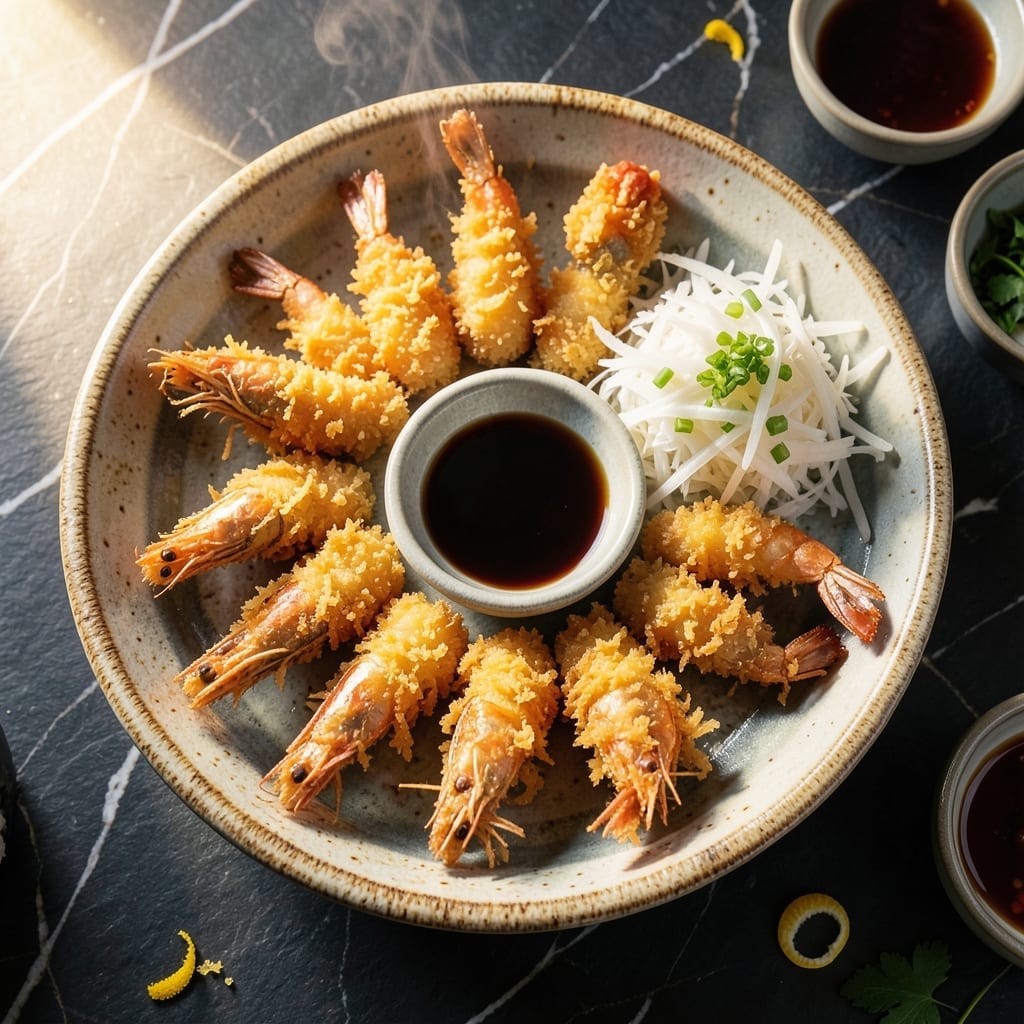
Achieving crispy shrimp tempura at home requires just a few traditional Japanese techniques. This method delivers light, airy batter that shatters with each bite, encasing tender shrimp in a golden shell.
The secret lies in ice-cold ingredients and quick frying at 350-375°F. A simple batter of flour, cornstarch, and sparkling water creates that signature delicate texture without heaviness.
Each piece emerges from the oil with a perfect golden hue and that unmistakable crunch. The shrimp remain perfectly cooked inside while the batter stays light, never greasy.
Serve immediately with tentsuyu dipping sauce for the authentic experience. The contrast of hot, crispy tempura with cool sauce is irresistible.
Ingredients for Japanese Shrimp Tempura
Traditional ingredients deliver authentic crispy tempura with light, airy batter every time.
| Ingredient | Amount | Notes |
|---|---|---|
| Large Shrimp 🦐 | 1 lb | Peeled, deveined, tails on |
| Cake Flour 🌾 | 1 cup | Low-protein for tenderness |
| Cornstarch 🌾 | ¼ cup | Enhances crispiness in batter |
| Ice-Cold Sparkling Water 💧 | 1 ½ cups | Chilled for maximum carbonation |
| Large Egg 🥚 | 1 whole | Ice-cold for batter cohesion |
| Neutral Oil 🫒 | 4 cups | For deep frying, high smoke point |
| Kosher Salt 🧂 | 1 tsp | For seasoning shrimp and batter |
| Dashi Stock 🍲 | 1 cup | Traditional Japanese stock for tentsuyu |
| Soy Sauce 🫙 | ¼ cup | Low-sodium preferred |
| Mirin 🍶 | 2 tbsp | Sweet rice wine for sauce |
| Grated Daikon Radish 🥬 | ½ cup | For tentsuyu sauce garnish |
| Matcha Powder 🍵 | ½ tsp | Optional for dusting finished tempura |
The shrimp quality is non-negotiable. Wild-caught or sustainably farmed large shrimp (16/20 count) yield the best texture. Asian markets often have the freshest selection, but Whole Foods or Trader Joe’s carry reliable frozen options (thaw in ice water). Cake flour is essential—Bob’s Red Mill or King Arthur brands deliver consistent results. For oil, peanut or vegetable oil provides the neutral base needed for high-heat frying.
No sparkling water? Ice-cold club soda works identically. Short on cornstarch? Substitute potato starch at equal ratio. For gluten-free tempura, rice flour plus cornstarch creates a comparable batter. The dashi can be instant dashi granules (dissolved in hot water) for convenience. Mirin substitutes include 1 tbsp sugar plus 1 tbsp water per tablespoon of mirin.
Frying oil can be reused 2-3 times if filtered and stored in a cool, dark place. Battered shrimp must be fried immediately—no resting or the coating loses its lift. Serve within 2 minutes of frying for peak crispiness. Leftovers? They won’t be crispy, but store in the fridge for 1 day maximum.
Why You’ll Love This Recipe
- One-Bowl Wonder: Honestly, the batter comes together in seconds—just cake flour, cornstarch, egg, and sparkling water. No fancy tools, no mess.
- Crispy Perfection: That light, airy crunch from the ice-cold batter? It makes every bite of shrimp feel like a restaurant treat.
- Crowd Pleaser: I serve this at parties, on busy weeknights, even as a snack. It disappears every single time.
- Budget Stretcher: Shrimp tempura feels fancy, but a pound of shrimp and pantry staples make it way cheaper than takeout.
Step-by-Step Instructions for Japanese Shrimp Tempura
Master the technique and you’ll achieve restaurant-quality crispy shrimp every time.
Step 1: Prepare and Season the Shrimp
Pat the 1 lb Large Shrimp completely dry with paper towels—this is essential for the batter to adhere properly. Season both sides lightly with 1 tsp Kosher Salt. To prevent curling during frying, make small diagonal cuts on the belly side of each shrimp, about ¼ inch apart.
Leave the tails on for presentation and easier handling. Arranging them in a single layer on a plate and refrigerating for 10 minutes helps the salt penetrate evenly while keeping the shrimp cold. Cold shrimp maintain their texture better during the quick frying process.
Step 2: Create the Tempura Batter
In a chilled bowl, whisk together the 1 cup Cake Flour and 0.25 cup Cornstarch. The low-protein cake flour ensures a delicate, airy batter, while the cornstarch adds extra crispiness. Create a well in the center and add the 1 whole Large Egg and 1.5 cups Ice-Cold Sparkling Water.
Using chopsticks, gently stir the mixture just until the ingredients are barely combined. The batter should remain lumpy with visible streaks of flour—overmixing develops gluten and results in a dense, chewy coating. The cold temperature of the ingredients and the carbonation in the sparkling water are critical for the batter’s light texture.
Step 3: Fry to Golden Perfection
Heat 4 cups Neutral Oil in a deep, heavy pot to 340-350°F. Use a deep-fry thermometer for accuracy, as temperature control is crucial. To test the oil, drop in a pinch of batter—it should sizzle immediately and float to the surface within 10 seconds.
Dip each shrimp into the batter, allowing excess to drip off, then carefully lower into the hot oil. Fry in batches to avoid crowding, which would lower the oil temperature. Cook for 2-3 minutes until the batter turns golden brown and crispy. Turn occasionally with a slotted spoon for even browning.
Step 4: Prepare the Tentsuyu Dipping Sauce
In a small saucepan, combine the 1 cup Dashi Stock, 0.25 cup Soy Sauce, and 2 tbsp Mirin. Heat over medium-low until just warmed through—do not boil, as this would concentrate the flavors too much and reduce the sauce.
Pour the sauce into small dipping bowls. Garnish each with 0.5 cup Grated Daikon Radish for a refreshing contrast. The daikon adds a crisp texture and mild peppery note that complements the rich tempura beautifully.
Step 5: Serve Immediately with Optional Matcha Dusting
Transfer the fried shrimp to a wire rack or paper towels to drain excess oil. Serve immediately while hot and crispy. The contrast between the hot, crunchy exterior and the tender shrimp inside is what makes tempura special.
For an elegant presentation, lightly dust with 0.5 tsp Matcha Powder using a fine-mesh sieve. The vibrant green matcha adds a subtle earthy note and visual appeal. Serve with the tentsuyu sauce on the side for dipping.
Pro Tips For Making Japanese Shrimp Tempura
- Chill the Batter: Use ice-cold sparkling water straight from the fridge—warm liquid makes the coating absorb oil and turn heavy.
- Dry the Shrimp: Pat the shrimp completely dry with paper towels before dipping; any moisture makes the tempura splatter and stick.
- Skip Overmixing: Stir the batter just 8-10 times—it should look lumpy. Overworking it develops gluten, which kills the crispiness.
- Fry in Small Batches: Cook 3-4 shrimp at a time to keep the oil hot. Crowding the pan drops the temperature and leaves you with soggy tempura.
Serving Suggestions for japanese shrimp tempura
Traditional Presentation
Arrange your shrimp tempura on a bamboo serving tray lined with parchment paper. This traditional approach enhances the visual appeal and keeps the batter crispy. I love how the natural wood highlights the golden color. 🥢
Dipping Sauce Style
Serve the tentsuyu in small ceramic dipping bowls placed at each setting. Add a small pile of grated daikon on the side for guests to mix into their sauce. The contrast of cool sauce with hot tempura is essential.
Garnish Ideas
Sprinkle toasted sesame seeds over the tempura just before serving for added texture. Thinly sliced green onions add a pop of color and mild onion flavor that complements the shrimp beautifully.
Accompaniment Pairings
Serve with steamed edamame sprinkled with sea salt as a light starter. A side of pickled cucumber salad cuts through the richness with its refreshing crunch and tang.
Beer Pairing
An ice-cold Japanese lager like Sapporo or Asahi is the classic pairing. The beer’s crispness cleanses your palate between bites of the rich, crispy tempura. I always keep some on hand for this exact purpose. 🍺
Family-Style Service
For gatherings, present the tempura on a large platter with the dipping sauce in the center. Include small plates and chopsticks for easy sharing. This encourages the communal dining experience central to Japanese cuisine.
Nutrition Facts
Frequently Asked Questions
Why use ice-cold ingredients for the batter?
Cold ingredients prevent gluten formation, keeping the batter light and crispy. The carbonation in sparkling water also creates air pockets for that signature delicate texture.
What oil works best for frying?
Use a neutral oil with a high smoke point like peanut or vegetable oil. Maintain 340-350°F for perfect golden results without burning.
How do I prevent the shrimp from curling?
Make small diagonal cuts on the belly side before cooking. This helps the shrimp stay straight during frying for a professional look.
Can I make tempura ahead of time?
No—tempura is best served immediately. The batter loses crispness quickly, even when reheated. Frying in small batches ensures peak freshness.

- 6 Egg Cake Recipe with Oil: Light as Air With Buttery Moisture - October 4, 2026
- 4 Bean Casserole Recipe: One-Pan Heartiness With Smoky Paprika Depth - October 4, 2026
- 3-Ingredient Keto Mug Cake Recipe: Microwave Magic in 2 Minutes - October 4, 2026