
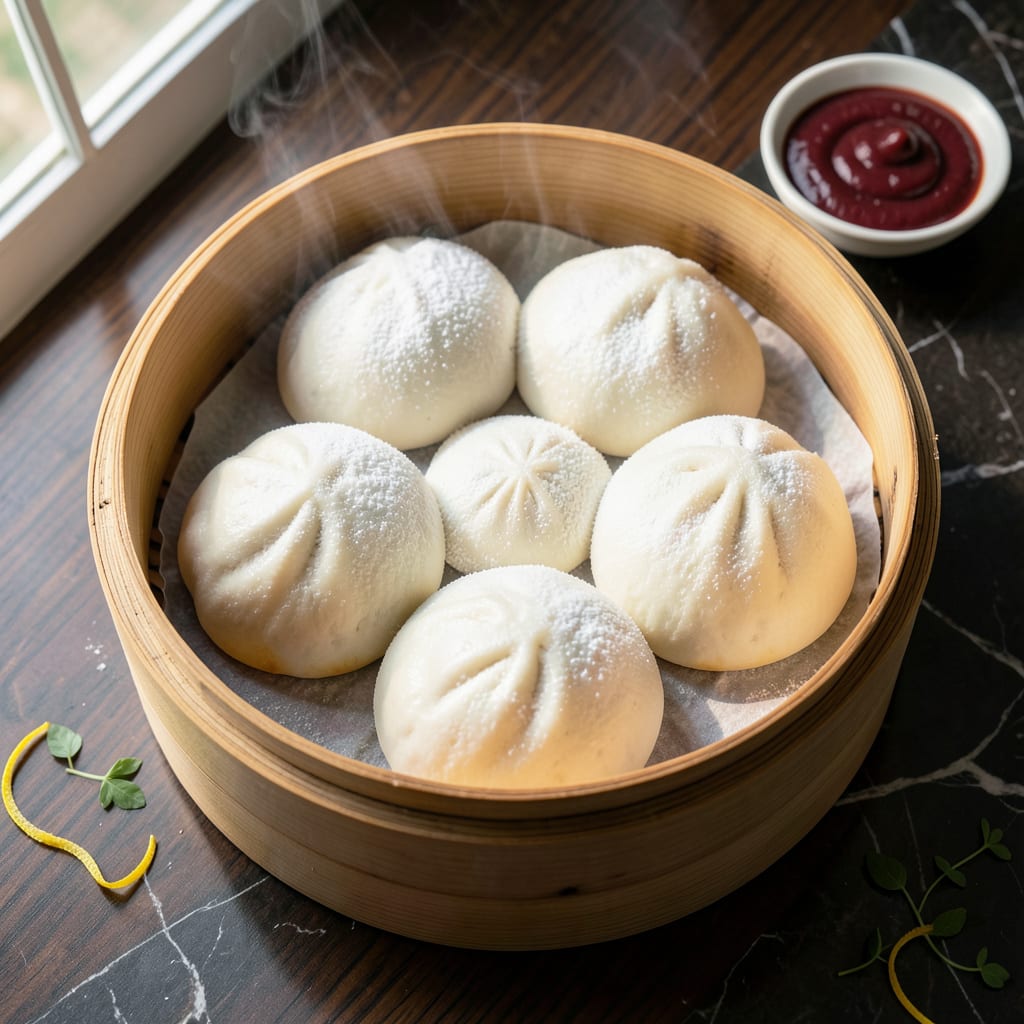
There’s a special satisfaction in making Japanese sweet steamed buns from scratch, achieving that signature pillowy soft texture with a sweet red bean filling. This traditional treat transforms simple ingredients into something extraordinary.
The steaming process creates buns that are light yet substantial, with the filling adding a delightful surprise in every bite. These are perfect for breakfast, dessert, or an afternoon treat.
Ingredients for Japanese Sweet Steamed Buns
Simple pantry staples transform into extraordinary pillowy soft buns with sweet filling.
| Ingredient | Amount | Notes |
|---|---|---|
| All-Purpose Flour 🌾 | 3 cups | Plus extra for dusting |
| Granulated Sugar 🍚 | ½ cup | Divided for dough and filling |
| Active Dry Yeast 🍞 | 1 package | 2 1/4 tsp equivalent |
| Warm Water 💧 | ¾ cup | 110-115°F for yeast activation |
| Whole Milk 🥛 | ¼ cup | Warmed to lukewarm |
| Unsalted Butter 🧈 | 2 tbsp | Melted and cooled |
| Large Egg 🥚 | 1 whole | Room temperature |
| Sweet Red Bean Paste 🍫 | 1 cup | Store-bought or homemade |
| Baking Powder 🧂 | 1 tsp | For lift and fluffiness |
| Salt 🧂 | ½ tsp | Kosher or sea salt |
| Cornstarch 🌽 | 1 tbsp | For dusting work surface |
| Vanilla Extract 🌿 | 1 tsp | Pure extract preferred |
The flour quality is paramount for achieving the signature texture. King Arthur all-purpose flour is ideal for its consistent protein content. Active dry yeast from Fleischmann’s or Red Star ensures reliable rise. For the red bean paste, Kikkoman’s canned anko is widely available at Asian markets and provides authentic flavor without the lengthy preparation.
Need to make substitutions? The milk can be replaced with equal parts warm water (though richness suffers slightly). No yeast? This isn’t a viable substitution—yeast is essential. For the butter, Earth Balance vegan butter works in a pinch. The sugar can be reduced by 25% without affecting texture, but the filling may taste less sweet.
Dough can be refrigerated overnight after the first rise (punch down first). The shaped buns must be steamed immediately or they’ll overproof. Leftovers keep 3-4 days in an airtight container, but reheat by steaming 5-10 minutes—microwaving makes them dense. Freeze unsteamed buns on a tray first, then transfer to a bag for up to 1 month.
Why You’ll Love This Recipe
- One Bowl Wonder: I just dump flour, sugar, yeast, warm water, and milk in a bowl—no fancy steps, and the dough comes together like magic.
- Sweet Pillow Perfection: That first bite of soft, slightly sweet steamed bun with a fluffy texture? Honestly, it’s the little things that make this worth the effort.
- Fill It Your Way: I’ve stuffed these with red bean paste, custard, even barbecue pork—same simple dough, endless possibilities for lunch or dessert.
- Budget-Friendly Batch: A few pantry staples make a dozen buns, and they freeze beautifully. Between us, my freezer always has a stash for lazy mornings.
Step-by-Step Instructions for Japanese Sweet Steamed Buns
This method ensures the signature pillowy texture and perfect filling distribution these buns are known for.
Step 1: Activate the Yeast and Prepare the Dough
In a small bowl, combine the 0.75 cup Warm Water with the 0.5 cup Granulated Sugar and sprinkle the 1 package Active Dry Yeast on top. Let it sit for 5-7 minutes until the mixture becomes frothy and cloudy—this confirms the yeast is active and ready to work.
In a large mixing bowl, whisk together the 3 cups All-Purpose Flour, 1 tsp Baking Powder, and 0.5 tsp Salt. Create a well in the center and add the yeast mixture, 0.25 cup Whole Milk, 1 whole Large Egg, 2 tbsp Unsalted Butter, and 1 tsp Vanilla Extract. The milk and egg should be at room temperature to prevent shocking the yeast.
Step 2: Knead and First Rise
Using a dough hook attachment, mix the ingredients on low speed until just combined, then increase to medium and knead for 8-10 minutes until the dough becomes smooth, elastic, and slightly tacky to the touch. If it feels too sticky, resist adding more flour—this moisture is what creates that signature soft texture.
Lightly dust your work surface with the 1 tbsp Cornstarch to prevent sticking. Transfer the dough to the surface and knead by hand for an additional 2 minutes to ensure even texture. Place the dough in a greased bowl, cover with a damp towel, and let it rise in a warm place for 1-1.5 hours or until doubled in size.
Step 3: Shape and Fill the Buns
Punch down the risen dough to release air and turn it out onto a work surface dusted with all-purpose flour. Divide the dough into 12 equal portions (about 70g each), then roll each into a smooth ball. Cover with a damp towel to prevent drying while you work with the rest.
Flatten one dough ball into a 3-inch circle with your hands, keeping the edges slightly thicker than the center. Place 1 tablespoon of Sweet Red Bean Paste in the center—don’t overfill or the buns may burst during steaming. Gather the edges of the dough around the filling, pinching to seal completely, then roll gently between your palms to create a smooth, round bun. Repeat with remaining dough and filling.
Step 4: Second Rise and Steam
Arrange the filled buns on individual squares of parchment paper, spacing them 2 inches apart to allow for expansion. Cover loosely with a damp towel and let rise for 30-40 minutes until puffy and nearly doubled in size. This second rise is crucial for that airy, cloud-like texture.
While the buns rise, set up your steamer. Bring water to a boil in the base, then reduce to a simmer. Place the buns in the steamer, ensuring the lid fits tightly to trap steam. Steam over medium heat for 15 minutes. Do not open the lid during steaming, as the sudden temperature change can cause the buns to collapse.
Pro Tips For Making Japanese Sweet Steamed Buns
- Test Your Yeast: I learned this the hard way—always proof your active dry yeast in the warm water with a pinch of sugar first. If it doesn’t bubble within 5-10 minutes, your buns won’t rise, no matter how long you wait.
- Use Scalded Milk: Heat the whole milk to just below boiling, then let it cool to lukewarm before mixing. This small step makes the dough softer and more pliable, which is crucial for those fluffy steamed buns.
- Skip Cold Water: Resist the urge to use cold water to speed things up. Warm water (around 110°F) is non-negotiable for activating the yeast properly—cold water will just leave you with dense, flat buns.
- Rest the Dough: After kneading, give the dough a full 1-2 hours to rise in a warm spot, covered with a damp towel. Sounds tedious, but it actually changes the outcome—your buns will be light and airy instead of tough.
Regional Styles of japanese sweet steamed buns
Classic Anpan Style
In Japan, anpan is the quintessential sweet bun, traditionally filled with anko (sweet red bean paste). The dough is slightly sweetened, creating a perfect balance with the rich filling. I love how the steaming process gives it that signature soft, fluffy texture. 🗺️
Taipei-Style Variations
Taiwanese versions often incorporate lotus seed paste or sesame filling alongside the classic red bean. The dough might include a touch of matcha powder for a subtle green tea flavor. These are slightly less sweet than Japanese anpan, letting the filling shine.
Chinese Tangbao Twist
Chinese tangbao (soup buns) can be adapted into sweet versions by using custard or black sesame paste as the filling. The dough is often enriched with more butter for extra tenderness. These are popular in Shanghai and make for a decadent treat.
Korean Hopang Style
Korean hopang often features fillings like sweet potato or pineapple mixed with red bean. The dough is typically less sweet, allowing the natural flavors of the filling to come through. These are a staple at Korean bakeries and street markets.
Hawaiian Manapua
Hawaiian manapua incorporates local flavors like coconut or macadamia nut into the filling. The dough is slightly denser, giving it a heartier texture. These are a beloved snack in Hawaii, often enjoyed as a quick breakfast or dessert. ✨
Thai Kanom Paang
Thai-style buns, or kanom paang, sometimes use pandan extract in the dough for a fragrant, slightly sweet aroma. The fillings can include mung bean paste or even sweetened taro. These are often brightly colored and served at festivals.
Nutrition Facts
Frequently Asked Questions
Why did my buns turn out dense instead of fluffy?
Over-kneading the dough or using too much flour can create a dense texture. Stick to the 8-10 minute knead time and avoid adding extra flour.
Can I use a different filling besides red bean paste?
Try custard, black sesame paste, or lotus seed paste for variety. Just keep the amount to 1 tablespoon per bun to prevent bursting.
How do I store leftover buns?
Keep them in an airtight container for 3-4 days. Reheat by steaming for 5-10 minutes to restore softness. Avoid microwaving, as it makes them rubbery.
Can I make the dough ahead of time?
Yes! After the first rise, punch down the dough and refrigerate overnight. Shape and fill in the morning, then proceed with the second rise and steaming.

- 6 Egg Cake Recipe with Oil: Light as Air With Buttery Moisture - October 4, 2026
- 4 Bean Casserole Recipe: One-Pan Heartiness With Smoky Paprika Depth - October 4, 2026
- 3-Ingredient Keto Mug Cake Recipe: Microwave Magic in 2 Minutes - October 4, 2026