
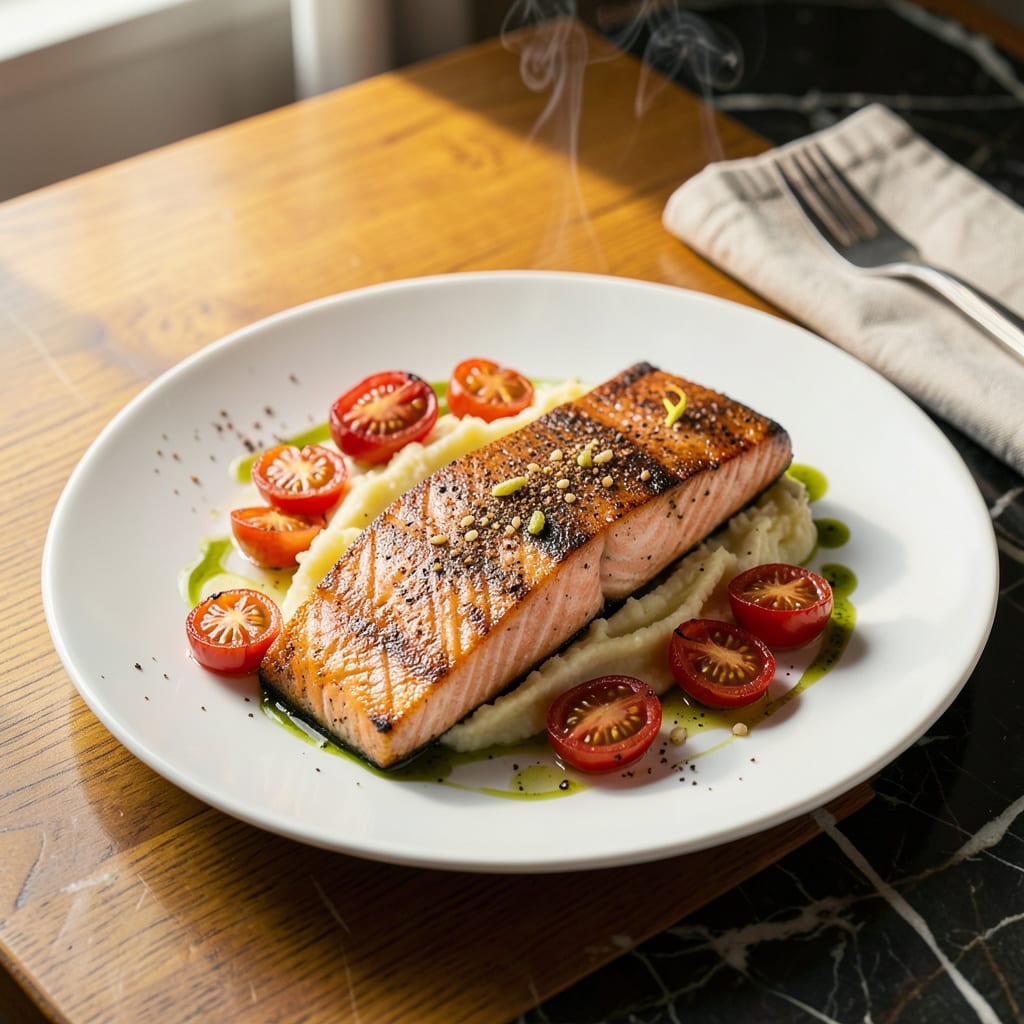
Mastering restaurant-quality salmon at home is simpler than you think—this method delivers flaky, tender fish with minimal effort. I’ve adapted Jeff Mauro’s approach to focus on precision timing and bold seasoning, ensuring perfect results every time. The key lies in the balance between high heat and gentle finishing, creating a crisp exterior while keeping the interior moist and delicate.
Ready in just 20 minutes, this recipe transforms ordinary salmon into a dish worthy of a fine-dining experience. Whether you’re cooking for a weeknight dinner or entertaining guests, the technique guarantees consistent texture and flavor. Pair it with simple sides like roasted asparagus or a citrus-infused quinoa to complete the meal.
Ingredients for Jeff Mauro Salmon
Precision matters with these restaurant-quality ingredients for flaky, tender salmon every time.
| Ingredient | Amount | Notes |
|---|---|---|
| Center-Cut Salmon Fillets 🐟 | 1 ½ lb | Skin-on, 1-inch thick, pin bones removed |
| Diamond Crystal Kosher Salt 🧂 | 1 ½ tsp | Divided for seasoning and finishing |
| Freshly Ground Black Pepper 🌶️ | ½ tsp | Coarse grind preferred |
| Granulated Garlic 🧄 | 1 tsp | Not garlic powder for texture |
| Smoked Paprika 🌶️ | ½ tsp | Spanish variety for depth |
| Extra-Virgin Olive Oil 🫒 | 3 tbsp | Divided for cooking and finishing |
| Unsalted Butter 🧈 | 2 tbsp | European-style preferred |
| Fresh Lemon 🍋 | 1 whole | Zested and juiced |
| Fresh Dill Sprigs 🌿 | ¼ cup | Loosely packed, chopped |
| Fresh Flat-Leaf Parsley 🌿 | 2 tbsp | Finely minced for garnish |
| Dijon Mustard 🟡 | 1 tsp | Smooth variety, not whole grain |
| Honey 🍯 | 1 tsp | Optional for glaze balance |
The salmon quality is non-negotiable for this technique. Opt for center-cut fillets with skin intact—Wild Alaskan sockeye or Scottish salmon deliver optimal fat content and flavor. Whole Foods or high-end seafood counters typically stock superior options; avoid previously frozen unless vacuum-sealed. Thickness must be uniform (1-inch ideal) for even cooking. Diamond Crystal kosher salt is specified for its clean flavor and precise measurement—other salts require volume adjustments.
Substitutions must maintain moisture balance. Maple syrup can replace honey at a 1:1 ratio, though flavor will differ slightly. For dairy-free preparation, substitute the butter with refined coconut oil—unrefined imparts unwanted coconut notes. Dried dill (1 tsp) may replace fresh in emergencies, but fresh delivers the requisite brightness. The Dijon mustard provides acidity; white wine vinegar (½ tsp) offers comparable effect without emulsification properties.
Store salmon on ice in the refrigerator for no more than 24 hours before cooking. Prepared fillets hold at room temperature for 30 minutes maximum pre-cooking. Leftover cooked salmon maintains quality for 2 days refrigerated—reheat gently in 170°F oven with foil. The compound butter (if made ahead) keeps 1 week refrigerated or 3 months frozen in airtight containers. Always bring refrigerated fish to room temperature 15 minutes before cooking for even doneness.
Why You’ll Love This Recipe
- I’ll be real: this is the only salmon recipe where I don’t have to minced garlic or chop herbs. Just pat the fillets dry, shake on the salt, pepper, granulated garlic, and smoked paprika—no bowls, no mess. Between us, I’ve made it half-asleep on a Wednesday.
- Five-Minute Prep: I’ll be real: this is the only salmon recipe where I don’t have to minced garlic or chop herbs. Just pat the fillets dry, shake on the salt, pepper, granulated garlic, and smoked paprika—no bowls, no mess. Between us, I’ve made it half-asleep on a Wednesday.
- That Smoky Crust: The smoked paprika isn’t just for color—it forms this ridged, caramelized crust that cracks when you cut into it, while the inside stays buttery. Honestly, I’d eat it plain, but it’s even better when the spices bloom in the pan.
- Weeknight to Weekend: I’ve served this to my in-laws with a fancy arugula salad and to my kids with buttered noodles. Same recipe, zero stress. Leftovers? Cold on a bagel with cream cheese or flaked into pasta—it’s my secret weapon for two meals in one.
Step-by-Step Instructions for Restaurant-Quality Salmon
This professional technique delivers perfectly flaky salmon with crispy skin and vibrant flavor in under 20 minutes.
Step 1: Season and Prepare the Salmon Fillets
Pat the center-cut salmon fillets completely dry with paper towels, focusing on the skin side to ensure maximum crispiness. Season immediately with 1 teaspoon Diamond Crystal kosher salt, 0.5 teaspoon freshly ground black pepper, 1 teaspoon granulated garlic, and 0.5 teaspoon smoked paprika, distributing evenly across all surfaces.
The key here is even coverage—don’t be shy with the seasoning. I use my fingers to gently press the spices into the flesh, creating a uniform crust. Let the seasoned fillets rest at room temperature for 10 minutes while you prepare the remaining ingredients. This brief rest allows the salt to penetrate slightly and the fish to cook more evenly.
Step 2: Create the Pan Sauce Foundation
Zest the fresh lemon directly into a small bowl, then juice it to yield about 2 tablespoons of juice. Add the 1 teaspoon Dijon mustard and 1 teaspoon honey to the lemon juice, whisking until fully combined. This acidic-sweet base will balance the richness of the salmon and create a glossy finish.
Chop the 0.25 cup fresh dill sprigs and finely mince the 2 tablespoons fresh flat-leaf parsley, keeping them separate. The dill will infuse the butter sauce while the parsley provides a fresh finish. Have all ingredients measured and ready—this dish comes together quickly once cooking begins.
Step 3: Cook the Salmon with Precision
Heat 2 tablespoons extra-virgin olive oil in a large nonstick skillet over medium-high heat until shimmering. Add the salmon fillets skin-side down and press gently with a fish spatula for 10 seconds to prevent curling. Cook undisturbed for 4-5 minutes until the skin is deep golden brown and crispy.
Flip the fillets and immediately add the 2 tablespoons unsalted butter to the pan. As the butter melts, spoon it continuously over the salmon for 2-3 minutes until the fish reaches 125°F internally. The butter basting creates a luxurious texture while the skin maintains its crispness.
Step 4: Finish with Bright Flavors
Transfer the salmon to a warm plate. Off heat, add the lemon-Dijon mixture to the skillet along with the chopped dill. Swirl for 30 seconds until the sauce emulsifies slightly. The residual heat will perfectly infuse the dill without overcooking it.
Pour the pan sauce over the salmon and garnish with the minced parsley and remaining 0.5 teaspoon Diamond Crystal kosher salt. The finishing salt enhances all the flavors while the parsley adds a fresh contrast to the rich fish. Serve immediately while the skin remains crisp and the interior is perfectly flaky.
Common Mistakes When Making This Dish
Overcrowding the Pan
One of the biggest mistakes I see is trying to cook all four fillets at once in a standard skillet. Salmon releases moisture as it cooks, and crowding creates steam instead of that perfect crispy skin. Use a 12-inch nonstick skillet and cook in batches if needed—2 fillets max ensures even browning. Trust me, patience pays off here. 🔥
Skipping the Dry Pat
Wet salmon skin equals soggy results, no exceptions. I use 3-4 paper towels and press firmly on both sides until the fillets feel completely dry to the touch. This step takes 30 seconds max but makes all the difference for that restaurant-quality crust. Don’t rush this crucial preparation.
Moving the Fish Too Soon
When you place the salmon skin-side down, resist the urge to peek or adjust for at least 4 minutes. The skin needs uninterrupted contact to develop that golden crust. I set a timer to avoid temptation. If it sticks slightly when flipping, it’s not ready—wait another 30-60 seconds before attempting again.
Overcooking the Interior
Salmon continues cooking after you remove it from the pan, so pull it at 125°F internal temperature. I use an instant-read thermometer inserted into the thickest part. The center will reach perfect 130°F while resting, staying moist and flaky. Remember: carryover cooking is your friend with delicate fish.
Neglecting the Butter Baste
That butter isn’t just for flavor—it’s your insurance policy against dry salmon. When you add the 2 tablespoons butter, continuously spoon it over the fillets for the full 2-3 minutes. This technique keeps the exposed flesh moist while the skin crisps. I tilt the pan slightly to pool the butter for easier spooning.
Forgetting the Rest
Even 5 minutes of resting transforms good salmon into great salmon. Transfer to a warm plate (not room temp) and tent loosely with foil. This allows the juices to redistribute and the internal temperature to equalize. Skipping this step means those beautiful flakes will turn dry the moment you cut into them. 💡
Nutrition Facts

- 6 Egg Cake Recipe with Oil: Light as Air With Buttery Moisture - October 4, 2026
- 4 Bean Casserole Recipe: One-Pan Heartiness With Smoky Paprika Depth - October 4, 2026
- 3-Ingredient Keto Mug Cake Recipe: Microwave Magic in 2 Minutes - October 4, 2026