
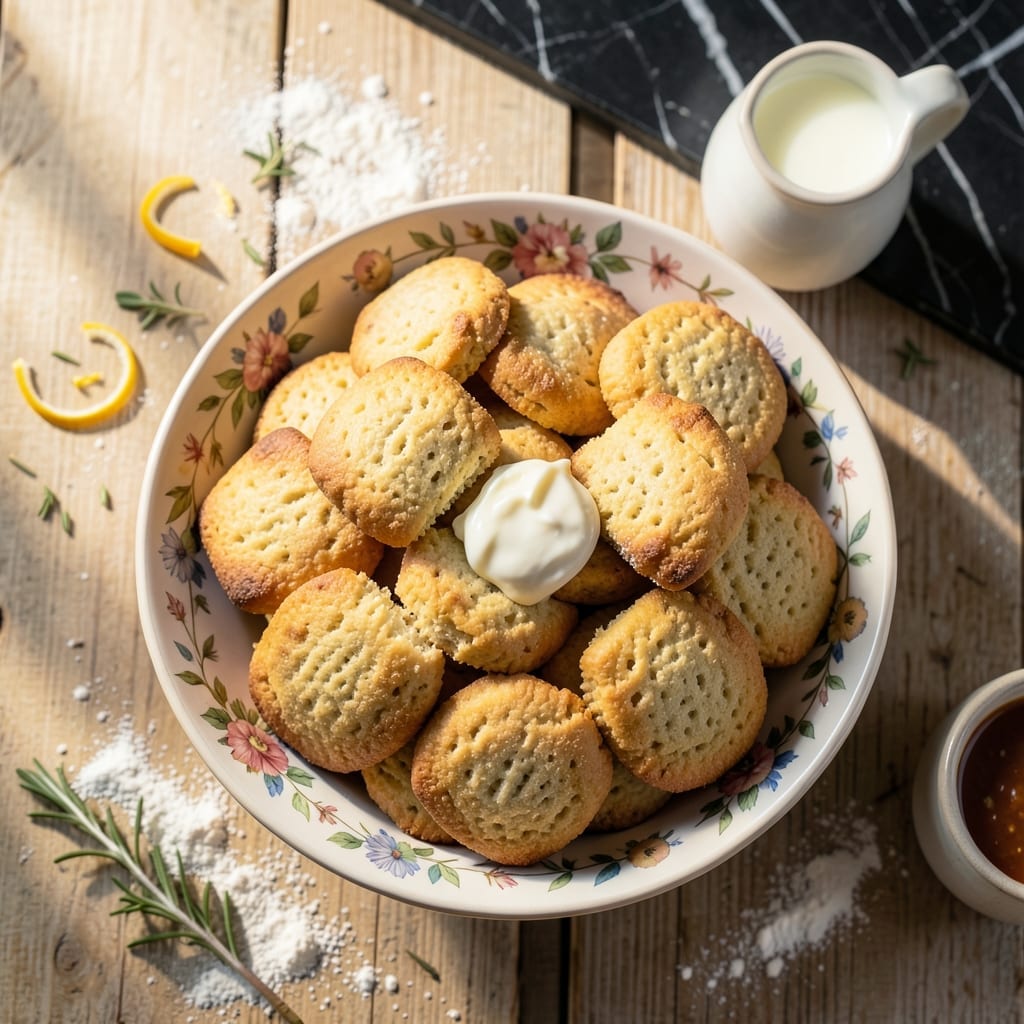
Achieving flaky layers in homemade biscuits is simpler than you might think. This method delivers professional results with minimal effort, using basic pantry staples everyone already has on hand.
The secret lies in cold butter and gentle handling. By keeping the fat solid until baking, you create distinct layers that separate into those coveted flaky sheets we all love in a perfect biscuit.
These biscuits emerge golden and towering, with a tender crumb inside and a slightly crisp exterior. The process takes less than 30 minutes from start to finish, making it ideal for quick meals or last-minute gatherings.
Serve them warm with butter and honey, or alongside your favorite savory dishes. This technique works every time without fail.
Ingredients for Jiffy Biscuits
Basic pantry staples transform into golden, flaky biscuits in minutes.
| Ingredient | Amount | Notes |
|---|---|---|
| All-Purpose Flour 🌾 | 2 cups | Plus extra for dusting surface |
| Baking Powder 🧂 | 1 tbsp | Ensures proper rise |
| Granulated Sugar 🧈 | 1 tbsp | Balances the saltiness |
| Salt 🧂 | 1 tsp | Fine table salt works best |
| Unsalted Butter 🧈 | ½ cup | Very cold, cubed |
| Whole Milk 🥛 | ¾ cup | Cold for flaky layers |
| Baking Soda 🧂 | ½ tsp | Helps with browning |
| Cream of Tartar 🧂 | ½ tsp | Adds extra lift |
| Honey 🍯 | 2 tbsp | Optional for serving |
| Additional Butter 🧈 | 2 tbsp | Melted, for brushing tops |
The butter is everything here. Use unsalted, European-style if possible—it has a higher fat content which means flakier layers. Keep it ice cold until the very last second (I stash mine in the freezer while prepping). Most grocery stores carry Land O’Lakes or store brands that work perfectly. The flour should be all-purpose—King Arthur is my go-to for consistent results (worth the extra dollar).
No milk? Buttermilk at the same amount actually makes them even better. Fresh out of cream of tartar? Skip it—add 0.25 tsp more baking powder instead. Want extra flaky layers? Freeze the cubed butter for 10 minutes before cutting into flour. The honey for serving is totally optional (maple syrup if you prefer).
Baked biscuits are best served warm, straight from the oven. Leftovers keep in an airtight container for 2 days—reheat in a 350°F oven for 5 minutes to revive. Dough can be frozen for 1 month (thaw before baking).
Why You’ll Love This Recipe
- Ready in 15: I can mix, shape, and bake these before the oven even finishes preheating. Honestly, it’s faster than driving to the store for canned biscuits.
- Buttery Layers: The cold unsalted butter creates those flaky, golden layers that melt in your mouth. That first warm bite with a pat of jam? Pure comfort.
- Breakfast to Dinner: I serve them with eggs at dawn and with stew at dusk. My daughter even sneaks one as an after-school snack.
- Pantry Staples: All-purpose flour, sugar, butter—stuff I always have. No last-minute grocery runs, and my wallet stays happy.
Step-by-Step Instructions for Jiffy Biscuits
Here’s how to achieve those buttery, flaky layers with minimal effort and maximum flavor.
Step 1: Combine Dry Ingredients for Perfect Rise
In a large bowl, whisk together the 2 cups All-Purpose Flour, 1 tbsp Baking Powder, 1 tbsp Granulated Sugar, 1 tsp Salt, 0.5 tsp Baking Soda, and 0.5 tsp Cream of Tartar. I like to sift these together to ensure even distribution and prevent any clumps.
This combination of leaveners is what gives the biscuits their lift and flaky texture. The cream of tartar reacts with the baking soda for extra height, while the baking powder ensures a consistent rise. Make sure everything is thoroughly mixed before moving on.
Step 2: Cut in Cold Butter for Flaky Layers
Add the 0.5 cup Unsalted Butter (cubed and very cold) to the dry ingredients. Use a pastry cutter or your fingers to work the butter into the flour until the mixture resembles coarse crumbs with some pea-sized butter pieces remaining. This is key for flakiness.
Here’s the thing—don’t overwork it. You want those little butter chunks to create steam pockets in the oven, which separate the layers. If the butter melts or the mixture looks sandy, pop the bowl in the fridge for 5 minutes to chill before proceeding.
Step 3: Add Milk and Form the Dough
Pour in the 0.75 cup Whole Milk (cold) and stir gently with a wooden spoon or spatula until the dough just comes together. It’ll look shaggy, but that’s perfect. Over-mixing develops gluten, which makes biscuits tough instead of tender.
Turn the dough onto a lightly floured surface (use some of the extra all-purpose flour) and pat it into a 1-inch thick rectangle. Fold the dough in half like a book, then pat it down again. Repeat this 2-3 times to create layers without fully kneading.
Step 4: Cut and Bake to Golden Perfection
Pat the dough to ¾-inch thickness and cut into rounds using a biscuit cutter or glass (about 2.5 inches wide). Press straight down—don’t twist, or the edges won’t rise properly. Place biscuits on a baking sheet lined with parchment paper, touching slightly for softer sides or apart for crispier edges.
Bake in a preheated 450°F oven for 12-15 minutes until the tops are golden brown. Halfway through, I brush the tops with the 2 tbsp Additional Butter (melted) for extra richness and shine. They’re done when they’re tall, flaky, and lightly browned.
Step 5: Serve Warm with Optional Honey
Transfer the biscuits to a wire rack and let them cool for 2 minutes—just enough to handle. Serve warm, split open, and drizzled with the 2 tbsp Honey if you like a touch of sweetness. The layers should pull apart effortlessly, revealing a light, airy interior.
Real talk: these are best fresh out of the oven, but leftovers can be revived in a 300°F oven for 5-10 minutes. The key to their flakiness was keeping everything cold and handling the dough as little as possible.
Pro Tips For Making Jiffy Biscuits
- Chill the Butter: Cut the unsalted butter into small cubes and refrigerate for 10 minutes before mixing—I learned this the hard way after my first few batches turned out flat and dense.
- Measure Flour Right: Spoon the all-purpose flour into your measuring cup and level it off; scooping directly from the bag packs it down and makes biscuits tough.
- Don’t Overmix: Stir just until the dough comes together, even if it looks shaggy—after burning three batches, I finally figured out overworking develops gluten and kills the fluff.
- Hot Oven, Fast Bake: Crank the oven to 425°F and bake on the upper rack for 10-12 minutes; high heat makes them rise fast and brown beautifully before the butter melts out.
Storing and Reheating This Recipe
Room Temperature Storage
For same-day enjoyment, keep biscuits in an airtight container at room temperature. They’ll stay fresh for up to 2 days, though I find they’re best within the first 12 hours. Line the container with a paper towel to absorb excess moisture. 💡
Refrigerator Storage
If storing longer, place cooled biscuits in a resealable bag or airtight container and refrigerate for up to 5 days. Reheat before serving to restore that just-baked warmth and texture. I like using Ziploc bags for convenience.
Freezing Unbaked Dough
Cut dough rounds and freeze on a baking sheet for 1 hour, then transfer to a freezer bag. They’ll keep for 1 month. Bake from frozen, adding 2-3 minutes to the baking time. No need to thaw first.
Reheating in Oven
Preheat oven to 350°F, wrap biscuits in aluminum foil, and warm for 5-10 minutes. For extra crispiness, unwrap and bake for 2 additional minutes. This method revives the flaky layers beautifully. 🔥
Microwave Reheating
Place a biscuit on a microwave-safe plate, cover with a damp paper towel, and heat on 50% power for 20-30 seconds. Check and repeat if needed. This works in a pinch but may soften the texture.
Toaster Oven Tip
Split biscuits in half and toast on low setting for 2-3 minutes. This creates a delightful contrast—crispy edges with a warm, soft center. Perfect for a quick breakfast treat.
Nutrition Facts
Frequently Asked Questions
Can I use buttermilk instead of whole milk?
Buttermilk adds extra tang and tenderness. Use the same 0.75 cup amount and reduce baking powder by ¼ tsp since buttermilk is more acidic. The result will be even flakier!
Why did my biscuits come out flat?
This usually happens if the butter melted before baking or the dough was overworked. Keep butter ice-cold and handle dough minimally. Also, ensure your oven is fully preheated to 450°F.
Can I make these biscuits ahead of time?
Yes! Shape and cut the dough, then freeze on a tray for 1 hour. Transfer to a bag and store for up to 1 month. Bake from frozen, adding 2-3 minutes to the time.

- 6 Egg Cake Recipe with Oil: Light as Air With Buttery Moisture - October 4, 2026
- 4 Bean Casserole Recipe: One-Pan Heartiness With Smoky Paprika Depth - October 4, 2026
- 3-Ingredient Keto Mug Cake Recipe: Microwave Magic in 2 Minutes - October 4, 2026