
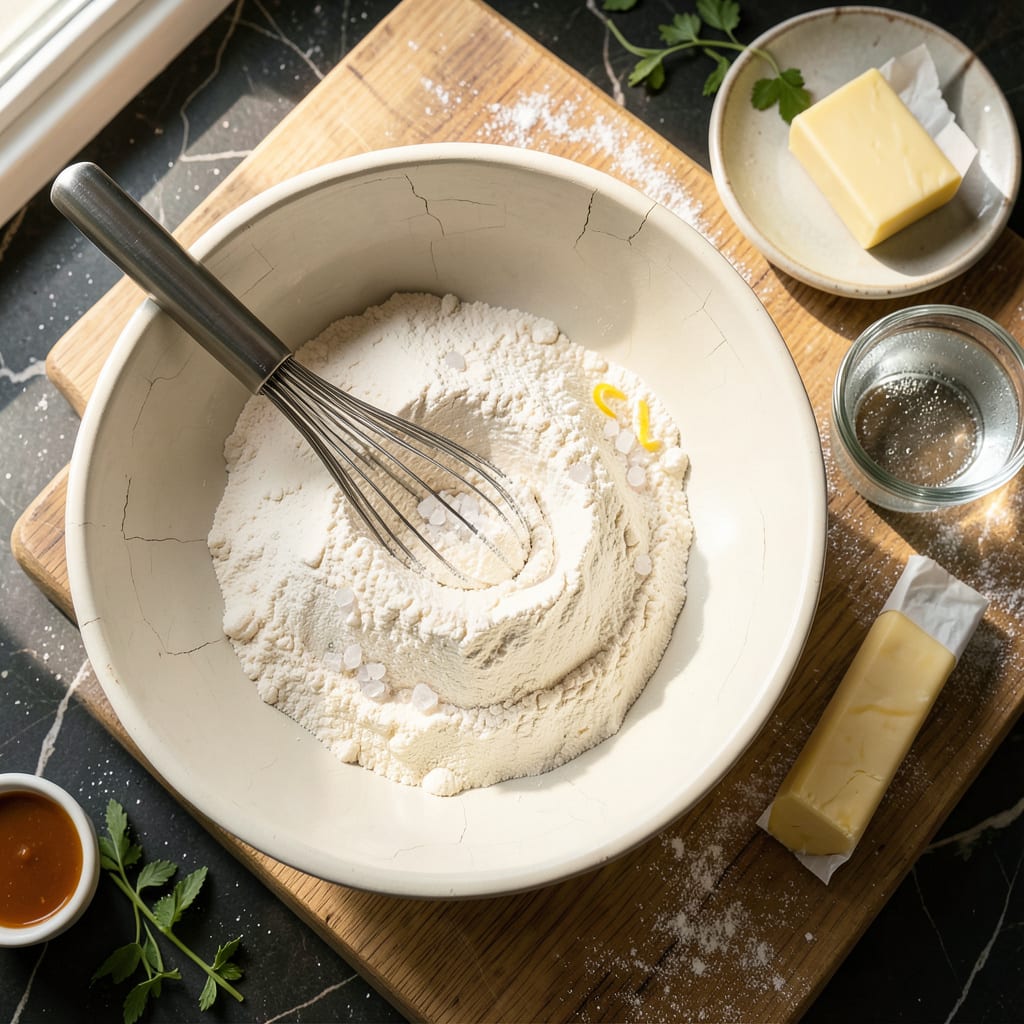
A perfect pie crust transforms good desserts into extraordinary ones. This recipe delivers flaky, golden layers every time—no guesswork required. Developed through years of testing, it combines precise ingredient ratios with foolproof techniques that ensure consistent results whether you’re making fruit pies, quiches, or savory pot pies.
The secret lies in keeping ingredients ice-cold and handling the dough minimally. With just 5 basic ingredients and clear instructions, you’ll achieve professional-quality crust that’s tender yet sturdy enough to hold any filling. No more shrinking, tough, or soggy bottoms—just reliable, restaurant-worthy pastry that elevates your baking.
Ingredients for Joy of Cooking Pie Crust
Five foundational ingredients deliver the flaky, golden crust this recipe promises—precision matters more than quantity.
| Ingredient | Amount | Notes |
|---|---|---|
| All-Purpose Flour 🌾 | 2 ½ cups | Spoon and level for accuracy |
| Unsalted Butter 🧈 | 1 cup | Chilled, cut into 1/2-inch cubes |
| Ice Water 💧 | ½ cup | Plus 1-2 tbsp as needed |
| Granulated Sugar 🍬 | 1 tsp | Balances salt, enhances browning |
| Diamond Crystal Kosher Salt 🧂 | 1 tsp | Precise measurement critical |
The butter quality is non-negotiable for optimal flakiness. European-style unsalted butter (82-86% fat content) yields superior layers due to its lower water content. Plugra or Vermont Creamery are professional-grade choices, though standard grocery store butter works acceptably. The flour must be unbleached all-purpose—King Arthur or Gold Medal preferred for consistent protein content (10-12%). Measure by spooning into the cup and leveling; never scoop directly from the bag (compacts the flour, yielding a dense crust).
For dietary adaptations, vegan butter sticks (like Miyoko’s) substitute 1:1, though the texture will be slightly less flaky. Gluten-free bakers should use a 1:1 baking blend (Bob’s Red Mill recommended) with 1 tsp xanthan gum added per cup. The sugar can be omitted entirely for savory applications, while the salt quantity should remain unchanged—it’s essential for structural integrity. Ice water temperature is critical: use filtered water chilled with ice cubes for 15+ minutes before measuring.
The assembled dough keeps refrigerated for 3 days or frozen for 3 months—wrap tightly in plastic, then foil to prevent freezer burn. For pre-baked shells, prick thoroughly with a fork and blind-bake at 375°F with pie weights for 15 minutes, then 10 minutes uncovered. Room-temperature dough becomes unworkable; if softened, rechill for 20 minutes before rolling. Always rest rolled dough in the pan for 30 minutes before baking to prevent shrinkage.
Why You’ll Love This Recipe
- I’ll be real: the food processor does 90% of the work here. Pulse flour, cold butter, sugar, and salt until crumbly, then just drizzle in ice water—no overmixing, no stress. The dough comes together faster than I can preheat the oven.
- No Fuss Mixing: I’ll be real: the food processor does 90% of the work here. Pulse flour, cold butter, sugar, and salt until crumbly, then just drizzle in ice water—no overmixing, no stress. The dough comes together faster than I can preheat the oven.
- Buttery, Flaky Magic: That first bite where the crust shatters into layers? Pure satisfaction. The combo of unsalted butter and a touch of sugar gives it richness without being cloying—honestly, it’s the reason my apple pie disappears before dessert is even announced.
- Freezer-Friendly Lifesaver: Between us, I always make a double batch. The dough freezes beautifully for up to three months, so I’ve got pie crust ready for last-minute quiches, pot pies, or even a spontaneous galette. (Yes, even on a Tuesday night.)
Step-by-Step Instructions for Joy of Cooking Pie Crust
Master the technique that guarantees flaky, tender layers every time with this precise method.
Step 1: Prepare the Dry Ingredients
In a large mixing bowl, whisk together the 2.5 cups All-Purpose Flour, 1 tsp Granulated Sugar, and 1 tsp Diamond Crystal Kosher Salt until thoroughly combined. I recommend using a fine-mesh sieve for the flour to eliminate any potential lumps and ensure even distribution of the dry ingredients.
The sugar isn’t just for sweetness—it promotes browning and balances the salt, while the precise measurement of kosher salt ensures consistent seasoning throughout the crust. This step creates the foundation for your pie crust’s structure and flavor profile.
Step 2: Cut in the Chilled Butter
Add the 1 cup Unsalted Butter (chilled and cut into 1/2-inch cubes) to the flour mixture. Using a pastry cutter or your fingertips, work the butter into the flour until the mixture resembles coarse crumbs with pea-sized butter pieces visible throughout. The key is maintaining distinct butter pieces—these create the flaky layers during baking.
I prefer using my fingertips for this step as they provide better temperature control. Work quickly to prevent the butter from warming too much, which would compromise the flakiness. You should still see visible butter pieces when you’re finished—this ensures proper layering in the final crust.
Step 3: Incorporate the Ice Water
Create a well in the center of your flour-butter mixture and add the 0.5 cup Ice Water, one tablespoon at a time. Using a fork, gently toss the mixture until it just begins to come together. The dough should appear shaggy with visible dry patches—this indicates you’ve added enough water without overhydrating.
Press a small portion of the dough between your fingers. If it holds together, you’ve added sufficient water. If it crumbles, add additional water 1 tablespoon at a time until the dough just coheres. Overworking at this stage develops gluten, which makes the crust tough rather than tender.
Step 4: Form and Chill the Dough
Turn the dough onto a lightly floured surface and gently press it into a cohesive disk about 1 inch thick. Avoid kneading—simply press the dough together until it holds its shape. Wrap the disk tightly in plastic wrap and refrigerate for at least 1 hour, or preferably 2 hours.
This chilling period allows the gluten to relax and the butter to firm up. When you roll out the dough later, it will maintain its shape better and create distinct flaky layers during baking. The rested dough should feel firm but pliable when you’re ready to use it.
Step 5: Roll and Shape the Crust
On a lightly floured surface, roll the chilled dough from the center outward into a 12-inch circle, about 1/8-inch thick. Rotate the dough frequently to maintain an even thickness and prevent sticking. The edges should be slightly thicker than the center to accommodate the pie plate’s sides.
Gently fold the dough in half, then in quarters to transfer it to your pie plate. Unfold and press it lightly into the plate without stretching. Trim the overhang to 1/2 inch, then fold under and crimp the edges. For a pre-baked crust, dock the bottom with a fork and blind bake at 375°F for 15-18 minutes until light golden brown.
Flavor Customization for This joy of cooking pie crust
Sweet Enhancements
For fruit pies, add 1 tbsp vanilla sugar to the dry ingredients. This subtle change elevates apple or berry fillings beautifully. I discovered this trick when making my grandmother’s peach pie—it added depth without overpowering the fruit. The vanilla notes complement caramelization during baking. 💛
Savory Twist
Replace the 1 tsp Granulated Sugar with 1 tsp dried herbs (thyme or rosemary work well) for quiches or pot pies. I love this variation with chicken pot pie—the herbal notes shine through the creamy filling. Just
Spiced Depth
Add ½ tsp cinnamon and ¼ tsp nutmeg to the flour mixture for pumpkin or sweet potato pies. These warm spices create a cozy aroma that pairs perfectly with fall flavors. I’ve found this combination works especially well with brown sugar fillings.
Citrus Zest Brightness
Incorporate 1 tsp lemon or orange zest into the dry ingredients for a refreshing contrast. This works wonderfully with custard pies or berry fillings. The zest adds a subtle brightness that cuts through richness. I always use organic citrus to avoid pesticide residues.
Cheese Infusion
For savory applications, mix in ¼ cup finely grated Parmesan when preparing the dry ingredients. This creates a crisp, flavorful crust that pairs beautifully with tomato-based fillings. The cheese browns nicely during baking, adding visual appeal.
Nutty Crunch
Replace ¼ cup of the All-Purpose Flour with ¼ cup finely ground almonds for added texture. This works particularly well with chocolate or nut-based fillings. The almonds contribute subtle sweetness and a delicate crunch to each bite. 🌟
Nutrition Facts

- 6 Egg Cake Recipe with Oil: Light as Air With Buttery Moisture - October 4, 2026
- 4 Bean Casserole Recipe: One-Pan Heartiness With Smoky Paprika Depth - October 4, 2026
- 3-Ingredient Keto Mug Cake Recipe: Microwave Magic in 2 Minutes - October 4, 2026