
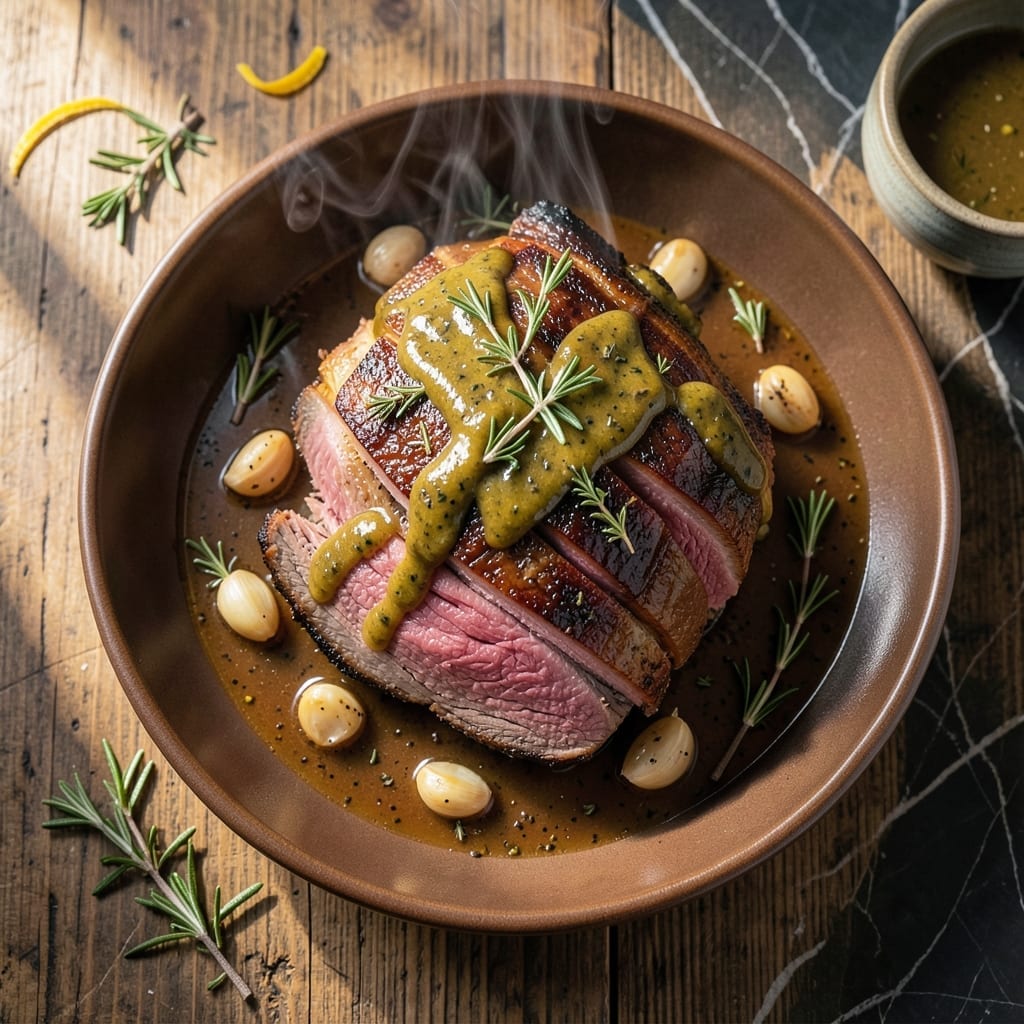
This herb-crusted prime rib transforms holiday dinners into unforgettable feasts with minimal effort and maximum impact.
I developed this method after years of testing, focusing on a simple herb crust that forms a flavorful seal while allowing the beef’s natural richness to shine. The key is a low-and-slow approach that guarantees tender, juicy slices every time.
You’ll achieve a perfectly rosy center with a savory crust that impresses without complicated techniques. The aroma alone signals a special occasion.
Serve with au jus and classic sides for a centerpiece that feels both traditional and elevated.
Ingredients for Joy of Cooking Prime Rib
A bone-in roast, fresh herbs, and a few pantry staples create this holiday centerpiece.
| Ingredient | Amount | Notes |
|---|---|---|
| Prime Rib Roast 🥩 | 5 lb | Bone-in, well-marbled preferred |
| Kosher Salt 🧂 | 2 tbsp | Diamond Crystal brand recommended |
| Freshly Ground Black Pepper 🌶️ | 1 ½ tbsp | Coarse grind preferred |
| Fresh Rosemary 🌿 | 3 tbsp | Finely chopped, stems discarded |
| Fresh Thyme Leaves 🍃 | 2 tbsp | Stems removed before measuring |
| Garlic Cloves 🧄 | 6 cloves | Minced to fine paste |
| Dijon Mustard 🟡 | ¼ cup | High-quality French variety |
| Extra-Virgin Olive Oil 🫒 | ¼ cup | For herb crust binding |
| Red Wine 🍷 | 1 cup | Dry variety like Cabernet |
| Beef Stock 🥩 | 2 cups | Low-sodium preferred |
| Unsalted Butter 🧈 | 4 tbsp | For au jus finishing |
| All-Purpose Flour 🌾 | 1 tbsp | For optional au jus thickening |
The prime rib is the star—look for bright red meat with heavy marbling. Bone-in roasts deliver more flavor and stay juicier. Whole Foods or Costco have great options, but any butcher worth their salt can source a quality cut. Ask for the ribeye end if you want extra richness. The herb crust needs fresh rosemary and thyme, not the dried stuff (that’s for weeknight chicken).
No red wine? Substitute beef stock with a splash of balsamic vinegar. Out of fresh herbs? Double the dried but expect less vibrancy. The Dijon mustard can be yellow in a pinch, but the sharpness of Dijon cuts through the fat better. For the au jus, low-sodium beef stock lets you control the salt—Better Than Bouillon is a solid backup if you’re not making homemade.
The roast can rest at room temp for 2 hours before cooking (or overnight in the fridge for deeper flavor). Leftovers? Slice and freeze for 3 months—perfect for steak sandwiches. Herbs keep in damp paper towels for 5 days.
Why You’ll Love This Recipe
- Set and Forget: That prime rib just needs a rub of salt, pepper, rosemary, and thyme, then the oven does all the work while I sip coffee.
- Herb-Crusted Heaven: The rosemary and thyme form this insane crust that makes every bite taste like a steakhouse special.
- Holiday Hero: I serve this for Christmas and birthdays—always disappears before the desserts even come out.
- Leftovers for Days: Honestly, the sandwiches I make with the extras might be even better than the first meal.
Step-by-Step Instructions for Herb-Crusted Prime Rib
This method delivers a showstopping centerpiece with a fragrant crust and perfect doneness every time.
Step 1: Create the Herb Crust and Prep the Roast
In a small bowl, combine the 2 tbsp Kosher Salt, 1.5 tbsp Freshly Ground Black Pepper, 3 tbsp Fresh Rosemary, 2 tbsp Fresh Thyme Leaves, 6 cloves Garlic Cloves, 0.25 cup Dijon Mustard, and 0.25 cup Extra-Virgin Olive Oil. Stir until it forms a thick, fragrant paste. I like to let this sit for 10 minutes to let the flavors meld.
Pat the 5 lb Prime Rib Roast completely dry with paper towels. This is critical—any moisture prevents the crust from adhering properly. Place the roast bone-side down on a rack in a roasting pan. Spread the herb paste evenly over the entire surface, pressing it in firmly so it forms a thick, even layer.
Step 2: Roast at High Heat for a Perfect Crust
Preheat your oven to 450°F. Position the roast in the center of the oven and cook for 30 minutes. This initial high heat creates that beautiful, flavorful crust on the outside while keeping the inside juicy.
You’ll know it’s working when you see the herb paste transform into a deep golden-brown crust and the kitchen fills with an incredible aroma. Don’t open the oven door during this time—consistent heat is key for that perfect sear.
Step 3: Reduce Heat and Roast to Desired Doneness
After the initial high-heat sear, reduce the oven temperature to 325°F. Continue roasting until the internal temperature reaches your desired doneness: 120-125°F for rare, 130-135°F for medium-rare, or 140-145°F for medium.
For a 5 lb roast, this typically takes 1.5 to 2 hours total cooking time, but always use a meat thermometer for accuracy. I check the temperature in the thickest part of the meat, avoiding the bone. The roast is ready when it reaches 10°F below your target temperature, as it will continue cooking while resting.
Step 4: Rest and Prepare the Au Jus
Transfer the roast to a cutting board, tent loosely with foil, and let it rest for 20-30 minutes. This allows the juices to redistribute, ensuring every slice is tender and flavorful. Meanwhile, place the roasting pan on the stovetop over medium heat.
Add the 1 cup Red Wine to the pan and scrape up all the browned bits with a wooden spoon. Simmer for 3-4 minutes until reduced by half. Add the 2 cups Beef Stock and 4 tbsp Unsalted Butter, then simmer for another 5 minutes. For a thicker sauce, whisk in the 1 tbsp All-Purpose Flour and cook for 1-2 minutes until slightly thickened.
Step 5: Carve and Serve with Au Jus
After resting, carve the roast by slicing between the bones to separate them, then cut the meat into thick slices. Arrange the slices on a platter and drizzle some of the au jus over the top. Serve the remaining au jus on the side for dipping.
Each slice should have a beautiful, herb-speckled crust and a tender, juicy interior. The au jus adds an extra layer of richness that ties the whole dish together perfectly.
Pro Tips For Making Joy Of Cooking Prime Rib
- Dry the Roast: Pat the prime rib thoroughly dry with paper towels before seasoning—this guarantees a better crust and prevents steaming in the oven.
- Season Overnight: Salt the roast at least 12 hours ahead (I do it the night before) so the seasoning penetrates deep into the meat, not just the surface.
- Start High, Finish Low: Sear at 450°F for 20 minutes, then drop to 325°F for the rest of the cooking time to get that perfect browned exterior and even doneness.
- Rest Under Foil: Tent the cooked roast with foil and let it rest 20-30 minutes before slicing—this keeps all the juices locked in, not on your cutting board.
Dietary Considerations for These Flavors
Gluten-Free Adaptation
This recipe is naturally gluten-free if you skip the optional 1 tbsp All-Purpose Flour in the au jus. Instead, thicken with a cornstarch slurry—mix 1 tsp cornstarch with 1 tbsp cold water and whisk in at the end. I’ve tested this method with great success, and the texture remains silky smooth. 💪
Dairy-Free Modification
Replace the 4 tbsp Unsalted Butter in the au jus with olive oil or dairy-free butter like Miyoko’s. The flavor will be just as rich, and the sauce will still cling beautifully to each slice. Honestly, I barely notice the difference when making this swap.
Low-Sodium Options
Use low-sodium beef stock and reduce the 2 tbsp Kosher Salt in the herb crust to 1 tbsp. Boost flavor with extra herbs or a splash of balsamic vinegar in the au jus. It’s an easy tweak that keeps the dish just as satisfying.
Keto-Friendly Version
This dish fits perfectly into a keto diet as-is, with 0g net carbs from the prime rib itself. Just ensure your au jus thickener is keto-approved, like xanthan gum instead of flour. The rich, fatty cut aligns perfectly with keto macros. ✨
Allergen Considerations
The primary allergens here are mustard in the Dijon and potential dairy in the butter. For mustard-free versions, substitute 1 tbsp horseradish for a similar sharpness. Always check labels on beef stock for hidden allergens like soy or wheat.
Paleo Adjustments
This recipe is nearly paleo by default—just verify your Dijon mustard contains no added sugars or non-paleo additives. I use Primal Kitchen’s mustard for a clean, compliant option. The herb crust and au jus need no other changes.
Nutrition Facts
Frequently Asked Questions
What’s the ideal internal temperature for medium-rare?
Remove the roast when it reaches 125°F internally. It will rise to 130-135°F during resting, giving you perfect medium-rare with a rosy center.
How long should the roast rest before carving?
Let it rest for 20-30 minutes after cooking. This allows juices to redistribute, ensuring each slice stays moist and flavorful. Skipping this step risks dry meat.
Can I use dried herbs instead of fresh?
Yes, but use 1/3 the amount since dried herbs are more concentrated. The flavor won’t be as vibrant, but it’ll still work in a pinch.
What if my crust burns during cooking?
Tent the roast loosely with foil if the crust browns too quickly. Reduce oven temperature by 25°F if needed. The crust should be deep golden, not blackened.

- 6 Egg Cake Recipe with Oil: Light as Air With Buttery Moisture - October 4, 2026
- 4 Bean Casserole Recipe: One-Pan Heartiness With Smoky Paprika Depth - October 4, 2026
- 3-Ingredient Keto Mug Cake Recipe: Microwave Magic in 2 Minutes - October 4, 2026