
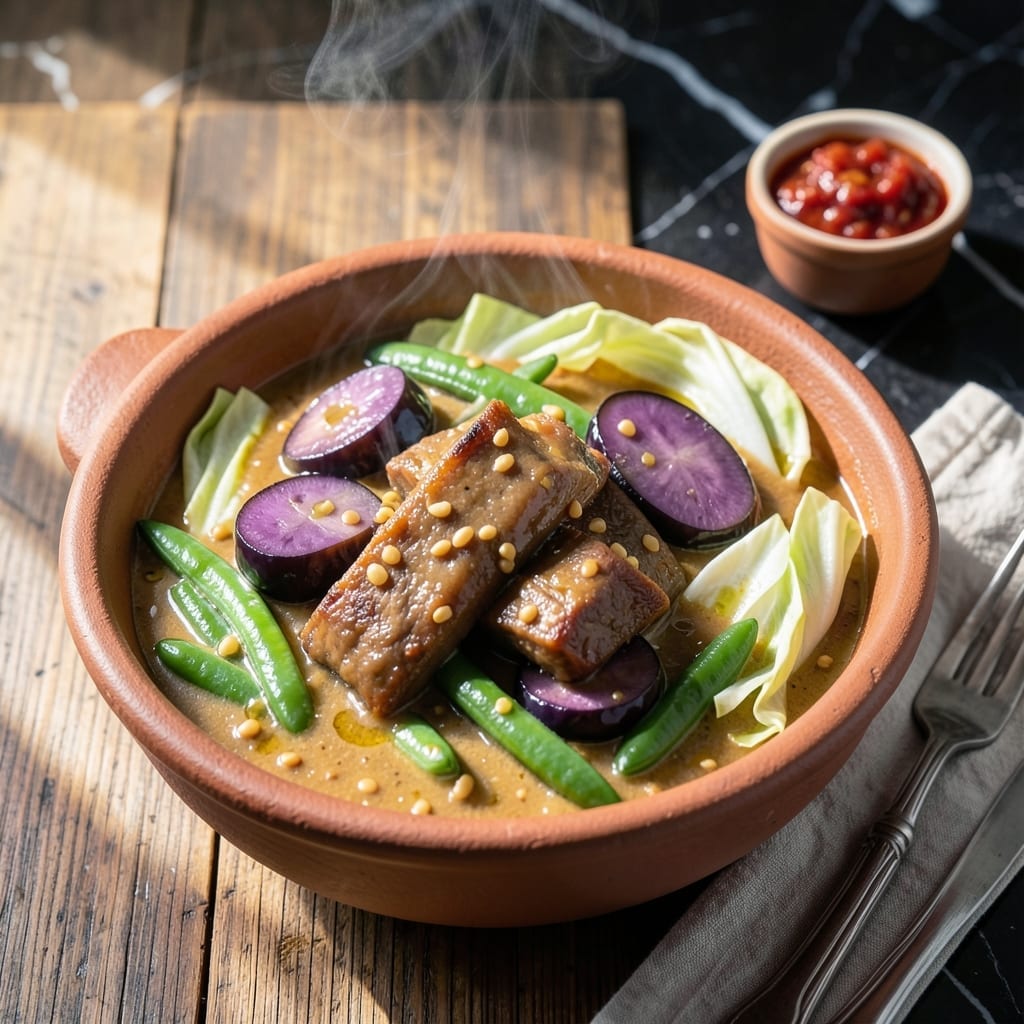
This traditional Filipino dish features tender oxtail in a rich peanut sauce, elevated with a bagoong twist for authentic flavor.
Slow-cooked to perfection, this creation combines hearty meat, vegetables, and a velvety sauce that stays true to its cultural roots.
Ingredients for Kare Kare Recipe Philippines
Rich peanut sauce, tender oxtail, and vegetables create this beloved Filipino classic with authentic depth.
| Ingredient | Amount | Notes |
|---|---|---|
| Oxtail 🐂 | 2 ½ lb | Cut into 2-inch pieces, trimmed of excess fat |
| Peanut Butter 🥜 | ¾ cup | Creamy, unsweetened preferred |
| Bagoong Alamang 🦐 | ½ cup | Shrimp paste, Filipino variety |
| Eggplant 🍆 | 1 whole | Asian long variety preferred, sliced |
| Chinese Cabbage 🥬 | 1 whole | Napa or bok choy, cut into wedges |
| String Beans 🌿 | ½ lb | Green beans, trimmed |
| Onion 🧅 | 1 whole | Yellow or white, quartered |
| Garlic Cloves 🧄 | 6 cloves | Peeled and crushed |
| Ginger Root 🌿 | 2 tbsp | Peeled and sliced |
| Annatto Seeds 🌶️ | 1 tsp | For natural coloring, soaked in oil |
| Ground Black Pepper 🌶️ | 1 tsp | Freshly ground preferred |
| Fish Sauce 🐟 | 2 tbsp | Patis or Thai tiparos, for umami |
| Beef Stock 🥩 | 4 cups | Low-sodium preferred |
| Toasted Rice Powder 🍚 | 2 tbsp | grounding for thickening sauce |
| Cooking Oil 🫒 | 3 tbsp | Neutral-flavored like vegetable or canola |
The oxtail is non-negotiable for authenticity—look for meaty pieces with good marbling at your butcher or Filipino markets like Seafood City. Bagoong alamang, the fermented shrimp paste, is the soul of the dish; Mama Sita’s or Barrio Fiesta brands are widely available. For the peanut sauce, natural, unsweetened peanut butter avoids the added sugars found in commercial brands, ensuring the sauce’s rich, savory profile.
No oxtail? Beef shank or short ribs work as substitutes, though the texture will differ slightly. Bagoong not an option? Fish sauce mixed with a bit of miso can mimic the umami, but it won’t be the same. Asian eggplants are ideal, but regular eggplants cut into chunks are fine. For the annatto, if unavailable, a pinch of turmeric or paprika can add color without altering the flavor too much.
The stew tastes even better the next day as flavors meld. Store leftovers in an airtight container in the fridge for up to 4 days, or freeze for 3 months. Reheat gently to avoid breaking the oxtail’s tenderness.
Why You’ll Love This Recipe
- One Pot Wonder: Honestly, I just dump oxtail, peanut butter, and veggies in one pot and let it simmer—minimal cleanup, maximum flavor.
- Rich Peanut Depth: That thick, nutty sauce from peanut butter and bagoong alamang? I could eat it with a spoon.
- Crowd Pleaser: I serve this at gatherings, and even my picky cousin goes back for seconds.
- Better Next Day: Leftovers taste even richer. I make extra just for lunch the next day.
Step-by-Step Instructions for Peanut-Stewed Oxtail With Bagoong
Master this traditional Filipino technique with precise timing and authentic flavor development.
Step 1: Sear and Brown the Oxtail
Heat the 3 tbsp Cooking Oil in a large Dutch oven or heavy pot over medium-high heat. Add the 2.5 lb Oxtail pieces and sear for 5-7 minutes until deeply browned on all sides. This creates the flavor foundation for the stew.
I sear in batches to avoid crowding the pan, which ensures proper browning rather than steaming. The oxtail should develop a rich, dark crust. Remove the oxtail and set aside. The fond left in the pot will dissolve into the sauce later.
Step 2: Build the Aromatic Base
In the same pot, add the quartered 1 whole Onion, 6 cloves Garlic Cloves, and 2 tbsp Ginger Root. Sauté for 3-4 minutes until the onion softens and becomes translucent. The aromatics should release their fragrance without browning.
Add the soaked 1 tsp Annatto Seeds (with their soaking oil) and stir for 1 minute to infuse the oil with color. This gives the dish its characteristic golden hue. Be careful not to burn the annatto seeds as they can turn bitter.
Step 3: Simmer the Oxtail to Tenderness
Return the oxtail to the pot and pour in the 4 cups Beef Stock. Add the 2 tbsp Fish Sauce and 1 tsp Ground Black Pepper. Bring to a boil, then reduce heat to low, cover, and simmer for 2.5-3 hours until the meat is fork-tender and nearly falling off the bone.
Check occasionally and skim off any foam that rises to the surface. The liquid should reduce slightly but not completely. If it reduces too much, add a bit of water to maintain the level. The oxtail is done when it pulls away from the bone easily with a fork.
Step 4: Add Vegetables and Thicken the Sauce
Once the oxtail is tender, add the 1 whole Eggplant, 1 whole Chinese Cabbage, and 0.5 lb String Beans. Simmer for 10-12 minutes until the vegetables are tender-crisp. The eggplant should be soft but still hold its shape.
Stir in the 0.75 cup Peanut Butter and 2 tbsp Toasted Rice Powder until fully incorporated. The sauce will thicken slightly and become velvety. Simmer for an additional 5 minutes to meld all the flavors together.
Step 5: Serve with Bagoong Alamang
Taste and adjust the seasoning if needed, though the fish sauce and peanut butter should provide enough saltiness. Transfer to a serving dish and serve hot with the 0.5 cup Bagoong Alamang on the side for dipping.
The stew should have a rich, nutty aroma with a balance of savory and slightly sweet flavors. Each bite should deliver tender oxtail and vegetables coated in a thick, peanut-infused sauce. The bagoong alamang adds a salty, umami punch that complements the dish perfectly.
Pro Tips For Making Kare Kare Recipe Philippines
- Parboil the Oxtail: I learned this the hard way—boil the oxtail for 5-10 minutes first, then drain and rinse to remove impurities and keep the stew clean.
- Toast the Peanut Butter: Sounds weird but it works—lightly toasting 2 tablespoons of peanut butter in the pot before adding liquid deepens the nutty flavor.
- Salt the Eggplant: Sprinkle sliced eggplant with salt and let it sit for 10 minutes to draw out bitterness, then pat dry before adding to the stew.
- Skip the Pre-Cooked Bagoong: My grandmother swore by this: use fresh bagoong alamang instead of pre-cooked for a stronger, more authentic fermented shrimp taste.
Best Sauces and Condiments for This Recipe
Spicy Options 🔥
For those who love heat, bagoong (fermented shrimp paste) is the classic pairing for kare kare. You can make it at home by sautéing minced shrimp paste with garlic, onions, and a bit of vinegar for a bold, umami-rich kick. If you prefer store-bought, Barrio Fiesta or Datu Puti offer reliable options. For an extra fiery twist, mix in some siling labuyo (Bird’s Eye chili) or a dash of hot sauce like Sriracha.
Sweet and Tangy
A sweet and tangy sauce can balance the richness of the peanut stew. Try a homemade mix of banana ketchup and a splash of calamansi juice for a uniquely Filipino touch. Store-bought Jufran Banana Catsup works well in a pinch. Another great option is a vinegar-based dip with a hint of sweetness—combine white vinegar, minced garlic, and a teaspoon of sugar for a quick, refreshing condiment.
Creamy and Rich
To enhance the dish’s velvety texture, consider a creamy sauce. A simple peanut satay dip made with crushed peanuts, coconut milk, and a touch of brown sugar complements the stew beautifully. For a store-bought alternative, Mama Sita’s Peanut Sauce is a convenient choice. If you’re feeling adventurous, a dollop of queso de bola (Edam cheese) grated on top adds a delightful salty contrast.
Nutrition Facts

- 6 Egg Cake Recipe with Oil: Light as Air With Buttery Moisture - October 4, 2026
- 4 Bean Casserole Recipe: One-Pan Heartiness With Smoky Paprika Depth - October 4, 2026
- 3-Ingredient Keto Mug Cake Recipe: Microwave Magic in 2 Minutes - October 4, 2026