
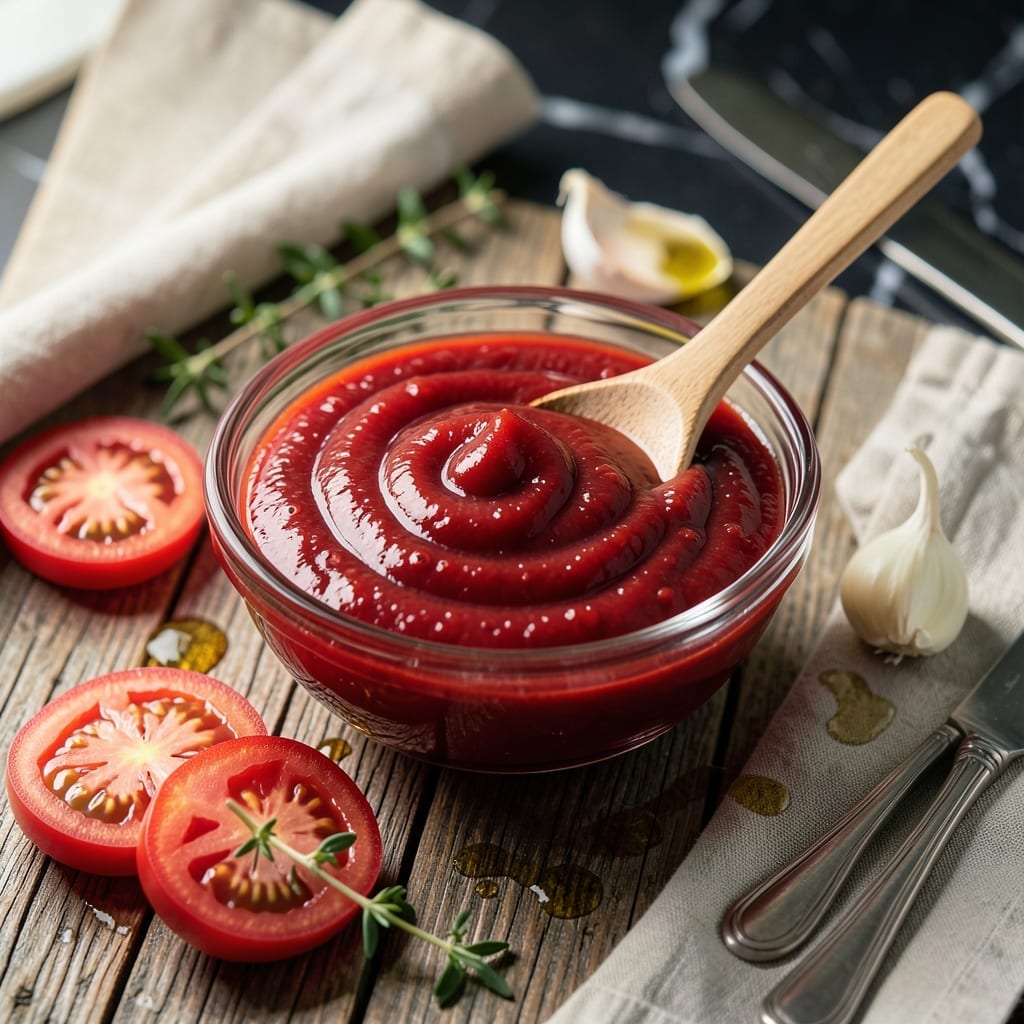
There’s a satisfying depth to homemade condiments that store-bought versions simply can’t match. This version delivers bold flavor without the excessive sugar found in commercial products.
Using tomato paste as a base creates a richer, more concentrated ketchup with complex umami notes. The process is straightforward yet rewarding, with spices and vinegar balancing the natural sweetness of the tomatoes.
What emerges is a versatile condiment that elevates burgers, fries, and even meatloaf. The texture is smooth and pourable, with a vibrant red color that looks as good as it tastes.
Make a batch and store it in the fridge for up to three weeks. The flavor only improves with time.
Ingredients for Ketchup Recipe Tomato Paste
Ten simple ingredients transform into bold, sugar-conscious condiment perfection.
| Ingredient | Amount | Notes |
|---|---|---|
| Tomato Paste 🍅 | 1 can | 6 oz can, no salt added |
| Apple Cider Vinegar 💧 | ½ cup | 5% acidity preferred |
| Water 💧 | ½ cup | Filtered for best taste |
| Maple Syrup 🍁 | 2 tbsp | Or agave nectar for sweetness |
| Onion Powder 🧅 | 1 tsp | Freshly ground if possible |
| Garlic Powder 🧄 | 1 tsp | Not garlic salt substitute |
| Ground Mustard 🟡 | ½ tsp | Adds tangy depth |
| Paprika 🌶️ | ½ tsp | Sweet or smoked variety |
| Ground Cloves 🌿 | ¼ tsp | Sparingly for warmth |
| Salt 🧂 | 1 tsp | Fine sea salt preferred |
The tomato paste is the foundation—San Marzano or Muir Glen brands offer superior depth without additives. Vinegar choice matters: apple cider vinegar provides the right acidity balance (avoid white vinegar, too harsh). For the sweetener, pure maple syrup from Whole Foods or Trader Joe’s ensures clean flavor without refined sugar.
Out of apple cider vinegar? White wine vinegar works at a 1:1 ratio. No maple syrup? Agave nectar or date syrup at equal amounts. Mustard powder can replace ground mustard at half the quantity. For a smokier profile, smoked paprika instead of sweet adds complexity. The cloves are potent—start with 1/8 tsp if sensitive to spice.
This keeps 3 weeks refrigerated in a glass jar. The flavor deepens over time (worth the wait). For longer storage, freeze in ice cube trays—thaw only what you need. Always use clean, dry utensils to prevent spoilage.
Why You’ll Love This Recipe
- 5-Minute Mix: I just dump everything in a pot—tomato paste, vinegar, a splash of water—and it thickens up fast.
- Sweet-Tangy Balance: The maple syrup and apple cider vinegar hit that perfect sweet-and-sour note every time.
- Pantry Staple: I keep a jar in the fridge for burgers, fries, or quick dipping sauces all week long.
- Budget Winner: One can of tomato paste makes multiple batches, and it’s way cheaper than store-bought.
Step-by-Step Instructions for Homemade Tomato Paste Ketchup
This method ensures a smooth, balanced condiment with complex flavor development.
Step 1: Combine Tomato Base and Liquids
In a medium saucepan, combine the 1 can Tomato Paste, 0.5 cup Apple Cider Vinegar, and 0.5 cup Water. Use a whisk to break up the tomato paste completely, ensuring no lumps remain in the mixture.
The vinegar’s acidity begins activating the tomato’s natural pectin, which will help achieve the perfect ketchup consistency. You’ll notice the mixture darkens slightly as the tomato paste dissolves fully into the liquids.
Step 2: Incorporate Sweetener and Spices
Add the 2 tbsp Maple Syrup, 1 tsp Onion Powder, 1 tsp Garlic Powder, 0.5 tsp Ground Mustard, 0.5 tsp Paprika, 0.25 tsp Ground Cloves, and 1 tsp Salt to the saucepan. Stir thoroughly to distribute all spices evenly throughout the mixture.
The maple syrup balances the acidity while the spices create depth. I always add the ground cloves last – their potent flavor needs careful distribution to avoid overpowering the blend. The mixture should appear uniformly colored with no visible spice particles.
Step 3: Simmer for Flavor Concentration
Place the saucepan over medium-low heat and bring to a gentle simmer. Reduce heat to low and let it cook for 20-25 minutes, stirring occasionally with a silicone spatula to prevent sticking.
You’ll see the mixture thicken gradually as excess moisture evaporates. The color will deepen to a rich, brick-red hue. The aroma shifts from sharp vinegar notes to a warm, spiced tomato fragrance when it’s properly developed. Watch for small bubbles breaking the surface slowly – this indicates the correct simmering temperature.
Step 4: Achieve Final Consistency
After 20 minutes, begin checking the thickness by dragging a spoon through the mixture. It should leave a trail that holds its shape briefly before flowing back together. Continue simmering for 5-10 additional minutes if needed until reaching ketchup-like viscosity.
The final product should coat the back of a spoon thickly and drip off slowly in sheets rather than watery droplets. I test this by dipping a cold spoon in – the ketchup should cling and maintain its shape momentarily. The volume will reduce by about one-third during this process.
Step 5: Cool and Store
Remove from heat and let cool to room temperature, about 1 hour. The mixture will thicken slightly more as it cools. Transfer to a clean glass jar or airtight container.
Store in the refrigerator for up to 3 weeks. The flavors will meld and mellow over the first 24-48 hours, so I recommend waiting at least a day before first use. This resting period allows the spices to fully infuse the tomato base, creating the signature bold flavor profile.
Pro Tips For Making Ketchup Recipe Tomato Paste
- Simmer Low and Slow: Keep the heat at a gentle simmer—too high and the vinegar will overpower the tomato paste before the flavors meld. I learned this the hard way after scorching my first two batches.
- Bloom the Onion Powder: Toast the onion powder in the pot for 30 seconds before adding liquids. Sounds weird, but it works: it wakes up the flavor so your ketchup doesn’t taste flat.
- Thin Gradually: Add water a little at a time until you hit your preferred thickness. Dumping it all in at once makes it easy to overshoot and end up with tomato soup instead of ketchup.
- Balance with Maple: Taste before the final simmer and adjust the maple syrup—sometimes you need an extra teaspoon to cut the vinegar’s sharpness, especially if your tomato paste is extra tangy.
Essential Equipment for Perfect Results
Saucepan Selection
I always reach for my 3-quart stainless steel saucepan from All-Clad for this recipe. The even heat distribution prevents hot spots that can scorch the tomato paste. A heavy-bottomed pan is essential for the long simmer.
Whisk Matters
A flat-bottomed whisk helps break up the tomato paste completely in the initial stages. I use my OXO Good Grips whisk—it’s sturdy and the flat edge gets into the pan’s corners. Avoid wooden spoons for this step as they don’t blend as effectively.
Measuring Tools
Precision matters with spices, so I keep my stainless steel measuring spoons from Cuisinox handy. They’re durable and the long handles fit deep into spice jars. For the vinegar and water, a 1-cup glass measuring cup works perfectly. 💡
Silicone Spatula
During simmering, a heat-resistant silicone spatula prevents sticking and helps you scrape every bit of flavor from the pan. I prefer the one-piece design from Di Oro—it won’t melt or warp at high temperatures.
Storage Containers
For storing your finished ketchup, 8-ounce glass mason jars are ideal. I use Ball Mason jars with airtight lids. They’re easy to clean, don’t absorb odors, and let you see the beautiful color of your creation. 🥫
Cooling Rack
After cooking, transfer your saucepan to a wire cooling rack to speed up the cooling process. This prevents the bottom from overcooking while the top cools. I’ve found this simple step makes a noticeable difference in texture consistency.
Nutrition Facts
Frequently Asked Questions
Can I use tomato sauce instead of paste?
No, tomato sauce is too thin and watery for this recipe. Tomato paste provides the concentrated flavor and thickness needed. You’d need to cook sauce down significantly, which would alter the flavor balance and take much longer.
How do I adjust the sweetness?
Start with the 2 tablespoons of sweetener, then taste after simmering. Add more maple syrup in 1 teaspoon increments if needed. For less sweetness, reduce to 1 tablespoon or use a sugar-free alternative.
Why did my ketchup turn out watery?
It likely didn’t simmer long enough. Return it to low heat and cook for an additional 10-15 minutes, stirring frequently. The mixture should coat the back of a spoon thickly when done.
What’s the best vinegar substitute?
White wine vinegar works in a 1:1 ratio but has a sharper taste. Rice vinegar is milder but may require extra sweetener. Avoid balsamic—its strong flavor will overpower the blend.

- 6 Egg Cake Recipe with Oil: Light as Air With Buttery Moisture - October 4, 2026
- 4 Bean Casserole Recipe: One-Pan Heartiness With Smoky Paprika Depth - October 4, 2026
- 3-Ingredient Keto Mug Cake Recipe: Microwave Magic in 2 Minutes - October 4, 2026