
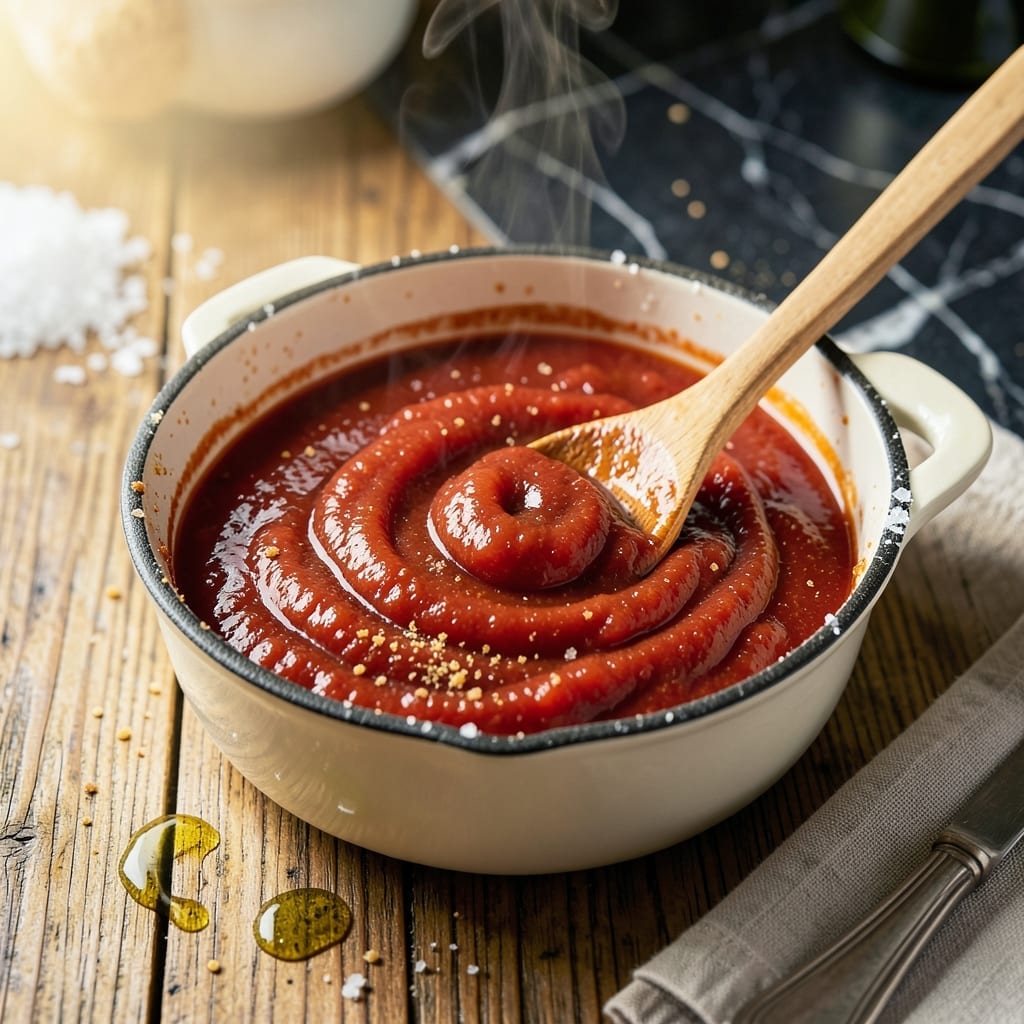
This homemade ketchup delivers bold flavor that puts store-bought versions to shame. Using tomato paste as the base creates a richer, more concentrated taste that’s both sweet and tangy.
The process is straightforward yet precise, combining simple ingredients like vinegar, sugar, and spices with the paste. Simmering for just 15 minutes allows the flavors to meld perfectly.
What you get is a thick, glossy sauce with depth and complexity. It coats fries, burgers, or eggs with a vibrant punch that’s impossible to resist.
Make a batch today and enjoy the satisfaction of using your own creation. This recipe keeps well for weeks in the fridge.
Ingredients for Ketchup Recipe with Tomato Paste
Ten pantry staples transform into bold, tangy, glossy homemade ketchup in minutes.
| Ingredient | Amount | Notes |
|---|---|---|
| Tomato Paste 🍅 | 1 can | 6 oz can, no salt added |
| Apple Cider Vinegar 🍏 | ½ cup | 5% acidity preferred |
| Granulated Sugar 🍚 | ½ cup | Or substitute coconut sugar |
| Light Brown Sugar 🟤 | ¼ cup | Packed, for depth |
| Onion Powder 🧅 | 1 tbsp | Freshly ground if possible |
| Garlic Powder 🧄 | 1 tbsp | Not garlic salt |
| Ground Mustard 🌿 | ½ tsp | For tangy kick |
| Ground Allspice 🌶️ | ¼ tsp | Essential for complexity |
| Ground Cloves 🌿 | ¼ tsp | Freshly ground ideal |
| Salt 🧂 | 1 ½ tsp | Diamond Crystal preferred |
The tomato paste base is non-negotiable here. San Marzano paste (sold in tubes at Whole Foods or Trader Joe’s) has the richest flavor, but any unsalted canned variety works. Apple cider vinegar gives that signature tang—white vinegar lacks depth. For the sugars, don’t skip the brown sugar; its molasses notes balance the acidity perfectly (worth the extra minute).
No brown sugar? Maple syrup at three-quarters the amount works, though it’ll be slightly thinner. Swap onion powder for fresh minced onion cooked down, but reduce the moisture elsewhere. Out of allspice? Cinnamon plus nutmeg gets close. The cloves can be skipped in a pinch, but they add that subtle warmth that makes this taste complex. Always taste before final salting—tomato paste varies in sodium.
This keeps 4-6 weeks in the fridge in a clean jar. For longer storage, freeze in ice cube trays, then transfer to a bag. Thaw overnight when needed. The flavor actually deepens after 24 hours, so resist the urge to dive in right away (don’t worry, it’s worth the wait).
Why You’ll Love This Recipe
- 5-Minute Mix: I just dump everything in a pot—tomato paste, vinegars, sugars—and let it simmer while I set the table.
- Sweet-Tangy Balance: Honestly, the apple cider vinegar with both sugars hits that classic ketchup zing without being cloying.
- Pantry MVP: Between us, I use this on burgers, fries, even as a base for BBQ sauce when I’m in a pinch.
- Stretches Further: One batch fills a jar and keeps for weeks, so I’m not buying store ketchup every other grocery run.
Step-by-Step Instructions for Ketchup With Tomato Paste
This method transforms simple ingredients into rich, tangy ketchup with minimal effort.
Step 1: Combine the Base Ingredients
In a medium saucepan, add the 1 can Tomato Paste, 0.5 cup Apple Cider Vinegar, 0.5 cup Granulated Sugar, and 0.25 cup Light Brown Sugar. I always use a whisk here to break up the thick tomato paste and ensure it blends smoothly with the liquids.
Stir until the mixture is uniform and no dry pockets of sugar remain. The apple cider vinegar will start to loosen the tomato paste immediately, but you’ll need to keep stirring for about 1-2 minutes to get a completely smooth base. This is your foundation—get it right.
Step 2: Add the Spices and Seasonings
Now, whisk in the 1 tbsp Onion Powder, 1 tbsp Garlic Powder, 0.5 tsp Ground Mustard, 0.25 tsp Ground Allspice, 0.25 tsp Ground Cloves, and 1.5 tsp Salt. Each spice plays a role here: the mustard adds tang, the allspice and cloves provide warmth, and the salt balances everything out.
I add them all at once to simplify the process, but make sure to whisk vigorously to distribute the spices evenly. You’ll notice the mixture darken slightly as the spices incorporate. Don’t skip this step—it’s where the depth of flavor develops.
Step 3: Simmer to Develop Flavor and Thickness
Place the saucepan over medium-low heat and bring the mixture to a gentle simmer. Stir frequently to prevent sticking, especially as it starts to thicken. You’re looking for small bubbles to form at the edges—this indicates it’s simmering, not boiling.
Let it cook for 20-25 minutes, stirring occasionally. The ketchup will reduce and thicken, and the raw edge of the vinegar will mellow into a smooth, balanced tang. You’ll know it’s ready when it coats the back of a spoon and holds a line when you draw your finger through it.
Step 4: Cool and Adjust Consistency
Remove the saucepan from heat and let the ketchup cool to room temperature, about 30-45 minutes. As it cools, it will thicken further. This is normal—homemade ketchup is naturally thicker than store-bought versions.
If you prefer a smoother texture, use an immersion blender to puree it until silky. Taste and adjust seasoning if needed, though I find the balance is usually perfect as is. Transfer to an airtight jar and refrigerate. It’ll keep for up to 2 weeks in the fridge.
Pro Tips For Making Ketchup Recipe With Tomato Paste
- Simmer Low and Slow: Cook the mixture on low heat for at least 20-30 minutes, stirring often—rushing it with high heat can scorch the sugars and leave a bitter taste.
- Bloom the Onion Powder: Toast the onion powder in the pot for 30 seconds before adding liquids to wake up its flavor, or it’ll taste flat and dusty.
- Balance the Vinegar: Apple cider vinegar can overpower if you’re heavy-handed; start with half the amount, taste, then add more if needed.
- Use Double-Strength Paste: If your tomato paste is watery, cook it down first until it darkens—this concentrate builds deeper, richer ketchup without extra time later.
Essential Equipment for This Recipe
Heavy Saucepan
A 2-3 quart heavy-bottomed saucepan prevents scorching during simmering. I use my All-Clad Stainless Steel for even heat distribution. Thin pans cause hot spots that burn the sugar in this recipe. 🔥
Whisk for Smoothness
A sturdy stainless steel whisk breaks up the thick tomato paste completely. I prefer the OXO Good Grips 11-inch for reaching all corners of the pan. Wooden spoons won’t dissolve the paste as effectively.
Fine Mesh Strainer
For ultra-smooth ketchup, press the finished sauce through a fine mesh strainer. This catches any undissolved spices or tomato paste fibers. I use my Cuisinox strainer—it’s durable and won’t bend under pressure.
Immersion Blender
An immersion blender creates a silky texture in seconds. I recommend the Breville Control Grip for its power and easy cleaning. Process directly in the saucepan to minimize dishes.
Glass Storage Jars
Store your creation in clean 16-ounce glass mason jars. The Ball Mason brand with airtight lids keeps the ketchup fresh for 4-6 weeks. Avoid metal containers that can react with the acidity. ✨
Measuring Tools
Accurate measurements matter for consistent flavor. I use OXO measuring cups for dry ingredients and a Pyrex liquid measuring cup for vinegar. A set of measuring spoons handles the spices precisely.
Nutrition Facts
Frequently Asked Questions
Can I use tomato sauce instead of paste?
No, tomato sauce has too much water and will make your ketchup thin. Stick with 6 oz tomato paste for the right thickness and concentrated flavor.
What if my ketchup is too thick after cooling?
Stir in 1-2 tablespoons of warm water until it reaches your desired consistency. Homemade versions naturally thicken more than commercial ones.
How do I adjust the sweetness?
Taste after simmering and add 1 tablespoon of sugar at a time until balanced. Brown sugar adds deeper molasses notes than white.
Why does my ketchup taste bitter?
Over-simmering can cause bitterness. Reduce heat to medium-low and don’t exceed 25 minutes of cooking time.

- 6 Egg Cake Recipe with Oil: Light as Air With Buttery Moisture - October 4, 2026
- 4 Bean Casserole Recipe: One-Pan Heartiness With Smoky Paprika Depth - October 4, 2026
- 3-Ingredient Keto Mug Cake Recipe: Microwave Magic in 2 Minutes - October 4, 2026