
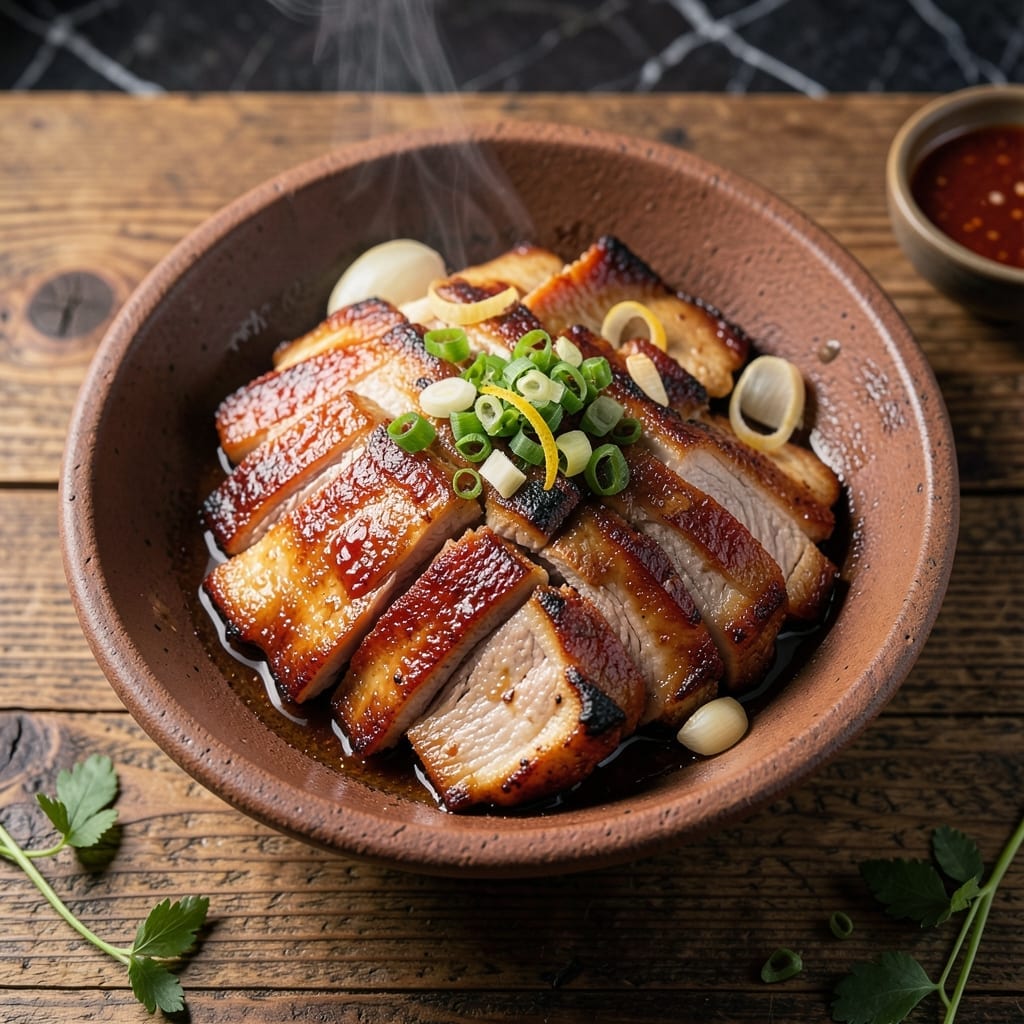
This Korean BBQ pork belly delivers an irresistible balance of sweet and spicy in every bite. The marinade creates a caramelized crust that locks in juices while adding layers of umami depth.
I developed this method through years of testing to achieve that signature sticky-savory glaze without overpowering the pork’s natural richness. A 12-hour marinade ensures maximum flavor penetration, while high-heat searing guarantees the perfect char.
The result is tender, fatty pork belly with edges that crisp at the slightest touch. Each piece carries the bold, complex flavors of traditional Korean BBQ without complicated techniques.
Serve with steamed rice, kimchi, and lettuce wraps for the complete experience. This dish transforms any meal into a restaurant-quality feast.
Ingredients for Korean Bbq Pork Belly
Rich, tender pork belly meets a bold marinade for authentic Korean BBQ flavors at home.
| Ingredient | Amount | Notes |
|---|---|---|
| Pork Belly 🥩 | 2 lb | Skin-on, cut into 1/2-inch slices |
| Gochujang 🌶️ | ½ cup | Korean red pepper paste |
| Soy Sauce 🥫 | ⅓ cup | Low-sodium preferred |
| Brown Sugar 🍚 | ½ cup | Light or dark variety |
| Garlic Cloves 🧄 | 6 cloves | Minced for marinade |
| Fresh Ginger 🌿 | 1 tbsp | Grated finely |
| Sesame Oil 🫒 | 2 tbsp | Toasted for depth |
| Rice Vinegar 🍯 | 2 tbsp | Balances sweetness |
| Asian Pear 🍐 | ½ whole | Grated, for tenderness |
| Green Onions 🧅 | 4 whole | Thinly sliced for garnish |
| Sesame Seeds 🌰 | 2 tbsp | Toasted for garnish |
| Black Pepper 🌶️ | 1 tsp | Freshly ground |
| Cooking Oil 🛢️ | 2 tbsp | Neutral flavor for searing |
The pork belly is the foundation—opt for skin-on cuts with even fat marbling from a trusted butcher or H Mart. Look for pieces about 1-inch thick for ideal texture. The gochujang must be Korean-made (brands like Sempio or Chongga are reliable) for authentic heat and depth. Fresh ginger and garlic are non-negotiable; pre-minced varieties lack the potency needed for the marinade’s complexity.
No Asian pear? Kiwi or pineapple works as a tenderizer alternative. Substitute honey for brown sugar if needed, though the molasses notes in brown sugar are ideal. For a gluten-free version, use tamari instead of soy sauce. The sesame oil should be 100% pure toasted—brands like Kadoya deliver consistent quality. Green onions can be swapped with chives in a pinch.
Marinate the pork belly for the full 12 hours for maximum flavor penetration. Store leftovers in an airtight container for up to 4 days in the fridge or freeze for 3 months. Reheat gently to preserve the caramelized crust.
Why You’ll Love This Recipe
- One Pan Wonder: I toss everything together in a single dish—pork belly soaking up that gochujang, soy, and brown sugar mix—then let the oven do the work.
- Sweet-Spicy Perfection: The caramelized brown sugar with the heat from gochujang and the punch of fresh garlic? I’ll be real: it’s the reason I make this every other week.
- Feeds a Crowd: Between us, this is my go-to for game nights or when the in-laws drop by unannounced. Everyone leaves happy.
- Leftovers? No Problem: Honestly, the flavors taste even better the next day—if there’s any left. I’ve been known to sneak a piece cold from the fridge.
Step-by-Step Instructions for Korean BBQ Pork Belly
Master the technique for perfectly caramelized pork belly with this proven method.
Step 1: Prepare the Marinade Base
In a large bowl, combine the 0.5 cup Gochujang, 0.33 cup Soy Sauce, and 0.5 cup Brown Sugar. Stir vigorously until the mixture becomes smooth and the brown sugar fully dissolves—this ensures even flavor distribution throughout the pork belly.
Add the 6 cloves Garlic Cloves (minced) and 1 tbsp Fresh Ginger (grated) to the bowl. I use a microplane for the ginger to achieve a fine, consistent texture that blends seamlessly into the marinade. Stir for another 30 seconds until fully incorporated.
Finish the marinade by whisking in the 2 tbsp Sesame Oil, 2 tbsp Rice Vinegar, and 1 tsp Black Pepper. The vinegar will balance the sweetness while the sesame oil adds depth. Let the marinade sit for 5 minutes to allow the flavors to meld.
Step 2: Tenderize and Marinate the Pork Belly
Meanwhile, prepare the 2 lb Pork Belly by cutting it into ½-inch thick slices. I find that partially freezing the pork belly for 20 minutes first makes it easier to slice evenly. Leave the skin on for texture contrast.
Add the pork belly slices to the marinade, ensuring each piece is fully coated. For maximum tenderness, finely grate the 0.5 whole Asian Pear directly over the bowl and mix it into the marinade. The natural enzymes in the pear will break down the meat fibers during marinating.
Cover the bowl with plastic wrap and refrigerate for at least 4 hours, though overnight marination yields the best flavor penetration. Turn the pork belly slices halfway through the marinating time to ensure even coverage.
Step 3: Sear and Caramelize
Heat the 2 tbsp Cooking Oil in a large skillet over medium-high heat until shimmering. Remove the pork belly from the marinade (reserve the marinade) and pat the slices dry with paper towels—this prevents steaming and promotes proper searing.
Working in batches to avoid overcrowding, sear the pork belly slices for 3-4 minutes per side until they develop a deep golden-brown crust. The sugars in the marinade will caramelize quickly, so watch for burning. Reduce heat to medium if needed.
As the pork belly cooks, pour the reserved marinade into a small saucepan. Simmer over medium-low heat for 5-7 minutes, stirring frequently, until it thickens into a glossy glaze that coats the back of a spoon.
Step 4: Glaze and Garnish
Return all the seared pork belly slices to the skillet and pour the reduced glaze over them. Toss gently to coat each piece evenly. Cook for an additional 2-3 minutes until the glaze has thickened further and the pork belly reaches an internal temperature of 145°F.
Transfer the pork belly to a serving platter and garnish with the 4 whole Green Onions (thinly sliced) and 2 tbsp Sesame Seeds (toasted). The green onions add a fresh contrast while the sesame seeds provide a nutty crunch.
Serve immediately while hot, with the extra glaze spooned over the top. The pork belly should be tender with a sticky, caramelized exterior that gives way to juicy meat beneath.
Pro Tips For Making Korean Bbq Pork Belly
- Score the Fat: Cut shallow slits in the pork belly fat cap about 1/2 inch apart—this helps render the fat and lets the gochujang marinade penetrate deeper.
- Marinate Overnight: I learned this the hard way—give the pork belly at least 12 hours in the gochujang, soy, and brown sugar mix for the flavors to really sink in.
- Watch the Sugar: Brown sugar burns easily, so keep the heat at medium when searing and move the pork belly if the pan starts smoking.
- Rest Before Slicing: After grilling or pan-frying, let the pork belly rest for 5 minutes under foil—this keeps the juices from running all over the cutting board.
Dietary Considerations for korean bbq pork belly
Gluten-Free Option
Swap the soy sauce for tamari or a certified gluten-free alternative. Coconut aminos work well too, though they’re sweeter. Always check labels to avoid hidden gluten in gochujang or other sauces. 💡
Lower Sugar Version
Reduce the brown sugar by half and add 1 tbsp erythritol or monk fruit sweetener. The glaze will still caramelize but with fewer carbs. Balance the sweetness with an extra 1 tsp rice vinegar for tang.
Dairy-Free Note
This recipe is naturally dairy-free, but watch for cross-contamination if using store-bought gochujang. Stick to brands like Sempio or Chongga for guaranteed dairy-free marinades. No substitutions needed here!
Keto Adaptation
Replace the brown sugar with a keto-friendly sweetener like allulose or Swerve. Use 1:1 ratio for best results. The Asian pear can be omitted, though the texture will be slightly less tender.
Low-Sodium Adjustment
Use low-sodium soy sauce and cut the total soy sauce by 25%. Boost umami with 1 tsp fish sauce or 1 tbsp coconut aminos instead. The dish stays flavorful without excess salt.
Vegetarian Alternative
For a plant-based twist, use thick-cut king oyster mushrooms or tofu slabs. Marinate and cook the same way. The mushrooms absorb the glaze beautifully, while tofu benefits from pressing first. 🌱
Nutrition Facts
Frequently Asked Questions
Can I use frozen pork belly?
Yes, but thaw it completely in the fridge for 24 hours before marinating. Pat it dry thoroughly to ensure proper searing and caramelization. Never cook from frozen.
How do I prevent the glaze from burning?
Cook over medium heat, not high, and stir the marinade frequently while reducing. The sugars burn quickly, so keep an eye on the pan and lower heat if it darkens too fast.
What can I use instead of gochujang?
Mix 2 tbsp sriracha with 1 tbsp miso paste and 1 tbsp honey for a similar flavor profile. It won’t be identical but still delicious.
How long does the pork belly stay fresh?
Store leftovers in an airtight container for up to 4 days in the fridge. Reheat gently in a pan to preserve the caramelized crust.

- 6 Egg Cake Recipe with Oil: Light as Air With Buttery Moisture - October 4, 2026
- 4 Bean Casserole Recipe: One-Pan Heartiness With Smoky Paprika Depth - October 4, 2026
- 3-Ingredient Keto Mug Cake Recipe: Microwave Magic in 2 Minutes - October 4, 2026