
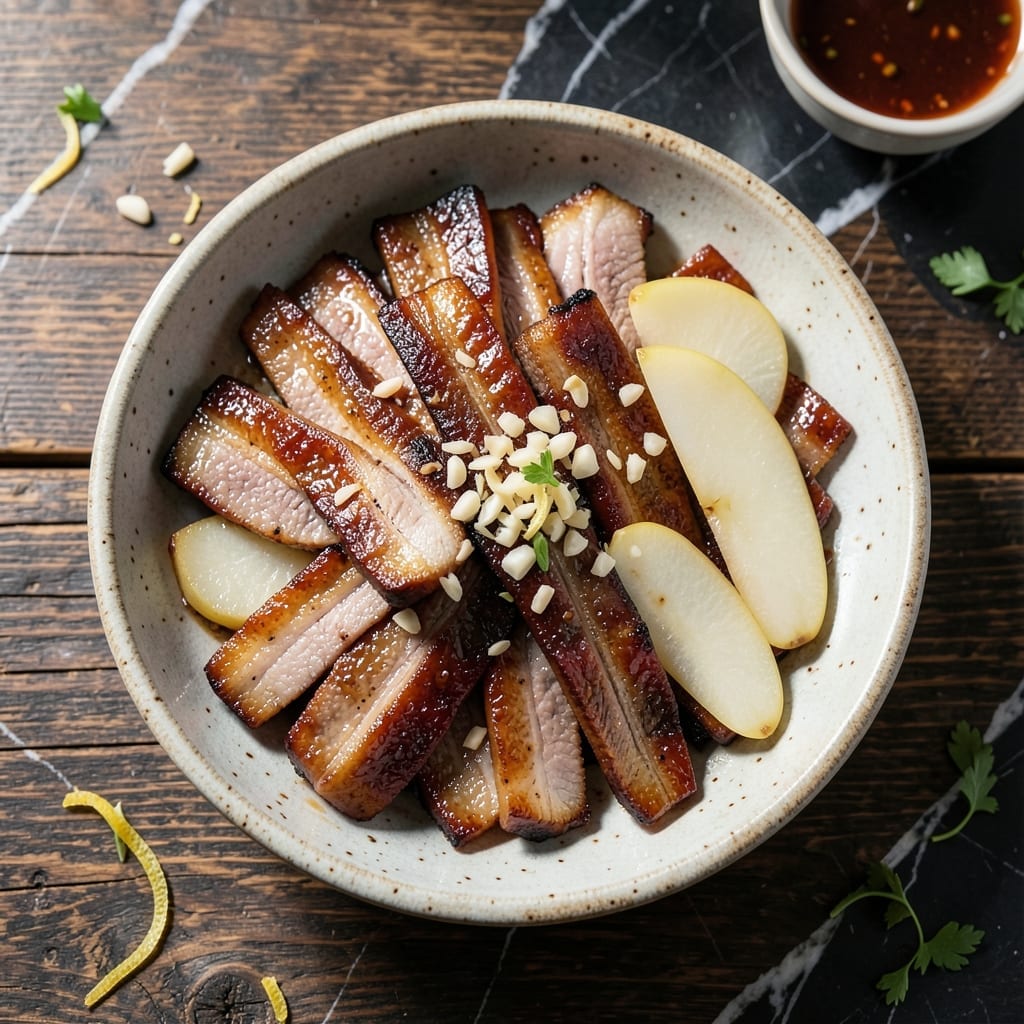
This Korean BBQ pork jerky delivers an authentic balance of sweet and savory flavors in every chewy bite. I developed this recipe after testing countless marinade ratios to achieve that perfect sticky-sweet glaze with deep umami notes.
The key is a 24-hour marinade that infuses the pork with traditional Korean flavors—soy sauce, brown sugar, garlic, and pear puree for natural tenderizing. This ensures the meat stays juicy even after the drying process.
After marinating, the pork is partially cooked before dehydrating to lock in moisture. The result is tender jerky with concentrated flavor in each piece, not the dry, tough texture of typical store-bought versions.
This method produces restaurant-quality results at home. The jerky keeps well for weeks, making it ideal for snacks, lunchboxes, or sharing as a homemade gift.
Ingredients for Korean Bbq Pork Jerky
Thinly sliced pork meets a bold marinade for authentic Korean BBQ flavor in every bite.
| Ingredient | Amount | Notes |
|---|---|---|
| Pork Shoulder 🥩 | 1 ½ lb | Thinly sliced against grain |
| Soy Sauce 🫙 | ½ cup | Low-sodium preferred for balance |
| Brown Sugar 🍚 | ½ cup | Light or dark variety |
| Asian Pear 🍐 | 1 whole | Peeled, cored, puréed |
| Garlic Cloves 🧄 | 6 cloves | Minced for even distribution |
| Fresh Ginger 🌿 | 1 tbsp | Grated, peeled first |
| Sesame Oil 🫒 | 1 tbsp | Toasted for depth of flavor |
| Rice Vinegar 🍶 | 2 tbsp | Balances sweetness and salt |
| Gochujang 🌶️ | 1 tbsp | Korean chili paste for heat |
| Sesame Seeds 🌰 | 1 tbsp | Toasted, for garnish |
| Green Onions 🧅 | 3 whole | Thinly sliced for garnish |
| Black Pepper 🌶️ | ½ tsp | Freshly ground preferred |
| Red Pepper Flakes 🔥 | ½ tsp | Adjust to spice preference |
The pork is critical here. Pork shoulder offers the ideal fat-to-meat ratio for tender jerky, but pork loin works in a pinch (it’ll be leaner). Most Asian markets sell pre-sliced meat for hot pot—perfect thickness. Ask the butcher to slice against the grain if you’re buying a whole cut. The pear puree isn’t just for flavor; its enzymes naturally tenderize the meat during the 24-hour marinade.
No Asian pear? Bosc pear or apple purée (unsweetened) works nearly as well. Out of gochujang? Sriracha plus a pinch of sugar mimics the sweet-spicy balance, though the fermented depth won’t be the same. For a gluten-free version, swap soy sauce for tamari. The sesame oil is non-negotiable—it’s what gives that authentic Korean aroma. Black pepper can be pre-ground, but fresh is always better.
The jerky keeps for 3-4 weeks in an airtight container at room temperature, or up to 6 months frozen. For best texture, let it sit for 24 hours after dehydrating before eating—this lets the flavors fully meld. Pack in paper towels to absorb any residual moisture during storage.
Why You’ll Love This Recipe
- Minimal Chopping Required: I just slice the pork shoulder thin, and the Asian pear grates in seconds—no fancy knife skills needed.
- Sweet-Savory Addiction: The brown sugar caramelizes with the soy and garlic into this sticky, umami-packed glaze I can’t stop sneaking bites of.
- Meal Prep MVP: I make a double batch on Sunday and it’s my grab-and-go protein for salads, rice bowls, or straight from the fridge all week.
- Budget Stretch: Pork shoulder is cheap, and a little goes a long way—this recipe turns $8 of meat into snacks for days.
Step-by-Step Instructions for Korean BBQ Pork Jerky
Master the technique for tender, flavorful jerky with a perfect balance of sweet and umami notes.
Step 1: Slice and Marinate the Pork Shoulder
Begin by slicing the 1.5 lb Pork Shoulder thinly against the grain into ¼-inch thick strips. This cross-grain slicing ensures the jerky remains tender rather than chewy. Place the strips in a large bowl.
In a separate bowl, whisk together the 0.5 cup Soy Sauce, 0.5 cup Brown Sugar, puréed Asian Pear, minced 6 cloves Garlic Cloves, grated 1 tbsp Fresh Ginger, 1 tbsp Sesame Oil, 2 tbsp Rice Vinegar, 1 tbsp Gochujang, 0.5 tsp Black Pepper, and 0.5 tsp Red Pepper Flakes until fully combined. Pour this marinade over the pork, ensuring every piece is thoroughly coated.
Step 2: Refrigerate for Deep Flavor Penetration
Cover the bowl with plastic wrap and refrigerate for at least 4 hours, or ideally overnight. This extended marinating time allows the flavors to deeply penetrate the meat, resulting in a more intense taste in every bite.
Occasionally stir the pork during marination to redistribute the liquid and ensure even exposure. The pork should turn a rich, caramelized color as it absorbs the marinade, signaling that it’s ready for the next step.
Step 3: Dry the Jerky in the Oven
Preheat your oven to its lowest setting, typically around 170-175°F. Remove the pork from the marinade, shaking off any excess liquid, and arrange the strips on a wire rack set over a baking sheet lined with parchment paper. This setup allows air to circulate around the meat, promoting even drying.
Place the jerky in the oven and dry for 4-6 hours, flipping the strips halfway through. The jerky is done when it bends but doesn’t break, and the edges appear slightly darkened and leathery.
Step 4: Finish with Garnishes and Cool
Once dried to your desired texture, remove the jerky from the oven and let it cool completely on the rack. As it cools, it will firm up slightly. While still warm, sprinkle with 1 tbsp Sesame Seeds and thinly sliced 3 whole Green Onions for a fresh, aromatic finish.
Store the cooled jerky in an airtight container in the refrigerator for up to 2 weeks, or freeze for longer storage. The flavors will continue to develop over time, making each bite as delicious as the first.
Pro Tips For Making Korean Bbq Pork Jerky
- Slice Against the Grain: Cut the pork shoulder into thin strips against the grain for tender jerky that doesn’t chew like leather. I learned this the hard way after my first batch turned into a jaw workout.
- Grate the Pear: Use a microplane to grate the Asian pear directly into the marinade—it blends seamlessly and adds natural sweetness without chunks. Sounds weird, but it works.
- Pat Dry First: Blot the pork strips thoroughly with paper towels before marinating so the sauce clings instead of pooling at the bottom. Skip this and you’ll end up with uneven flavor.
- Low and Slow Drying: Dry the jerky at 175°F for 4-6 hours, flipping halfway, to remove moisture without cooking it. After burning three batches, I finally figured out patience beats high heat.
Essential Equipment for korean bbq pork jerky
Dehydrator Essentials
For consistent results, I swear by my Nesco FD-75A dehydrator with adjustable temperature control. Set it to 160°F and arrange strips in a single layer on the mesh screens. The vertical airflow prevents uneven drying and sticky marinade buildup. 💡
Oven Method Setup
If using an oven, a wire cooling rack over a baking sheet is non-negotiable for airflow. I line mine with parchment paper to catch drips. The convection setting at 170°F mimics dehydrator performance beautifully.
Slicing Tools
A sharp chef’s knife is key for uniform ¼-inch slices against the grain. For speed, my Cuisinart electric slicer with the 1/8-inch blade works wonders. Always chill pork for 30 minutes first for cleaner cuts.
Marinade Mixing
I use a large glass mixing bowl for the marinade—it won’t absorb odors like plastic. A whisk fully emulsifies the brown sugar and sesame oil. For easy cleanup, silicone-coated tongs help toss pork without sticking.
Storage Solutions
After drying, Mason jars with airtight lids keep jerky fresh for weeks. I add a silica gel packet to absorb any residual moisture. For gifting, cellophane bags with twist ties look professional. ❄️
Safety Gear
Don’t overlook nitrile gloves for handling the sticky marinade and raw pork. The gochujang stains! I also keep a meat thermometer handy to verify pork reaches 145°F during initial cooking.
Nutrition Facts
Frequently Asked Questions
What can I use if I don’t have Asian pear?
Bosc pear or unsweetened apple purée work as great substitutes. They provide similar tenderizing enzymes and natural sweetness to balance the marinade.
Can I make this without a dehydrator?
Yes! Use your oven at its lowest setting (170-175°F) with a wire rack for airflow. It takes 4-6 hours, flipping halfway through for even drying.
How do I store leftover jerky?
Keep it in an airtight container at room temperature for up to 3-4 weeks. For longer storage, freeze for up to 6 months.
Why is my jerky too tough?
This usually happens from slicing with the grain or over-drying. Always slice against the grain and remove from heat when it bends but doesn’t break.

- 6 Egg Cake Recipe with Oil: Light as Air With Buttery Moisture - October 4, 2026
- 4 Bean Casserole Recipe: One-Pan Heartiness With Smoky Paprika Depth - October 4, 2026
- 3-Ingredient Keto Mug Cake Recipe: Microwave Magic in 2 Minutes - October 4, 2026