
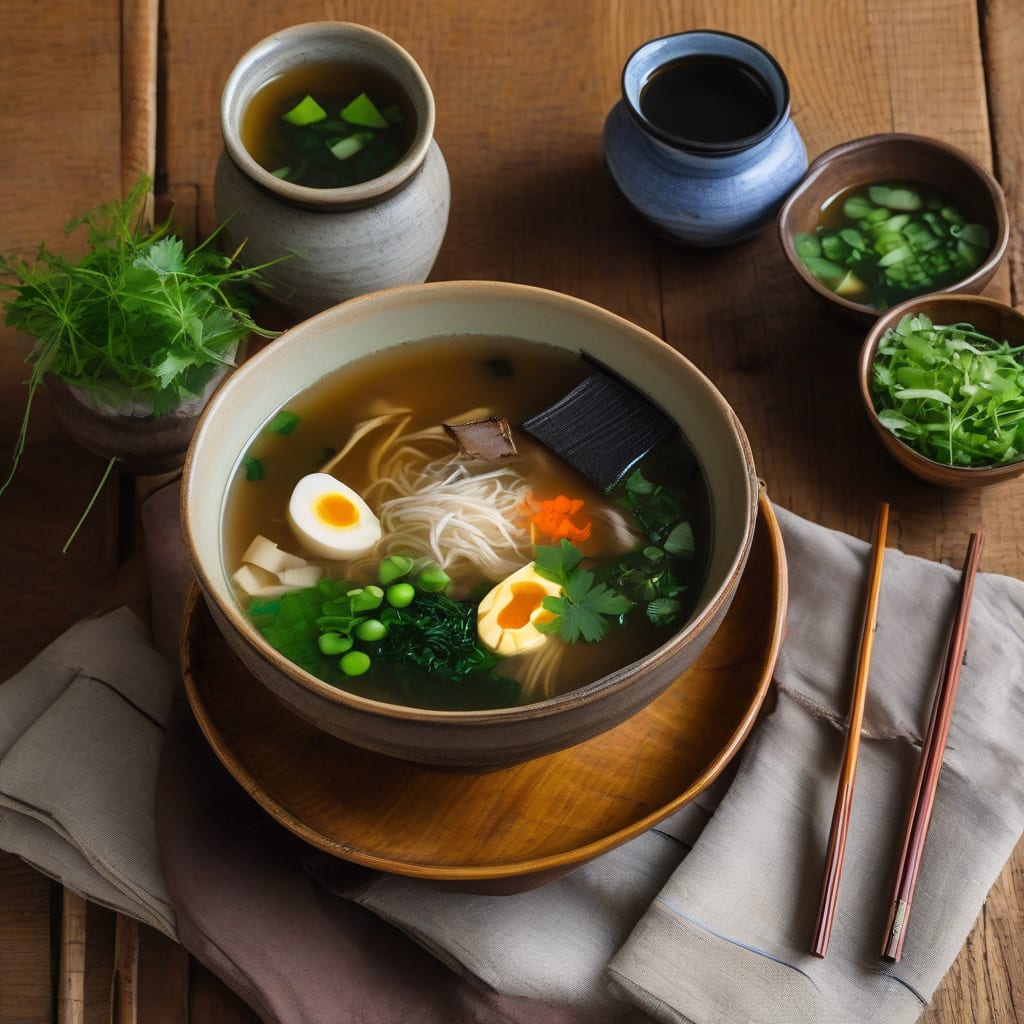
I’ve perfected a Korean miso soup recipe that delivers hearty comfort in just 30 minutes. This traditional Korean dish combines rich miso paste with tender ingredients for a deeply satisfying meal that’s both nourishing and flavorful.
With simple ingredients and straightforward instructions, you’ll create a velvety soup that’s perfect for any day. Let’s make this comforting Korean miso soup that’s sure to become a staple in your kitchen.
Ingredients for Korean Miso Soup
Gather these simple ingredients for a nourishing Korean miso soup.
| Ingredient | Amount | Notes |
|---|---|---|
| Miso Paste 🧂 | 2 tbsp | White or yellow miso preferred |
| Dashi Stock 🍜 | 4 cups | Vegetable or kombu dashi |
| Shiitake Mushrooms 🍄 | 1 cup | Sliced, fresh or dried |
| Tofu 🥗 | 12 oz | Silken or soft block |
| Wakame Seaweed 🌿 | 1 cup | Dried, rehydrated |
| Scallions 🌱 | 2 whole | Thinly sliced, for garnish |
| Garlic Cloves 🧄 | 3 cloves | Minced, for depth |
| Ginger 🌶️ | 1 tbsp | Grated, fresh |
| Soy Sauce 💧 | 2 tbsp | Low-sodium preferred |
| Sesame Oil 🫒 | 1 tsp | For finishing, optional |
| Black Pepper 🌶️ | ¼ tsp | Freshly ground |
For authentic flavor, look for white or yellow miso at Asian markets or well-stocked supermarkets. Kombu dashi gives depth, but vegetable stock works too. I prefer silken tofu for its creamy texture. Wakame seaweed is a must—rehydrate it in warm water before using.
No dashi? Use vegetable broth with kombu powder as a substitute. For added protein, consider cooked shrimp or cubed firm tofu. If using dried shiitake, rehydrate in hot water first. Soy sauce adds umami—choose low-sodium to control salt levels. Fresh ginger is ideal, but ground ginger works in a pinch.
This soup keeps well in the fridge for 3-4 days. Reheat gently to preserve the miso’s flavor. Freeze individual portions for up to 3 months. Add fresh scallions and a drizzle of sesame oil just before serving for the best flavor.
❤️
Why You’ll Love This Recipe
- Quick Comfort: I can whip up this Korean miso soup in under 30 minutes, and it’s honestly a lifesaver on busy weeknights when I need something nourishing.
- Umami Bomb: The combination of miso paste and dashi stock creates an incredibly rich, savory flavor that’s ridiculously good – and the shiitake mushrooms add this amazing depth.
- Flexible Feast: I’ve made this soup for everything from solo lunches to family dinners, and it always hits the spot – plus, it’s a great way to use up any leftover ingredients I have on hand.
- Budget Friendly: This recipe is super cost-effective, especially since I can make a big batch and enjoy leftovers for days – it’s my secret weapon for stretching my grocery budget.
Step-by-Step Instructions for Korean Miso Soup
Creating this comforting Korean miso soup is straightforward and rewarding, yielding a delicious meal in under 30 minutes.
Step 1: Prepare the Aromatics and Ingredients
Start by preparing the aromatics and main ingredients. Mince the 3 cloves Garlic Cloves and grate 1 tbsp Ginger to release their flavors. Slice the 1 cup Shiitake Mushrooms into thin pieces, ensuring they will cook evenly. Cut the 12 oz Tofu into small cubes, about ½ inch in size, so they heat through properly in the hot broth. Thinly slice the 2 whole Scallions and set them aside for garnish.
Rehydrate the 1 cup Wakame Seaweed according to package instructions, typically by soaking it in water for a few minutes, then drain and set aside. Having all ingredients prepped before starting to cook ensures a smooth process.
Step 2: Make the Dashi Stock Base
Pour the 4 cups Dashi Stock into a large pot and bring it to a gentle simmer over medium heat. If using kombu dashi, ensure it doesn’t boil vigorously as it can become bitter. Once simmering, add the sliced 1 cup Shiitake Mushrooms and let them cook for 5 minutes until they release their flavor and become tender.
Add the minced 3 cloves Garlic Cloves and grated 1 tbsp Ginger to the pot. Continue to simmer for another 2-3 minutes until the aromatics are fragrant. This step builds the depth of flavor in the soup.
Step 3: Add Miso Paste and Tofu
In a small bowl, whisk the 2 tbsp Miso Paste with a ladleful of the hot dashi stock until smooth. This prevents lumps from forming when it’s added to the pot. Add the miso mixture back into the pot, stirring gently to distribute evenly.
Add the cubed 12 oz Tofu to the soup and continue to simmer for 2-3 minutes until heated through. Be gentle when stirring to avoid breaking the tofu. The soup should be hot but not boiling, as boiling can destroy the delicate flavor of the miso.
Step 4: Finish with Wakame Seaweed and Seasoning
Add the rehydrated 1 cup Wakame Seaweed to the pot and simmer for another minute. Stir in 2 tbsp Soy Sauce to enhance the umami flavor. Taste the soup and adjust seasoning with 0.25 tsp Black Pepper as needed.
If desired, drizzle 1 tsp Sesame Oil into the soup for added richness and depth. Ladle the soup into bowls and garnish with thinly sliced 2 whole Scallions. Serve immediately while hot, enjoying the comforting warmth and complex flavors.
👨🍳
Pro Tips For Making Korean Miso Soup
- Whisk Miso Smooth: When adding miso paste to your Korean miso soup, whisk it with a small amount of hot dashi stock first to prevent lumps from forming. This ensures a smooth, velvety texture that coats your tongue.
- Soak Wakame Properly: Rehydrate your wakame seaweed in cold water for at least 5 minutes before adding it to the soup. This step is crucial for achieving the right texture and preventing the seaweed from becoming too chewy or tough.
- Don’t Overcook Tofu: Add tofu towards the end of your cooking time, as it can quickly become tough and rubbery if overcooked. A gentle simmer for 2-3 minutes is all you need to warm it through without compromising its silky texture.
- Use High-Quality Dashi: Invest in a good-quality dashi stock or make your own using kombu and katsuobushi, as it forms the rich, savory backbone of your Korean miso soup. A rich, authentic dashi elevates the entire dish, making it more complex and satisfying.
Common Mistakes When Making Great korean miso soup
Overheating the Miso
One of the most common mistakes when making Korean miso soup is overheating the miso paste. When the soup boils after adding miso, it destroys the delicate flavor and beneficial probiotics. I always keep the heat at medium-low after adding miso. 🔥
Using Low-Quality Miso
The quality of miso paste significantly affects the final flavor. I recommend using white or yellow miso from reputable brands for the best results. Avoid miso that’s been sitting on the shelf too long as it can lose its depth.
Skipping Dashi Preparation
Dashi is the backbone of this soup’s flavor. I’ve found that using kombu dashi or a good vegetable stock makes a huge difference. Don’t skip this step or use low-quality stock as it will result in a bland soup.
Not Preparing Ingredients Properly
Proper ingredient preparation is crucial.
Adding Tofu Too Early
Adding tofu too early can cause it to break apart. I add it after the miso paste has been incorporated and simmer for just 2-3 minutes until heated through. This keeps the tofu intact and silky.
Skipping Final Seasoning Adjustments
The final seasoning makes a big difference. I always taste the soup before serving and adjust with soy sauce or black pepper as needed. A drizzle of sesame oil just before serving adds wonderful depth.
Nutrition Facts
180kcal
Frequently Asked Questions
Can I make Korean miso soup without dashi stock?
Yes, you can make Korean miso soup without dashi stock. Use a good vegetable broth or chicken stock as a substitute. For added depth, consider adding kombu powder or seaweed to your vegetable broth. This will help replicate some of the umami flavor that dashi provides.
How do I prevent miso paste from becoming lumpy?
To prevent miso paste from becoming lumpy, whisk it with a small amount of hot broth before adding it to the soup. This helps to dissolve the miso evenly. Use a small bowl and whisk until smooth, then gradually add more broth while whisking. This ensures a silky texture in your finished soup.
Can I add seafood to my Korean miso soup?
Absolutely! Korean miso soup is versatile and can include various seafood options. Popular choices include clams, shrimp, or mussels. Add them after the mushrooms have cooked and simmer until they’re just cooked through. This adds protein and extra flavor to your soup.
How long can I store leftover Korean miso soup?
You can store leftover Korean miso soup in the refrigerator for 3-4 days. Reheat it gently over low heat to preserve the miso’s flavor. Freeze individual portions for up to 3 months. When reheating, add fresh scallions and a drizzle of sesame oil for the best flavor.

- 6 Egg Cake Recipe with Oil: Light as Air With Buttery Moisture - October 4, 2026
- 4 Bean Casserole Recipe: One-Pan Heartiness With Smoky Paprika Depth - October 4, 2026
- 3-Ingredient Keto Mug Cake Recipe: Microwave Magic in 2 Minutes - October 4, 2026