
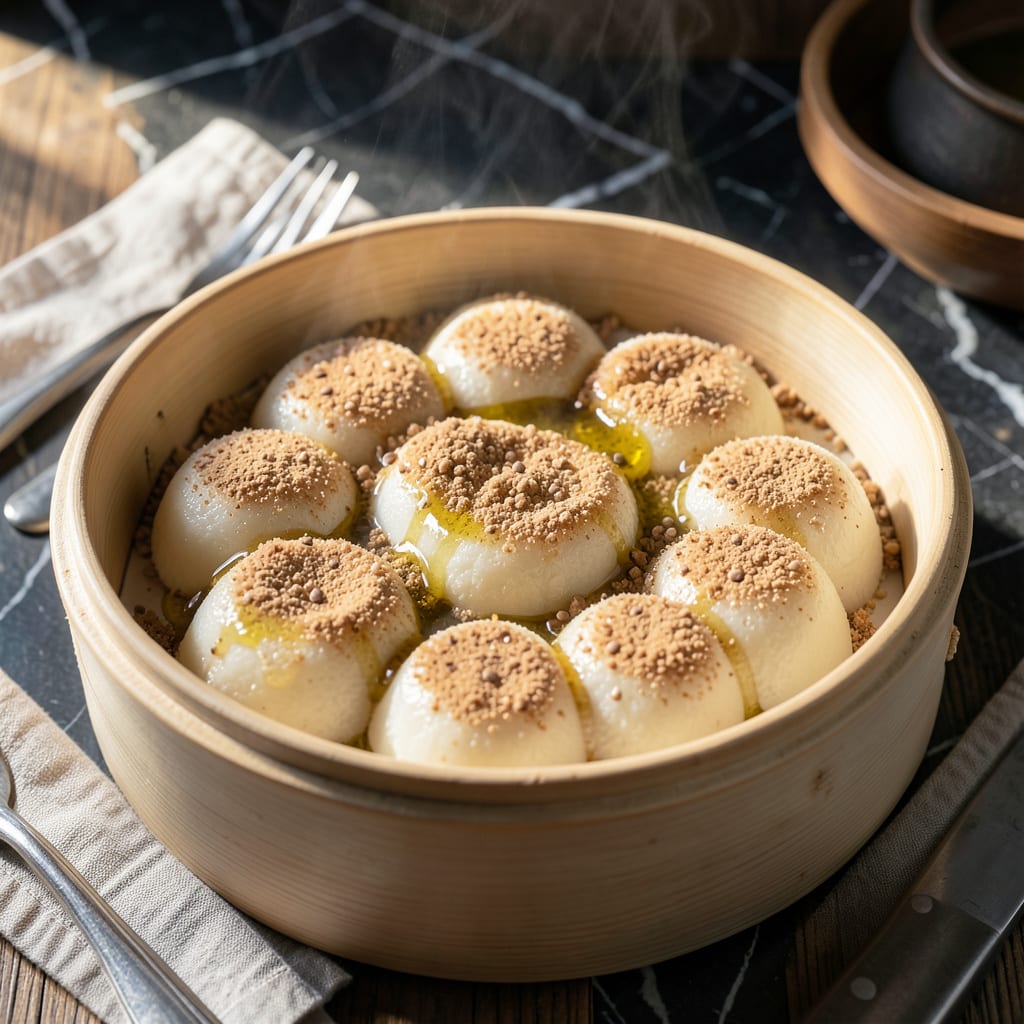
This traditional Korean dessert delivers pillowy soft texture with subtle sweetness and nutty depth. The steaming method ensures a delicate, chewy consistency that melts in your mouth.
Simple ingredients transform into an elegant treat that honors authentic techniques. The result is a versatile cake perfect for celebrations or everyday indulgence.
Ingredients for Korean Steamed Rice Cake
Traditional Korean ingredients create this authentic steamed dessert with delicate texture and rich flavor.
| Ingredient | Amount | Notes |
|---|---|---|
| Glutinous Rice Flour 🌾 | 2 cups | Also called sweet rice flour |
| Granulated Sugar 🍚 | ¾ cup | Adjust to taste preference |
| Hot Water 💧 | 1 ¼ cups | For activating the flour |
| Roasted Soybean Flour 🌰 | ¼ cup | For nutty depth, optional |
| Kosher Salt 🧂 | ¼ tsp | Enhances all flavors |
| Vegetable Oil 🫒 | 1 tbsp | For greasing the mold |
| Brown Sugar 🍯 | 2 tbsp | For topping if desired |
| Crushed Pine Nuts 🌲 | 2 tbsp | Optional garnish for texture |
| Red Bean Paste 🫘 | ½ cup | Traditional filling option |
| Sesame Seeds 🌿 | 1 tbsp | Toasted, for garnish |
| Vanilla Extract 🌸 | 1 tsp | Pure extract preferred |
The glutinous rice flour is essential—look for Asian brands like Mochiko at H Mart or Korean markets. It’s distinct from regular rice flour, so don’t substitute. Roasted soybean flour adds that signature nutty depth (find it in the same aisle). If you can’t locate it, lightly toasted all-purpose flour in a pinch, but the flavor won’t be the same. Quality matters here.
No red bean paste? Mung bean paste or sweetened mashed sweet potato work well. Swap brown sugar with honey or maple syrup if preferred. Pine nuts can be replaced with crushed walnuts or almonds for garnish. For a gluten-free version, ensure all flours are certified gluten-free. The sugar can be reduced slightly, but don’t skip it entirely.
Store dry ingredients in airtight containers in a cool pantry for up to 6 months. The cake keeps 3-4 days at room temperature, wrapped tightly. Re-steam briefly to restore moisture if it dries out. Freezing isn’t recommended—texture suffers.
Why You’ll Love This Recipe
- One Bowl Wonder: I just mix glutinous rice flour, sugar, and hot water in a single bowl—no fancy tools, no fuss.
- Nutty Sweetness: The roasted soybean flour adds this warm, toasty depth that balances the sugar perfectly.
- Weekend Project: Honestly, I make a big batch on Saturday and snack on them all week—great for lunches or unexpected guests.
- Budget Stretcher: A bag of rice flour and a little soybean powder make dozens of these for pennies. I’ll be real: it’s my cheapest crowd-pleaser.
Step-by-Step Instructions for Korean Steamed Rice Cake
Master the technique for achieving that signature pillowy texture with perfectly balanced sweetness.
Step 1: Prepare the Steaming Equipment and Base Mixture
Begin by greasing your steaming mold or heatproof dish with the 1 tablespoon Vegetable Oil, ensuring all surfaces are evenly coated to prevent sticking. I use a silicone brush for even distribution without excess pooling.
In a large mixing bowl, whisk together the 2 cups Glutinous Rice Flour, 0.75 cup Granulated Sugar, 0.25 cup Roasted Soybean Flour, and 0.25 teaspoon Kosher Salt until no lumps remain. The roasted soybean flour adds a subtle nutty complexity that elevates this dish beyond simple sweetness.
Step 2: Activate the Batter with Hot Liquid
Gradually pour the 1.25 cups Hot Water into the dry mixture while whisking continuously. The batter will transform from powdery to a smooth, thick consistency reminiscent of pancake batter. Stop adding water once the mixture is uniform—overmixing can develop gluten, resulting in a tougher texture.
Add the 1 teaspoon Vanilla Extract and fold gently to incorporate. The vanilla enhances the natural sweetness of the glutinous rice flour without overpowering its delicate flavor. Let the batter rest for 5 minutes to allow the flour to fully hydrate.
Step 3: Steam to Perfection
Bring water to a rolling boil in your steamer base. Pour the batter into your prepared mold, filling it no more than ¾ full to allow for expansion. Place the mold in the steamer, cover tightly with a lid, and steam over medium-high heat for 25-30 minutes.
Check for doneness by inserting a toothpick into the center—it should come out clean with no wet batter clinging to it. The top should appear set with a slight sheen, and the edges will pull away from the mold slightly. Avoid opening the lid during steaming, as this causes temperature fluctuations that can result in uneven cooking.
Step 4: Add Filling and Final Touches
Once the base layer is cooked, carefully spread the 0.5 cup Red Bean Paste evenly over the surface if using filling. For a marbled effect, dollop the paste in several spots and swirl gently with a knife. Return to the steamer for an additional 5-7 minutes to warm the filling through.
Remove from heat and immediately sprinkle with the 2 tablespoons Brown Sugar, 2 tablespoons Crushed Pine Nuts, and 1 tablespoon Sesame Seeds. The residual heat will slightly caramelize the brown sugar, creating a subtle crunch that contrasts beautifully with the soft cake.
Let cool for 10 minutes before slicing to allow the structure to set. The cake should be moist but hold its shape, with a slightly sticky surface that’s characteristic of well-made Korean rice cakes.
Pro Tips For Making Korean Steamed Rice Cake
- Steam Evenly: Use a bamboo steamer lined with cheesecloth to prevent sticking—sounds fussy, but I learned this the hard way after scraping ruined cakes off the bamboo.
- Sift the Flour: Sift the glutinous rice flour before mixing to avoid lumps; my first few batches had a weird, grainy texture until I started doing this.
- Avoid Cold Water: Always use hot water when mixing the batter—cold water makes the rice flour clump and the texture turns out dense and gummy.
- Rest the Batter: Let the batter sit for 10-15 minutes after mixing—this gives the flour time to hydrate fully, and the cakes come out lighter and fluffier.
Troubleshooting korean steamed rice cake
Batter Too Thin
If your mixture resembles water rather than pancake batter, you likely added too much liquid. Add 1-2 tbsp more glutinous rice flour gradually while whisking. Let it rest for 5 minutes—the flour needs time to absorb moisture properly. 💡
Batter Too Thick
When the batter is too dense and difficult to pour, stir in 1 tbsp hot water at a time until it reaches a smooth, pourable consistency. Remember, the batter thickens slightly as it rests.
Uneven Steaming
If the center remains undercooked while edges are firm, your steamer may lack sufficient heat circulation. Use a bamboo steamer with a tight lid, and ensure water is at a rolling boil before adding the mold. Rotate the mold 180 degrees halfway through cooking.
Cake Collapses After Steaming
This usually indicates undercooking or opening the lid too soon. Steam for the full 25-30 minutes without peeking. If using a filling like red bean paste, ensure it’s added only after the base layer is fully set to prevent weighing down the cake.
Sticky Surface
A slightly sticky top is normal, but excessive stickiness means it needs more time. Return to the steamer for 5 additional minutes. Grease your mold thoroughly with 1 tbsp vegetable oil before adding batter to prevent sticking during removal.
Dry or Dense Texture
Overmixing or using cold water can cause this. Always use hot water to activate the flour properly, and mix just until combined. If the cake turns out dry, serve with a drizzle of honey or a dollop of sweet red bean paste to restore moisture. ⚡
Nutrition Facts
Frequently Asked Questions
Can I use regular rice flour instead?
No, regular rice flour won’t work. Glutinous rice flour is essential for the chewy texture. Substituting will result in a crumbly, dry cake instead of the signature pillowy softness.
Why did my cake turn out dense?
Overmixing or using cold water can cause this. Always use hot water and mix just until combined. Let the batter rest for 5 minutes before steaming to ensure proper hydration.
How long can I store the cake?
It keeps for 3-4 days at room temperature, tightly wrapped. For best results, re-steam briefly to restore moisture. Avoid freezing, as it can ruin the texture.

- 6 Egg Cake Recipe with Oil: Light as Air With Buttery Moisture - October 4, 2026
- 4 Bean Casserole Recipe: One-Pan Heartiness With Smoky Paprika Depth - October 4, 2026
- 3-Ingredient Keto Mug Cake Recipe: Microwave Magic in 2 Minutes - October 4, 2026