
Homemade biscuits with flaky, golden layers don’t require a boxed mix—just a few pantry staples and the right technique. This recipe delivers the same tender, buttery results as Krusteaz, but with the satisfaction of making them from scratch. Cold butter and minimal handling are the secrets to achieving those perfect, peeling layers.
The entire process takes less than 15 minutes from mixing to baking, making these ideal for busy mornings or last-minute brunches. Whether you serve them with gravy, jam, or as a side to fried chicken, the result is a flaky, melt-in-your-mouth biscuit that rivals any store-bought version. Let’s get baking.
Ingredients for Krusteaz Biscuit
Eight simple ingredients deliver flaky, golden biscuits rivaling any boxed mix—with superior homemade quality.
| Ingredient | Amount | Notes |
|---|---|---|
| All-Purpose Flour 🌾 | 2 cups | Plus extra for dusting |
| Baking Powder 🧂 | 1 tbsp | Aluminum-free preferred |
| Baking Soda 🧂 | ½ tsp | For optimal rise |
| Salt 🧂 | 1 tsp | Fine sea salt preferred |
| Unsalted Butter 🧈 | ½ cup | Cold, cubed into 1/4-inch pieces |
| Buttermilk 🥛 | ¾ cup | Cold, plus extra for brushing |
| Honey 🍯 | 1 tbsp | Optional, for subtle sweetness |
| Heavy Cream 🥛 | 2 tbsp | For richer dough (optional) |
The butter is critical for flakiness. Land O’Lakes unsalted butter provides consistent results due to its 80% fat content. Use full-fat buttermilk—low-fat versions alter the texture. For baking powder, Clabber Girl or Rumford brands ensure proper rise without metallic aftertaste. Measure flour by spooning into cups (not scooping) for accurate quantities; excess flour creates dense biscuits. The dough should remain cold throughout preparation to maintain distinct layers during baking.
No buttermilk? Combine 3/4 cup whole milk with 1 tbsp lemon juice and let sit 5 minutes. For a vegan version, substitute cold coconut oil for butter and almond milk with vinegar for buttermilk. Honey can be replaced with maple syrup or omitted entirely. All-purpose flour alternatives like White Lily (Southern brand) yield softer results, while bread flour creates slightly chewier biscuits. Avoid overmixing the dough to prevent tough texture.
Store baked biscuits in an airtight container at room temperature for up to 2 days. Reheat in a 350°F oven for 5-7 minutes to restore flakiness. Unbaked dough can be frozen for 1 month—cut into rounds, freeze on tray, then transfer to bags. For make-ahead convenience, prepare dough the night before and refrigerate; bake directly from cold. Always use ingredients at their coldest temperature for optimal layer separation during baking.
Why You’ll Love This Recipe
- One-Bowl Magic: I love that I can dump all the dry ingredients—flour, baking powder, soda, salt—right into one bowl, cut in the cold butter, and call it done. No fancy tools, no extra dishes to wash.
- Buttery Heaven: Here’s what sold me—that first bite where the crisp, golden crust gives way to a tender, buttery center. The unsalted butter lets the rich, clean flavor shine without overpowering.
- Breakfast-to-Dinner MVP: These biscuits work as a grab-and-go breakfast, a side for weeknight chicken, or even as shortcake for dessert. Honestly, I’ve served them with jam, gravy, and ice cream—all in the same week.
- Pantry Staples Only: No last-minute grocery runs. If I’ve got flour, butter, and basic baking supplies (which I always do), I’m 20 minutes away from warm, homemade biscuits. That’s cheaper than a bakery and twice as satisfying.
Step-by-Step Instructions for Krusteaz Biscuits
Follow this precise method to create flaky, golden biscuits with perfect layers in record time.
Step 1: Combine Dry Ingredients for Optimal Rise
In a large mixing bowl, whisk together the 2 cups All-Purpose Flour, 1 tbsp Baking Powder, 0.5 tsp Baking Soda, and 1 tsp Salt until completely combined. I use aluminum-free baking powder for cleaner flavor and fine sea salt for even distribution throughout the dough.
This dry mixture creates the structural foundation for your biscuits. The baking powder and baking soda work together to create those signature flaky layers, while the salt enhances all the flavors. Make sure there are no lumps in your flour mixture before proceeding to the next step.
Step 2: Cut in Cold Butter for Flaky Layers
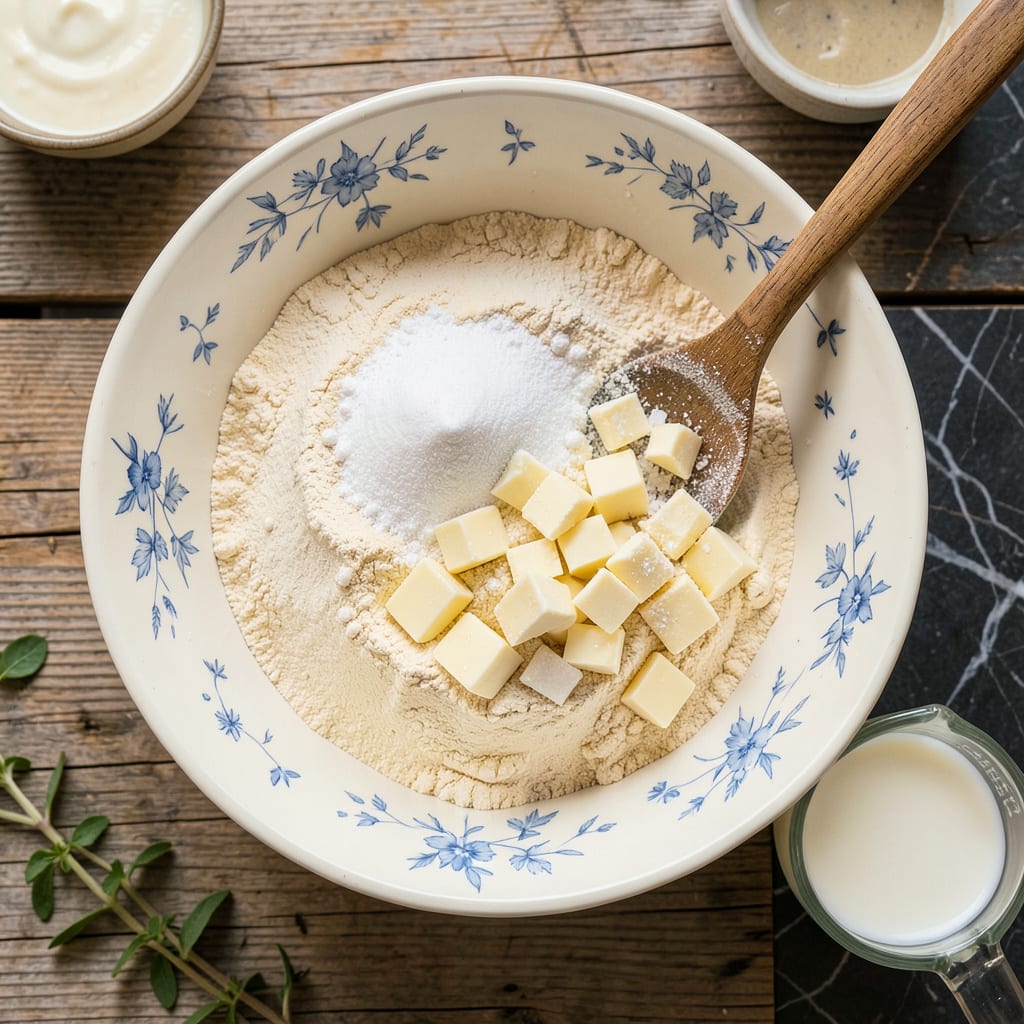
Add the 0.5 cup Unsalted Butter (cold and cubed into 1/4-inch pieces) to the dry ingredients. Using a pastry cutter or your fingertips, work the butter into the flour mixture until it resembles coarse crumbs with pea-sized butter pieces remaining.
The key to flaky biscuits is keeping the butter cold and visible in the dough. These butter pieces create steam pockets during baking that separate the layers. Work quickly to prevent the butter from warming—if your kitchen is hot, you can briefly chill the bowl between steps.
Step 3: Create the Dough with Minimal Handling
Make a well in the center of your flour-butter mixture. Pour in the 0.75 cup Buttermilk, 1 tbsp Honey, and 2 tbsp Heavy Cream. Using a fork or silicone spatula, gently mix just until the dough comes together—it will be slightly sticky but shouldn’t be wet.
Overmixing develops gluten, which makes biscuits tough. The dough should still have visible butter pieces and look shaggy rather than smooth. The buttermilk provides tangy flavor and tenderness, while the honey and heavy cream add subtle sweetness and richness to the final product.
Step 4: Shape and Cut for Even Baking
Turn the dough onto a lightly floured surface and gently pat it into a 1-inch thick rectangle. Avoid using a rolling pin, which can compress the layers. Fold the dough in half like a book, then pat it back to 1-inch thickness. This folding technique creates additional layers for extra flakiness.
Using a 2.5-inch biscuit cutter (or a glass), cut out biscuits by pressing straight down without twisting. Twisting seals the edges and prevents proper rising. Place biscuits on a parchment-lined baking sheet with sides just touching—this helps them rise upward rather than outward.
Step 5: Bake to Golden Perfection
Preheat your oven to 425°F and position a rack in the upper-middle position. Brush the biscuit tops with additional buttermilk for extra browning. Bake for 12-15 minutes until the tops are golden brown and the biscuits have risen to about double their original height.
The biscuits are done when they reach an internal temperature of 200°F and the bottoms sound hollow when tapped. Remove from the oven and let cool on the baking sheet for 2 minutes before serving. This brief rest allows the structure to set while still maintaining that tender, flaky texture.
Dietary Considerations for This krusteaz biscuit
Gluten-Free Adaptation
For a gluten-free version, replace the 2 cups All-Purpose Flour with a 1:1 gluten-free baking blend. I recommend King Arthur Measure for Measure because it includes xanthan gum for proper structure. Keep all other ingredients the same, but expect slightly denser results since gluten-free flours absorb moisture differently. 💡
Dairy-Free Option
To make these biscuits dairy-free, substitute the 0.5 cup Unsalted Butter with cold coconut oil (solid, not melted) and use unsweetened almond milk mixed with 1 tbsp lemon juice instead of buttermilk. The coconut oil should be chilled and cut into 1/4-inch pieces just like butter for proper layering.
Lower-Sodium Version
Reduce the 1 tsp Salt to 1/4 tsp and use low-sodium baking powder (like Hain Pure Foods brand). The buttermilk already contains natural sodium, so this adjustment maintains flavor while cutting overall salt content by about 70%. Perfect for those watching their sodium intake.
Vegan Biscuits
Combine the dairy-free swaps above with maple syrup instead of honey. For extra richness, add 1 tbsp vegan butter to the dough. The texture will be slightly different but still flaky if you keep all ingredients ice-cold. I’ve found Miyoko’s Creamery butter works best for this adaptation.
Whole Wheat Option
Replace up to 1 cup of the All-Purpose Flour with white whole wheat flour for added fiber. The biscuits will be slightly denser but maintain good rise if you add an extra 1/2 tsp baking powder to compensate. The nutty flavor pairs wonderfully with honey butter.
Nut-Free Considerations
If avoiding nuts, ensure your gluten-free flour blend (if using) is processed in a nut-free facility. For the dairy-free version, use oat milk instead of almond milk—it has similar acidity when mixed with lemon juice. Always check labels on all ingredients to avoid cross-contamination risks. ❤️
Nutrition Facts
Frequently Asked Questions
Why is my butter melting before baking?
This usually happens if the butter warms up during preparation. Keep your butter ice-cold and work quickly. If your kitchen is warm, chill the bowl for 10 minutes between steps. You can even freeze the butter cubes for 5 minutes before cutting them into the flour.
Can I make these ahead of time?
Prepare the dough, cut into rounds, and freeze on a tray. Once solid, transfer to a bag and store for up to 1 month. Bake directly from frozen, adding 2-3 extra minutes to the baking time. For same-day prep, refrigerate shaped biscuits up to 4 hours before baking.
What if I don’t have buttermilk?
No problem! Mix 3/4 cup whole milk with 1 tbsp lemon juice or vinegar. Let it sit for 5 minutes to thicken. This creates a perfect substitute with the same tangy flavor and acidity needed for tender, flaky layers.
Why did my biscuits turn out flat?
Flat biscuits usually mean the leavening lost its power. Check your baking powder’s freshness—it should be replaced every 6 months. Also, avoid overmixing the dough, which can deflate the air pockets. Ensure your oven is fully preheated to 425°F before baking.
Can I use a food processor?
Yes, but pulse carefully! Use 3-4 quick pulses just until the butter is pea-sized. Over-processing warms the butter and creates a dense texture. I recommend transferring to a bowl before adding wet ingredients to maintain control over mixing.

- 6 Egg Cake Recipe with Oil: Light as Air With Buttery Moisture - October 4, 2026
- 4 Bean Casserole Recipe: One-Pan Heartiness With Smoky Paprika Depth - October 4, 2026
- 3-Ingredient Keto Mug Cake Recipe: Microwave Magic in 2 Minutes - October 4, 2026