
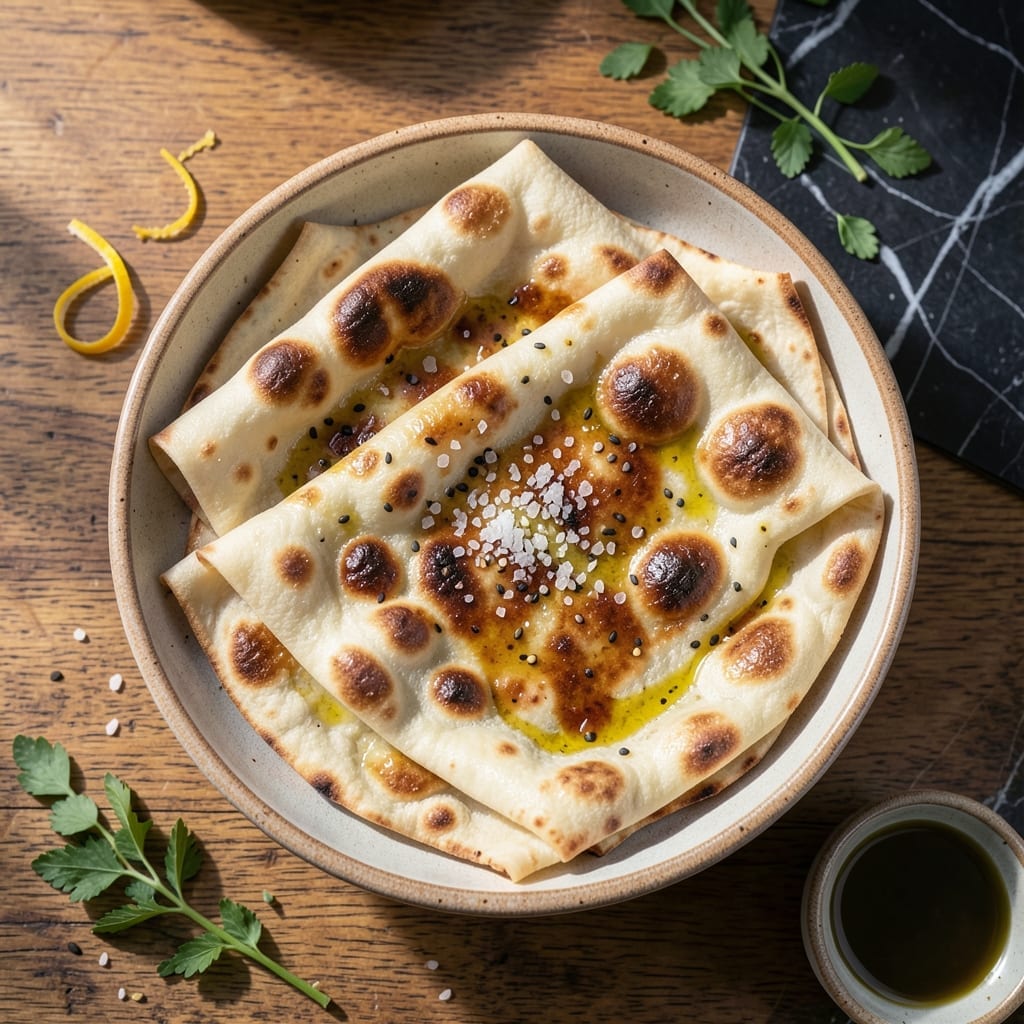
Thin, crispy, and endlessly versatile, this flatbread elevates any meal with its delicate texture and subtle flavor. I’ve perfected a method that delivers consistent results with minimal effort, making it ideal for both everyday dining and special occasions.
The process involves a simple dough of flour, water, and a touch of salt, rolled paper-thin and baked until golden. Whether you prefer it soft or cracker-crisp, the technique ensures a perfectly even finish every time.
Use it as a wrap for sandwiches, a base for dips, or even as a crunchy snack on its own. The possibilities are limited only by your imagination.
This recipe proves that homemade bread doesn’t have to be complicated to be extraordinary.
Ingredients for Lavash Bread Recipe Ideas
A simple dough of flour, water, and yeast creates this paper-thin, golden flatbread.
| Ingredient | Amount | Notes |
|---|---|---|
| All-Purpose Flour 🌾 | 2 cups | Plus extra for dusting |
| Warm Water 💧 | ¾ cup | About 110°F for activation |
| Active Dry Yeast 🍞 | 1 tsp | One packet or 2 1/4 tsp |
| Granulated Sugar 🍚 | 1 tsp | Feeds the yeast |
| Salt 🧂 | ½ tsp | Fine sea salt preferred |
| Olive Oil 🫒 | 2 tbsp | For dough elasticity |
| Cornmeal 🌽 | 2 tbsp | For dusting, optional |
| Sesame Seeds 🌰 | 1 tbsp | Optional topping for flavor |
| Poppy Seeds 🪨 | 1 tbsp | Optional topping for crunch |
| Garlic Powder 🧄 | ½ tsp | For savory variation |
| Dried Oregano 🌿 | ½ tsp | For herb-infused option |
| Honey 🍯 | 1 tbsp | For slightly sweet dough |
The flour is foundational here. King Arthur all-purpose gives consistent results, but any reliable brand works. Yeast needs to be fresh—check the expiration date. Fleet Farm or bulk bins at natural food stores often have the best prices. Warm water should feel like bathwater (not hot) to avoid killing the yeast. Cornmeal adds texture, but semolina works too if that’s what you have.
No yeast? Baking powder at 1 tsp per cup of flour makes a quick version (skip the sugar). Short on time? Store-bought pizza dough rolls out thin for instant lavash. For gluten-free, King Arthur GF flour blend with xanthan gum works well. The olive oil can be swapped for melted butter if you’re not sticking to vegetarian-only (though this version keeps it veg).
Dough keeps in the fridge for 2 days—let it come to room temp before rolling. Baked lavash stays fresh in an airtight container for 1 week, or freeze for 3 months. Re-crisp in the oven or toaster if it softens. Perfect for making ahead.
Why You’ll Love This Recipe
- Five Ingredient Magic: I love that this comes together with just flour, water, yeast, sugar, and salt—no fancy pantry items needed.
- Warm, Soft Bite: The yeast and sugar create this subtle sweetness that makes every bite just melt in your mouth.
- Endless Meal Pairings: I use it for wraps, dips, or even as a quick flatbread pizza base—so versatile for any meal.
- Budget Stretch: Here’s what sold me—it costs pennies per batch and keeps well for days, so I always have some on hand.
Step-by-Step Instructions for Lavash Bread
Master the technique for thin, crisp flatbread with these precise steps.
Step 1: Activate the Yeast Mixture
In a small bowl, combine the 0.75 cup Warm Water, 1 tsp Active Dry Yeast, and 1 tsp Granulated Sugar. Stir gently and let sit for 5-7 minutes until the mixture becomes frothy and cloudy.
This visual change confirms the yeast is alive and active. The sugar feeds the yeast during this activation period, which is critical for proper dough rise. If you don’t see bubbles forming, your water may have been too hot or the yeast may be expired.
Step 2: Create and Knead the Dough
In a large mixing bowl, combine the 2 cups All-Purpose Flour and 0.5 tsp Salt. Make a well in the center and pour in the activated yeast mixture along with the 2 tbsp Olive Oil and 1 tbsp Honey.
Mix with a wooden spoon until a shaggy dough forms, then turn onto a lightly floured surface. Knead for 8-10 minutes until smooth and elastic. The dough should spring back when pressed lightly with a finger.
This kneading develops the gluten structure that gives lavash its characteristic chewy texture. The honey adds a subtle sweetness that balances the savory notes.
Step 3: Let the Dough Rest and Rise
Lightly oil the mixing bowl, place the dough inside, and cover with a damp towel. Let rise in a warm, draft-free place for 1-1.5 hours or until doubled in volume.
The dough is ready when it holds an indent when pressed gently with a finger. This resting period allows the gluten to relax, making the dough easier to roll out thinly. The olive oil in the dough and bowl prevents sticking during this rise.
Step 4: Divide, Roll, and Top the Dough
Punch down the risen dough and divide it into 4 equal portions. On a surface dusted with 2 tbsp Cornmeal, roll each portion paper-thin, about Ⱡ16 inches in diameter.
Lightly brush the surface with water and sprinkle with 1 tbsp Sesame Seeds, 1 tbsp Poppy Seeds, 0.5 tsp Garlic Powder, and 0.5 tsp Dried Oregano if using. The seeds will adhere better to the damp surface.
The cornmeal prevents sticking while adding a subtle texture to the finished bread. Roll as thin as possible for that characteristic crisp texture.
Step 5: Bake to Crisp Perfection
Preheat your oven to 475°F with a baking stone or inverted baking sheet inside. Transfer each rolled dough to the hot surface and bake for 3-5 minutes until lightly blistered and golden brown in spots.
Watch closely as lavash bakes quickly at this high temperature. The bread should be crisp when cool but may appear slightly soft when first removed from the oven. Transfer to a wire rack to cool completely before breaking into pieces.
Pro Tips For Making Lavash Bread Recipe Ideas
- Proof the Yeast: I learned this the hard way—always bloom your active dry yeast in warm water with a pinch of sugar first. If it doesn’t foam within 5-10 minutes, your lavash won’t rise, and you’ll waste flour.
- Roll It Thin: Sounds obvious, but lavash needs to be paper-thin—aim for about 1/16 of an inch. Any thicker and it won’t get that signature crisp, delicate texture.
- Skip Cold Water: Warm water is non-negotiable here—around 110°F activates the yeast properly. Cold water slows fermentation, and you’ll end up with dense, flat bread.
- Use Bread Flour: I was skeptical until I tried it, but swapping all-purpose for bread flour gives lavash that extra chew and structure. The higher protein content actually changes the outcome.
Regional Styles of This lavash bread recipe ideas
Armenian Tradition
In Armenia, lavash is baked in a tandoor oven at blistering temperatures, creating paper-thin sheets that puff slightly. The dough is traditionally just flour, water, and salt—no yeast. I love the subtle char it develops from the intense heat. 🔥
Turkish Influence
Turkish lavash often includes yogurt or olive oil in the dough for extra tenderness. It’s typically thicker than Armenian versions and baked on a saj griddle. I find this style perfect for wrapping kebabs or meze.
Middle Eastern Style
In Lebanon and Syria, lavash is used as a wrap for shawarma or falafel. The dough is rolled slightly thicker and often brushed with za’atar oil before baking. This adds a fragrant, herby note that pairs beautifully with grilled meats.
Persian Approach
Persian lavash, called noon lavash, is baked in long, thin sheets and often topped with sesame or poppy seeds. It’s crispier than other regional versions and commonly served with stews for scooping. I prefer mine with a sprinkle of sumac for tang.
American Adaptation
Here in the US, lavash is often baked in a home oven at 475°F and used for sandwich wraps or crackers. I’ve seen creative twists like garlic-herb or cheese-filled variations. The thinness makes it versatile for any meal. ✨
Nutrition Facts
Frequently Asked Questions
Can I make this without yeast?
Yes! Replace yeast with 1 tsp baking powder per cup of flour and skip the rising time. The texture will be slightly different but still delicious.
What’s the secret to paper-thin dough?
Roll each portion as thin as possible on a lightly floured surface. Use a long rolling pin and rotate the dough frequently for even thickness.
How do I store leftover lavash?
Keep in an airtight container at room temperature for up to 1 week. For longer storage, freeze for 3 months and re-crisp in the oven.
Why did my bread turn out tough?
Over-kneading or not rolling thin enough can cause toughness. Stick to 8-10 minutes of kneading and aim for near-translucent thickness.

- 6 Egg Cake Recipe with Oil: Light as Air With Buttery Moisture - October 4, 2026
- 4 Bean Casserole Recipe: One-Pan Heartiness With Smoky Paprika Depth - October 4, 2026
- 3-Ingredient Keto Mug Cake Recipe: Microwave Magic in 2 Minutes - October 4, 2026