
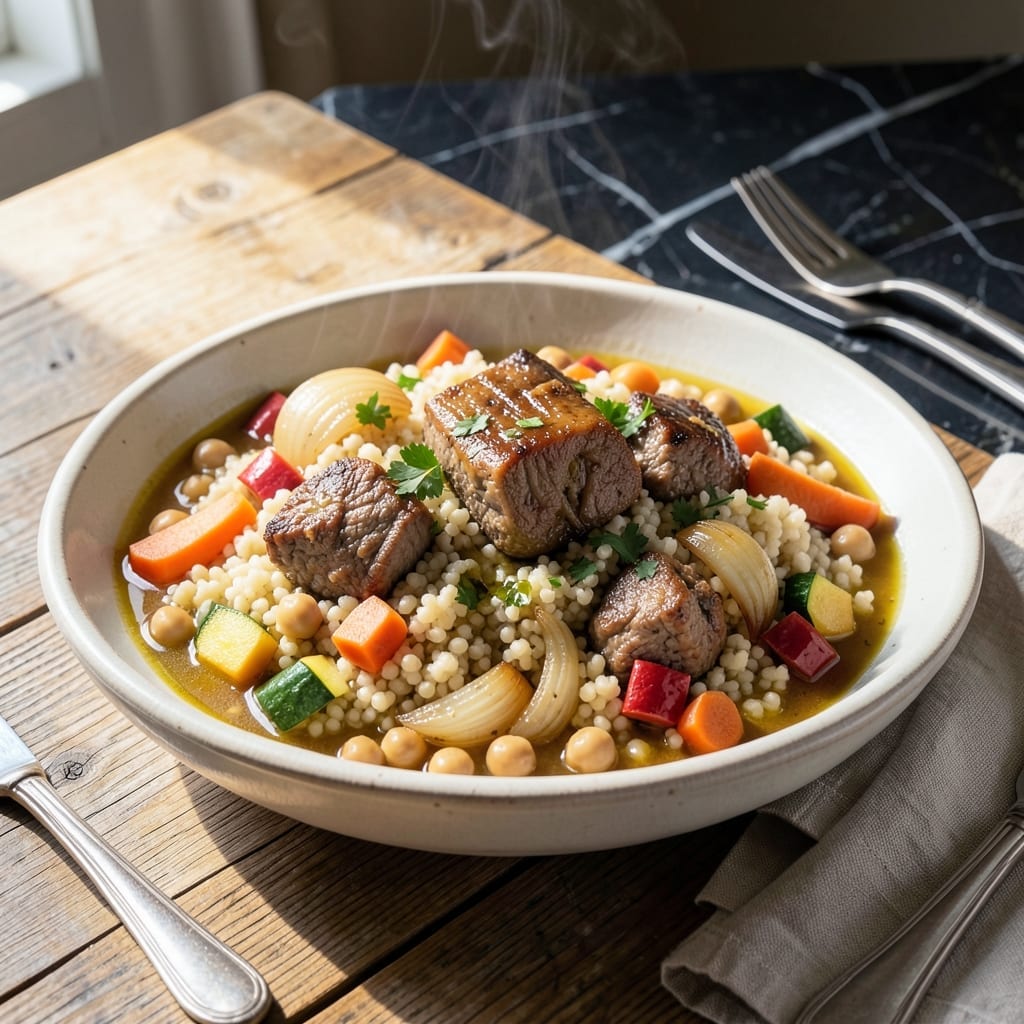
This traditional dish brings the flavors of Lebanon to your table with its unique pearl-like grains and richly spiced components. I’ve perfected this recipe to balance the textures of couscous with tender lamb and sweet vegetables.
The key is in the layering of flavors—couscous steamed to fluffy perfection, lamb slow-cooked with warm spices, and vegetables caramelized to bring out their natural sweetness. Each element is prepared with care to create a harmonious final dish.
What sets this apart is the traditional technique of hand-rolling the couscous pearls, which gives them their distinctive texture. The lamb and vegetables are simmered together, allowing their flavors to meld beautifully.
Once assembled, the dish offers a satisfying combination of tender lamb, sweet vegetables, and light, fluffy couscous. It’s a meal that feels special yet remains approachable for home cooks.
Ingredients for Lebanese Couscous
Pearl-like grains meet tender lamb and sweet vegetables in this traditional Lebanese dish.
| Ingredient | Amount | Notes |
|---|---|---|
| Moghrabieh (Lebanese Couscous) 🌾 | 2 cups | Pearl-like, hand-rolled preferred |
| Lamb Shoulder 🐑 | 1 ½ lb | Boneless, cubed into 1-inch pieces |
| Onions 🧅 | 2 whole | Yellow or white, thinly sliced |
| Carrots 🥕 | 3 whole | Peeled, cut into chunks |
| Zucchini 🥒 | 2 whole | Cut into large chunks |
| Chickpeas 🥜 | 1 can | Drained and rinsed |
| Tomato Sauce 🍅 | 2 cups | Plain, no added seasoning |
| Vegetable Broth 🥣 | 4 cups | Low-sodium preferred |
| Ground Cinnamon 🌿 | 1 tsp | Freshly ground for best flavor |
| Ground Cumin 🌿 | 1 tsp | Toasted for enhanced aroma |
| Ground Coriander 🌿 | 1 tsp | Freshly ground preferred |
| Olive Oil 🫒 | ½ cup | Extra-virgin for richness |
| Salt 🧂 | 1 ½ tsp | Diamond Crystal kosher recommended |
| Black Pepper 🌶️ | 1 tsp | Freshly ground preferred |
| Butter 🧈 | 2 tbsp | Unsalted, for couscous |
The Moghrabieh is the star—Middle Eastern markets or specialty grocers like Whole Foods usually carry it. Look for large, pearl-like grains rather than the finer instant couscous. For the lamb, shoulder is ideal due to its marbling and tenderness when slow-cooked. Boneless, cubed pieces ensure even cooking and maximum flavor absorption. The spices—cinnamon, cumin, coriander—should be fresh and aromatic for the best results.
No lamb? Beef chuck works well with a slightly longer cooking time. For a lighter option, chickpeas or mushrooms can replace the meat entirely (adjust broth accordingly). If Moghrabieh is unavailable, Israeli couscous is the closest substitute, though the texture will differ slightly. Tomato sauce can be homemade or San Marzano canned for optimal flavor. The vegetable broth should be robust—Better Than Bouillon is a reliable brand.
The cooked Moghrabieh keeps well in the fridge for 3-4 days in an airtight container. The lamb and vegetable stew actually improves overnight, so consider making it a day ahead. Both components freeze beautifully for up to 3 months. Reheat gently with a splash of broth to restore moisture.
Why You’ll Love This Recipe
- One Pot Wonder: I love that I can brown the lamb, sauté the onions, and simmer everything together—moghrabieh soaks up all the flavor while I do something else.
- Rich & Hearty: The lamb shoulder melts into the couscous, and the carrots and zucchini add just enough sweetness to balance it.
- Feeds a Crowd: I make a big batch on Sunday and we eat it for days—tastes even better reheated.
- Budget Stretcher: Lamb shoulder is affordable, and moghrabieh swells up so much that a little goes a long way.
Step-by-Step Instructions for Lebanese Couscous With Spiced Lamb and Vegetables
Master the technique of building layered flavors while achieving perfectly cooked pearl-like grains.
Step 1: Sear the Lamb Shoulder with Aromatic Spices
Heat 0.5 cup olive oil in a large, heavy pot over medium-high heat. Add the cubed 1.5 lb lamb shoulder in a single layer, being careful not to overcrowd the pot. I sear the meat in batches if necessary to ensure proper browning.
After 3-4 minutes, when the lamb develops a deep golden crust, add the 1 tsp ground cinnamon, 1 tsp ground cumin, and 1 tsp ground coriander. Stir to coat the meat evenly and cook for an additional 1-2 minutes until the spices become fragrant. This toasting step intensifies their warm, earthy notes.
Sprinkle with 1.5 tsp salt and 1 tsp black pepper, then transfer the lamb to a plate, leaving the spiced oil in the pot. This residual fat will serve as the foundation for the vegetable base.
Step 2: Caramelize the Vegetables and Build the Stew Base
In the same pot, add the 2 whole onions and cook over medium heat for 8-10 minutes, stirring occasionally, until they soften and turn translucent with golden edges. The natural sugars in the onions will begin to caramelize, creating depth of flavor.
Add the 3 whole carrots and 2 whole zucchini to the pot, cooking for another 5-6 minutes until the carrots start to soften slightly. Pour in the 2 cups tomato sauce and stir to combine, scraping up any browned bits from the bottom of the pot. These fond bits contain concentrated flavor that will enrich the stew.
Stir in the 1 can chickpeas and 4 cups vegetable broth, then return the seared lamb to the pot. Bring the mixture to a gentle simmer, then reduce the heat to medium-low to maintain a slow, steady bubble.
Step 3: Simmer the Stew and Cook the Moghrabieh
Cover the pot and let the stew simmer for 45 minutes, allowing the lamb to become fork-tender and the flavors to meld together. The lamb should easily pull apart with a fork when fully cooked. Stir occasionally to prevent sticking and ensure even cooking.
While the stew simmers, prepare the 2 cups Moghrabieh (Lebanese Couscous). In a separate pot, bring water to a boil and cook the moghrabieh according to package instructions until tender but still slightly firm, about 10-12 minutes. Drain well and toss with 2 tbsp butter to add richness and prevent sticking.
Step 4: Combine and Finish the Dish
Once the lamb is tender, taste the stew and adjust seasoning if needed. The sauce should be thick and aromatic, with the vegetables soft but still holding their shape. If the stew is too thin, simmer uncovered for an additional 5-10 minutes to reduce slightly.
To serve, spoon the cooked moghrabieh onto a large platter or individual bowls. Ladle the lamb and vegetable stew over the top, ensuring each serving has a generous portion of both the tender meat and the flavorful sauce. The moghrabieh should absorb some of the stew’s liquid, creating a harmonious blend of textures and flavors.
Pro Tips For Making Lebanese Couscous
- Toast the Moghrabieh: Dry-toast the couscous in a pan for 2-3 minutes before adding liquid—this deepens the nutty flavor and prevents mushiness.
- Brown the Lamb Well: Sear the lamb shoulder in batches to avoid steaming, and don’t stir too much—let it develop a dark crust for richer stew flavor.
- Soak the Couscous: If using dried moghrabieh, soak it in cold water for 10 minutes first; it cuts the cooking time in half and keeps the texture even.
- Add Zucchini Late: Stir in zucchini only 15 minutes before serving so it stays firm and doesn’t turn to mush in the long-cooked broth.
Health Benefits of This Dish
Fiber Rich Goodness
The Moghrabieh in this dish is a whole grain that provides an excellent source of dietary fiber—about 8 grams per cooked cup. This supports digestive health and helps maintain steady blood sugar levels. I find it keeps me fuller for longer after meals. 💪
Plant-Powered Vitamins
The vegetables deliver a powerhouse of vitamins: carrots provide vitamin A for eye health, while onions offer vitamin C and antioxidants. Zucchini adds vitamin B6 and potassium, supporting heart and muscle function.
Protein Boost
This dish offers a balanced protein source from both lamb and chickpeas. A serving provides approximately 30 grams of protein, essential for muscle repair and immune function. The lamb also contains iron and zinc for energy and immunity.
Healthy Fats
The olive oil in this recipe is rich in monounsaturated fats, which support heart health. It also contains polyphenols, powerful antioxidants that reduce inflammation. I always use extra-virgin for maximum nutritional benefits. ✨
Low Glycemic Impact
Despite its hearty nature, this dish has a moderate glycemic impact due to the fiber in Moghrabieh and vegetables. This helps prevent blood sugar spikes, making it suitable for those monitoring their glucose levels.
Bone Health Support
The combination of lamb, chickpeas, and vegetables provides calcium, magnesium, and phosphorus—all crucial for maintaining strong bones. The lamb also contains vitamin D, which enhances calcium absorption.
Nutrition Facts
Frequently Asked Questions
What’s the best substitute for Moghrabieh?
Israeli couscous is the closest alternative, with similar pearl-like texture. For a gluten-free option, try large pearl tapioca. Both may require adjusted cooking times.
Can I make this dish vegetarian?
Replace lamb with extra chickpeas or mushrooms. Use vegetable broth and add 1 tbsp soy sauce for umami depth. The spices work perfectly with plant-based proteins.
Why did my couscous turn mushy?
Overcooking or insufficient draining causes this. Cook Moghrabieh until just tender (10-12 minutes), then drain well. Toss with butter immediately to prevent sticking.
How do I store leftovers?
Keep stew and couscous separate in airtight containers for up to 3 days refrigerated. Freeze for longer storage (up to 3 months). Reheat gently with broth.

- 6 Egg Cake Recipe with Oil: Light as Air With Buttery Moisture - October 4, 2026
- 4 Bean Casserole Recipe: One-Pan Heartiness With Smoky Paprika Depth - October 4, 2026
- 3-Ingredient Keto Mug Cake Recipe: Microwave Magic in 2 Minutes - October 4, 2026