
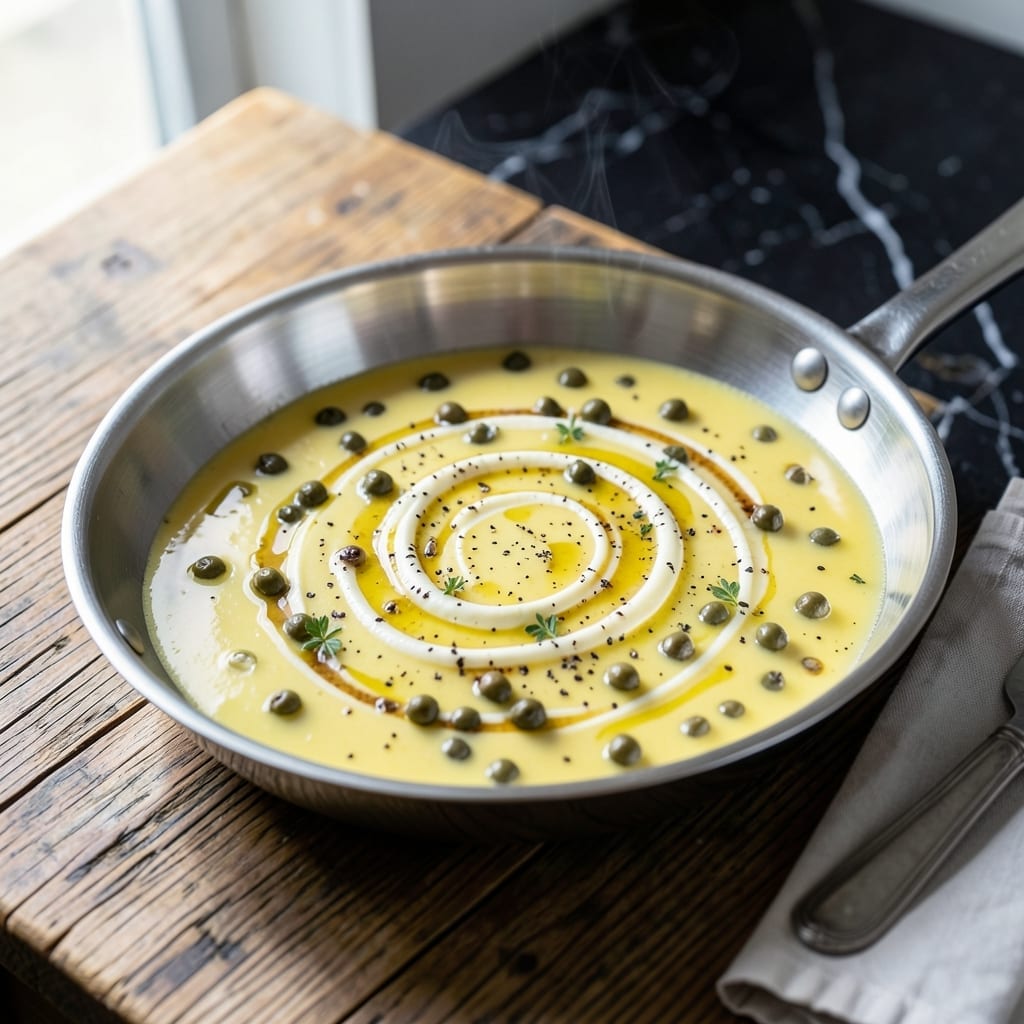
This sauce transforms simple seafood into restaurant-quality dishes with minimal effort. The combination of bright citrus, rich butter, and briny capers creates a perfectly balanced finish.
I developed this recipe to elevate grilled fish without overpowering its natural flavor. The key is emulsifying the butter into the lemon juice for a silky, cohesive texture.
You’ll get a velvety sauce with tangy lemon notes, creamy butter richness, and salty caper pops. It comes together in under 10 minutes with pantry staples.
Drizzle over salmon, scallops, or chicken for an instant gourmet touch. The flavors deepen as it sits, making it ideal for meal prep.
Ingredients for Lemon Butter Caper Sauce
Nine simple ingredients create this restaurant-worthy lemon butter caper sauce with ease.
| Ingredient | Amount | Notes |
|---|---|---|
| Unsalted Butter 🧈 | ½ cup | Cold, cut into small cubes |
| Fresh Lemon Juice 🍋 | ¼ cup | About 2-3 lemons, freshly squeezed |
| Capers 🌿 | 2 tbsp | Drained and rinsed if salt-packed |
| Shallot 🧅 | 1 whole | Finely minced for subtle bite |
| White Wine 🍷 | 2 tbsp | Dry variety like Sauvignon Blanc |
| Dijon Mustard 🟡 | 1 tsp | Smooth, no seeds preferred |
| Fresh Parsley 🌿 | 2 tbsp | Finely chopped for garnish |
| Kosher Salt 🧂 | ¼ tsp | Diamond Crystal preferred |
| Freshly Ground Black Pepper 🌶️ | 0.125 tsp | Fine grind for even distribution |
The butter is the foundation here. European-style unsalted (like Plugrá or Kerrygold) has higher fat content for better emulsification. Capers come salt-packed or brine-packed—salt-packed have better flavor but require a thorough rinse. Trader Joe’s carries great salt-packed capers. Shallots add a delicate oniony note without overpowering the sauce. Grab them from the produce section near the garlic.
No white wine? Substitute dry vermouth at 1:1 ratio or use a splash of apple cider vinegar with water. Shallot shortage? Red onion at half the amount works in a pinch. For a creamier texture, add a pat of cold butter at the end off heat. If your capers are huge, give them a rough chop—uniform size ensures even distribution in every bite.
This sauce holds beautifully at room temperature for 2 hours. Store leftovers in an airtight container in the fridge for up to 5 days. Reheat gently over low heat, whisking in a splash of water if it separates. Freezing isn’t recommended—the emulsion breaks down.
Why You’ll Love This Recipe
- 5-Minute Magic: I melt the butter, toss in the shallots, and let the wine reduce while the capers pop—done before the pasta finishes boiling.
- Bright and Zesty: That first hit of fresh lemon juice with the rich butter and briny capers? It’s the kind of flavor that makes me close my eyes mid-bite.
- Dresses Up Anything: I’ve drizzled this over salmon, chicken, even roasted veggies—honestly, it turns whatever’s on my plate into something restaurant-worthy.
- Zero Waste: Leftovers keep beautifully, and I’ll stir a spoonful into scrambled eggs the next morning for a fancy breakfast with no extra effort.
Step-by-Step Instructions for Lemon Butter Caper Sauce
This elegant sauce comes together quickly with just a few simple techniques.
Step 1: Sauté the Shallot Until Translucent
Heat a medium saucepan over medium heat. Add 0.5 cup Unsalted Butter and let it melt completely, swirling occasionally. The butter should foam but not brown—this takes about 2-3 minutes.
Once melted, add the finely minced 1 whole Shallot and cook for 3-4 minutes, stirring frequently, until it turns translucent and fragrant. Don’t let it brown; soft, sweet shallot is what you want here.
This base builds the aromatic foundation. If the shallot starts to color too quickly, reduce the heat slightly. The goal is gentle cooking, not caramelization.
Step 2: Deglaze with Wine and Build Flavor
Pour in the 2 tbsp White Wine and let it simmer for 1-2 minutes until reduced by half. The alcohol should cook off, leaving behind a bright, concentrated flavor.
Next, add the 1 tsp Dijon Mustard and 2 tbsp Capers (drained and rinsed). Stir well to combine, then cook for another 1 minute to meld the flavors. The capers will plump slightly in the heat, releasing their briny essence.
Here’s the thing—this step is where the sauce starts to develop its signature complexity. The wine and mustard balance the capers’ saltiness beautifully.
Step 3: Emulsify with Lemon and Finish
Reduce heat to low and slowly pour in the 0.25 cup Fresh Lemon Juice, whisking constantly. The mixture will look separated at first, but keep whisking—it will come together into a smooth, glossy emulsion.
Season with 0.25 tsp Kosher Salt and 0.125 tsp Freshly Ground Black Pepper. Taste and adjust if needed, but remember the capers add saltiness too. The sauce should be tangy, rich, and slightly briny.
Real talk: if it looks too thick, add a splash of water or extra lemon juice. This sauce should coat the back of a spoon but still be pourable.
Step 4: Finish with Fresh Parsley and Serve
Remove the sauce from heat and stir in 2 tbsp Fresh Parsley. The residual heat will wilt it slightly, releasing its fresh, green aroma without cooking it completely.
Let the sauce sit for 2 minutes to allow the flavors to fully marry. The parsley adds a bright, herbal note that cuts through the richness of the butter.
Serve immediately over grilled fish, shrimp, or chicken. This sauce doesn’t hold well, so make it last—it’s best fresh and warm, with all its vibrant flavors intact.
Pro Tips For Making Lemon Butter Caper Sauce
- Temper the Butter: Pull the pan off the heat when adding butter to keep the sauce from separating—I learned this the hard way after ruining two batches with broken emulsions.
- Rinse the Capers: Soak capers in cold water for 5 minutes, then drain, or they’ll overpower the sauce with salt (yes, even if the jar says “non-pariel”).
- Reduce the Wine First: Simmer the shallots in white wine until it’s nearly gone before adding lemon juice—skipping this leaves the sauce watery and raw-tasting.
- Use Room-Temp Butter: Cut the unsalted butter into small cubes and let it sit out for 10 minutes so it melts evenly into the sauce instead of seizing up.
Essential Equipment for This Recipe
Saucepan Selection
I always reach for my All-Clad 3-quart saucepan with a heavy bottom for even heat distribution. A medium-sized pan gives you enough room to whisk while keeping the sauce contained. Avoid nonstick for this recipe—you want the fond from the shallots to build flavor. 💡
Whisk Matters
A balloon whisk is my secret weapon for creating that perfect emulsion. The rounded shape helps incorporate air and blend ingredients smoothly. I prefer OXO’s stainless steel whisk for its comfortable grip and durability.
Precision Thermometer
While not strictly necessary, a instant-read thermometer helps monitor your butter temperature. The ideal range is 160-180°F—hot enough to melt but not so hot it burns the shallots. I trust my ThermoWorks ThermoPop for accuracy.
Fine Mesh Strainer
If you prefer ultra-smooth sauce, have a fine mesh strainer ready to catch any stray shallot pieces. I use Cuisinox for this—it’s sturdy and easy to clean. Strain just before serving for a refined texture.
Citrus Juicer
Fresh lemon juice is non-negotiable. A handheld citrus reamer or OXO juicer extracts every last drop efficiently. You’ll need about 2-3 lemons for the ¼ cup required. Roll them on the counter first to maximize yield.
Prep Bowls
Mise en place is key for fast sauces. Have all ingredients prepped and measured in small bowls—a set of 4 stainless steel prep bowls from Winco keeps my workspace organized. Measure your capers and Dijon ahead of time. ✨
Nutrition Facts
Frequently Asked Questions
Can I use bottled lemon juice instead of fresh?
Fresh is always best for bright, vibrant flavor. Bottled juice often tastes flat and processed. If you must, use 1/3 less since bottled is more concentrated.
How do I fix a broken emulsion?
Remove from heat and whisk in 1 teaspoon of cold water or lemon juice. If that fails, transfer to a blender and pulse until smooth.
What’s the best way to store leftovers?
Keep in an airtight container in the fridge for up to 5 days. Reheat gently on low heat, whisking constantly.
Can I make this sauce ahead of time?
Yes, but prepare it no more than 2 hours ahead. The flavors meld beautifully at room temperature. Avoid making it a full day in advance.

- 6 Egg Cake Recipe with Oil: Light as Air With Buttery Moisture - October 4, 2026
- 4 Bean Casserole Recipe: One-Pan Heartiness With Smoky Paprika Depth - October 4, 2026
- 3-Ingredient Keto Mug Cake Recipe: Microwave Magic in 2 Minutes - October 4, 2026