
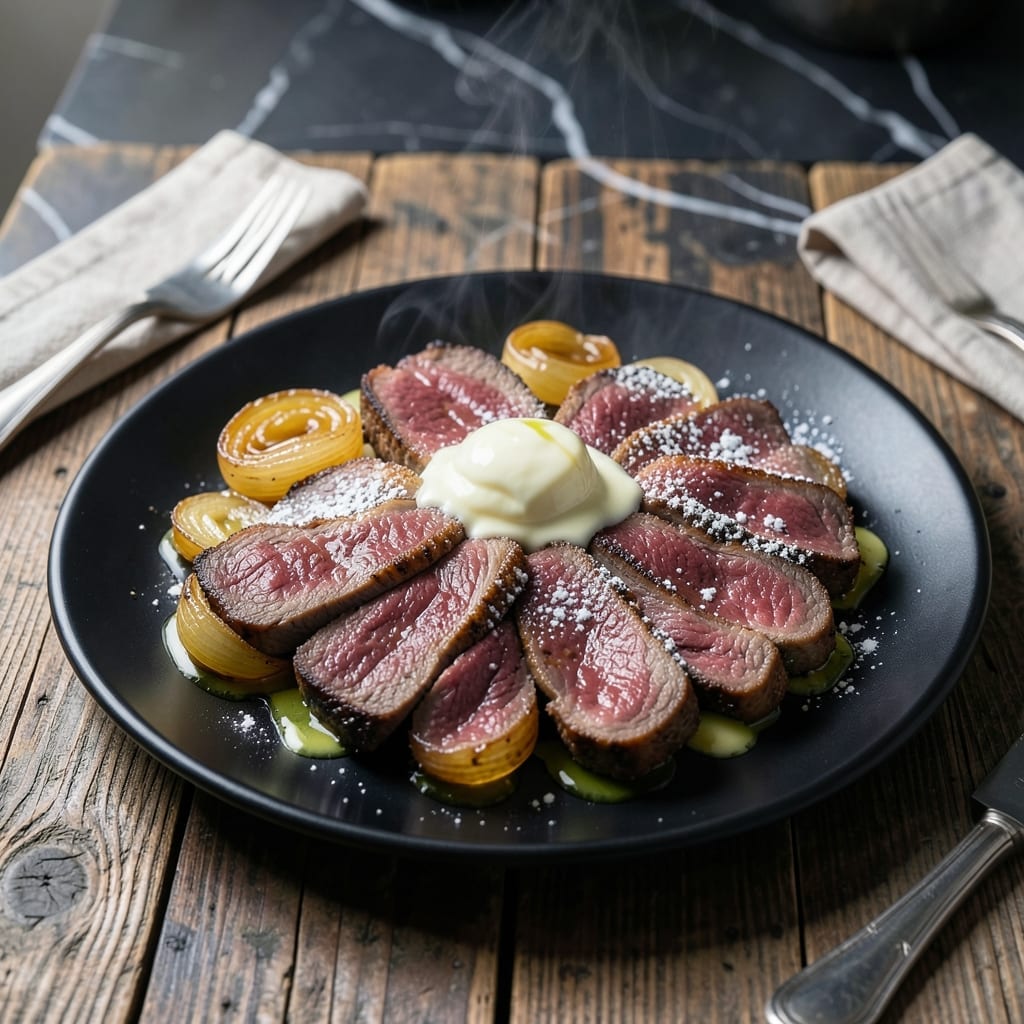
I’ve perfected a method for cooking liver that removes any bitterness while locking in rich, savory depth. The key is high heat and precise timing to achieve a tender interior with a caramelized crust.
Caramelized onions add natural sweetness that balances liver’s bold flavor, creating a sophisticated dish in under 30 minutes. A simple pan sauce ties everything together with minimal effort.
This technique works with beef, chicken, or pork liver, delivering restaurant-quality results at home. The onions become deeply golden, melting into each bite.
Serve with mashed potatoes or crusty bread to soak up every drop of flavor. Here’s how to master it.
Ingredients for Liver
High-heat searing and caramelized onions transform liver into a restaurant-worthy dish with minimal ingredients.
| Ingredient | Amount | Notes |
|---|---|---|
| Beef Liver 🥩 | 1 ½ lb | Sliced into 1/2-inch pieces, patted dry |
| Yellow Onions 🧅 | 3 whole | Large, thinly sliced for caramelization |
| Unsalted Butter 🧈 | 6 tbsp | Divided for onions and liver |
| All-Purpose Flour 🌾 | ½ cup | For dredging liver slices |
| Kosher Salt 🧂 | 1 ½ tsp | Diamond Crystal preferred, divided |
| Freshly Ground Black Pepper 🌶️ | 1 tsp | Coarse grind for texture |
| Garlic Cloves 🧄 | 4 cloves | Minced for pan sauce |
| Beef Stock 💧 | 1 cup | Low-sodium preferred for sauce |
| Worcestershire Sauce 🍶 | 1 tbsp | Adds umami depth to sauce |
| Fresh Thyme Sprigs 🌿 | 4 whole | Stems removed, leaves only |
| Olive Oil 🫒 | 2 tbsp | For high-heat searing |
| Dijon Mustard 🟡 | 1 tsp | For finishing pan sauce |
The liver quality is paramount. Beef liver from a trusted butcher ensures freshness and mild flavor. Look for deep red color and smooth texture—avoid any with grayish spots or strong ammonia odor. Whole Foods or local butchers typically carry higher-grade offal. For best results, soak slices in milk for 30 minutes to mellow any residual bitterness before cooking.
No beef liver? Chicken or pork liver work equally well with the same technique, though cooking times may vary slightly. Substitute shallots for onions for a more delicate sweetness. If avoiding alcohol, beef stock with a splash of apple cider vinegar replaces Worcestershire sauce. The flour dredge can be swapped for cornstarch for a gluten-free version, though the crust may be less traditional.
Cook liver immediately after purchasing or freeze for up to 3 months. Caramelized onions keep in the fridge for 5 days—perfect for meal prep. The pan sauce is best made fresh but can be reheated gently. Always store liver in the coldest part of your refrigerator and use within 2 days of purchase.
Why You’ll Love This Recipe
- One Pan Wonder: I love that this comes together in a single skillet—just sear the liver, sauté the onions in butter, and dust with flour.
- Rich and Savory: The butter and onions caramelize into this deep, meaty flavor that makes the liver taste indulgent, not gamey.
- Weeknight Hero: Honestly, it’s my go-to for busy evenings—quick enough for a Tuesday, fancy enough for company.
- Budget Stretch: A pound of beef liver costs less than steak but feeds my family of four with leftovers for lunch the next day.
Step-by-Step Instructions for Savory Pan-Seared Beef Liver with Caramelized Onions
Master the technique for tender liver and rich onions with this refined approach.
Step 1: Prepare and Dredge the Beef Liver
Begin by patting the 1.5 lb Beef Liver slices completely dry with paper towels. This critical step ensures a proper sear rather than steaming. Season both sides with 1 tsp Kosher Salt and 1 tsp Freshly Ground Black Pepper, pressing the seasoning into the surface.
Spread the 0.5 cup All-Purpose Flour on a plate and dredge each liver slice, shaking off excess. The flour creates a light crust that locks in moisture while adding subtle texture. Set the dredged slices aside on a wire rack to maintain crispness.
Step 2: Caramelize the Yellow Onions
In a large skillet over medium-low heat, melt 3 tbsp Unsalted Butter. Add the 3 whole Yellow Onions and cook for 30-40 minutes, stirring occasionally, until they transform into a deep amber color and sweet aroma fills the kitchen.
Resist the urge to increase heat—low and slow is key for proper caramelization. Add a pinch of the remaining 0.5 tsp Kosher Salt halfway through to help draw out moisture. The onions should collapse into silky strands with a rich, jammy consistency.
Step 3: Sear the Liver to Perfection
Heat the 2 tbsp Olive Oil in a separate large skillet over medium-high heat until shimmering. Add the dredged liver slices in a single layer, working in batches if necessary to avoid crowding. Sear for 2-3 minutes per side until browned but still slightly pink inside.
Add the remaining 3 tbsp Unsalted Butter to the pan during the last minute of cooking, basting the liver with the foaming butter for added richness. Transfer the seared liver to a warm plate and tent loosely with foil to keep warm.
Step 4: Create the Pan Sauce
In the same skillet used for the liver, reduce heat to medium. Add the 4 cloves Garlic Cloves and Fresh Thyme Sprigs leaves, sautéing for 30 seconds until fragrant. Pour in the 1 cup Beef Stock and 1 tbsp Worcestershire Sauce, scraping up any browned bits from the pan.
Simmer for 3-4 minutes until the liquid reduces by half. Remove from heat and whisk in the 1 tsp Dijon Mustard for a velvety finish. The sauce should coat the back of a spoon with a glossy sheen.
Spoon the sauce over the liver and serve immediately with the caramelized onions on the side or atop the liver. The liver should be tender with a slight resistance at the center, never tough or dry.
Pro Tips For Making Liver
- Soak the Liver: Cover beef liver slices in milk for 30 minutes before cooking—it draws out the bitterness and mellows the flavor. I learned this the hard way after serving a metallic-tasting batch to skeptical guests.
- High Heat Only: Use a ripping hot pan and don’t crowd it—liver cooks in 2-3 minutes per side and will turn rubbery if overcooked. Sounds fast, but that’s exactly how long it takes.
- Dry the Slices: Pat the liver completely dry with paper towels before dredging in flour, or the coating won’t stick and you’ll get a sad, soggy crust instead of a crisp one.
- Butter Last: Sear the liver in oil first, then add the butter at the end for basting—this prevents it from burning and gives you that rich, nutty flavor without the black bits.
Storing and Reheating This Dish
Refrigerator Storage
Let liver cool completely before storing. Transfer to an airtight container with caramelized onions and sauce. It stays fresh at 40°F or below for up to 2 days. The onions may soften but retain their sweetness. ❄️
Freezer Storage
Freeze cooked liver in a single layer first, then transfer to a freezer bag. It keeps for 3 months without texture loss. I recommend portioning into meal-sized servings for convenience. Always label with the date.
Reheating on Stovetop
Gently warm in a skillet over medium-low heat with a splash of beef stock to prevent drying. Cover and heat for 5-7 minutes, stirring occasionally. The sauce will thicken slightly as it reheats.
Microwave Reheating
Place liver in a microwave-safe dish with a damp paper towel. Heat at 50% power for 1-2 minutes, checking and stirring every 30 seconds. This prevents rubbery texture. 🔥
Sauce Refresh Tip
If the pan sauce thickens too much, thin with 2-3 tbsp warm water or beef stock. Reheat gently to maintain its velvety consistency. Taste and adjust seasoning with a pinch of salt if needed.
Safety Note
Never leave liver at room temperature for more than 2 hours. When reheating, ensure it reaches 165°F internally. I always use a meat thermometer to be absolutely sure.
Nutrition Facts
Frequently Asked Questions
How do I prevent a bitter taste?
Soak slices in milk for 30 minutes before cooking. This removes impurities and mellows the flavor. Always pat dry thoroughly afterward for the best sear.
Can I use chicken liver instead?
Yes! Chicken liver cooks faster—reduce searing time to 1-2 minutes per side. The technique works the same, but watch closely to avoid overcooking.
What if my liver turns out tough?
Overcooking is the usual culprit. Cook just until slightly pink inside at 145-150°F. Let it rest 5 minutes before serving to redistribute juices.
How do I know when it’s done?
Use a meat thermometer—145°F for medium-rare, 160°F for well-done. The center should still feel slightly springy, not firm.

- 6 Egg Cake Recipe with Oil: Light as Air With Buttery Moisture - October 4, 2026
- 4 Bean Casserole Recipe: One-Pan Heartiness With Smoky Paprika Depth - October 4, 2026
- 3-Ingredient Keto Mug Cake Recipe: Microwave Magic in 2 Minutes - October 4, 2026