
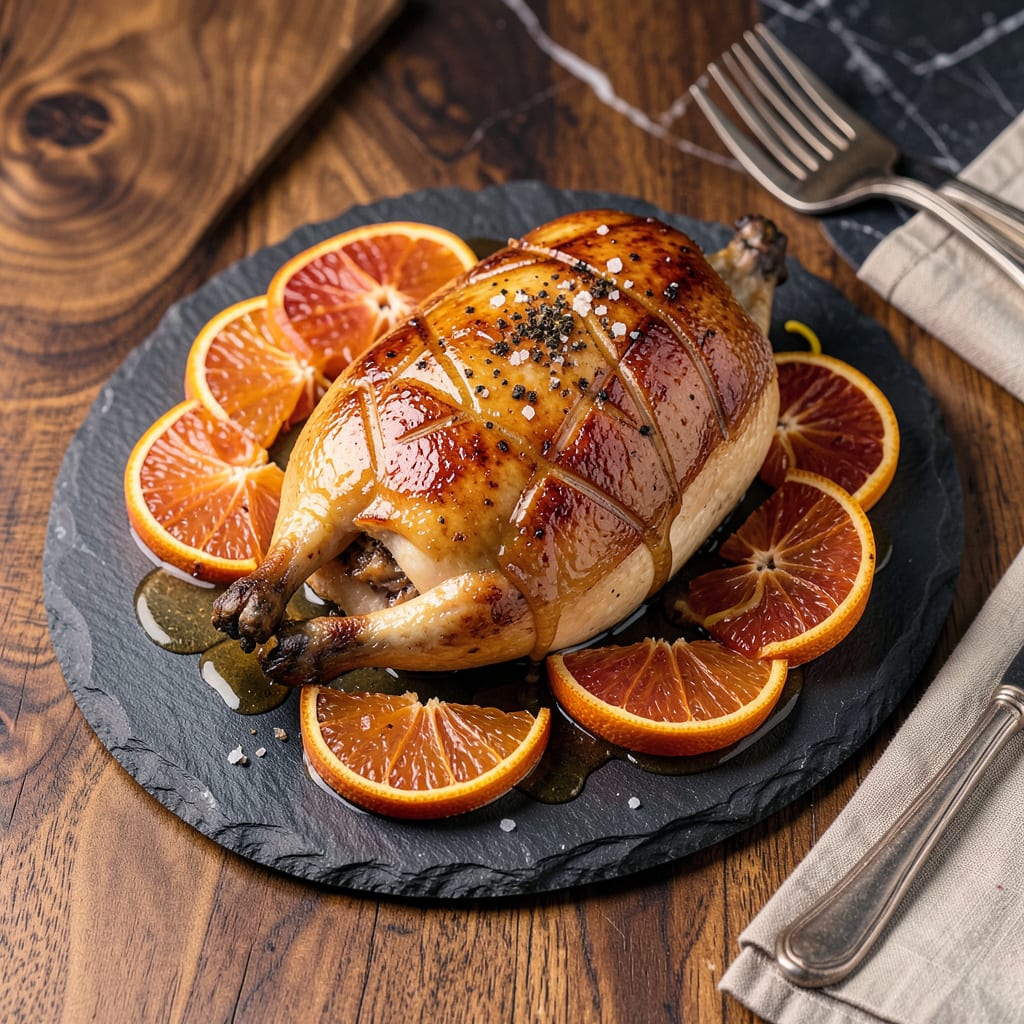
Long Island’s duck-farming heritage meets modern culinary technique in this refined preparation that delivers crispy-skinned perfection. The region’s cool climate and coastal grasses create duck with exceptional flavor and texture, making it ideal for this elegant treatment. I’ve adapted classic French methods to highlight the bird’s natural richness while incorporating local citrus for brightness.
What sets this recipe apart is the precise balance between rendering fat for crispness and maintaining moist meat. The orange glaze adds a sophisticated contrast to the duck’s savory depth, creating a dish that’s impressive enough for special occasions yet approachable for home cooks. Proper technique ensures the skin achieves that coveted crackling texture while the meat remains tender throughout.
Ingredients for Long Island Duck
This refined preparation requires precise ingredients to achieve crispy-skinned perfection with citrus-balanced elegance.
| Ingredient | Amount | Notes |
|---|---|---|
| Long Island Duck 🦆 | 4 lb | Whole, fresh, skin-on |
| Kosher Salt 🧂 | 1 ½ tbsp | Diamond Crystal preferred for even seasoning |
| Freshly Ground Black Pepper 🌶️ | 1 tsp | Medium-coarse grind recommended |
| Navel Oranges 🍊 | 2 whole | Zested and juiced for glaze |
| Local Honey 🍯 | ¼ cup | Long Island wildflower preferred for depth |
| Apple Cider Vinegar 🍏 | 2 tbsp | Unfiltered for balanced acidity |
| Fresh Thyme 🌿 | 6 sprigs | Stems removed, leaves reserved |
| Shallots 🧅 | 2 whole | Finely minced for aromatic base |
| Unsalted Butter 🧈 | 4 tbsp | European-style preferred for lower water content |
| Dry White Wine 🍷 | ½ cup | Sauvignon Blanc or Pinot Grigio recommended |
| Chicken Stock 🥄 | 1 cup | Homemade or low-sodium preferred |
| Extra-Virgin Olive Oil 🫒 | 1 tbsp | For initial searing only |
| Fresh Parsley 🌿 | ¼ cup | Flat-leaf variety, finely chopped for garnish |
| Grand Marnier 🥃 | 2 tbsp | Optional but recommended for depth |
| Dijon Mustard 🥄 | 1 tsp | For glaze emulsification |
The duck quality is paramount for this preparation. Optimal results require Long Island-raised duck, available at specialty butchers like Pat LaFrieda or local farms such as Crescent Duck Farm. The skin must be intact and well-distributed—avoid previously frozen specimens. For the orange component, local Navel oranges provide the ideal sweetness-acid balance, though Valencia oranges may be substituted. The honey should be raw and unfiltered to maintain the glaze’s complexity; Long Island wildflower varieties are particularly well-suited.
Substitutions must maintain the dish’s delicate balance. Maple syrup may replace honey at a 1:1 ratio, though the flavor profile will shift. For alcohol-free preparation, substitute orange juice reduction for the Grand Marnier. The thyme is non-negotiable for aromatic depth, but rosemary at half quantity can provide an alternative herbaceous note. Should shallots be unavailable, yellow onion at double volume offers comparable sweetness when properly caramelized.
Proper storage preserves the duck’s texture. Keep the raw bird refrigerated at 38°F until preparation, ideally on a wire rack to allow air circulation. The prepared glaze maintains optimal consistency for 3 days refrigerated or 2 months frozen. For service, reheat the duck skin-side up in a 350°F oven to restore crispness, while the glaze should be gently warmed in a saucepan to prevent separation.
Why You’ll Love This Recipe
- Five-Ingredient Magic: Honestly, the ingredient list looks fancy but it’s just duck, salt, pepper, oranges, and honey. I’ve made this on exhausted weeknights when even ordering takeout felt like too much effort—no chopping marathons, no obscure spices, just what’s already in my pantry (plus that one glorious duck).
- Sweet-Tart Obsession: Here’s what sold me—the honey caramelizes into this sticky, glossy coat while the orange zest cuts through the richness like a bright little surprise. My partner, who “doesn’t do fruit with meat,” now steals bites straight from the pan. (Yes, even the crispy skin.)
- Dinner or Centerpiece: I’ve served this on a random Wednesday with roasted potatoes and again at a dinner party where people actually asked for the recipe. The duck does the heavy lifting—fancy enough for guests, unfussy enough for my kids to eat (minus the orange slices, which my youngest picks out but still demands “more duck, please”).
- Leftovers? Lucky You: Cold duck slices on crusty bread with a smear of honey? Chef’s kiss. Or toss the shredded meat into fried rice the next day—saves me $20 on takeout and tastes twice as good. One duck feeds us for two meals, and the rendered fat? I hoard it for roasting veggies later. Waste nothing, flavor everything.
Step-by-Step Instructions for Long Island Duck with Orange Glaze
This method delivers perfectly crisp skin and tender meat with a vibrant citrus glaze every time.
Step 1: Prepare and Season the Duck
Remove the duck from packaging and pat it completely dry with paper towels, paying special attention to the skin and cavity. This step is crucial for achieving crispy skin. Using a sharp knife, score the skin in a crosshatch pattern, cutting through the fat but not into the meat. This allows the fat to render more efficiently during cooking.
Season the duck generously with the 1.5 tbsp Kosher Salt and 1 tsp Freshly Ground Black Pepper, rubbing it into all surfaces including the cavity. Place the duck on a wire rack set over a baking sheet and refrigerate uncovered for 12-24 hours. This drying process is essential for developing crispy skin and even seasoning throughout.
Step 2: Create the Orange Glaze Base
Zest both Navel Oranges into a small saucepan, then juice them to yield approximately ½ cup of fresh orange juice. Add the 0.25 cup Local Honey, 2 tbsp Apple Cider Vinegar, 2 tbsp Grand Marnier, and 1 tsp Dijon Mustard to the saucepan. Bring to a gentle simmer over medium heat and cook for 8-10 minutes, stirring occasionally, until the mixture reduces by about one-third and develops a syrupy consistency.
Remove from heat and whisk in the 4 tbsp Unsalted Butter one tablespoon at a time, allowing each addition to fully incorporate before adding the next. This creates a glossy, emulsified glaze. Set aside until ready to use, keeping it warm but not boiling.
Step 3: Render Fat and Sear the Duck
Preheat your oven to 375°F. Place the duck breast-side up on the wire rack. Roast for 1 hour, then carefully flip the duck and continue roasting for another 45 minutes. This two-stage roasting ensures even fat rendering and crispy skin on both sides.
After the initial roasting, transfer the duck to a large oven-safe skillet. Pour off all but 2 tablespoons of the rendered fat from the baking sheet. Add the 1 tbsp Extra-Virgin Olive Oil to the skillet and sear the duck over medium-high heat for 3-4 minutes per side until the skin is deep golden brown and crispy. Remove the duck and set aside.
Step 4: Build the Pan Sauce
In the same skillet, add the 2 whole Shallots (finely minced) and cook over medium heat for 2-3 minutes until translucent. Add the 6 sprigs Fresh Thyme (leaves only) and cook for an additional 30 seconds until fragrant. Deglaze the pan with the 0.5 cup Dry White Wine, scraping up any browned bits from the bottom.
Add the 1 cup Chicken Stock and bring to a simmer. Cook for 5-7 minutes until the liquid reduces by half. Stir in the reserved orange glaze and simmer for another 2 minutes until the sauce coats the back of a spoon. Taste and adjust seasoning if needed.
Step 5: Rest and Serve
Return the duck to the skillet with the sauce and spoon the sauce over the duck to coat evenly. Transfer to a cutting board and let rest for 10 minutes before carving. This resting period allows the juices to redistribute throughout the meat.
Carve the duck into serving pieces and arrange on a platter. Spoon the remaining sauce over the duck and garnish with the 0.25 cup Fresh Parsley (finely chopped). The skin should be crisp and mahogany-colored, while the meat remains tender and juicy. Serve immediately with the vibrant orange glaze.
Perfect Pairings for This Dish
Wine Pairings
The orange glaze’s citrus notes call for a Pinot Noir from Long Island’s North Fork. I love Bedell Cellars’ 2019 Pinot Noir—its bright acidity and red fruit flavors complement the duck’s richness while harmonizing with the glaze. Serve slightly chilled at 60°F to enhance the pairing. 🍷
For white wine lovers, a Gewürztraminer from nearby Paumanok Vineyards offers lychee and rose petal aromas that elevate the dish. The wine’s natural sweetness balances the duck’s savory notes, while its acidity cuts through the fat beautifully.
Craft Cocktails
A Long Island Duck Sour makes the perfect signature cocktail. Combine 2 oz bourbon, 1 oz orange liqueur, ¾ oz lemon juice, and ½ oz honey syrup. Shake with ice and strain into a chilled coupe glass. The citrus echoes the glaze while the bourbon stands up to the duck’s richness.
For something lighter, try a Sparkling Thyme Fizz with 1 oz gin, ½ oz thyme-infused simple syrup, and 3 oz chilled prosecco. The herbal notes mirror the dish’s thyme component while the bubbles refresh your palate between bites.
Side Dish Pairings
Wild rice pilaf with toasted pecans and dried cranberries provides textural contrast. I use 1 cup wild rice blend cooked in duck stock (reserved from the pan) for extra depth. The nuttiness complements the duck while the cranberries echo the orange glaze’s fruitiness.
Roasted Brussels sprouts with pancetta and chestnuts offer a hearty accompaniment. Toss 1 lb halved sprouts with 2 oz diced pancetta and ½ cup roasted chestnuts, then roast at 400°F for 20 minutes until crispy. 🥗
Bread Options
A warm brioche roll from Blue Duck Bakery in Southampton soaks up the orange glaze beautifully. Toast lightly and brush with duck fat reserved from cooking for extra richness. The slight sweetness of brioche balances the dish’s savory elements.
For something rustic, serve with sourdough from North Fork Bread Company. The tangy crumb cuts through the duck’s fat while the crisp crust provides satisfying texture contrast. I like to warm slices in the oven at 350°F for 5 minutes before serving.
Cheese Course
A small plate of Catapano Dairy Farm’s goat cheese from Peconic pairs wonderfully. The creamy, slightly tangy cheese offers a refreshing interlude between bites of duck. Serve with local honeycomb and toasted baguette slices for a simple yet elegant course.
For a bolder option, try Mecox Bay Dairy’s aged cheddar. The sharp, nutty flavors stand up to the duck’s richness while the crystalline texture provides pleasant contrast. I recommend serving it at room temperature with apple slices for balance.
Dessert Harmony
End with orange-infused panna cotta to echo the glaze’s citrus notes. The creamy texture contrasts with the duck’s crisp skin while the orange flavor creates a cohesive dining experience. I use 1 tbsp orange zest in the cream mixture for subtle but noticeable flavor.
A dark chocolate tart with sea salt from Southampton’s Hampton Chutney Co. offers a sophisticated finish. The bitterness of 70% dark chocolate cuts through any lingering richness, while the sea salt enhances all the savory notes from your meal. ✨
Nutrition Facts

- 6 Egg Cake Recipe with Oil: Light as Air With Buttery Moisture - October 4, 2026
- 4 Bean Casserole Recipe: One-Pan Heartiness With Smoky Paprika Depth - October 4, 2026
- 3-Ingredient Keto Mug Cake Recipe: Microwave Magic in 2 Minutes - October 4, 2026