
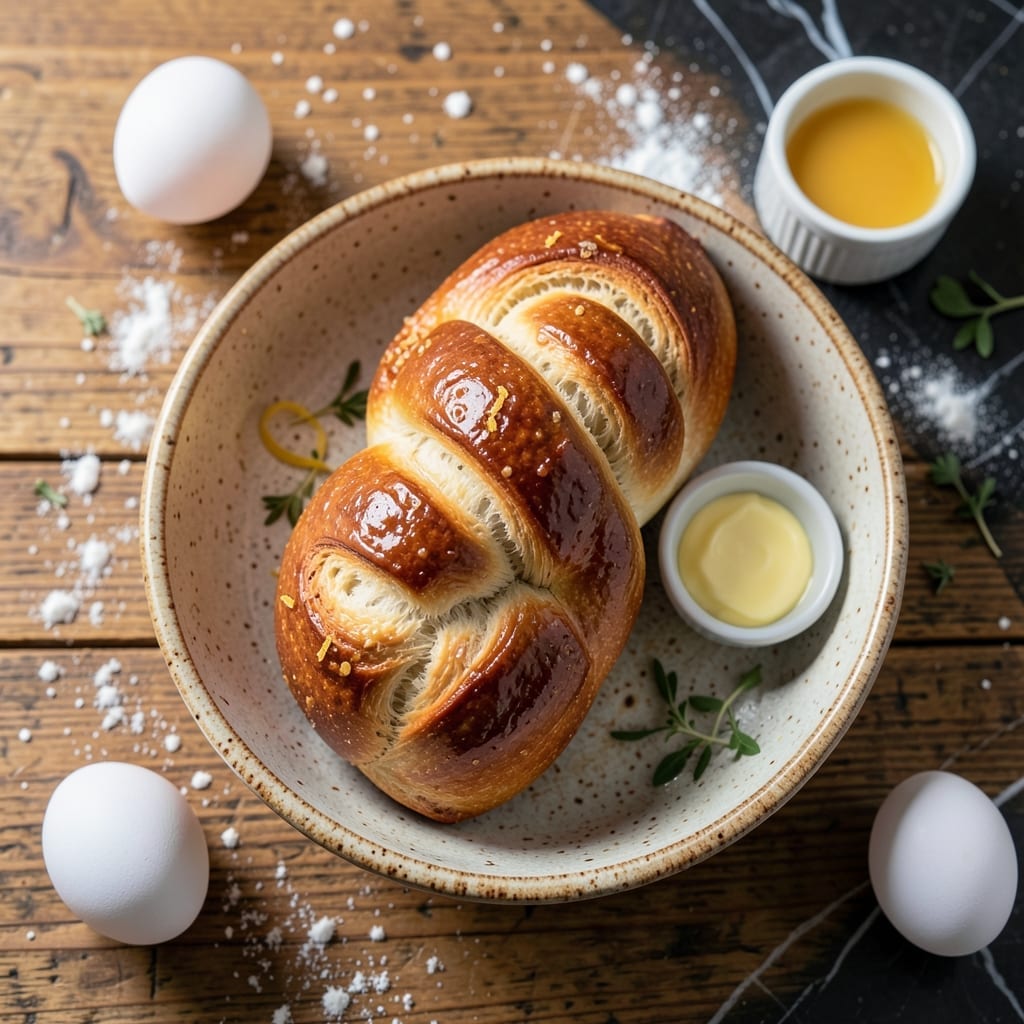
There’s a reason these rolls have achieved legendary status at steakhouses across America. This recipe captures that same buttery softness and subtle sweetness in every bite, making them impossible to resist.
The secret lies in the combination of honey glaze and a rich, egg-enriched dough that bakes into tender, pull-apart perfection. I’ve refined this method to ensure consistent results, whether you’re making a dozen or a double batch.
What emerges from the oven are golden-brown rolls with a glossy finish, soft enough to tear with your hands yet sturdy enough to hold their shape. The honey glaze adds just the right touch of sweetness without overpowering the buttery flavor.
Serve them warm for the ultimate accompaniment to any meal. Here’s how to recreate this classic at home.
Ingredients for Longhorn Bread
Simple pantry staples create these legendary soft, honey-glazed rolls at home.
| Ingredient | Amount | Notes |
|---|---|---|
| All-Purpose Flour 🌾 | 4 cups | Plus extra for dusting |
| Granulated Sugar 🍚 | ¼ cup | Fine white sugar preferred |
| Instant Yeast 🍞 | 1 package | 2 1/4 tsp active dry works too |
| Whole Milk 🥛 | 1 cup | Warm to 110°F |
| Unsalted Butter 🧈 | ½ cup | Melted and cooled |
| Large Egg 🥚 | 1 whole | Room temperature |
| Salt 🧂 | 1 ½ tsp | Fine sea salt or table salt |
| Honey 🍯 | ¼ cup | For glaze and dough |
| Vanilla Extract 🌿 | 1 tsp | Pure extract preferred |
| Melted Butter 🧈 | ¼ cup | For brushing on rolls |
The flour is the foundation here—Gold Medal or King Arthur all-purpose gives consistent results. Yeast freshness is critical; check the expiration date and store unopened packages in the freezer. For the milk, whole milk creates the richest, most tender crumb. The butter should be high-quality (Kerrygold or Land O’Lakes), as lower-fat versions can affect texture. Warm the milk gently to avoid killing the yeast.
No whole milk? 2% works in a pinch though texture will be slightly less rich. Honey can be swapped for maple syrup or agave, but the flavor profile will differ. Out of vanilla? Skip it rather than using imitation—the subtle depth it adds is worth the splurge. For the glaze, salted butter can replace unsalted, but reduce added salt in the dough by half.
Store yeast in the freezer for up to 1 year. Dough can be made ahead and refrigerated overnight for a slow rise. Baked rolls keep 2-3 days in an airtight container at room temperature, or freeze for up to 1 month. Always warm before serving to restore that fresh-baked softness.
Why You’ll Love This Recipe
- I’ll be real: it’s ready in about an hour, start to finish, with ingredients I always have on hand.
- No-Fuss Dough: I love that I can mix the flour, sugar, yeast, and warm milk in one bowl and let the butter do its magic while I do other things.
- Buttery Richness: The whole milk and unsalted butter create this tender, slightly sweet crumb that’s honestly hard to resist.
- Crowd Pleaser: Between us, this bread disappears fast at gatherings, but it’s just as good toasted for breakfast the next day.
Step-by-Step Instructions for Buttery Soft Rolls With Honey Glaze
Master the technique for perfect pull-apart rolls with a glossy honey finish.
Step 1: Activate Yeast and Combine Wet Ingredients
In a stand mixer bowl, whisk together the 1 cup Whole Milk (warmed to 110°F) with the 0.25 cup Granulated Sugar until the sugar dissolves. Sprinkle the 1 package Instant Yeast over the surface and let it sit for 5-7 minutes until foamy.
Add the 0.5 cup Unsalted Butter (melted and cooled), 1 whole Large Egg, 0.25 cup Honey, and 1 tsp Vanilla Extract. Mix on low until the wet ingredients are fully incorporated. The mixture should look smooth with no visible separation.
Step 2: Form the Dough and Knead
Gradually add the 4 cups All-Purpose Flour and 1.5 tsp Salt to the wet ingredients while mixing on low speed. Once the dough comes together, switch to the dough hook attachment and knead for 6-8 minutes on medium-low speed.
The dough should pull away from the bowl sides and become smooth and elastic. If it feels too sticky, add 1-2 tablespoons of extra flour, but resist the urge to add too much—this dough should remain slightly tacky for tender rolls.
Step 3: First Rise Until Doubled
Transfer the dough to a lightly greased bowl, cover with a damp towel, and let it rise in a warm, draft-free place for 1-1.5 hours. The dough should double in volume and spring back slowly when poked with a finger.
For consistent results, I recommend placing the bowl in an oven with the light turned on, which maintains an ideal 80-85°F environment. Avoid temperatures above 90°F, as this can kill the yeast and prevent proper rising.
Step 4: Shape and Second Rise
Punch down the risen dough to release air, then turn it out onto a lightly floured surface. Divide the dough into 12 equal portions (about 3.5 oz each) and roll each into a smooth ball. Arrange them in a greased 9×13-inch pan so they’re just touching.
Cover the pan and let the rolls rise for another 45-60 minutes until puffy and nearly doubled in size. The rolls should look like they’re about to merge when ready. Preheat your oven to 375°F during the last 15 minutes of rising.
Step 5: Bake and Glaze
Bake the rolls for 18-22 minutes until the tops are golden brown and the internal temperature reaches 190°F. Remove from the oven and immediately brush the tops with the 0.25 cup Melted Butter.
While still warm, drizzle with the remaining 0.25 cup Honey (warmed slightly for easier pouring). Let the rolls cool in the pan for 10 minutes before serving. The glossy finish should be visible and the rolls should pull apart easily with a gentle tug.
Pro Tips For Making Longhorn Bread
- Warm the Milk: Heat the whole milk to about 110°F—any hotter and you’ll kill the instant yeast, any cooler and it won’t activate properly. I learned this the hard way after a loaf that refused to rise.
- Soften the Butter: Let the unsalted butter sit at room temperature for 30 minutes before mixing. Cold butter leaves chunks, and melted butter changes the texture entirely.
- Don’t Over-Flour: Resist the urge to dump extra flour on the counter when kneading. The dough should be slightly sticky—that’s how it stays tender, not dense.
- Double the Rise: Give the dough a full 1-2 hours for its first rise in a warm spot, like an oven with the light on. Rushing it means flat, sad bread.
Common Mistakes When Making Perfect Results
Yeast Activation Errors
Using milk that’s too hot will kill the yeast before it can activate. Always check the temperature with a thermometer—110°F is ideal. If your yeast doesn’t foam after 5-7 minutes, it’s likely expired. I once ruined a batch because my milk hit 130°F without me noticing. 🌡️
Over-Flouring the Dough
Adding too much flour makes dense, dry rolls. The dough should feel slightly tacky but pull away from the bowl. If it sticks to your fingers, add flour 1 tablespoon at a time until just manageable. This recipe needs that slight stickiness for tender results.
Insufficient Rising Time
Rushing the first rise leads to flat, flavorless rolls. Let the dough double in size—this usually takes 1-1.5 hours at 80-85°F. I use my oven with just the light on to create the perfect warm environment. Patience pays off in fluffiness.
Improper Shaping
Uneven portions mean some rolls bake faster than others. Use a kitchen scale to divide the dough into 12 equal pieces (about 3.5 oz each). Roll each into a smooth ball and arrange them snugly in the pan so they rise upward, not outward.
Overbaking the Rolls
Pull them out when they’re golden brown and reach 190°F internally. Overbaking dries them out. I check at 18 minutes and add time in 2-minute increments if needed. The honey glaze adds moisture, but it can’t save overdone rolls. 💡
Skipping the Glaze
The honey glaze isn’t just for looks—it locks in moisture and adds that signature sweetness. Brush the tops with melted butter immediately after baking, then drizzle with warm honey. This step makes them irresistibly shiny and soft.
Nutrition Facts
Frequently Asked Questions
Can I use active dry yeast instead of instant?
Yes, substitute 2 1/4 tsp active dry yeast for the packet. Dissolve it in warm milk first and let it foam for 5-7 minutes before adding to wet ingredients.
How do I store leftover rolls?
Keep in an airtight container at room temperature for 2-3 days. For longer storage, freeze for up to 1 month and warm before serving to restore softness.
Why did my rolls turn out dense?
Over-flouring or insufficient rising time are the most common causes. Ensure the dough stays slightly tacky and rises until nearly doubled in size.
Can I make the dough ahead of time?
Prepare the dough, cover tightly, and refrigerate overnight for a slow rise. Shape and bake the next day for fresh rolls.

- 6 Egg Cake Recipe with Oil: Light as Air With Buttery Moisture - October 4, 2026
- 4 Bean Casserole Recipe: One-Pan Heartiness With Smoky Paprika Depth - October 4, 2026
- 3-Ingredient Keto Mug Cake Recipe: Microwave Magic in 2 Minutes - October 4, 2026