
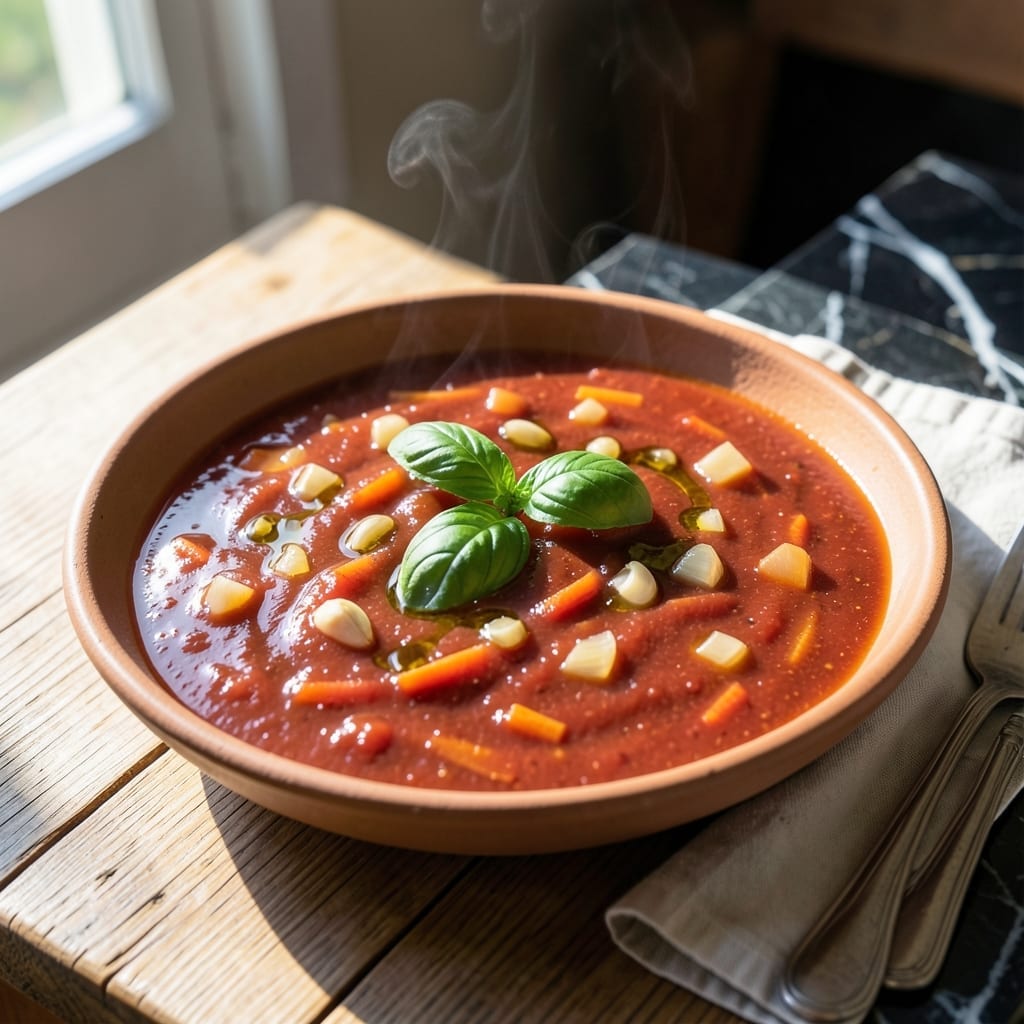
This gently simmered sauce delivers all the rich tomato flavor without the sharp acidity that can upset sensitive stomachs. The secret lies in selecting naturally sweet tomato varieties and a slow cooking process that mellows any remaining tang.
I developed this method after years of experimenting with different tomato types and cooking techniques. The result is a smooth, velvety sauce that works beautifully in pasta dishes, soups, or as a pizza base.
What makes this version special is its versatility—use it immediately or store for later. The long, gentle simmer concentrates the natural sweetness while eliminating the harshness found in many commercial sauces.
Perfect for those who love tomato flavor but need to avoid high acidity. This creation will become your go-to base for countless meals.
Ingredients for Low Acid Tomato Sauce
Nine simple ingredients transform into a smooth, velvety sauce that’s gentle on the stomach.
| Ingredient | Amount | Notes |
|---|---|---|
| San Marzano Tomatoes 🍅 | 28 oz | Canned, whole peeled preferred |
| Yellow Onion 🧅 | 1 whole | Finely diced for sweetness |
| Carrots 🥕 | 2 whole | Peeled and grated for natural sweetness |
| Extra-Virgin Olive Oil 🫒 | 3 tbsp | High quality for rich base |
| Garlic Cloves 🧄 | 4 cloves | Minced for aromatic depth |
| Fresh Basil Leaves 🌿 | ¼ cup | Loosely packed, chopped |
| Dried Oregano 🍃 | 1 tsp | Mediterranean variety preferred |
| Baking Soda 🧂 | ¼ tsp | Neutralizes acidity (key ingredient) |
| Sea Salt 🧂 | 1 tsp | Adjust to taste after cooking |
The tomatoes make this sauce. San Marzano cans from an Italian market or Whole Foods have the natural sweetness you need. Avoid cheaper brands with added citric acid. I always stock up at Trader Joe’s when they have sales—they carry the good stuff. Carrots and onions add natural sweetness without sugar (the secret weapon for low-acid balance).
No San Marzano? Regular canned tomatoes at peak ripeness work, but drain the liquid first. Skip the garlic if it bothers your stomach—asafetida powder (1/4 tsp) gives a similar depth. The baking soda is non-negotiable—neutralizes acidity without altering flavor. Fresh basil can be swapped for 1 tsp dried basil (add during cooking).
Sauce keeps 1 week in the fridge or 6 months frozen. Portion into ice cube trays for easy use. The flavors deepen after a day, so make it ahead (worth the wait).
Why You’ll Love This Recipe
- One Pot Wonder: I just dump everything in—San Marzano tomatoes, carrots, onion—and let it simmer. No fancy steps.
- Sweet and Smooth: The carrots and San Marzano tomatoes cut the acidity, making it naturally mild and rich.
- Freezer Best Friend: I double the batch and freeze half for lazy nights. Honestly, it tastes even better later.
- Budget Stretch: A can of tomatoes, a few veggies, and olive oil feed my family for days. My wallet thanks me.
Step-by-Step Instructions for Low Acid Tomato Sauce
This method delivers a velvety, gentle sauce that’s kind to sensitive palates while rich in flavor.
Step 1: Build the Aromatic Base
Heat the 3 tbsp Extra-Virgin Olive Oil in a heavy pot over medium-low heat. Add the finely diced 1 whole Yellow Onion and cook for 8-10 minutes until translucent and sweet. The low heat prevents browning while coaxing out natural sugars.
Stir in the peeled and grated 2 whole Carrots. Their natural sweetness will balance the tomatoes’ acidity. Cook for another 5 minutes until the carrots soften completely. You’ll notice the mixture developing a subtle sweet aroma—this is your signal to proceed.
Step 2: Develop the Flavor Foundation
Add the minced 4 cloves Garlic Cloves to the pot and cook for 1 minute just until fragrant. Be vigilant here—garlic burns quickly and turns bitter. Immediately follow with the 1 tsp Dried Oregano, stirring to bloom its earthy notes in the warm oil.
Now add the 28 oz San Marzano Tomatoes, crushing them by hand as they go in. These tomatoes are naturally sweeter and less acidic than standard varieties, making them ideal for this application. Stir well to combine with the aromatic base.
Step 3: Neutralize and Simmer
Here’s the key step for low acidity: sprinkle in the 0.25 tsp Baking Soda. It will fizz slightly as it neutralizes the tomatoes’ acid—this is normal. Stir thoroughly to distribute evenly throughout the sauce.
Add the 1 tsp Sea Salt and bring to a gentle simmer. Reduce heat to low and let cook uncovered for 45-60 minutes, stirring occasionally. The sauce should reduce by about one-third, with the oil pooling slightly at the surface when done.
Step 4: Finish with Fresh Herb Brightness
Remove the pot from heat and stir in the chopped 0.25 cup Fresh Basil Leaves. The residual heat will wilt the basil perfectly without cooking away its vibrant flavor. Let the sauce rest for 10 minutes to allow the basil to infuse.
Taste and adjust seasoning if needed, though the baking soda and natural sweetness of the carrots should have created a perfectly balanced, mild sauce. For the smoothest texture, you can blend with an immersion blender, but I prefer leaving it rustic with visible vegetable specks.
Pro Tips For Making Low Acid Tomato Sauce
- Simmer Low and Slow: Keep the heat at a gentle simmer—bubbling too hard will make the sauce reduce too fast and concentrate the acidity. I learned this the hard way after ending up with a sharp, bitter batch.
- Crush the Tomatoes: Hand-crush the San Marzano tomatoes instead of blending them—it breaks down the flesh while keeping the texture chunky and helps mellow the acidity naturally.
- Sauté the Carrots First: Cook the diced carrots and onions in the olive oil for at least 8-10 minutes until soft—their natural sweetness balances the acidity in the tomatoes.
- Skip the Tomato Paste: Sounds counterintuitive, but adding tomato paste can actually increase acidity. Stick to just the San Marzano tomatoes for a smoother, milder base.
Pro Cooking Tips for This Recipe
Tomato Selection Matters
Always start with San Marzano tomatoes—their natural sweetness and low acidity make them ideal. I find Whole Foods or Trader Joe’s carry the best quality. Avoid generic brands with added citric acid, which will work against your low-acid goal. 🥫
Low and Slow Simmer
Cook your sauce over low heat for 45-60 minutes to gently reduce and mellow flavors. A heavy-bottomed pot, like my Le Creuset Dutch oven, distributes heat evenly and prevents scorching. Stir occasionally to prevent sticking.
Baking Soda Technique
The ¼ tsp baking soda is non-negotiable for neutralizing acidity. Add it just after the tomatoes—it will fizz as it reacts with the acid. Stir well to evenly distribute; this small amount won’t alter the flavor but makes a huge difference in gentleness.
Sweetness Boosters
Grated carrots and finely diced yellow onion add natural sweetness without sugar. Cook them down completely in the olive oil base before adding tomatoes. This builds a naturally sweet foundation that balances the sauce.
Fresh Herb Timing
Add fresh basil at the very end, off the heat. The residual warmth will wilt the leaves perfectly, preserving their bright, aromatic flavor. If using dried basil, add it earlier with the oregano to develop its full potential.
Texture Control
For a silky finish, use an immersion blender after cooking. I prefer a rustic texture, so I leave mine slightly chunky. Either way, let the sauce rest for 10 minutes before final seasoning adjustments. 💪
Nutrition Facts
Frequently Asked Questions
Why add baking soda to tomato sauce?
The ¼ tsp baking soda neutralizes acid naturally without affecting flavor. It reacts with the tomatoes’ acid, reducing sharpness while keeping the sauce smooth and mild. This small amount makes a noticeable difference for sensitive stomachs.
Can I use regular canned tomatoes?
Yes, but drain the liquid first to reduce acidity. San Marzano are ideal, but standard tomatoes work if you add extra grated carrots for natural sweetness. Avoid brands with added citric acid.
How long can I store this sauce?
It keeps 1 week in the fridge in an airtight container. For longer storage, freeze for up to 6 months. Portion into ice cube trays for easy single-serving use later.
What if my sauce tastes too sweet?
Balance it with a pinch of salt or a splash of water. The carrots and baking soda may over-sweeten if your tomatoes were very ripe. Taste as you go and adjust gradually.

- 6 Egg Cake Recipe with Oil: Light as Air With Buttery Moisture - October 4, 2026
- 4 Bean Casserole Recipe: One-Pan Heartiness With Smoky Paprika Depth - October 4, 2026
- 3-Ingredient Keto Mug Cake Recipe: Microwave Magic in 2 Minutes - October 4, 2026