
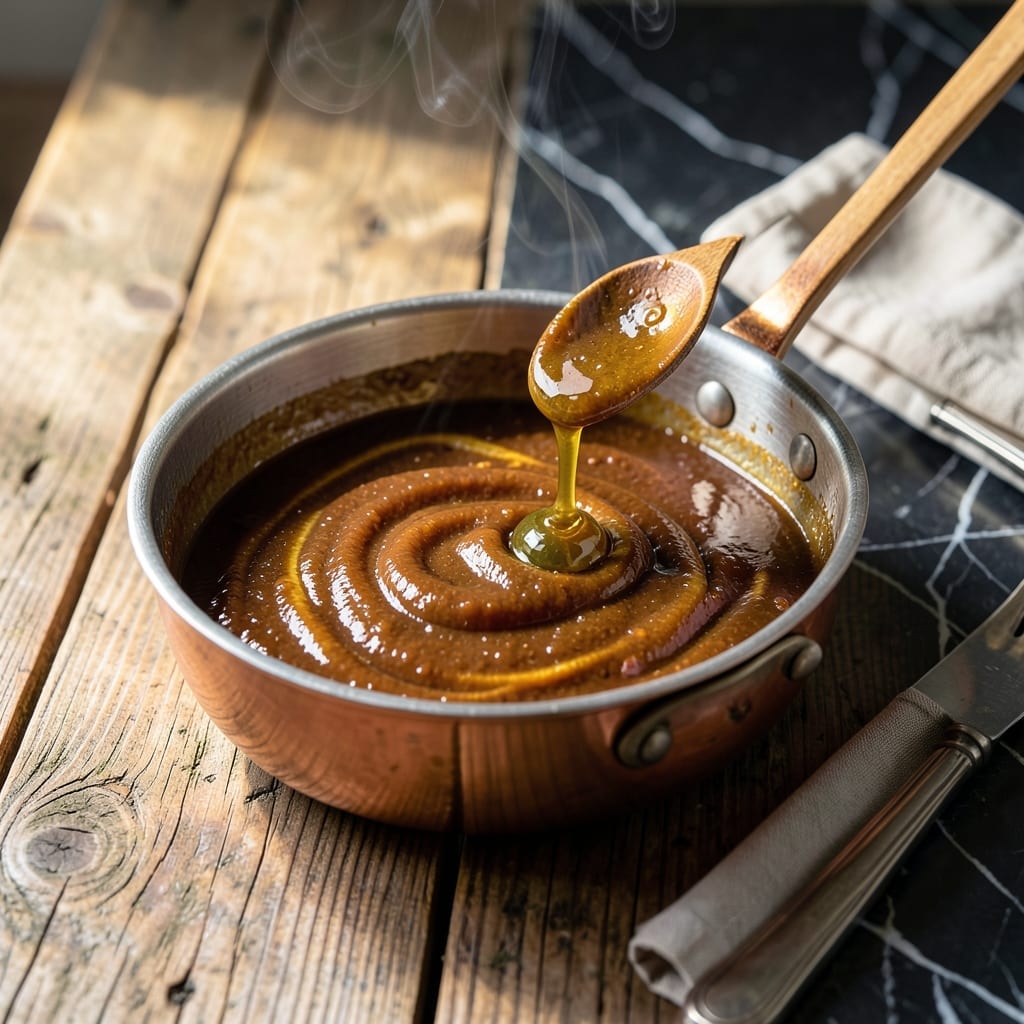
This homemade version captures the tangy, umami-rich essence of the beloved condiment without artificial additives. I developed it after realizing how versatile a quality sauce can be for elevating simple dishes.
The foundation lies in balancing fermented flavors with a touch of sweetness and acidity. A short simmer allows the ingredients to meld into a smooth, concentrated sauce that stores beautifully in your pantry.
Use it to transform rice, noodles, or grilled meats with just a drizzle. The depth of flavor it adds makes even weeknight meals taste restaurant-worthy.
One batch yields about 1 cup, enough to experiment with in multiple recipes while keeping the rest on hand for future cooking.
Ingredients for Maggi Sauce
Nine ingredients transform into that signature tangy umami depth in minutes.
| Ingredient | Amount | Notes |
|---|---|---|
| Water 💧 | ¾ cup | Filter if tap water is chlorinated |
| Soy Sauce 🫕 | ¼ cup | Low-sodium for controlled saltiness |
| Apple Cider Vinegar 🍏 | 3 tbsp | For essential tangy sharpness |
| Brown Sugar 🍚 | 2 tbsp | Light or dark works fine |
| Molasses 🍯 | 1 tbsp | Adds deep caramel complexity |
| Worcestershire Sauce 🫕 | 1 tbsp | Anchovy-free if vegetarian |
| Garlic Powder 🧄 | 1 tsp | Freshly ground for best flavor |
| Onion Powder 🧅 | 1 tsp | Balances the fermented notes |
| Ground Black Pepper 🌶️ | ½ tsp | Freshly cracked preferred |
The soy sauce is non-negotiable here—Kikkoman or Pearl River Bridge for consistent quality. I grab both at Costco (the big bottles last forever). Molasses adds that dark, caramelized depth you can’t skip. If you’ve got blackstrap molasses, use it—it’s more intense but delicious. The vinegar needs to be apple cider for the right fruit-forward tang (white vinegar tastes too harsh).
No molasses? Honey or maple syrup at double the amount gets you close. Swap Worcestershire for coconut aminos if avoiding anchovies. Brown sugar can be white in a pinch, but you’ll lose some caramel notes. The garlic and onion powders are one-third the amount of fresh if you’re mincing cloves instead—just cook them down first to mellow the bite.
This keeps 6-12 months in a sealed jar at room temperature. The flavors deepen over time, so make a double batch. Refrigerate after opening for 3-4 weeks of peak freshness. Shake before using—some separation is normal.
Why You’ll Love This Recipe
- Five-Minute Mix: I just dump everything in a pot and let it simmer—no chopping, no fuss.
- Sweet-Savory Balance: The molasses and brown sugar give it this deep, caramel-like richness that pairs perfectly with the tang of apple cider vinegar.
- Endless Uses: I drizzle it on stir-fries, use it as a marinade, or even mix it into soups for an instant flavor boost.
- Pantry Staples Only: Honestly, I always have these ingredients on hand, so I can make it anytime without a last-minute grocery run.
Step-by-Step Instructions for Maggi-Style Seasoning Sauce
This comes together quickly on the stovetop with no special equipment required.
Step 1: Combine Water and Soy Sauce Base
In a medium saucepan, pour the 0.75 cup Water and 0.25 cup Soy Sauce. Set the pan over medium heat and stir briefly to incorporate. You’ll notice the soy sauce immediately darkens the water, creating that signature deep amber base.
As it heats, watch for tiny bubbles to form around the edges—that’s your signal to proceed. Don’t let it come to a full boil yet. This gentle heating preserves the soy sauce’s complexity while allowing the flavors to begin melding.
Step 2: Add the Vinegar and Sweeteners
Stir in the 3 tbsp Apple Cider Vinegar, 2 tbsp Brown Sugar, and 1 tbsp Molasses. The mixture will bubble up slightly as the vinegar reacts with the other ingredients. Use a silicone spatula to scrape the bottom of the pan, ensuring the brown sugar fully dissolves.
Cook for 2-3 minutes until the sugar crystals disappear completely and the mixture takes on a glossy sheen. The vinegar’s sharpness will mellow as it simmers, while the molasses adds its characteristic deep, caramel-like richness that balances the tang.
Step 3: Incorporate the Depth Enhancers
Add the 1 tbsp Worcestershire Sauce, 1 tsp Garlic Powder, 1 tsp Onion Powder, and 0.5 tsp Ground Black Pepper. Stir well after each addition to distribute the spices evenly throughout the sauce.
The Worcestershire contributes its fermented umami depth, while the garlic and onion powders build a savory foundation. The black pepper adds a subtle warmth that lingers on the finish. Let this simmer for another 3-4 minutes until the sauce thickens slightly and all the flavors meld together.
Step 4: Adjust and Cool the Sauce
Remove the pan from heat and let the sauce sit for 1 minute to cool slightly. The mixture will thicken a bit more as it cools. Give it a final stir to ensure all the ingredients are fully incorporated.
Taste and adjust if needed—though with these precise ratios, you’ll find it hits that perfect balance of tangy, sweet, and savory right away. The sauce should coat the back of a spoon with a thin, syrupy consistency that’s ready to drizzle over everything from grilled meats to roasted vegetables.
Pro Tips For Making Maggi Sauce
- Simmer Low and Slow: Keep the heat on medium-low—boiling it too hard makes the sugars burn and the sauce turn bitter. I learned this the hard way after ruining a batch by cranking the heat to rush it.
- Dissolve the Sugar First: Mix the brown sugar and molasses into the warm water before adding other ingredients. Sounds tedious, but it prevents clumps and guarantees a smooth sauce every time.
- Skip the Cheap Vinegar: Use high-quality apple cider vinegar with at least 5% acidity—cheap versions taste flat and make the sauce taste thin. My grandmother swore by this, and she was right.
- Taste Before Salting: Soy sauce is already salty, so taste the mixture before adding any extra salt. After burning three batches with over-salted sauce, I finally figured out this simple step saves the dish.
Wine and Beer Pairings for This Recipe
White Wine Picks
A crisp Sauvignon Blanc from New Zealand cuts through the sauce’s richness beautifully. The citrusy acidity balances the umami depth. I love Kim Crawford for its bright grapefruit notes that complement the vinegar tang. 🍷
Red Wine Options
For red drinkers, a light Pinot Noir from Oregon works surprisingly well. Its gentle tannins won’t overpower the sauce’s delicate flavor profile. Try Eyrie Vineyards for a perfect match.
Craft Beer Pairings
A Belgian Witbier like Blue Moon enhances the sauce’s complexity with its citrus and coriander notes. The effervescence cleanses your palate between bites. I always keep a six-pack on hand for this exact purpose. 🍺
Light Lager Choices
An ice-cold Pilsner Urquell offers crisp refreshment against the sauce’s bold flavors. The light body and mild bitterness make it an ideal contrast without competing with the seasoning.
Non-Alcoholic Options
For non-drinkers, sparkling water with a squeeze of lime provides palate-cleansing bubbles. The acidity mirrors the sauce’s tang while letting its full flavor shine through.
Nutrition Facts
Frequently Asked Questions
Can I use white vinegar instead of apple cider vinegar?
White vinegar works in a pinch, but it lacks the fruit-forward depth. Use 1 less tablespoon to avoid overpowering the sauce with its sharper taste.
How long does this sauce last in the fridge?
Sealed in a clean jar, it stays fresh for 3-4 weeks refrigerated. The flavors actually deepen over time, making it taste even richer.
What can I substitute for molasses?
Use 2 tbsp honey or maple syrup for a similar sweetness. Note that the final color will be lighter, but the flavor remains delicious.
Can I make this sauce spicier?
Add 0.25 tsp cayenne pepper or a pinch of red pepper flakes with the other spices. Simmer for 1 extra minute to infuse the heat.

- 6 Egg Cake Recipe with Oil: Light as Air With Buttery Moisture - October 4, 2026
- 4 Bean Casserole Recipe: One-Pan Heartiness With Smoky Paprika Depth - October 4, 2026
- 3-Ingredient Keto Mug Cake Recipe: Microwave Magic in 2 Minutes - October 4, 2026