
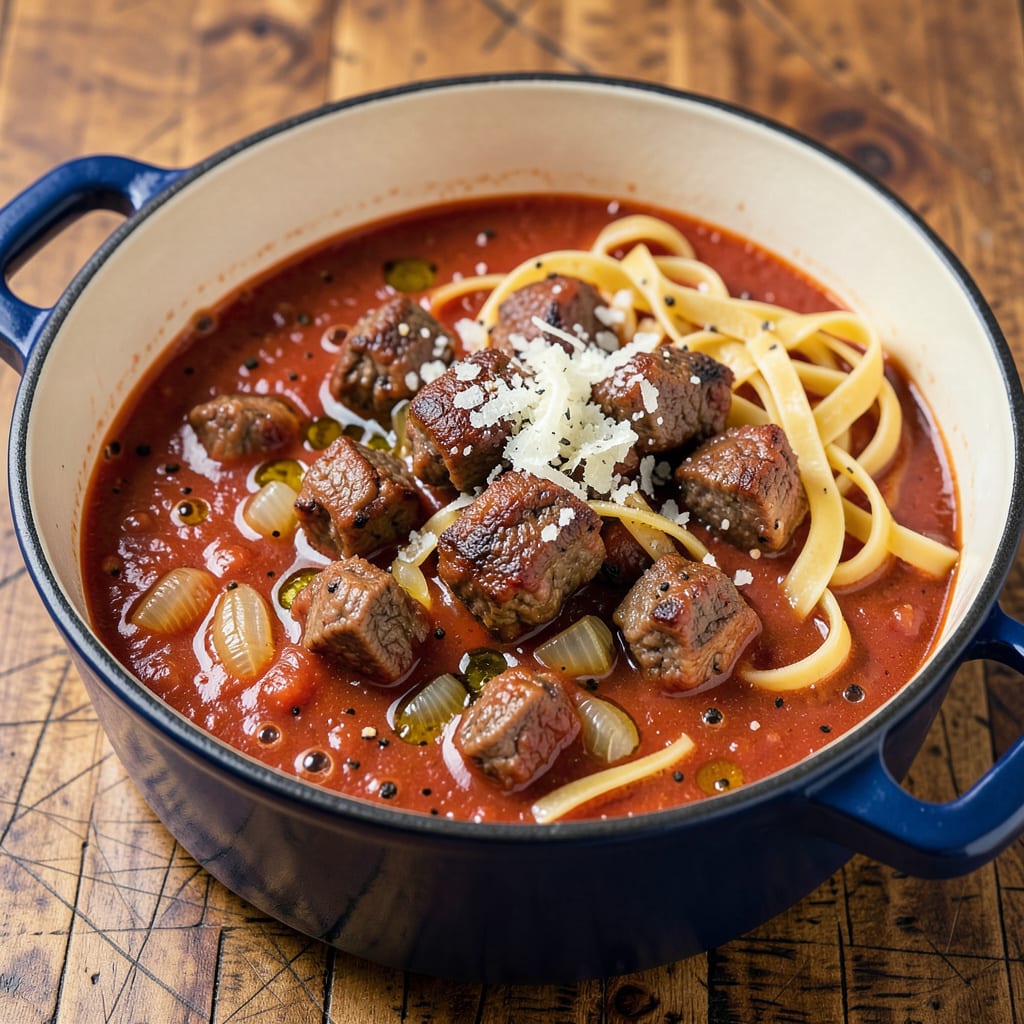
Creating a rich, slow-simmered meat sauce that rivals Maggiano’s requires patience and the right balance of ingredients. This recipe delivers the deep, savory flavor and velvety texture that makes their sauce so memorable. The secret lies in browning the meat thoroughly and allowing the sauce to reduce slowly, concentrating every layer of flavor.
Unlike traditional marinara, this sauce combines ground beef and pork with tomatoes, wine, and aromatic herbs for complexity. The result is a thick, hearty sauce that clings perfectly to pasta or can stand alone as a robust topping. Whether you’re making a big batch for meal prep or a special dinner, this method ensures professional-quality results every time.
Ingredients for Maggiano’s Meat Sauce
Professional-quality ingredients create this restaurant-worthy sauce with deep, layered Italian flavors.
| Ingredient | Amount | Notes |
|---|---|---|
| Ground Beef 🥩 | 1 lb | 80/20 lean-to-fat ratio preferred |
| Ground Pork 🥩 | ½ lb | Not lean, for rich flavor |
| San Marzano Canned Tomatoes 🍅 | 28 oz | Whole, crushed by hand |
| Tomato Paste 🍅 | 3 tbsp | Double-concentrated preferred |
| Dry Red Wine 🍷 | 1 cup | Bold, dry variety like Cabernet |
| Yellow Onion 🧅 | 1 whole | Finely diced for even cooking |
| Garlic Cloves 🧄 | 6 cloves | Minced to fine consistency |
| Extra-Virgin Olive Oil 🫒 | ¼ cup | High-quality for depth |
| Dried Oregano 🌿 | 1 tbsp | Mediterranean variety preferred |
| Dried Basil 🍃 | 1 tbsp | Crushed between fingers |
| Bay Leaves 🌿 | 2 whole | Removed before serving |
| Kosher Salt 🧂 | 1 ½ tsp | Diamond Crystal preferred |
| Freshly Ground Black Pepper 🌶️ | 1 tsp | Coarse grind for texture |
| Red Pepper Flakes 🔥 | ½ tsp | Adjust for heat preference |
| Whole Milk 🥛 | ½ cup | Added at end for richness |
The meat selection is critical for authentic Maggiano’s flavor. Ground beef (80/20) provides fat for richness while ground pork adds depth—avoid lean cuts. San Marzano tomatoes are non-negotiable; their sweetness and low acidity balance the sauce perfectly. For optimal results, source them from Italian specialty stores or Whole Foods. The wine should be a bold, dry red—Cabernet Sauvignon or Chianti work exceptionally well. Professional kitchens use double-concentrated tomato paste for intensity; look for it in Italian markets or the international aisle.
Substitutions must maintain the sauce’s complexity. Ground turkey can replace pork, but increase olive oil by 2 tbsp to compensate for lost fat. Fire-roasted tomatoes work if San Marzanos are unavailable, though the flavor profile will shift slightly. For alcohol-free versions, substitute 1 cup beef broth plus 1 tbsp balsamic vinegar for the wine. The dried herbs can be replaced with fresh at triple the quantity, but add them in the final 30 minutes of cooking. Heavy cream may replace milk for extra richness, though the sauce will be slightly heavier.
Storage requires attention to maintain quality. The sauce keeps for 5 days refrigerated in an airtight container, with flavors deepening over time. For longer storage, freeze in quart-sized portions for up to 3 months. Reheat gently over low heat, adding a splash of water if needed. The milk should be added only when reheating to prevent separation. Professional kitchens portion this sauce in vacuum-sealed bags for optimal freshness, but heavy-duty freezer bags work well for home cooks.
Why You’ll Love This Recipe
- One-Pot Magic: I love that this comes together in a single Dutch oven—brown the beef and pork, deglaze with that bold red wine, then let the San Marzanos do their thing. No colander, no extra bowls, just rich sauce and easy cleanup.
- Restaurant-Worthy Depth: Here’s what sold me—the combo of pork and beef with that splash of dry red wine creates this velvety, almost umami-packed sauce. It’s the kind of flavor that makes you pause mid-bite and think, “Wait, did I really make this?”
- Freezer’s Best Friend: Honestly, I double the batch every time because it freezes like a dream. Toss it with pasta, layer it in lasagna, or spoon it over polenta—it’s my secret weapon for those “I have nothing planned” nights.
- Budget Stretch: Between us, this feels fancy but costs less than takeout. A pound each of beef and pork, plus canned tomatoes? It feeds six generously, with enough left for garlic bread dipping. My wallet (and my family) are equally happy.
Step-by-Step Instructions for Maggiano’s Meat Sauce
This method delivers the rich, slow-developed flavors that make this sauce legendary.
Step 1: Brown the Meats for Maximum Flavor
Heat the 0.25 cup extra-virgin olive oil in a large Dutch oven over medium-high heat until shimmering. Add the 1 lb ground beef and 0.5 lb ground pork, breaking them apart with a wooden spoon. Cook undisturbed for 5-7 minutes until a deep brown crust forms on the bottom.
This browning process creates the fond that will later dissolve into the sauce, adding incredible depth of flavor. Stir occasionally but allow the meat to develop color—this isn’t the time for gentle cooking. The meat should be fully browned with no pink remaining.
Step 2: Build the Aromatic Foundation
Reduce heat to medium and add the finely diced yellow onion. Cook for 8-10 minutes, stirring frequently, until the onions become translucent and begin to caramelize at the edges. Add the minced garlic cloves and cook for 1 minute until fragrant but not browned.
Stir in the 3 tbsp tomato paste and cook for 2-3 minutes until it darkens slightly. This step intensifies the tomato flavor and removes any raw taste. Add the 1 tbsp dried oregano, 1 tbsp dried basil, 0.5 tsp red pepper flakes, 1.5 tsp kosher salt, and 1 tsp freshly ground black pepper, stirring to bloom the spices.
Step 3: Deglaze and Simmer the Sauce
Pour in the 1 cup dry red wine and scrape up all the browned bits from the bottom of the pot. Simmer for 5 minutes until the liquid reduces by half. Add the 28 oz San Marzano canned tomatoes (crushed by hand) and 2 whole bay leaves.
Reduce heat to low and partially cover the pot. Simmer for 2-3 hours, stirring occasionally, until the sauce reduces by about one-third and develops a rich, velvety texture. The sauce should coat the back of a spoon and have a deep red color.
Step 4: Finish with Milk for Silky Texture
Remove the bay leaves and stir in the 0.5 cup whole milk. This Italian technique, called “marinara al latte,” mellows the acidity and creates an incredibly smooth, luxurious texture. Simmer uncovered for an additional 15 minutes to allow the flavors to meld.
Taste and adjust seasoning if needed. The sauce should be rich and balanced, with the meat flavors prominent but not overpowering. For best results, let the sauce rest for 30 minutes before serving to allow the flavors to fully develop.
Wine and Beer Pairings for This Recipe
Italian Red Wines
This rich meat sauce calls for bold Italian reds that can stand up to its depth. I always reach for a Chianti Classico—its bright acidity and cherry notes cut through the richness beautifully. For something more robust, try a Barolo with its earthy complexity. The tannins in these wines complement the meat perfectly. 🍷
Super Tuscan Pairings
Super Tuscans like Sassicaia or Ornellaia offer a modern twist with their blend of Sangiovese and Bordeaux grapes. Their structured yet approachable profile makes them ideal for this sauce. I find these wines particularly enjoyable when serving the sauce with hearty pasta like pappardelle.
California Cabernets
If you prefer New World wines, a Napa Valley Cabernet Sauvignon works wonderfully. Look for bottles with balanced oak and dark fruit notes—I love Caymus or Stag’s Leap. The wine’s boldness matches the sauce’s intensity without overpowering it.
Italian Beers
For beer lovers, a Peroni or Moretti lager provides a crisp contrast to the sauce’s richness. The light malt profile cleanses your palate between bites. I especially enjoy this pairing when serving the sauce with polenta or crusty bread.
Dark Craft Ales
Dark ales like Negra Modelo or Guinness offer surprising harmony. Their roasted malt flavors echo the caramelized notes in the sauce. The carbonation helps cut through the fat, making each bite feel fresh. This is my go-to for casual gatherings. 🍺
Non-Alcoholic Options
For non-drinkers, try a sparkling pomegranate juice or Italian blood orange soda. The tartness mimics wine’s acidity while the bubbles provide palate-cleansing refreshment. I keep these on hand for guests who don’t drink alcohol.
Nutrition Facts
Frequently Asked Questions
Why does this recipe use both beef and pork?
The combination creates the signature depth of flavor. Ground beef provides a robust meaty base, while ground pork adds richness and subtle sweetness. This blend mimics the complexity of traditional Italian ragù, giving the sauce its characteristic velvety texture.
Can I make this sauce in a slow cooker?
Yes, but with adjustments. Brown the meat and sauté aromatics first in a skillet—this step is crucial for flavor development. Transfer everything to the slow cooker and cook on low for 6-8 hours or high for 3-4 hours. Add milk in the last 30 minutes.
What’s the purpose of adding milk at the end?
This Italian technique (called “marinara al latte”) transforms the sauce. The milk mellows acidity from tomatoes and wine while adding a silky richness. It also helps emulsify the fats, creating that restaurant-quality texture that clings perfectly to pasta.
How can I fix it if my sauce tastes too acidic?
Balance is key. First, ensure you’ve simmered it long enough—at least 2 hours reduces acidity naturally. If still sharp, stir in a pinch of baking soda (1/8 tsp) or a carrot grated into the sauce during cooking. Both neutralize acid without altering flavor.
Is there a good vegetarian substitute for the meat?
For similar texture, use a mix of 1 cup finely chopped mushrooms, 1 cup lentils, and 1/2 cup walnuts. Sauté until deeply browned to develop umami. Add 1 tbsp soy sauce for meaty depth. The sauce will be lighter but still rich and satisfying.

- 6 Egg Cake Recipe with Oil: Light as Air With Buttery Moisture - October 4, 2026
- 4 Bean Casserole Recipe: One-Pan Heartiness With Smoky Paprika Depth - October 4, 2026
- 3-Ingredient Keto Mug Cake Recipe: Microwave Magic in 2 Minutes - October 4, 2026