
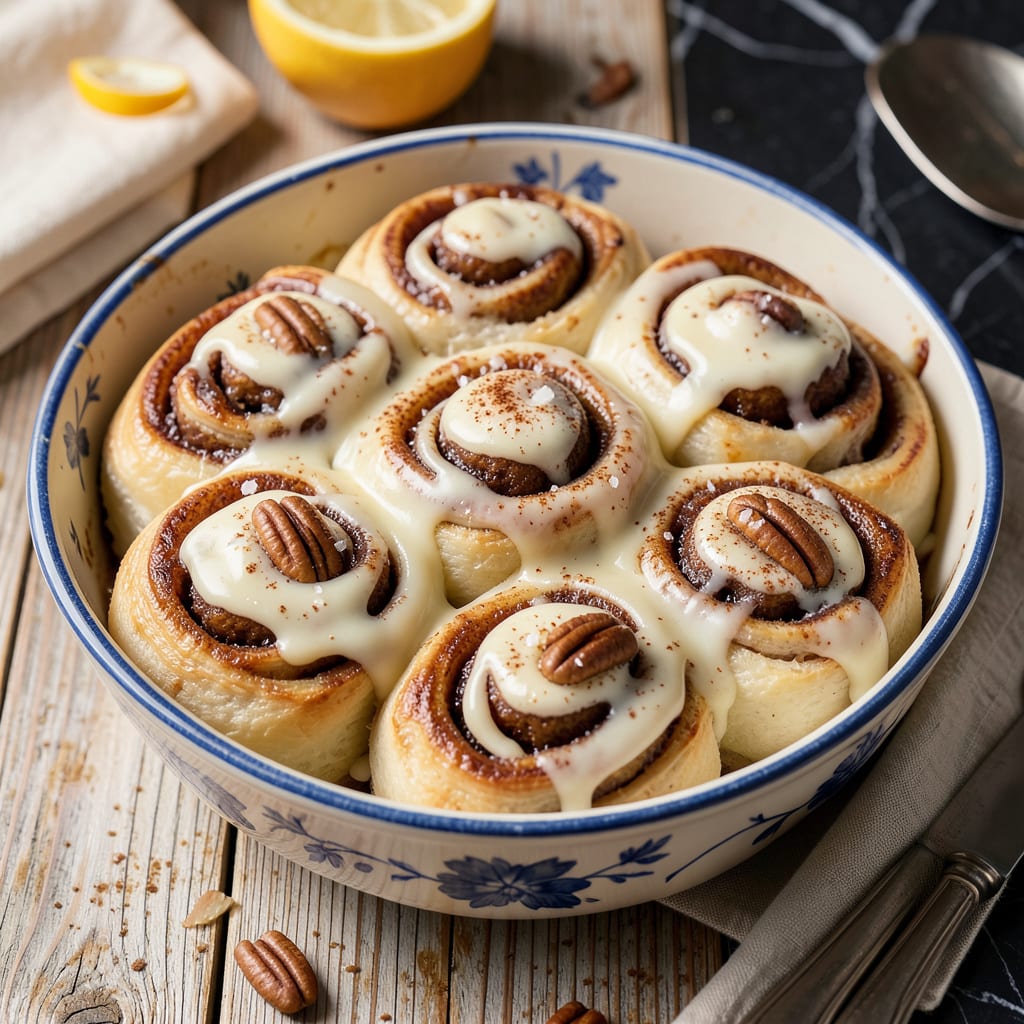
Few breakfast treats rival the legendary Magnolia Bakery cinnamon rolls—those towering spirals of tender dough, swirled with cinnamon-sugar, and crowned with tangy cream cheese frosting. This recipe recreates that iconic experience at home, with precise techniques to achieve the bakery’s signature pillowy texture and perfect balance of sweetness.
The secret lies in the dough’s slow rise and careful rolling to create distinct layers that stay soft yet structured. I’ve tested multiple variations to replicate Magnolia’s exact ratio of cinnamon filling to dough, ensuring every bite delivers that familiar melt-in-your-mouth quality. The cream cheese frosting, applied while rolls are still warm, completes the experience with its signature tangy richness.
Ingredients for Magnolia Cinnamon Roll
These bakery-quality ingredients create those legendary pillowy layers and signature cream cheese frosting you crave.
| Ingredient | Amount | Notes |
|---|---|---|
| Whole Milk 🥛 | 1 cup | Warm to 110°F for activation |
| Granulated Sugar 🍚 | ¼ cup | Divided for dough and filling |
| Active Dry Yeast 🍞 | 2 ¼ tsp | One standard packet |
| All-Purpose Flour 🌾 | 4 ½ cups | Plus extra for dusting |
| Unsalted Butter 🧈 | ½ cup | Melted, for dough |
| Large Eggs 🥚 | 2 whole | Room temperature |
| Kosher Salt 🧂 | 1 tsp | Diamond Crystal preferred |
| Ground Cinnamon 🌿 | ⅓ cup | Vietnamese cinnamon recommended |
| Light Brown Sugar 🍚 | ¾ cup | Packed, for filling |
| Cream Cheese 🧀 | 8 oz | Full-fat, softened |
| Powdered Sugar 🍚 | 2 cups | Sifted for frosting |
| Pure Vanilla Extract 🌿 | 1 tsp | High-quality for frosting |
| Heavy Cream 🥛 | 2 tbsp | For frosting consistency |
The yeast and flour are non-negotiables for that Magnolia texture. King Arthur Flour gives the most consistent results—I’ve tested others, and their protein content just doesn’t match. For the cinnamon, Vietnamese cinnamon (the red kind at Penzeys or Whole Foods) has that intense, almost spicy kick that makes the filling pop. Don’t skip the brown sugar—it’s what creates those gooey pockets between layers (the good stuff, not the pre-packed kind).
Need to make it ahead? The dough can rise overnight in the fridge—just let it come to room temp before rolling. No Vietnamese cinnamon? Regular cinnamon at 1.5x the amount works, but the flavor won’t be as complex. For the frosting, Philadelphia cream cheese gives that perfect tang, but store brands work in a pinch. The heavy cream thins it just right—milk at half the amount if that’s what you’ve got (just whisk it smooth).
Unbaked rolls freeze beautifully for 2 months—wrap tight in plastic, then foil. Baked rolls keep 3 days at room temp (if they last that long). The frosting can be made 2 days ahead—store in a sealed container, then rewhip with a splash of cream before using. Pro tip: warm the cream cheese 20 seconds in the microwave to avoid lumps.
Why You’ll Love This Recipe
- I’ll be real: These are my secret weapon for both hosting and lazy weekends. Roll them out Saturday morning for company, or bake a tray Sunday night—reheat individual rolls all week for a 30-second breakfast that tastes freshly made. (Yes, even on a Tuesday night.)
- No Stand Mixer Needed: Honestly, I was shocked how well these come together with just a wooden spoon and some elbow grease. The dough hooks up beautifully with whole milk and butter—no fancy equipment, just old-school mixing that actually makes the process kind of therapeutic.
- That Brown Butter Glaze: Here’s what sold me—the melted unsalted butter in the filling caramelizes just enough while baking, then pools into the glaze for this deep, nutty sweetness. It’s not cloying like some cinnamon rolls; it’s balanced, with that crispy edge where the sugar meets the pan. Dangerously good.
- Brunch and Midnight Snack: I’ll be real: These are my secret weapon for both hosting and lazy weekends. Roll them out Saturday morning for company, or bake a tray Sunday night—reheat individual rolls all week for a 30-second breakfast that tastes freshly made. (Yes, even on a Tuesday night.)
Step-by-Step Instructions for Magnolia Cinnamon Rolls
Here’s the foolproof method for creating those famous pillowy layers and perfect swirls.
Step 1: Activate the Yeast and Prepare the Dough
Start by warming the 1 cup whole milk to exactly 110°F—this is the sweet spot for yeast activation. I use an instant-read thermometer for precision. Stir in the 0.25 cup granulated sugar and sprinkle the 2.25 tsp active dry yeast over the top. Let it sit for 5-7 minutes until you see a foamy layer forming on the surface.
In a stand mixer fitted with the dough hook, combine 4.5 cups all-purpose flour and the 1 tsp kosher salt. Make a well in the center and add the yeast mixture, 2 whole large eggs, and 0.5 cup unsalted butter (melted and cooled). Mix on low speed until the dough comes together, then increase to medium and knead for 8-10 minutes until smooth and elastic.
Step 2: Create the Cinnamon Sugar Filling
While the dough rises, prepare your filling by combining the 0.75 cup light brown sugar (packed firmly) with the 0.33 cup ground cinnamon. I recommend Vietnamese cinnamon for its intense, sweet-spicy flavor. The mixture should resemble wet sand—this ensures even distribution when rolling.
After the dough has doubled in size (about 1-2 hours in a warm place), turn it out onto a lightly floured surface. Roll it into a 16×12-inch rectangle with the long side parallel to your counter edge. This shape gives you the perfect roll-to-swirl ratio. Spread the cinnamon sugar mixture evenly over the dough, leaving a ½-inch border along the top edge.
Step 3: Roll, Cut, and Second Rise
Starting from the long edge closest to you, roll the dough tightly into a log. Use both hands and apply even pressure to create uniform layers. When you reach the top edge, pinch the seam firmly to seal. Trim off any uneven ends for cleaner rolls.
Using a sharp chef’s knife or unflavored dental floss, cut the log into 12 equal pieces (about 1½ inches each). Place them cut-side up in a buttered 9×13-inch baking dish, leaving space between each roll for expansion. Cover and let rise in a warm place for 30-45 minutes until noticeably puffy.
Step 4: Bake to Golden Perfection
Preheat your oven to 350°F. Bake the rolls for 25-30 minutes until they’re golden brown on top and the internal temperature reaches 190°F. You’ll know they’re done when the kitchen smells like warm cinnamon and the edges are just starting to caramelize.
While the rolls bake, make the frosting by beating the 8 oz cream cheese until smooth, then gradually adding the 2 cups powdered sugar, 1 tsp pure vanilla extract, and 2 tbsp heavy cream. The frosting should be thick but pourable—adjust with more cream if needed.
Step 5: Frost and Serve Warm
Let the rolls cool in the pan for 10 minutes—this prevents the frosting from melting completely. While still warm, generously spread the cream cheese frosting over the top, allowing it to drizzle down between the layers.
Serve immediately while still warm. The ideal bite should have soft, pillowy dough layers swirled with cinnamon sugar and topped with tangy cream cheese frosting. For best results, enjoy within 2 hours of baking when the texture is at its peak.
Troubleshooting Great magnolia cinnamon roll
Dough Won’t Rise
If your dough hasn’t doubled after 2 hours, check your yeast first. The milk might have been too hot (over 115°F kills yeast) or too cold (below 105°F won’t activate it). I always use a thermometer—guessing leads to flat rolls. Try this: mix 1 tsp sugar with ¼ cup warm water and ½ tsp yeast. If it doesn’t foam in 10 minutes, your yeast is dead. 🌡️
Filling Leaks Out
When cinnamon sugar escapes during baking, it’s usually from overfilling or uneven rolling. Stick to 0.75 cup brown sugar—packed firmly—and spread it evenly, leaving that ½-inch border. Roll tightly but don’t stretch the dough. If using dental floss to cut, make clean cuts without dragging. Pro tip: chill rolls 15 minutes before baking to set the filling.
Dense or Tough Rolls
Over-kneading or incorrect flour measurements are the usual culprits. The dough should be soft and slightly sticky after 8-10 minutes of kneading—don’t add extra flour unless absolutely necessary. I weigh my flour (20 oz for 4.5 cups) for consistency. Also check your oven temp with an oven thermometer—350°F is ideal. Overbaking by even 5 minutes can dry them out.
Frosting Too Thin
The perfect frosting should coat the back of a spoon. If yours is runny, you likely added too much cream. Start with just 1 tbsp heavy cream, then add more by teaspoons. Use full-fat cream cheese straight from the fridge—warmer cheese makes thinner frosting. For quick fixes, chill the frosting 10 minutes before using, or add ¼ cup more powdered sugar, sifted.
Uneven Baking
If some rolls are golden while others are pale, your oven has hot spots. Rotate the pan halfway through baking (at the 12-minute mark). For consistent results, invest in an oven thermometer—most built-in gauges are off by 25°F or more. I also recommend baking on the middle rack and avoiding dark metal pans, which absorb too much heat.
Rolls Stick Together
This happens when they’re placed too close before the second rise. Leave ½ inch between each roll in the pan—they’ll expand to touch during baking. If they’ve already baked together, run a butter knife around each roll while still warm. Next time, use parchment paper in the pan and spray it lightly with baking spray. The slight crisp on the sides actually improves texture! ✨
Nutrition Facts

- 6 Egg Cake Recipe with Oil: Light as Air With Buttery Moisture - October 4, 2026
- 4 Bean Casserole Recipe: One-Pan Heartiness With Smoky Paprika Depth - October 4, 2026
- 3-Ingredient Keto Mug Cake Recipe: Microwave Magic in 2 Minutes - October 4, 2026