
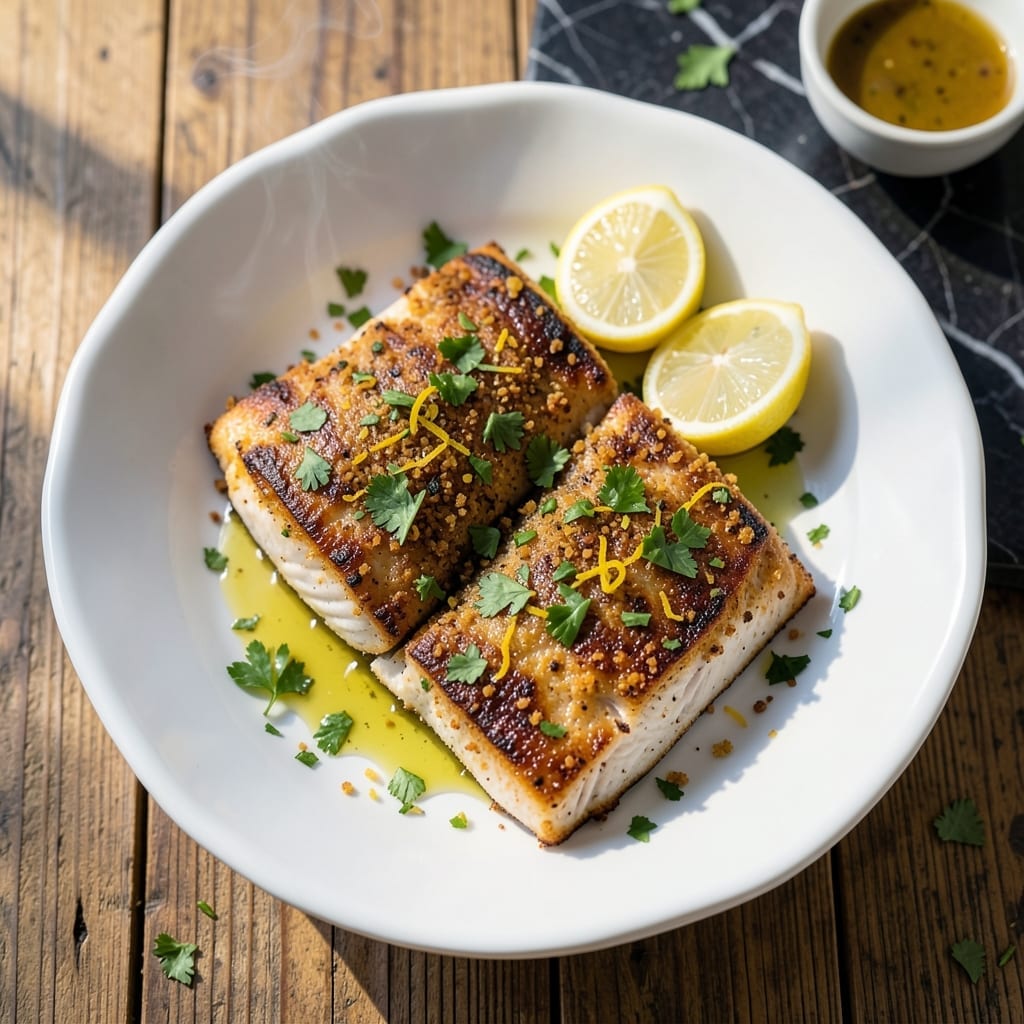
This broiled mahi mahi delivers flaky, tender fish with a golden crust in under 15 minutes. The high-heat method locks in moisture while creating a perfect sear on the lemon-herb topping.
I developed this technique to highlight the fish’s natural sweetness. A simple mix of breadcrumbs, parsley, and lemon zest forms a crispy layer that complements the mild flavor without overpowering it.
The result is restaurant-quality seafood with minimal effort. The crust stays crisp while the fish remains moist and delicate. Serve it alongside roasted vegetables or rice for a complete meal.
This method works every time, with consistent flaky texture and bright, fresh flavors. Here’s how to make it perfectly at home.
Ingredients for Mahi Mahi Recipe Broiled
Fresh mahi mahi and a handful of pantry staples create this restaurant-quality broiled fish dish.
| Ingredient | Amount | Notes |
|---|---|---|
| Mahi Mahi Fillets 🐟 | 1 ½ lb | Skinless, about 1-inch thick |
| Panko Breadcrumbs 🍞 | ½ cup | Japanese-style for extra crispiness |
| Fresh Parsley 🌿 | ¼ cup | Finely chopped, flat-leaf preferred |
| Lemon Zest 🍋 | 1 tbsp | From 1 large lemon |
| Lemon Juice 🍋 | 2 tbsp | Freshly squeezed from same lemon |
| Garlic Cloves 🧄 | 2 cloves | Minced or finely grated |
| Extra-Virgin Olive Oil 🫒 | 3 tbsp | Divided for topping and brushing |
| Dijon Mustard 🟡 | 1 tbsp | For binding the crust |
| Sea Salt 🧂 | ¾ tsp | Fine grain, divided use |
| Black Pepper 🌶️ | ½ tsp | Freshly ground preferred |
| Dried Thyme 🌿 | ½ tsp | Optional for added depth |
| Unsalted Butter 🧈 | 2 tbsp | Melted for extra richness |
The mahi mahi is the star. Look for fresh, sushi-grade fillets at Whole Foods or your trusted fishmonger—vibrant color and no fishy odor are key. The fillets should be about 1-inch thick for even cooking under the broiler. Frozen works in a pinch (thaw overnight in the fridge), but fresh delivers the best texture. The panko breadcrumbs, found in the Asian aisle, give that perfect crunch.
No panko? Regular breadcrumbs work at a 1:1 ratio, though the texture won’t be as crisp. Fresh parsley can be swapped for fresh dill or cilantro—both pair well with fish. Missing Dijon? Whole-grain mustard adds a nice texture. If you’re out of lemons, lime zest and juice provide a bright alternative. The butter can be omitted for a lighter version.
The crust topping can be prepped 1 day ahead and stored in the fridge. Broil the fish just before serving for the best texture. Leftovers keep for 2-3 days in the fridge, though the crust is best fresh. Reheat gently in the oven to preserve moisture.
Why You’ll Love This Recipe
- Ready in Minutes: I toss the mahi mahi with panko and lemon, then broil—dinner’s done faster than takeout.
- Crispy Zing: That panko crust gets golden while the lemon zest cuts through the richness like a dream.
- Weeknight Hero: Honestly, it’s my go-to for busy Tuesdays and fancy enough for company.
- Leftovers? Yes Please: The flavors hold up perfectly in the fridge—my lunch the next day tastes even better.
Step-by-Step Instructions for Broiled Mahi Mahi
Master this technique for perfectly flaky fish with a golden, herbaceous crust every time.
Step 1: Prepare the Lemon-Herb Crust
In a medium bowl, combine the 0.5 cup Panko Breadcrumbs, 0.25 cup Fresh Parsley, 1 tbsp Lemon Zest, 2 tbsp Lemon Juice, 2 cloves Garlic Cloves (minced), 1 tbsp Dijon Mustard, 0.5 tsp Dried Thyme, and 1 tbsp Extra-Virgin Olive Oil. The mixture should resemble wet sand with visible herb flecks.
Season with 0.5 tsp Black Pepper and 0.5 tsp Sea Salt, reserving the remaining 0.25 tsp Sea Salt for the mahi mahi fillets. This balance ensures the crust is flavorful without overpowering the delicate fish. Stir thoroughly to distribute the lemon and herbs evenly throughout the breadcrumbs.
Step 2: Season and Coat the Mahi Mahi Fillets
Pat the 1.5 lb Mahi Mahi Fillets completely dry with paper towels—this is critical for achieving a crispy crust. Season both sides lightly with the reserved 0.25 tsp Sea Salt. The fillets should be about 1-inch thick for even cooking under the broiler.
Brush the top of each fillet with 1 tbsp Extra-Virgin Olive Oil (from the remaining 2 tbsp), then press the panko mixture firmly onto the oiled surface. The coating should adhere completely, creating a ¼-inch thick layer. Drizzle the 2 tbsp Unsalted Butter evenly over the crust for added richness.
Step 3: Broil to Perfection
Position the oven rack 6 inches from the broiler element and preheat the broiler on high. Place the coated fillets on a broiler pan or wire rack set over a baking sheet. Broil for 6-8 minutes until the crust is golden brown and the fish flakes easily with a fork.
Avoid opening the oven door during broiling, as this causes temperature fluctuations. The mahi mahi is done when the internal temperature reaches 145°F and the flesh turns opaque. The crust should sizzle slightly when removed from the oven—a sign of perfect crispness.
Step 4: Rest and Serve Immediately
Transfer the broiled mahi mahi to a serving platter and let it rest for 2-3 minutes. This brief pause allows the juices to redistribute, ensuring the fish remains moist. The crust will firm up slightly during this time, making it easier to serve without losing the topping.
Serve immediately while the crust is still crisp. Each portion should showcase the contrast between the flaky, tender fish and the aromatic, golden-brown lemon-herb crust. The remaining 1 tbsp Extra-Virgin Olive Oil can be drizzled over the top for added brightness if desired.
Pro Tips For Making Mahi Mahi Recipe Broiled
- Preheat the Broiler: Crank it to high and let it heat for at least 5 minutes—mahi mahi cooks fast, and a screaming-hot broiler guarantees that crispy panko crust without overcooking the fish.
- Pat Fillets Dry: I learned this the hard way: even a little moisture on the mahi mahi makes the panko slide right off. Grab a paper towel and dry each fillet thoroughly before coating.
- Skip the Overcrowding: Leave space between fillets on the baking sheet, or they’ll steam instead of broil. Sounds obvious, but I’ve ruined a batch by trying to fit too many on one tray.
- Zest Before Juicing: Grate the lemon zest first, then cut and juice the same lemon—it’s faster and you’ll get more flavor out of each fruit. Plus, the oils in the zest really wake up the panko topping.
Common Mistakes When Making Perfect Results
Overcrowding the Pan
Always arrange the fillets with at least 2 inches of space between them on the broiler pan. Crowding causes uneven cooking and steams the crust instead of crisping it. I use a wire rack set over a baking sheet for optimal air circulation. 🔥
Skipping the Dry Pat
This is the most common mistake I see. Any moisture on the fillets prevents the crust from adhering properly. Press firmly with paper towels until the surface feels completely dry. The 1-inch thick fillets need this dry surface to achieve that perfect golden crust.
Broiling Too Close
Position your oven rack 6 inches from the broiler element. Too close and the crust burns before the fish cooks through. Too far and you’ll end up with dry, overcooked mahi mahi. My oven’s sweet spot is the second rack from the top.
Peeking Too Often
Every time you open the oven door, you lose 50-75°F of heat. Resist the urge to check until at least 5 minutes have passed. The crust needs consistent high heat to develop properly. Trust the process and your timer.
Underseasoning the Fish
While the crust is flavorful, the fish itself needs seasoning too.
Serving Too Soon
Let the fish rest for 2-3 minutes after broiling. This allows the juices to redistribute and the crust to set. Serving immediately can cause the topping to slide off and the fish to dry out. 💡
Nutrition Facts
Frequently Asked Questions
What temperature should the broiler be set to?
Preheat your broiler on high with the rack 6 inches from the element. This ensures even cooking without burning the crust before the fish is done.
How do I know when the mahi mahi is cooked?
The fish is ready when it reaches an internal temperature of 145°F and flakes easily with a fork. The crust should be golden brown and sizzling slightly.
Can I use frozen mahi mahi fillets?
Yes, thaw them overnight in the fridge and pat completely dry before seasoning. Avoid microwaving to thaw, as it can make the texture mushy.
What if my crust isn’t crispy?
Ensure the fillets are dry before adding the topping and avoid overcrowding the pan. Broil on high heat without opening the oven door.

- 6 Egg Cake Recipe with Oil: Light as Air With Buttery Moisture - October 4, 2026
- 4 Bean Casserole Recipe: One-Pan Heartiness With Smoky Paprika Depth - October 4, 2026
- 3-Ingredient Keto Mug Cake Recipe: Microwave Magic in 2 Minutes - October 4, 2026