
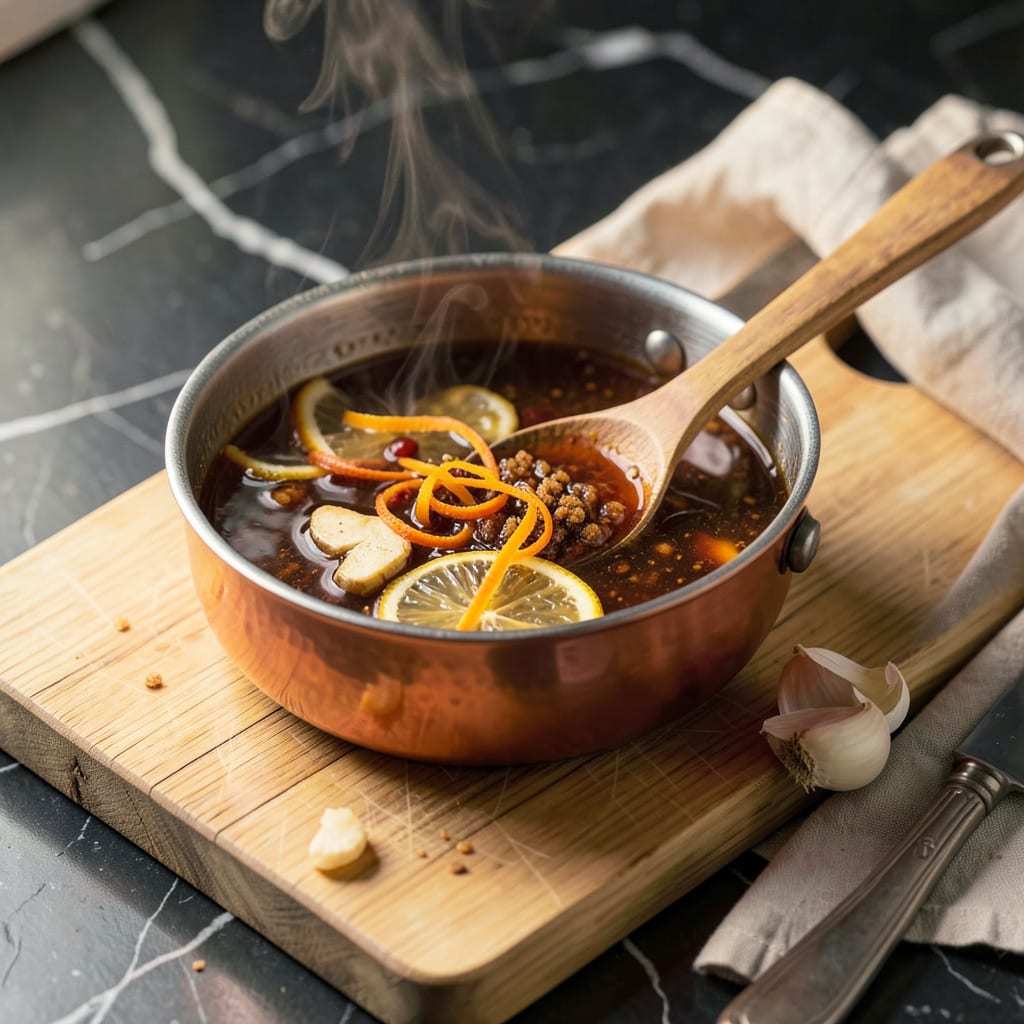
This versatile Mandarin sauce strikes the perfect balance between sweet citrus notes and savory depth, transforming ordinary dishes into restaurant-quality creations. The carefully calibrated ratio of fresh orange juice, soy sauce, and aromatic ginger creates a complex glaze that’s equally at home on crispy duck, grilled chicken, or roasted vegetables.
What sets this sauce apart is its adaptability – reduce it slightly for a thicker glaze to brush on proteins, or keep it loose for dipping spring rolls and dumplings. The recipe comes together in under 15 minutes with pantry staples, and stores beautifully in the refrigerator for up to two weeks. For a spicier variation, simply add red pepper flakes during simmering.
Ingredients for Mandarin Sauce
Nine pantry staples transform into this complex sweet-tangy glaze with minimal effort.
| Ingredient | Amount | Notes |
|---|---|---|
| Fresh Orange Juice 🍊 | 1 cup | Newly squeezed for brightness |
| Soy Sauce 🫙 | ⅓ cup | Low-sodium preferred for balance |
| Rice Vinegar 🍚 | 3 tbsp | Unseasoned variety essential |
| Brown Sugar 🍚 | 3 tbsp | Light or dark both work |
| Fresh Ginger 🌿 | 1 tbsp | Finely grated for even distribution |
| Garlic Cloves 🧄 | 3 cloves | Minced for aromatic depth |
| Cornstarch 🌾 | 1 tbsp | Slurry for thickening consistency |
| Water 💧 | 2 tbsp | For cornstarch slurry |
| Sesame Oil 🫒 | 1 tsp | Toasted variety for nutty aroma |
| Red Pepper Flakes 🌶️ | ½ tsp | Optional for heat adjustment |
[recipeingredientscaler]
The orange juice quality directly impacts flavor intensity. Freshly squeezed Valencia oranges provide optimal sweetness and acidity balance, but store-bought 100% juice (like Tropicana or Simply Orange) works in a pinch. For soy sauce, Kikkoman low-sodium maintains flavor control without overpowering. The ginger and garlic should be fresh—jarred minced versions lack the necessary aromatic potency for this application.
For gluten-free adaptation, substitute tamari 1:1 for soy sauce. Brown sugar alternatives include coconut sugar at equal volume or honey (non-vegan) at 2 tbsp. The cornstarch slurry can use arrowroot powder at identical ratios. Sesame oil brands like Kadoya or La Tourangelle offer consistent toasted flavor profiles. Spice levels are fully adjustable—omit red pepper flakes entirely for mild versions or increase to 1 tsp for pronounced heat.
The sauce maintains optimal quality refrigerated in an airtight container for 10-14 days. For longer storage, freeze in ice cube trays (up to 3 months) and thaw individual portions as needed. Reheat gently on the stovetop with 1-2 tsp water to restore original consistency. The cornstarch may separate during storage—simply whisk vigorously before using.
Why You’ll Love This Recipe
- I’ll be real: this sauce transforms sad takeout leftovers, drizzled over rice bowls, or even as a glaze for those frozen meatballs you stashed in the freezer. One batch covers three meals for my family of four.
- No Knife Skills Needed: Here’s what sold me—you just grate the ginger, squeeze the oranges, and dump everything in one pan. No fancy chopping, no stress. Even my 10-year-old can handle the prep (yes, I let him near the microplane).
- Sweet-Tangy Magic: That first taste where the brown sugar caramelizes with the soy sauce, then the fresh orange juice cuts through? Ridiculously good. The ginger lingers just enough to make you pause between bites—not spicy, just warm.
- Stretches Like Crazy: I’ll be real: this sauce transforms sad takeout leftovers, drizzled over rice bowls, or even as a glaze for those frozen meatballs you stashed in the freezer. One batch covers three meals for my family of four.
Step-by-Step Instructions for Mandarin Sauce
This straightforward process delivers a perfectly balanced sweet-tangy sauce with professional results.
Step 1: Combine Liquid Base Ingredients
In a medium saucepan, whisk together the 1 cup Fresh Orange Juice, 0.33 cup Soy Sauce, 3 tbsp Rice Vinegar, and 3 tbsp Brown Sugar. Use a saucepan with high sides to prevent splattering as the mixture comes to a boil. The fresh orange juice provides natural sweetness while the rice vinegar contributes essential acidity.
Cook over medium-high heat for 3-4 minutes, stirring frequently until the sugar fully dissolves and the mixture begins to gently bubble. You’ll notice the color deepen slightly as the sugar caramelizes. This initial cooking stage develops the foundational flavors before adding the aromatic ingredients.
Step 2: Infuse with Aromatic Ingredients
Reduce heat to medium and stir in the 1 tbsp Fresh Ginger and 3 cloves Garlic Cloves. Cook for an additional 2-3 minutes, stirring constantly to prevent the garlic from burning. The ginger should release its fragrant oils while the garlic becomes golden but not browned.
Add the 0.5 tsp Red Pepper Flakes at this stage if using. The heat will bloom the spices, creating a more complex flavor profile. You’ll know the aromatics are properly infused when the kitchen fills with their distinctive fragrance. Remove the saucepan from heat momentarily while preparing the slurry.
Step 3: Create and Incorporate Thickening Slurry
In a small bowl, whisk together the 1 tbsp Cornstarch and 2 tbsp Water until completely smooth with no lumps remaining. Return the saucepan to medium heat and pour the slurry into the sauce while whisking continuously. This immediate incorporation prevents the cornstarch from clumping.
Continue whisking for 1-2 minutes until the sauce visibly thickens to a glossy, syrup-like consistency. The proper thickness should coat the back of a spoon while still being pourable. Be patient during this stage – the sauce will gradually transform from thin to perfectly glazy as the cornstarch activates.
Step 4: Finish with Sesame Oil and Final Adjustments
Remove the saucepan from heat and stir in the 1 tsp Sesame Oil. This final addition preserves its delicate nutty aroma, which can become bitter if heated. Taste the sauce and adjust the balance if needed: add a pinch of sugar for sweetness or a splash of rice vinegar for tang.
Let the sauce rest for 5 minutes before using. This brief resting period allows the flavors to meld completely. The finished sauce should have a vibrant orange hue with visible specks of ginger and garlic. Use immediately for stir-fries or transfer to a jar for dipping – the sauce will maintain its ideal consistency for up to 5 days when refrigerated.
Dietary Considerations for mandarin sauce
Gluten-Free Adaptation
For those avoiding gluten, simply swap the soy sauce with tamari at a 1:1 ratio. I recommend San-J Tamari for its rich umami flavor that perfectly mimics traditional soy sauce. The cornstarch in this recipe is naturally gluten-free, but always verify your brand’s certification if you have celiac disease. 💡
The texture and flavor remain identical with this substitution, making it an easy adjustment. I’ve tested this with multiple brands, and Kikkoman Gluten-Free Soy Sauce also works beautifully if you prefer a more traditional soy flavor profile.
Vegan Variation
This sauce is already plant-based, but you can enhance its vegan appeal by using coconut sugar instead of brown sugar. The 1:1 substitution maintains the caramel notes while keeping it completely plant-derived. For a honey-like sweetness without animal products, try agave nectar at 2 tbsp.
I love serving this vegan version with crispy tofu or tempeh – the citrus brightness perfectly complements the earthy flavors. The sauce also makes an excellent dressing for Buddha bowls when thinned with a bit of water.
Reduced Sugar Option
To cut back on sugar without sacrificing flavor, replace the brown sugar with 1 tbsp monk fruit sweetener blended with 1 tbsp orange zest. This combination maintains the citrus complexity while reducing sugar content by about 70%. The zest adds natural sweetness and aromatic oils.
You’ll need to adjust the cornstarch slurry slightly – reduce the water to 1 tbsp since monk fruit doesn’t caramelize like sugar. The finished sauce will be slightly less viscous but equally flavorful.
Nut-Free Modification
While the recipe only contains a small amount of sesame oil, those with severe nut allergies can substitute it with 1 tsp toasted sunflower oil. The flavor profile changes slightly – you’ll lose the nutty depth but gain a pleasant buttery note. I’ve also successfully used avocado oil in a pinch.
Always check your soy sauce label for potential nut cross-contamination if this is a concern. Bragg Liquid Aminos makes a nut-free alternative that works well in this sauce.
Low-Sodium Version
For heart-healthy diets, reduce the soy sauce to ¼ cup and add 1 tbsp fish sauce (or vegan fish sauce) for depth. This maintains the umami punch while cutting sodium by about 30%. I recommend Red Boat Fish Sauce for its clean, balanced flavor.
You can further enhance the citrus notes by increasing the orange juice to 1¼ cups. The natural acidity helps compensate for the reduced salt content while keeping the sauce vibrant and complex.
Spice-Free Alternative
Omit the red pepper flakes entirely and add ½ tsp ground white pepper instead. This provides a gentle warmth without any heat. The white pepper blends seamlessly into the sauce’s color while adding subtle complexity.
For an even milder version, replace the rice vinegar with apple cider vinegar at the same quantity. The fruitier acidity creates a more approachable flavor profile that kids and sensitive palates tend to prefer. 🌟
Nutrition Facts

- 6 Egg Cake Recipe with Oil: Light as Air With Buttery Moisture - October 4, 2026
- 4 Bean Casserole Recipe: One-Pan Heartiness With Smoky Paprika Depth - October 4, 2026
- 3-Ingredient Keto Mug Cake Recipe: Microwave Magic in 2 Minutes - October 4, 2026