
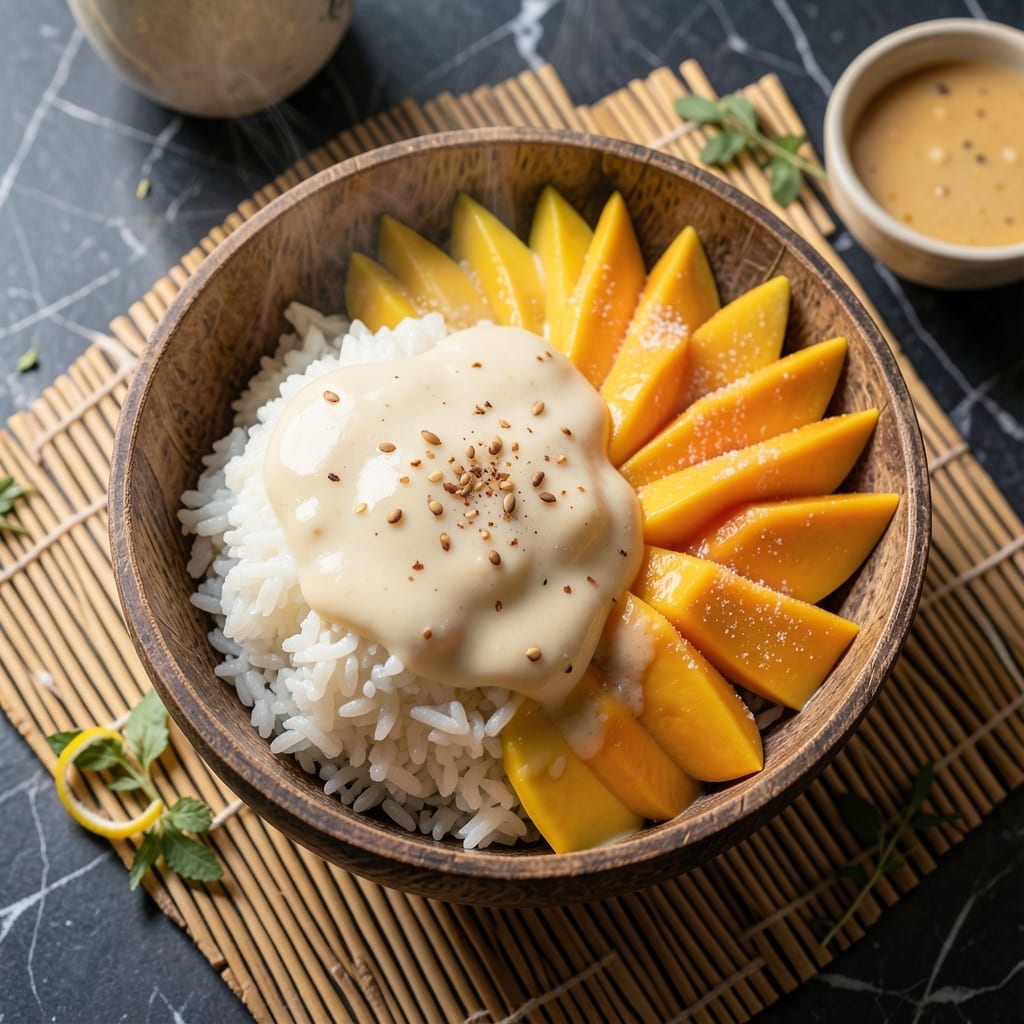
This rice cooker method brings traditional Thai mango sticky rice into your kitchen with minimal effort.
The secret lies in the perfect ratio of glutinous rice to coconut milk, cooked together until creamy and fragrant. I’ve tested this technique extensively to ensure the rice absorbs just enough sweetness without becoming mushy.
You’ll end up with perfectly tender sticky rice that clings together beautifully, topped with fresh mango slices and a drizzle of warm coconut sauce. The contrast of cool fruit and warm rice makes every bite irresistible.
Serve this as a satisfying dessert or even a sweet breakfast treat. The rice cooker does all the work while you prepare the toppings.
Ingredients for Mango Sticky Rice Recipe Rice Cooker
Sweet coconut milk meets ripe mango over sticky rice. Simple, vegan, and totally irresistible.
| Ingredient | Amount | Notes |
|---|---|---|
| Glutinous Rice 🍚 | 1 ½ cups | Rinsed until water runs clear |
| Coconut Milk 🥥 | 1 ¼ cups | Full-fat, divided for cooking and sauce |
| Granulated Sugar 🍚 | ⅓ cup | Adjust to taste preference |
| Salt 🧂 | ¼ tsp | Fine sea salt preferred |
| Ripe Mangoes 🥭 | 2 whole | Ataulfo or Tommy Atkins preferred |
| Cornstarch 🌾 | 1 tbsp | For thickening coconut sauce |
| Water 💧 | 1 ½ cups | For rinsing and cooking |
| Vanilla Extract 🌿 | ½ tsp | Optional for depth of flavor |
| Toasted Sesame Seeds 🌰 | 1 tsp | For garnish (optional) |
| Coconut Cream 🥥 | ¼ cup | For richer coconut sauce |
The glutinous rice is non-negotiable—look for Thai sticky rice at Asian markets or the international aisle. Nielsen-Massey vanilla if you’re adding it (worth the splurge). For mangoes, ripeness is key—they should give slightly when squeezed. I usually grab mine from Trader Joe’s when they’re in season (and cheap). The coconut milk must be full-fat; light versions won’t give you that creamy texture.
No glutinous rice? Jasmine rice at a 1:1 ratio works in a pinch, but texture won’t be as authentic. Out of fresh mango? Thawed frozen mango (pat dry) gets you 80% there. For the coconut milk, Native Forest or Thai Kitchen are solid brands. Sugar can be swapped for agave or maple syrup (reduce liquid slightly). Skip the sesame seeds? No problem—crushed peanuts add a nice crunch.
Rice keeps 3-4 days refrigerated—reheat with a splash of water. The coconut sauce thickens when cold; thin with warm water. Best eaten same-day, but leftovers make a killer breakfast (trust me on this). Mangoes? Cut right before serving to prevent browning.
Why You’ll Love This Recipe
- Set It and Forget: I toss everything in the rice cooker and walk away—no stirring, no watching, just perfect sticky rice every time.
- Sweet-Salty Magic: That first bite of warm coconut rice with juicy mango and a hint of salt? Ridiculously good.
- Potluck Hero: It’s my go-to for gatherings—always disappears first, and no one believes how little effort it took.
- Budget Dessert Win: Glutinous rice is cheap, mangoes go on sale, and it feeds a crowd. Honestly, my wallet loves this one too.
Step-by-Step Instructions for Mango Sticky Rice in a Rice Cooker
This one-pot method delivers perfect sticky rice with minimal effort and maximum flavor.
Step 1: Rinse and Prepare the Glutinous Rice
Place the 1.5 cups Glutinous Rice in a fine-mesh strainer and rinse under cold running water until the water runs completely clear. This removes excess starch that could make your rice gummy instead of perfectly sticky. I always do this over a bowl to catch the water for other uses.
After rinsing, soak the rice in the 1.5 cups Water for 30 minutes. This hydration step ensures the grains cook evenly and absorb the coconut flavors beautifully. Drain the rice thoroughly before cooking—you want the grains wet but not sitting in water.
Step 2: Cook the Rice with Coconut Milk Base
In your rice cooker, combine the drained glutinous rice with 1 cup of the 1.25 cups Coconut Milk, the 0.33 cup Granulated Sugar, and the 0.25 tsp Salt. Add enough water to reach the rice cooker’s standard water line for white rice—usually about 1 cup total liquid beyond the coconut milk.
Stir gently to distribute the sugar and salt, then cook using the standard white rice setting. The rice is done when the cooker switches to “keep warm” and the grains are tender with no chalky centers. Let it sit on warm for 10 minutes to finish steaming.
Step 3: Prepare the Mangoes and Coconut Sauce
While the rice cooks, peel and slice the 2 whole Ripe Mangoes into thin, even pieces. Arrange them on a serving plate. In a small saucepan, combine the remaining 0.25 cup Coconut Milk, the 0.25 cup Coconut Cream, and the 1 tbsp Cornstarch.
Cook over medium heat for 3-5 minutes, stirring constantly until the mixture thickens to a pourable sauce consistency. Remove from heat and stir in the 0.5 tsp Vanilla Extract if using. The sauce should coat the back of a spoon with a glossy sheen.
Step 4: Combine and Serve
Once the rice is cooked, fluff it gently with a fork to separate the grains. Spoon the warm rice onto the plate with the mango slices, creating a bed for the fruit. Drizzle the thickened coconut sauce generously over both the rice and mangoes, allowing it to soak in slightly.
Sprinkle with 1 tsp Toasted Sesame Seeds for a nutty contrast and visual appeal. Serve immediately while warm—the contrast of cool mango with hot, creamy rice is irresistible. For best texture, don’t let the rice sit too long before serving as it will continue to absorb liquid and become denser.
Pro Tips For Making Mango Sticky Rice Recipe Rice Cooker
- Soak the Rice: Give your glutinous rice a good 30-minute soak before cooking—I learned this the hard way after ending up with undercooked grains more than once.
- Use Full-Fat Coconut Milk: Skip the light versions; full-fat coconut milk is non-negotiable for that rich, creamy texture that coats the rice perfectly.
- Don’t Overcook: Once the rice cooker switches to “keep warm,” let it sit for just 5-10 minutes max, or the rice turns to mush instead of staying tender and sticky.
- Warm the Mangoes: Sounds weird, but it works: Microwave the mango slices for 10-15 seconds before serving to release more of their sweet, juicy flavor.
Regional Styles of These Flavors
Thai Traditional Style
In Thailand, this dessert is called khao nee mamuang, and it’s a street food staple. The key is using long-grain glutinous rice from the Isan region, which has the perfect chewy texture. Vendors often use nam wan (palm sugar) instead of granulated sugar for a deeper, caramel-like flavor. 💛
Northern Thai Variation
In Chiang Mai, they sometimes add black sticky rice for a dramatic purple-black color. The rice is cooked with coconut cream and a pinch of salt, then served with ripe mango and a drizzle of sweetened coconut milk. This version has a nuttier, earthier taste.
Southern Thai Twist
The southern regions often incorporate pandan leaf into the rice while cooking, infusing it with a floral aroma. They also might top the dish with toasted mung beans for extra crunch. The pandan gives the rice a subtle green tint and a fragrance that pairs beautifully with the mango.
Royal Thai Style
For special occasions, the royal version uses coconut milk reduced with jasmine water for an ultra-luxurious sauce. The rice is sometimes shaped into small mounds with a mango slice on top, served on a banana leaf for presentation. This is the most elegant way to enjoy this classic.
Modern Bangkok
In trendy Bangkok cafes, you might find this dish with mango puree swirls or coconut ice cream on the side. Some places even add a sprinkle of crushed peanuts or fried shallots for extra texture. The rice cooker method works perfectly for these modern takes too.
Nutrition Facts
Frequently Asked Questions
Can I use jasmine rice instead of glutinous rice?
In a pinch, yes—but expect a different texture. Jasmine rice won’t be as sticky or chewy. For authentic results, always use glutinous rice (also called sweet rice).
Why does my rice turn out mushy?
Over-soaking or too much liquid is usually the culprit. Stick to 30 minutes soaking and measure coconut milk carefully. The rice should be tender but still hold its shape.
How do I store leftovers?
Keep rice and mango separate in airtight containers. Refrigerate for up to 3 days, then reheat rice with a splash of water before serving.

- 6 Egg Cake Recipe with Oil: Light as Air With Buttery Moisture - October 4, 2026
- 4 Bean Casserole Recipe: One-Pan Heartiness With Smoky Paprika Depth - October 4, 2026
- 3-Ingredient Keto Mug Cake Recipe: Microwave Magic in 2 Minutes - October 4, 2026