
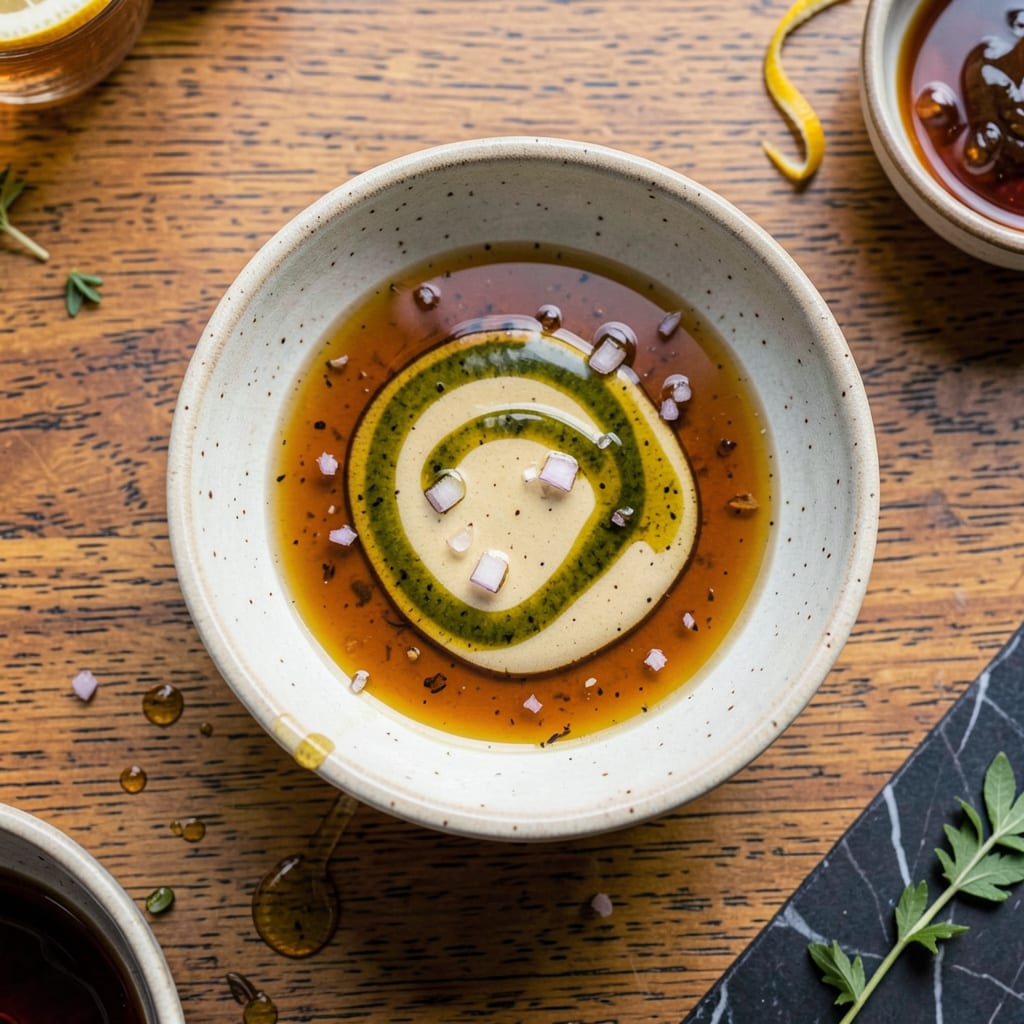
This maple bourbon vinaigrette transforms ordinary salads into extraordinary dining experiences. The perfect balance of sweet maple syrup, smoky bourbon, and tangy vinegar creates a complex flavor profile that elevates everything it touches. I developed this recipe after years of experimenting with different ratios to achieve that ideal harmony between sweetness and acidity.
What makes this vinaigrette special is its versatility. It takes just minutes to whisk together and keeps beautifully in the refrigerator for up to two weeks. The bourbon adds depth without overpowering, while the maple syrup provides natural sweetness that complements both bitter greens and roasted vegetables. This dressing proves that homemade condiments can outshine any store-bought version.
Ingredients for Maple Bourbon Vinaigrette
Eight carefully balanced ingredients create this sophisticated vinaigrette with complex sweet, smoky, and tangy dimensions.
| Ingredient | Amount | Notes |
|---|---|---|
| Pure Maple Syrup 🍁 | ⅓ cup | Grade A dark color preferred |
| Bourbon Whiskey 🥃 | 2 tbsp | Mid-shelf quality recommended |
| Apple Cider Vinegar 🍎 | ¼ cup | Unfiltered for robust flavor |
| Dijon Mustard 🟡 | 1 tbsp | Smooth, not whole-grain variety |
| Extra-Virgin Olive Oil 🫒 | ¾ cup | Cold-pressed for optimal quality |
| Kosher Salt 🧂 | ½ tsp | Diamond Crystal brand preferred |
| Freshly Ground Black Pepper 🌶️ | ¼ tsp | Medium-coarse grind ideal |
| Shallot 🧅 | 1 whole | Finely minced for even distribution |
The maple syrup quality is paramount for achieving the ideal sweetness profile. Grade A dark color provides the robust caramel notes essential for balancing the bourbon’s smokiness. For the whiskey, mid-shelf bourbons like Buffalo Trace or Maker’s Mark offer optimal depth without overpowering. Professional kitchens typically use unfiltered apple cider vinegar for its superior acidity and fruit-forward characteristics. The Dijon mustard acts as an emulsifier—Grey Poupon is the industry standard for consistency and flavor neutrality.
For alcohol-free versions, substitute the bourbon with 1 tbsp vanilla extract plus 1 tbsp water to maintain complexity. The extra-virgin olive oil should be high-quality but not overly peppery—California Olive Ranch or Bertolli are reliable choices. If shallots are unavailable, red onion at half the quantity provides similar allium notes. The salt-to-pepper ratio is calibrated for Diamond Crystal kosher salt; if using table salt, reduce by 25%.
This vinaigrette maintains optimal flavor for 10-14 days refrigerated in an airtight glass container. The emulsion may separate—simply rewhisk before use. For extended storage beyond 2 weeks, omit the shallots and add fresh when serving. The bourbon’s alcohol content preserves the dressing naturally, eliminating the need for artificial preservatives. Always bring to room temperature before serving to fully appreciate the flavor complexity.
Why You’ll Love This Recipe
- Shake & Done: I toss everything in a jar, shake for 10 seconds, and boom—dressing’s ready. No whisking, no blender, just that satisfying glug-glug of bourbon hitting the maple syrup.
- Sweet Heat Balance: That first bite where the smoky bourbon cuts through the maple’s richness? I’ll admit, I’ve licked the spoon. The Dijon sneaks in with just enough bite to keep it interesting.
- Salad’s Best Friend: Honestly, this isn’t just for greens. I’ve drizzled it over roasted sweet potatoes, spooned it into grain bowls, even used it as a glaze for grilled chicken. (Yes, it works.)
- Fridge Stays Interesting: It keeps for a week, and the flavors actually get better—like the bourbon mellows out while the vinegar stays bright. I make a double batch because, between us, I always run out too fast.
Step-by-Step Instructions for Maple Bourbon Vinaigrette
This method ensures perfect emulsification and balanced flavors every time you prepare the dressing.
Step 1: Mince and Macerate the Shallot
Begin by finely mincing the shallot until you achieve uniform, small pieces. The finer the mince, the more evenly the flavor will distribute throughout the vinaigrette. Transfer the minced shallot to a medium mixing bowl.
Add the apple cider vinegar to the bowl with the shallot. This step serves two purposes: it begins the flavor infusion process and helps mellow the shallot’s sharpness. Let this mixture sit for exactly 10 minutes to allow the shallot to macerate properly in the vinegar.
Step 2: Create the Flavor Base
After the maceration period, whisk in the pure maple syrup until fully incorporated. The syrup should dissolve completely into the vinegar mixture, creating a slightly thickened base. Next, add the Dijon mustard and whisk vigorously for 30 seconds until no visible streaks remain.
Pour in the bourbon whiskey and whisk again for 20 seconds. The alcohol will help emulsify the dressing later while adding depth of flavor. At this stage, you should have a smooth, homogeneous mixture with a glossy appearance and a balance of sweet, tangy, and smoky aromas.
Step 3: Emulsify with Olive Oil
Begin adding the extra-virgin olive oil in a very slow, steady stream while whisking constantly. This gradual incorporation is crucial for creating a stable emulsion. After adding about ¼ cup of the oil, the mixture should begin to thicken noticeably.
Continue whisking vigorously as you add the remaining oil. The dressing is properly emulsified when it reaches a creamy consistency that coats the back of a spoon. If the mixture appears too thick, you can thin it with 1 teaspoon of water, but this is rarely necessary with proper technique.
Step 4: Season and Adjust
Add the kosher salt and freshly ground black pepper to the emulsified dressing. Whisk for an additional 15 seconds to distribute the seasoning evenly. Taste the vinaigrette and assess the balance of flavors – you should detect sweetness from the maple, acidity from the vinegar, and a subtle smokiness from the bourbon.
If needed, make final adjustments: a pinch more salt for balance, a few drops of vinegar for brightness, or a drizzle of maple syrup for sweetness. The ideal consistency should be pourable but substantial enough to cling to salad greens without pooling at the bottom of the bowl.
Step 5: Rest and Serve
Transfer the completed vinaigrette to a glass jar or airtight container. Let it rest at room temperature for 15 minutes before using. This resting period allows the flavors to meld completely and the emulsion to stabilize.
Before serving, give the dressing a final whisk to re-emulsify any separated components. The vinaigrette will keep in the refrigerator for up to 5 days, though the flavors are most vibrant when used within 48 hours. Always bring to room temperature and whisk before each use.
Pro Cooking Tips for This Recipe
Perfect Emulsification Technique
The key to a stable emulsion lies in the oil addition process. I always use a glass measuring cup with a spout for precise control. Pour the olive oil in a thin, steady stream while whisking vigorously in a circular motion. This creates tiny oil droplets suspended in the vinegar base, preventing separation. 💡
For foolproof results, place your mixing bowl on a damp kitchen towel to prevent slipping. The friction helps you maintain constant whisking speed. If your arm gets tired, switch to a handheld immersion blender for the final ¼ cup of oil – it incorporates air for extra creaminess.
Flavor Balancing Secrets
After mixing, let the vinaigrette rest for 15 minutes before tasting. This allows the bourbon’s smokiness to fully integrate with the maple’s sweetness. I always taste with a piece of butter lettuce – it’s neutral enough to judge the balance accurately.
If the dressing tastes flat, add a pinch of flaky sea salt (I prefer Maldon). For too much acidity, balance with ½ tsp more maple syrup. The bourbon should be present but subtle – if it’s overpowering, whisk in 1 tsp water to mellow it.
Shallot Preparation Pro Tip
The shallot treatment makes or breaks this dressing. I use a microplane grater instead of mincing for ultra-fine texture that distributes evenly. Soak the grated shallot in vinegar for exactly 10 minutes – any longer and it loses its bright allium punch.
For a smoother texture, strain out the shallot pieces after maceration but keep the infused vinegar. This gives you the flavor without visible bits. I do this when serving the vinaigrette over delicate greens like baby spinach or frisée.
Oil Quality Matters
Not all olive oils work equally here. I recommend California Olive Ranch or Lucini for their balanced fruitiness. Avoid intensely peppery oils that can overwhelm the bourbon notes. The oil should complement, not compete with, the other flavors.
Store your oil in a cool, dark place to prevent oxidation. If your vinaigrette develops a bitter taste, the oil has likely turned rancid. Always smell your oil before using – it should be fresh and fruity, never musty or paint-like.
Temperature Control
All ingredients should be at room temperature before mixing. Cold maple syrup or olive oil can cause the emulsion to break prematurely. I set my ingredients out 30 minutes before starting, especially if they’ve been refrigerated.
If your kitchen is particularly warm (above 75°F), chill the finished vinaigrette for 15 minutes before serving. This helps stabilize the emulsion and prevents oil separation when dressing warm salads or roasted vegetables.
Storage Optimization
Glass containers with tight-fitting lids preserve flavor best. I use 16-ounce mason jars – they’re perfect for shaking to re-emulsify. Always leave ½ inch headspace to accommodate expansion if freezing (though I don’t recommend it).
Label your container with the date – this vinaigrette tastes best within 5 days but remains safe for up to 2 weeks. The bourbon acts as a natural preservative, but the shallot flavor intensifies over time. For longer storage, omit shallots and add fresh when serving.
Nutrition Facts
Frequently Asked Questions
Can I substitute the bourbon with something non-alcoholic?
Yes! For an alcohol-free version, replace the bourbon with 1 tbsp vanilla extract plus 1 tbsp water. This maintains the depth of flavor while keeping the vinaigrette family-friendly. The vanilla adds warmth similar to bourbon’s caramel notes.
How long does this vinaigrette stay fresh in the fridge?
When stored in an airtight glass container, it keeps beautifully for 10-14 days. The bourbon’s alcohol content helps preserve it naturally. Just give it a good whisk before using, as the emulsion may separate over time.
What’s the best way to fix a broken emulsion?
If your vinaigrette separates, place 1 tsp Dijon mustard in a clean bowl and slowly whisk in the broken dressing. The mustard’s emulsifying properties will rebind the oil and vinegar. For stubborn cases, use a handheld blender for 10 seconds.
Can I use this dressing for marinating meats?
It works wonderfully with pork tenderloin or chicken breasts. Marinate for 2-4 hours maximum—the maple’s sugars can burn if left too long. The bourbon’s smokiness pairs especially well with grilled proteins.
Why does my vinaigrette taste too sharp or acidic?
This usually means the vinegar overpowers. Balance it by whisking in ½ tsp more maple syrup or a pinch of salt. Let it rest 15 minutes before retasting—the flavors will mellow as they meld together.

- 6 Egg Cake Recipe with Oil: Light as Air With Buttery Moisture - October 4, 2026
- 4 Bean Casserole Recipe: One-Pan Heartiness With Smoky Paprika Depth - October 4, 2026
- 3-Ingredient Keto Mug Cake Recipe: Microwave Magic in 2 Minutes - October 4, 2026