
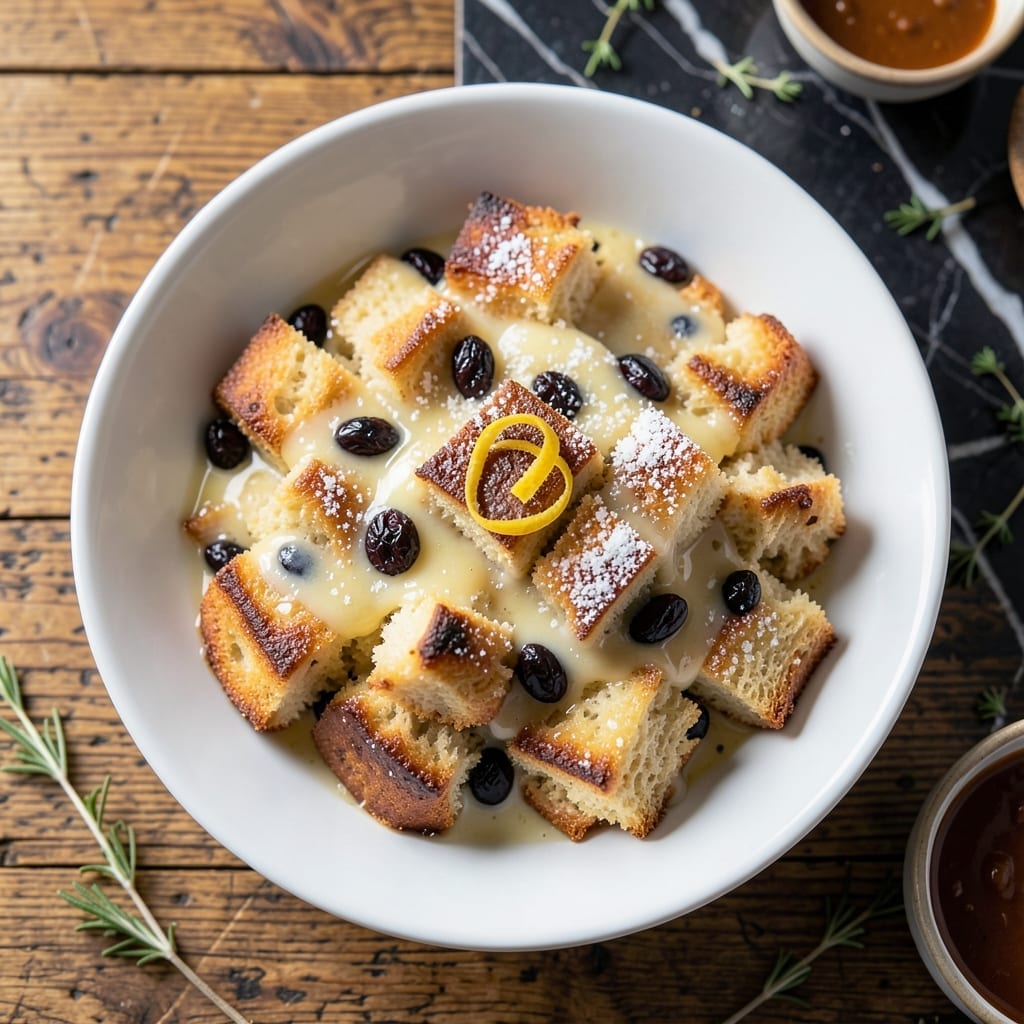
This bread pudding transforms simple ingredients into a vanilla-kissed custard masterpiece that feels both nostalgic and indulgent. The secret lies in allowing the bread to soak thoroughly in the rich custard mixture before baking.
I’ve tested countless variations, but the traditional approach—using stale bread, whole milk, and a touch of cinnamon—always delivers the best texture and flavor. The result is a dessert that’s creamy on the inside with a golden top.
The aroma of warm vanilla and baked custard fills the kitchen as it bakes, creating a comforting atmosphere that’s hard to resist. Serve it warm with a drizzle of caramel or a scoop of ice cream for the perfect finish.
This dish proves that sometimes, the classics are classics for a reason. Here’s how to make it at home.
Ingredients for Martha Stewart Bread Pudding
Classic ingredients create a vanilla-kissed custard masterpiece with golden results every time.
| Ingredient | Amount | Notes |
|---|---|---|
| Day-Old Bread 🍞 | 8 cups | Cubed, preferably brioche or challah |
| Whole Milk 🥛 | 2 cups | Full-fat for creaminess |
| Heavy Cream 🥛 | 1 cup | For rich custard texture |
| Large Eggs 🥚 | 4 whole | Room temperature preferred |
| Granulated Sugar 🧂 | ¾ cup | For sweet custard base |
| Vanilla Extract 🌿 | 2 tsp | Pure extract, not imitation |
| Ground Cinnamon 🌿 | 1 tsp | For warm spice flavor |
| Salt 🧂 | ¼ tsp | Balances sweetness |
| Unsalted Butter 🧈 | 2 tbsp | Melted, for greasing dish |
| Raisins 🍇 | ½ cup | Optional, for texture |
| Vanilla Bean 🌿 | 1 whole | Scraped seeds for intensity |
The bread is key here. Brioche or challah from a good bakery gives you that buttery richness—day-old is ideal since it soaks up custard better. I grab mine from local artisan bakeries or the bakery section at Whole Foods. The vanilla? Splurge on pure extract or a real bean—it makes all the difference in that signature flavor.
No brioche on hand? French bread or sourdough work too (just remove crusts if they’re too tough). Want it richer? Swap half the milk for more cream. Skipping raisins? Dried cranberries or chopped dates add nice texture. The cinnamon can be increased to 1.5 tsp if you love that warm spice kick—just don’t overpower the vanilla.
Assemble it the night before—soaking overnight deepens the flavor. Baked pudding keeps 3 days refrigerated (reheat covered) or freezes beautifully for 2 months. Serve warm with that caramel drizzle the intro promised.
Why You’ll Love This Recipe
- No Fuss Mixing: I just whisk the milk, cream, eggs, and sugar together—no fancy steps, just pour over the bread and let it soak.
- Custardy Goodness: The combo of whole milk and heavy cream makes it rich but not too heavy, with that perfect wobbly center.
- Feeds a Crowd: Between us, it’s my go-to for brunch or potlucks since it bakes up big and disappears fast.
- Leftovers? Please: Honestly, it tastes even better the next day—if it lasts that long.
Step-by-Step Instructions for Vanilla-Kissed Bread Pudding
This method ensures a creamy custard with perfectly soaked bread every time.
Step 1: Prepare the Bread and Raisins
Cut the 8 cups Day-Old Bread into 1-inch cubes if not already prepped. I prefer brioche or challah for its rich texture. Spread the cubes on a baking sheet and toast at 300°F for 10-12 minutes until lightly dried but not browned.
This step prevents soggy pudding by helping the bread absorb the custard without collapsing. Meanwhile, soak the 0.5 cup Raisins in warm water for 10 minutes to plump them, then drain well. Set both aside to cool slightly.
Step 2: Make the Custard Base
In a large bowl, whisk the 4 whole Large Eggs with the 0.75 cup Granulated Sugar until pale and slightly thickened, about 2 minutes. Slowly pour in the 2 cups Whole Milk and 1 cup Heavy Cream, whisking constantly to combine.
Split the 1 whole Vanilla Bean lengthwise, scrape the seeds into the mixture, then add the pod. Stir in the 2 tsp Vanilla Extract, 1 tsp Ground Cinnamon, and 0.25 tsp Salt. Remove the vanilla pod before proceeding.
Step 3: Combine and Soak
Place the toasted bread cubes in a large mixing bowl. Drizzle the custard mixture evenly over the bread, then gently fold with a spatula to coat every piece. Add the drained raisins and fold again to distribute them evenly.
Let the mixture soak for 20-30 minutes, pressing down on the bread occasionally to help it absorb the liquid. You’ll know it’s ready when the bread feels heavy and no dry spots remain, but a few moist pockets are normal—they’ll finish in the oven.
Step 4: Bake to Golden Perfection
Preheat the oven to 350°F. Use the 2 tbsp Unsalted Butter to grease a 9×13-inch baking dish, then transfer the soaked bread mixture into it, spreading it evenly. Press down lightly to create an even top.
Bake for 40-45 minutes until the top is golden brown and the center is set with a slight jiggle. If the top browns too quickly, tent loosely with foil. The pudding is done when a knife inserted in the center comes out clean.
Step 5: Rest and Serve
Remove the pudding from the oven and let it rest for 15 minutes before serving. This allows the custard to set fully and makes it easier to portion. The texture should be creamy with a tender crust on top.
Serve warm, spooning portions into bowls. The contrast of the crisp top layer and the rich, custardy interior below is the hallmark of a perfectly executed dish. For extra indulgence, drizzle with warm vanilla sauce or dust with powdered sugar.
Pro Tips For Making Martha Stewart Bread Pudding
- Soak the Bread: Let the bread cubes sit in the custard for at least 20 minutes—I learned this the hard way after ending up with dry spots in my first three attempts.
- Use Stale Bread: Sounds weird, but it works: day-old bread absorbs the custard better than fresh, so don’t skip this even if you’re tempted to use what’s on hand.
- Watch the Oven: Start checking at 40 minutes; overbaking turns the edges rubbery, and I’ve ruined more than one batch by getting distracted.
- Warm the Dairy: Take the whole milk and heavy cream out 30 minutes early—cold ingredients can make the custard curdle, and my grandmother swore by this.
Essential Equipment for This Dish
Baking Dish
A 9×13-inch baking dish is ideal for even cooking and that perfect golden crust. I recommend stoneware or ceramic for consistent heat distribution. Avoid glass if you plan to broil for extra browning, as it can shatter under high heat.
Mixing Bowls
Use a large mixing bowl (at least 4-quart capacity) for the custard—this gives you room to whisk without spills. I prefer stainless steel for its durability and easy cleaning. A second bowl helps when tossing the bread cubes with custard.
Whisk and Spatula
A balloon whisk is essential for smoothly combining eggs and sugar without lumps. For folding bread into custard, a silicone spatula gently coats every cube without crushing them. These tools are kitchen workhorses worth investing in.
Measuring Tools
Accurate measurements matter in custard-based desserts. I use dry measuring cups for sugar and flour, and liquid measuring cups for milk and cream. A set of measuring spoons ensures precise spice and extract amounts. 💡
Cooling Rack
After baking, transfer your dish to a wire cooling rack to prevent the bottom from steaming and getting soggy. This small step makes a big difference in texture. I keep mine on the counter for easy access during baking sessions.
Fine-Mesh Sieve
If you want ultra-smooth custard, whisk your eggs and sugar through a fine-mesh sieve first. This removes any chord from the eggs and ensures a silky texture. It’s a pro trick that takes your pudding to the next level.
Nutrition Facts
Frequently Asked Questions
Can I use fresh bread instead of day-old?
Yes, but toast fresh bread at 300°F for 10-12 minutes first. This dries it out so it soaks up custard properly without turning mushy.
Why does my pudding turn out soggy?
Sogginess usually means the bread didn’t soak long enough or the oven wasn’t hot enough. Ensure 350°F and bake until the center reaches 165°F.
Can I make this ahead of time?
Assemble the dish, cover, and refrigerate overnight. Bake as directed, adding 5-10 minutes if baking straight from the fridge.
What’s the best bread for this recipe?
Brioche or challah give the richest flavor, but French bread or sourdough work too. Remove tough crusts and use 8 cups of cubes.

- 6 Egg Cake Recipe with Oil: Light as Air With Buttery Moisture - October 4, 2026
- 4 Bean Casserole Recipe: One-Pan Heartiness With Smoky Paprika Depth - October 4, 2026
- 3-Ingredient Keto Mug Cake Recipe: Microwave Magic in 2 Minutes - October 4, 2026