
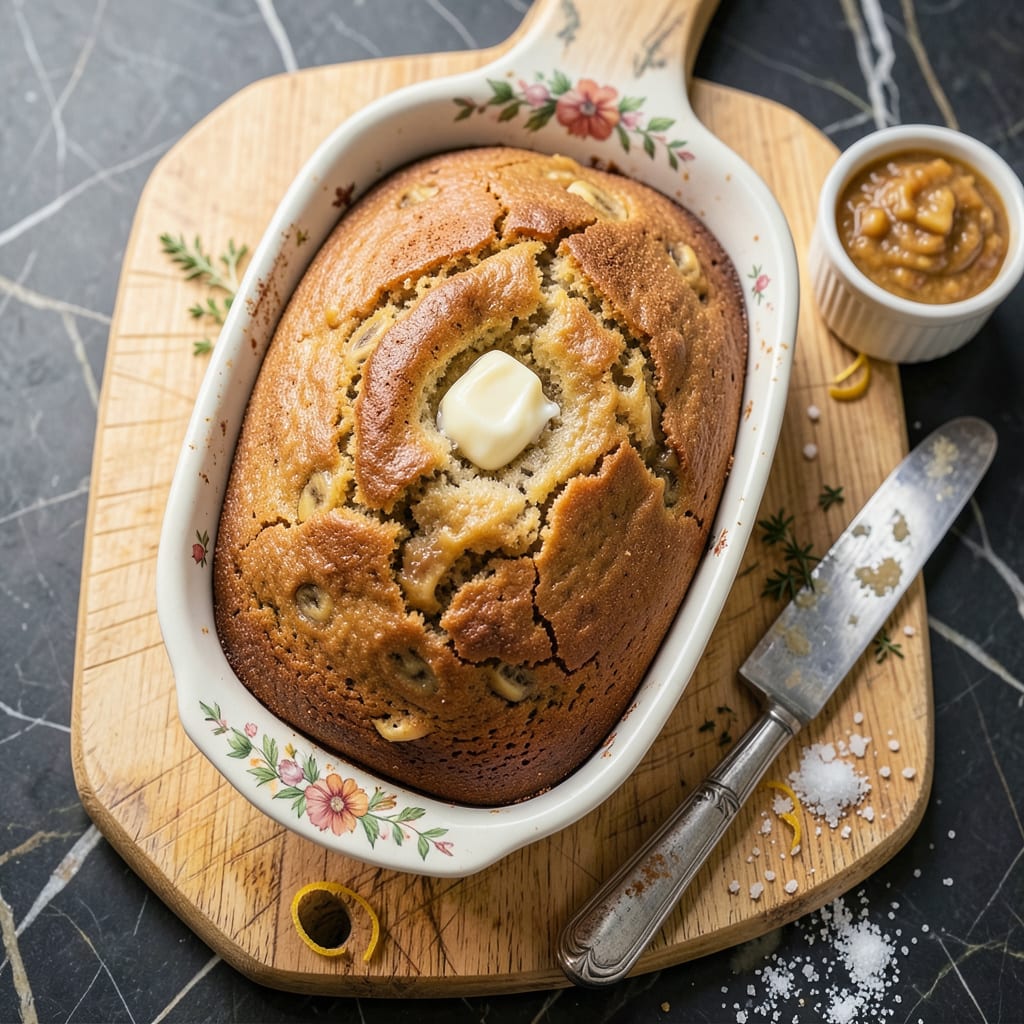
There’s a reason Martha Stewart’s banana bread remains the gold standard—it delivers perfectly moist crumb and balanced sweetness every time. This recipe transforms overripe bananas into a tender, golden loaf with just the right density, never dry or gummy. The secret lies in precise mixing and baking techniques that ensure even texture throughout.
What sets this version apart is its reliability. Whether you’re a novice baker or seasoned pro, the straightforward method yields consistent results. A touch of sour cream adds richness while keeping the bread light, and the warm spices create depth without overpowering. Serve it slightly warm for the ultimate comfort food experience.
Ingredients for Martha Stewarts Banana Bread
These carefully measured ingredients create Martha’s signature moist crumb and balanced sweetness in every slice.
| Ingredient | Amount | Notes |
|---|---|---|
| All-Purpose Flour 🌾 | 1 ½ cups | Spoon and level for accuracy |
| Granulated Sugar 🍬 | 1 cup | For balanced sweetness |
| Baking Soda 🧂 | 1 tsp | Ensures proper rise |
| Salt 🧂 | ½ tsp | Enhances flavor balance |
| Ground Cinnamon 🌿 | ½ tsp | Adds warm depth |
| Unsalted Butter 🧈 | ½ cup | Melted and cooled |
| Sour Cream 🥛 | ½ cup | Full-fat for richness |
| Large Eggs 🥚 | 2 whole | Room temperature preferred |
| Vanilla Extract 💧 | 1 tsp | Pure extract recommended |
| Ripe Bananas 🍌 | 1 ½ cups | Mashed (about 3-4 bananas) |
| Chopped Walnuts 🌰 | ½ cup | Optional for crunch |
The bananas are critical—overripe with brown speckles yield maximum sweetness and moisture. Standard all-purpose flour (like King Arthur or Gold Medal) provides reliable structure. For the sour cream, full-fat Daisy or Breakstone’s brands deliver optimal richness without altering the batter’s consistency. Butter should be unsalted European-style (like Plugrá) for superior flavor and texture control.
No sour cream? Plain Greek yogurt at equal volume works well. Walnuts can be swapped for pecans or omitted entirely. For gluten-free versions, King Arthur’s Measure for Measure flour substitutes 1:1. The cinnamon is optional but recommended—Vietnamese cinnamon offers more intensity. Always measure flour by spooning into cups (never scooping directly) to avoid dense results.
Store mashed bananas in an airtight container for 24 hours if prepping ahead. The baked loaf keeps at room temperature for 3 days (wrapped tightly) or freezes beautifully for 3 months. Slice before freezing for easy single servings. Optimal serving temperature is slightly warm—microwave individual slices for 15-20 seconds as needed.
Why You’ll Love This Recipe
- One-Bowl Magic: I love that this recipe lets me dump everything—flour, sugar, cinnamon—straight into one bowl, mix, and call it done. No sifting, no fancy tools, just a spatula and 10 minutes of my time before it goes in the oven.
- That Cinnamon Warmth: The ground cinnamon isn’t just an afterthought here—it’s the secret weapon. It turns basic banana bread into something cozy and aromatic, like your kitchen just got a hug.
- Breakfast or Dessert?: Honestly, I’ve served this warm with coffee for breakfast and dusted with powdered sugar for dessert. The texture holds up either way—moist but sturdy enough for toasting or à la mode.
- Overripe Bananas, Saved: Between us, I used to toss spotty bananas until I realized this recipe turns them into gold. Three sad bananas + pantry staples = two loaves (one for now, one for the freezer). No waste, just reward.
Step-by-Step Instructions for Banana Bread
This method delivers perfectly moist banana bread with a tender crumb every time. Follow these precise steps for best results.
Step 1: Prepare Wet Ingredients and Bananas
Begin by mashing the 1.5 cups ripe bananas in a large bowl until smooth with only small chunks remaining. I use a potato masher for this—it gives you better control than a fork. The bananas should be very ripe, with brown spots on the peel, as they provide maximum sweetness and moisture.
To the mashed bananas, add the 0.5 cup melted and cooled unsalted butter, 0.5 cup sour cream, 2 whole large eggs, and 1 tsp vanilla extract. Whisk vigorously for 1-2 minutes until the mixture is completely homogeneous and slightly thickened. The sour cream adds richness while keeping the bread moist.
Step 2: Combine Dry Ingredients
In a separate medium bowl, whisk together the 1.5 cups all-purpose flour, 1 cup granulated sugar, 1 tsp baking soda, 0.5 tsp salt, and 0.5 tsp ground cinnamon. I recommend spooning the flour into your measuring cup and leveling it off for accuracy—scooping directly from the bag can compact the flour and lead to a dense loaf.
The cinnamon adds warm depth without overpowering the banana flavor. Make sure the baking soda is fresh (less than 6 months old) for proper rise. Create a well in the center of your dry ingredients to prepare for combining with the wet mixture.
Step 3: Mix Wet and Dry Ingredients
Pour the wet banana mixture into the well of dry ingredients. Using a silicone spatula, fold the ingredients together just until no dry spots remain—about 15-20 strokes. Overmixing develops gluten and creates a tough bread, so stop as soon as the batter comes together.
The batter should be thick but pourable, with visible banana chunks throughout. If using the 0.5 cup chopped walnuts, fold them in now. I toast my walnuts in a dry skillet for 3-4 minutes first to enhance their flavor, but this is optional.
Step 4: Bake to Perfect Doneness
Pour the batter into a greased 9×5-inch loaf pan and smooth the top with your spatula. Bake in a preheated 350°F oven for 55-65 minutes, or until a toothpick inserted in the center comes out clean and the top is deep golden brown.
Check for doneness at the 55-minute mark—every oven varies slightly. If the top browns too quickly, tent loosely with foil. The bread is done when it springs back when lightly pressed in the center and pulls away slightly from the pan edges.
Step 5: Cool Completely Before Slicing
Let the bread cool in the pan for 10 minutes, then transfer it to a wire rack to cool completely—about 1 hour. This resting period allows the structure to set and prevents a gummy texture when sliced. The internal temperature will continue to rise slightly during this time.
Once completely cooled, slice with a serrated knife using gentle sawing motions. The bread should have a tender, moist crumb with a lightly crisp crust. Store tightly wrapped at room temperature for up to 3 days, or freeze for longer storage.
Perfect Pairings for This Recipe
Beverage Pairings
Nothing complements this banana bread better than a hot cup of dark roast coffee. The bitterness cuts through the sweetness beautifully—I love Peet’s Major Dickason’s Blend for its bold flavor. For tea lovers, a chai latte with steamed milk adds warm spice notes that echo the cinnamon in the bread.
Breakfast Spread
Turn this into a hearty breakfast by serving with Greek yogurt and fresh berries. I like Fage 2% for its creamy texture. The yogurt’s tang balances the bread’s sweetness, while berries add freshness. A drizzle of local honey ties everything together perfectly.
Dessert Pairings
For an indulgent treat, serve warm slices with vanilla bean ice cream. I recommend Häagen-Dazs for its rich texture. The contrast of warm bread and cold ice cream is magical. A sprinkle of flaky sea salt on top elevates the flavors to restaurant-quality. 🍦
Cheese Board
Create an unexpected pairing with a sharp cheddar or aged Gouda. The salty, nutty flavors contrast wonderfully with the bread’s sweetness. I discovered this combination at a Vermont bed and breakfast—it’s been my secret weapon for brunch gatherings ever since.
Butter Variations
Don’t underestimate the power of good butter. I keep European-style butter like Plugrá on hand for serving—its higher fat content makes it spread beautifully. For extra flair, whip butter with 1 tsp honey and a pinch of cinnamon for a compound butter. 🧈
Wine Pairings
Surprisingly, a glass of Moscato d’Asti pairs beautifully with banana bread. The wine’s light effervescence and stone fruit notes complement the bread’s sweetness without overwhelming it. For red wine lovers, a Ruby Port offers rich berry flavors that stand up to the bread’s density.
Nutrition Facts
Frequently Asked Questions
Why does this recipe use sour cream instead of yogurt?
Sour cream adds extra richness and moisture without thinning the batter. Its higher fat content creates a more tender crumb compared to yogurt. Martha’s version relies on this for the signature velvety texture.
Can I use frozen bananas for this recipe?
Thaw them completely and drain excess liquid before mashing. Frozen bananas actually concentrate their sweetness, making them ideal for baking. Just ensure they’re fully thawed to avoid cold spots in the batter.
How do I prevent the bread from sinking in the middle?
Make sure your baking soda is fresh and measure flour correctly by spooning into cups. Overmixing or opening the oven too early can also cause collapse. Test doneness at 55 minutes with a toothpick.
What’s the best way to store leftovers?
Wrap the cooled loaf tightly in plastic wrap, then foil. It keeps at room temperature for 3 days or refrigerated for 5 days. For longer storage, slice and freeze in a ziplock bag for up to 3 months.
Can I make this gluten-free without changing the texture?
Use a 1:1 gluten-free flour blend like King Arthur’s Measure for Measure. Add 1/2 tsp xanthan gum if your blend doesn’t include it. The crumb will be slightly denser but still moist and flavorful.

- 6 Egg Cake Recipe with Oil: Light as Air With Buttery Moisture - October 4, 2026
- 4 Bean Casserole Recipe: One-Pan Heartiness With Smoky Paprika Depth - October 4, 2026
- 3-Ingredient Keto Mug Cake Recipe: Microwave Magic in 2 Minutes - October 4, 2026