
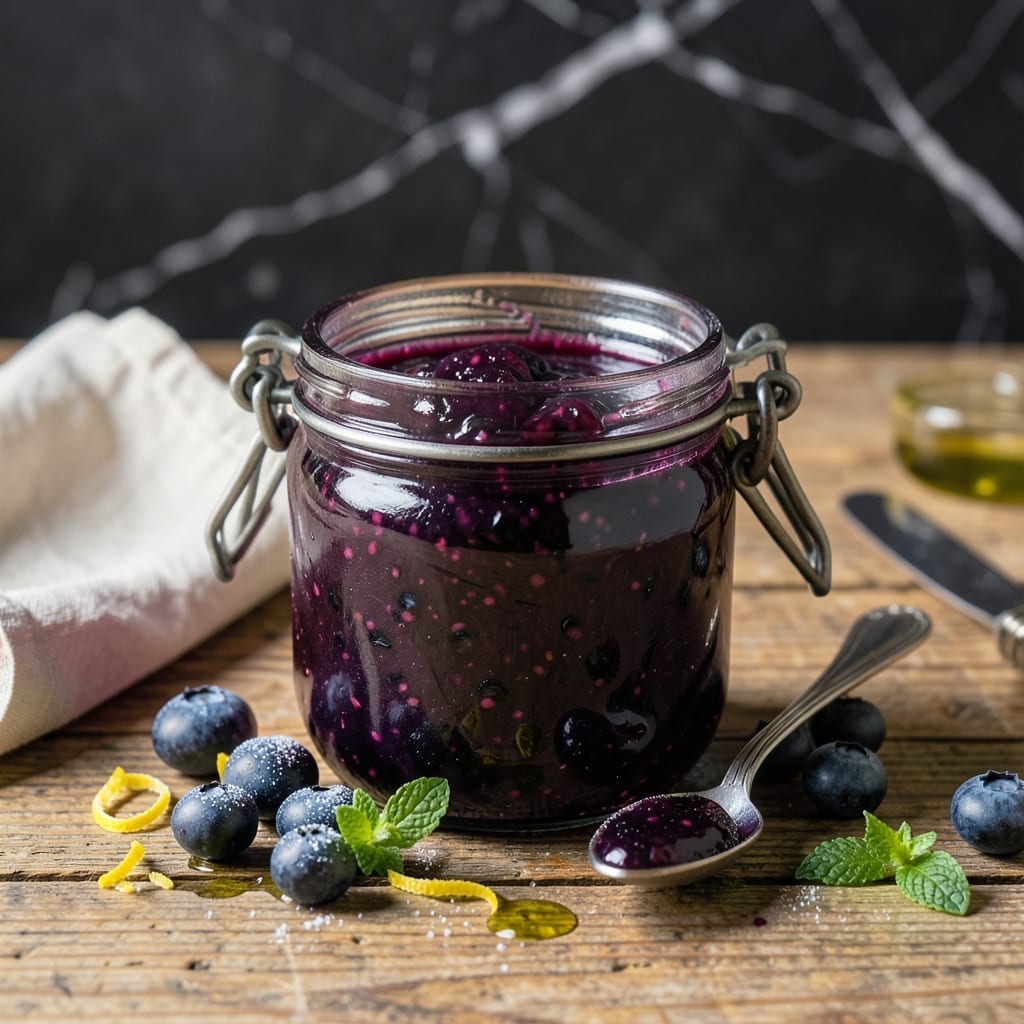
Few things capture summer’s essence like a jar of perfectly set blueberry jam with its vibrant color and bright fruit flavor. This recipe delivers that classic spread with a technique refined over years of testing.
The secret lies in balancing fruit, sugar, and acid for a jam that’s neither too loose nor too stiff. A short cooking time preserves the berries’ natural freshness while ensuring a perfect consistency every time.
What you get is a glossy, jewel-toned spread that holds its shape on a spoon yet melts beautifully on toast. The flavor remains bright and fruit-forward, never overly sweet or artificial.
Use it on scones, stir it into yogurt, or gift it in pretty jars—this jam keeps its quality for months when stored properly.
Ingredients for Mary Berry Blueberry Jam
Six simple ingredients transform into a glossy, jewel-toned blueberry spread with perfect consistency.
| Ingredient | Amount | Notes |
|---|---|---|
| Fresh Blueberries 🫐 | 4 cups | Rinsed, stems removed |
| Granulated Sugar 🍚 | 3 cups | White granulated for texture |
| Lemon Juice 🍋 | ¼ cup | Freshly squeezed preferred |
| Lemon Zest 🍋 | 1 tbsp | Finely grated for brightness |
| Unsalted Butter 🧈 | 1 tbsp | For foam reduction |
| Pectin 🧪 | 1 ¾ oz | Powdered, for perfect set |
The blueberries are the star—farmers market berries give the best color and flavor, but grocery store works if they’re in season. Look for plump, firm berries with deep color. The sugar amount isn’t flexible here; it’s crucial for both sweetness and the perfect set. I always use Domino or C&H for consistent results. The butter might seem odd, but it’s Mary Berry’s trick for reducing foam.
No fresh lemons? Bottled lemon juice at 1:1 ratio works, but fresh zest is non-negotiable for that bright note. If you’re out of pectin, you can use 1/4 cup more sugar and cook longer, but the texture won’t be as reliable. For a lighter version, low-sugar pectin is an option, but you’ll need to adjust the sugar amount accordingly.
Seal in sterilized jars for 12 months unopened. Once opened, store in the fridge for up to 3 weeks. The jam thickens as it cools, so resist the urge to overcook it. Always use a clean, dry spoon to avoid contamination.
Why You’ll Love This Recipe
- One Pot Wonder: I just dump everything in a single pan—blueberries, sugar, a squeeze of lemon—and let it bubble away.
- Bright & Zesty: That pop of lemon zest and juice cuts through the sweetness like a dream.
- Toast’s Best Friend: I slather it on everything from morning toast to cheese boards, and it’s always a hit.
- Budget Batch: A pound of blueberries makes jars and jars, so I stash some away for gifts. Honestly, it’s cheaper than store-bought.
Step-by-Step Instructions for Blueberry Jam
This method ensures a bright, glossy jam with the ideal balance of sweetness and acidity.
Step 1: Prepare the Blueberry Mixture
Combine the 4 cups Fresh Blueberries, 3 cups Granulated Sugar, 0.25 cup Lemon Juice, and 1 tbsp Lemon Zest in a large, heavy-bottomed pot. I use a stainless steel or enameled Dutch oven to prevent hot spots that can cause burning.
Stir well to combine, crushing a few berries with a wooden spoon to release their juices. This initial breakdown helps create a consistent texture in the final product. Let the mixture stand for 10-15 minutes to allow the sugar to begin dissolving and the berries to macerate.
Step 2: Cook the Fruit to a Rolling Boil
Place the pot over medium-high heat and bring to a rolling boil, stirring frequently with a wooden spoon. As the mixture heats, the sugar will fully dissolve and the berries will begin to break down, releasing their vibrant purple juices.
Continue boiling for 8-10 minutes, stirring constantly to prevent scorching. You’ll notice the mixture thicken slightly and the color deepen to a rich, jewel-toned purple. This is when the natural pectin in the fruit begins to activate, setting the stage for the final set.
Step 3: Add Pectin and Butter for the Perfect Finish
Stir in the 1.75 oz Pectin and 1 tbsp Unsalted Butter. The pectin provides the structure needed for a firm set, while the butter helps reduce the foam that naturally forms during cooking. Whisk vigorously to ensure the pectin dissolves completely—it can clump if not incorporated evenly.
Return the mixture to a full, rolling boil and cook for an additional 1-2 minutes, stirring constantly. At this point, the jam should begin to thicken noticeably, coating the back of your spoon. Watch for the mixture to sheet off the spoon in a slow, heavy ribbon rather than dripping quickly.
Step 4: Test for Doneness and Jar
To confirm the jam is ready, perform a wrinkle test: place a small amount of the hot jam on a chilled plate and let it cool for 30 seconds. Push the edge with your finger—if it wrinkles and holds its shape, it’s done. If not, cook for another 1-2 minutes and test again.
Once achieved, remove the pot from the heat and skim off any remaining foam with a metal spoon. Ladle the hot jam into sterilized jars, leaving ¼-inch headspace. Seal with lids and process in a water bath for 10 minutes to ensure shelf stability, or store in the refrigerator for up to 3 weeks.
Pro Tips For Making Mary Berry Blueberry Jam
- Test for Ripeness: I learned this the hard way—give a few berries a gentle squeeze before cooking; they should burst easily but not be mushy. Underripe fruit means your jam won’t set properly.
- Skim the Foam: As the jam boils, a purple foam will rise to the top. Skim it off with a spoon for a clearer, more professional-looking finish.
- Use a Wide Pot: After burning a batch in a deep saucepan, I switched to a wide, heavy-bottomed pot. It cooks the jam faster and more evenly, reducing the risk of scorching.
- Add Butter Last: Stir in the unsalted butter right at the end—it reduces the foam and gives the jam a silky texture without affecting the setting process.
Common Mistakes When Making This Recipe
Overcooking the Fruit
Blueberries are delicate, and boiling them too long turns your jam into a thick, muddy paste. I stop cooking the moment it passes the wrinkle test—usually after 10-12 minutes total. Overcooked jam loses its bright color and fresh flavor. 💡
Skipping the Wrinkle Test
Assuming the jam is done because it looks thick is risky. Always use a chilled plate to test for doneness. If it doesn’t wrinkle when pushed, cook for another 1-2 minutes and retest. This ensures a perfect set every time.
Using the Wrong Pot
A thin or lightweight pot causes hot spots, leading to scorching. I always use a heavy-bottomed stainless steel or enameled Dutch oven for even heat distribution. A 5-6 quart pot gives enough room for the jam to boil properly.
Adding Pectin Too Late
Pectin needs to dissolve completely to work its magic. Stir it in with the butter at the right stage, not at the end. If added too late, it won’t distribute evenly, and you’ll get a jam that’s either too loose or overly firm.
Ignoring Foam Removal
That foam on top isn’t just unsightly—it can trap air and cause spoilage. Skim it off with a metal spoon before jarring. The butter helps reduce foam, but you’ll still need to remove what remains for the cleanest finish.
Improper Jarring
Always use sterilized jars and leave that ¼-inch headspace. Filling to the rim can prevent proper sealing. I also wipe the rims with a clean, damp cloth to ensure a tight seal before processing.
Nutrition Facts
Frequently Asked Questions
Can I use frozen blueberries instead of fresh?
Yes, but thaw and drain them first to avoid excess liquid. Frozen berries can release more juice, so reduce the added sugar by ¼ cup to compensate.
How do I know when the jam is set?
Perform the wrinkle test: place a spoonful on a chilled plate, let it cool for 30 seconds, then push the edge with your finger. If it wrinkles, it’s ready.
What’s the best way to store homemade jam?
Seal in sterilized jars for up to 12 months unopened. Once opened, refrigerate and use within 3 weeks for the best flavor.
Can I skip the pectin?
You can, but the set may be softer. Cook the mixture longer to thicken naturally, but expect a looser texture. For a reliable set, pectin is recommended.

- 6 Egg Cake Recipe with Oil: Light as Air With Buttery Moisture - October 4, 2026
- 4 Bean Casserole Recipe: One-Pan Heartiness With Smoky Paprika Depth - October 4, 2026
- 3-Ingredient Keto Mug Cake Recipe: Microwave Magic in 2 Minutes - October 4, 2026