
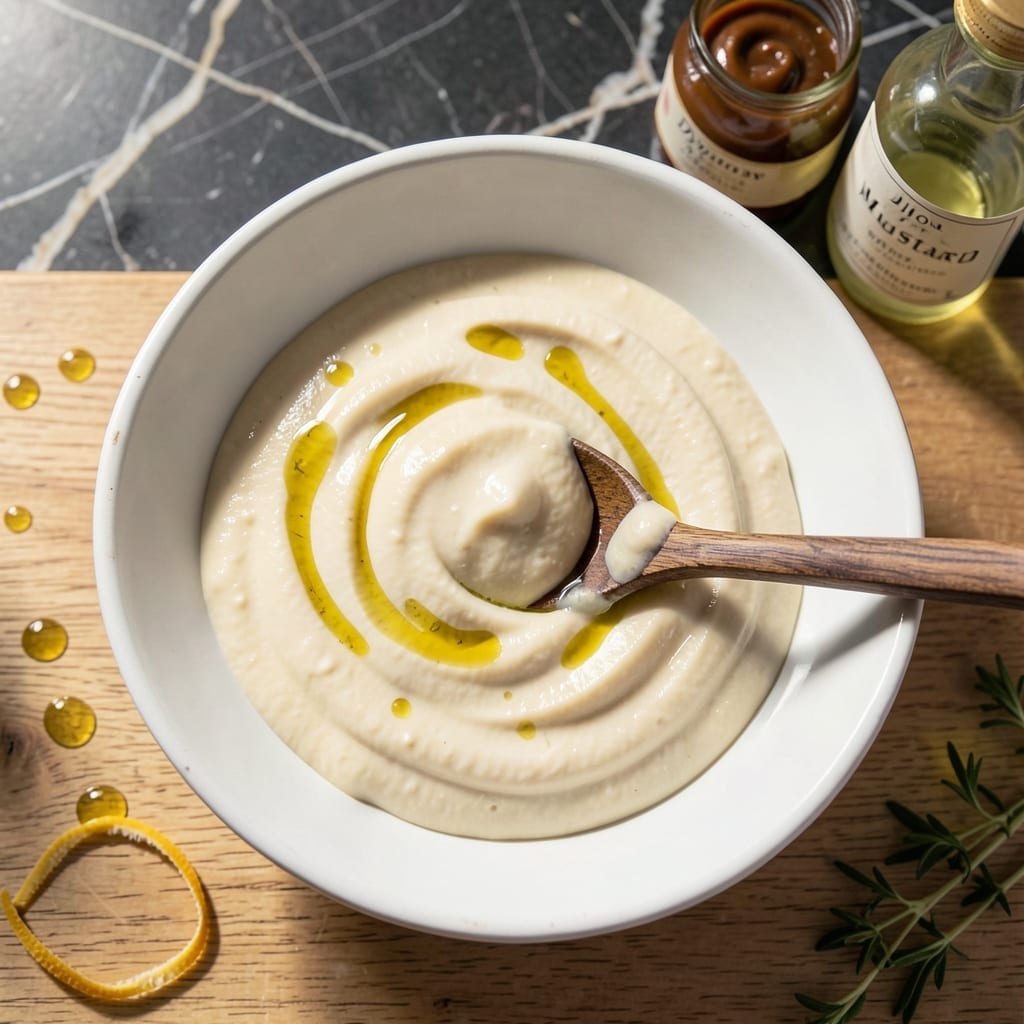
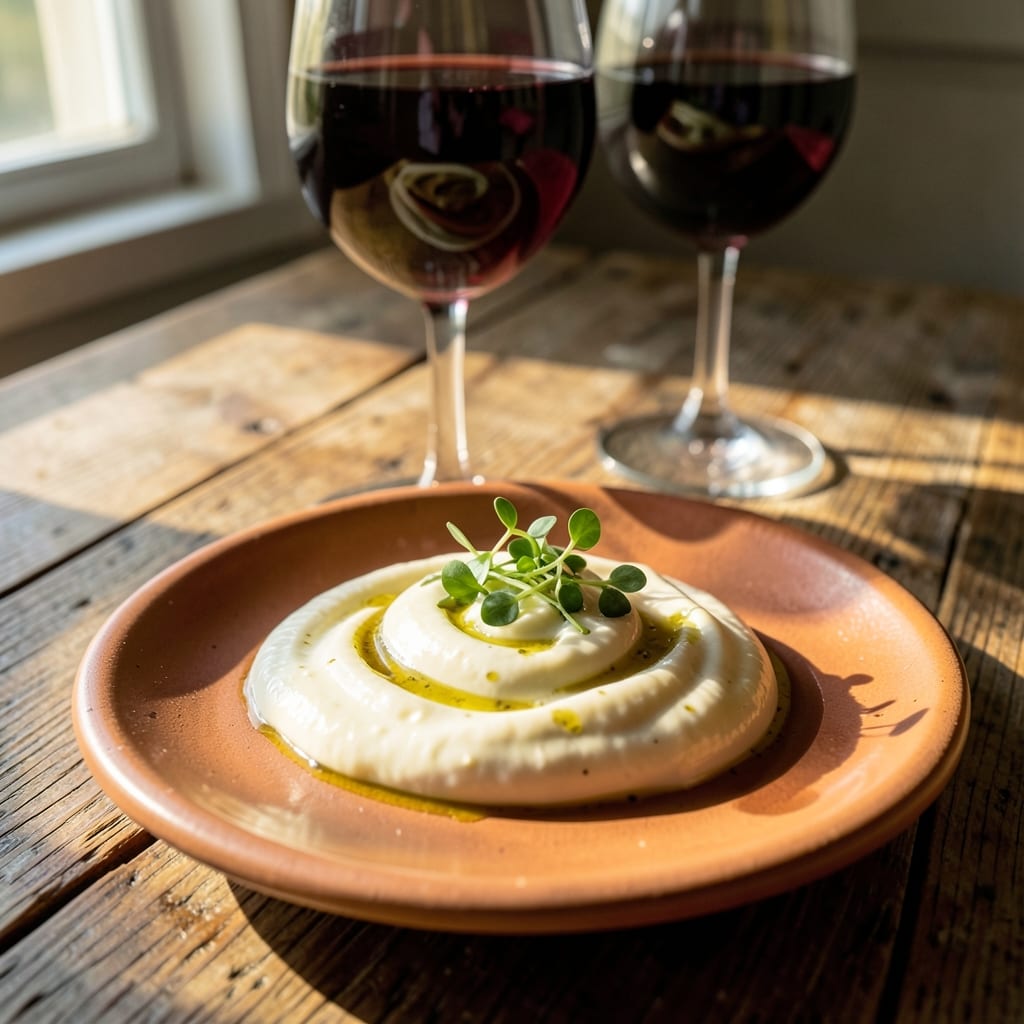
Crafting mayonnaise at home with olive oil yields a spread richer than any store-bought version. This method ensures a stable emulsion for a creamy, velvety texture every time.
Using simple ingredients and precise technique, you’ll create a homemade condiment that elevates sandwiches, dressings, and dips. The process takes minutes but delivers professional results.
Ingredients for Mayo Recipe with Olive Oil
Eight ingredients transform into a creamy, velvety emulsion superior to store-bought versions.
| Ingredient | Amount | Notes |
|---|---|---|
| Large Egg Yolk 🥚 | 1 whole | Room temperature for best emulsion |
| Dijon Mustard 🟡 | 1 tsp | Acts as natural emulsifier |
| White Wine Vinegar 💧 | 1 tbsp | Or substitute lemon juice |
| Extra-Virgin Olive Oil 🫒 | 1 cup | Light or mild variety preferred |
| Sea Salt 🧂 | ¼ tsp | Fine grain for even distribution |
| White Pepper 🌶️ | 0.125 tsp | Freshly ground for subtle heat |
| Sugar 🍚 | ¼ tsp | Optional, balances acidity |
| Lemon Juice 🍋 | ½ tsp | Freshly squeezed for brightness |
[recipeingredientscaler]
For optimal quality, select a light or mild extra-virgin olive oil—strongly flavored oils can overpower the emulsion. The Dijon mustard serves as the primary emulsifier, so choose a smooth, high-quality brand like Maille or Grey Poupon. Room temperature egg yolks are critical; cold yolks resist emulsification. Sea salt should be fine-grained to dissolve evenly throughout the mixture.
No white wine vinegar? Apple cider vinegar or lemon juice at equal amounts work equally well. If avoiding raw eggs, pasteurized egg yolks are a safe alternative. For a tangier profile, increase the lemon juice by half the amount. The sugar is optional but recommended for balancing the acidity—honey or agave can substitute if preferred.
Store in an airtight container in the refrigerator for up to 1 week. The emulsion may separate slightly over time—simply whisk to recombine. For longer storage, freeze in ice cube trays for up to 3 months.
Why You’ll Love This Recipe
- No-Fuss Whisking: I can make this in five minutes flat with just a bowl and a whisk.
- Rich & Tangy: The egg yolk plus olive oil creates this velvety texture, and the Dijon adds the perfect little kick.
- Sandwich MVP: Honestly, once I started making this, I stopped buying store mayo—it’s my burger, wrap, and dip go-to.
- Pantry Stable: All the ingredients keep forever, so I can whip up a fresh batch whenever I run out.
Step-by-Step Instructions for Homemade Mayonnaise
Master the technique for a perfectly emulsified spread with rich olive oil flavor.
Step 1: Prepare the Emulsion Base
In a medium bowl, whisk together the large egg yolk, Dijon mustard, white wine vinegar, sea salt, white pepper, sugar, and lemon juice until fully combined. The mixture should appear smooth and slightly pale.
This base creates the foundation for your emulsion. The Dijon mustard acts as a natural stabilizer, while the acids from both vinegar and lemon juice help balance the richness of the extra-virgin olive oil you’ll add next.
Step 2: Begin the Emulsion Process
Start adding the extra-virgin olive oil in a very slow, thin stream while whisking constantly. Begin with just a few drops at a time, allowing each addition to fully incorporate before adding more. This gradual process is crucial for creating a stable emulsion.
After about ¼ cup of the extra-virgin olive oil has been incorporated and the mixture begins to thicken, you can increase the stream to a thin, steady pour. The mixture should become noticeably thicker and take on a creamy, pale yellow appearance.
Step 3: Complete the Emulsion
Continue whisking as you add the remaining extra-virgin olive oil. Maintain a steady stream while keeping the whisk moving constantly in a circular motion. You’ll see the mixture transform from a thin liquid to a thick, glossy mayonnaise.
The entire process should take 3-5 minutes. If at any point the mixture appears to separate or look greasy, stop adding oil and whisk vigorously until it comes back together before continuing. This indicates the emulsion is temporarily broken but can be recovered.
Step 4: Adjust and Finish
Once all the extra-virgin olive oil has been incorporated, taste and adjust the seasoning if needed. The mayonnaise should have a rich, creamy texture that coats the back of a spoon. If it’s too thick, whisk in 1 teaspoon of warm water to loosen it slightly.
Transfer to a clean jar with a tight-fitting lid. The mayonnaise will keep in the refrigerator for up to 1 week. Note that it may thicken further as it chills, which is normal for this homemade version.
Pro Tips For Making Mayo Recipe With Olive Oil
- Drip the Oil Slowly: Add the olive oil in a thin, steady stream—literally drop by drop at first. I learned this the hard way after my first three attempts broke because I poured too fast.
- Use Room-Temp Yolk: Take the egg yolk out of the fridge 30 minutes before starting. Cold yolks resist emulsifying, and you’ll end up with a sad, separated mess.
- Skip Cheap Olive Oil: That bargain-bin olive oil has a low smoke point and a bitter edge. Splurge on a good extra-virgin—it actually changes the outcome.
- Start With Mustard: Whisk the Dijon mustard into the yolk before adding oil. It stabilizes the emulsion early, so your mayo clings together like it’s supposed to.
Pro Cooking Tips for This Dish
💡 Master the Heat
Keep your ingredients at room temperature before blending. Cold eggs or oil can break the emulsion, leaving you with a runny mess. If your mayo starts to separate, don’t panic—just slowly drizzle in 1 tsp of warm water while whisking to bring it back together.
🌡️ Slow and Steady Wins the Race
Add the olive oil drop by drop at first, especially when starting. This builds a stable base. Once the emulsion begins to form, you can switch to a thin, steady stream. Rushing this step is the #1 cause of failed homemade mayo.
✨ Acid for Stability
A splash of lemon juice or vinegar isn’t just for flavor—it helps stabilize the emulsion. Add it early in the process (after the first few oil droplets) to give your mayo a creamy, long-lasting texture. Too much acid can thin it out, so stick to 1-2 tsp per egg yolk.
🎯 Texture Control
For thicker mayo, use less oil (about ¾ cup per yolk). Prefer it lighter? Increase the oil to 1 cup per yolk. If it’s too thick, thin it with a teaspoon of water or more acid. The key is patience—let the mixture fully absorb each addition before adjusting.
Nutrition Facts

- 6 Egg Cake Recipe with Oil: Light as Air With Buttery Moisture - October 4, 2026
- 4 Bean Casserole Recipe: One-Pan Heartiness With Smoky Paprika Depth - October 4, 2026
- 3-Ingredient Keto Mug Cake Recipe: Microwave Magic in 2 Minutes - October 4, 2026