
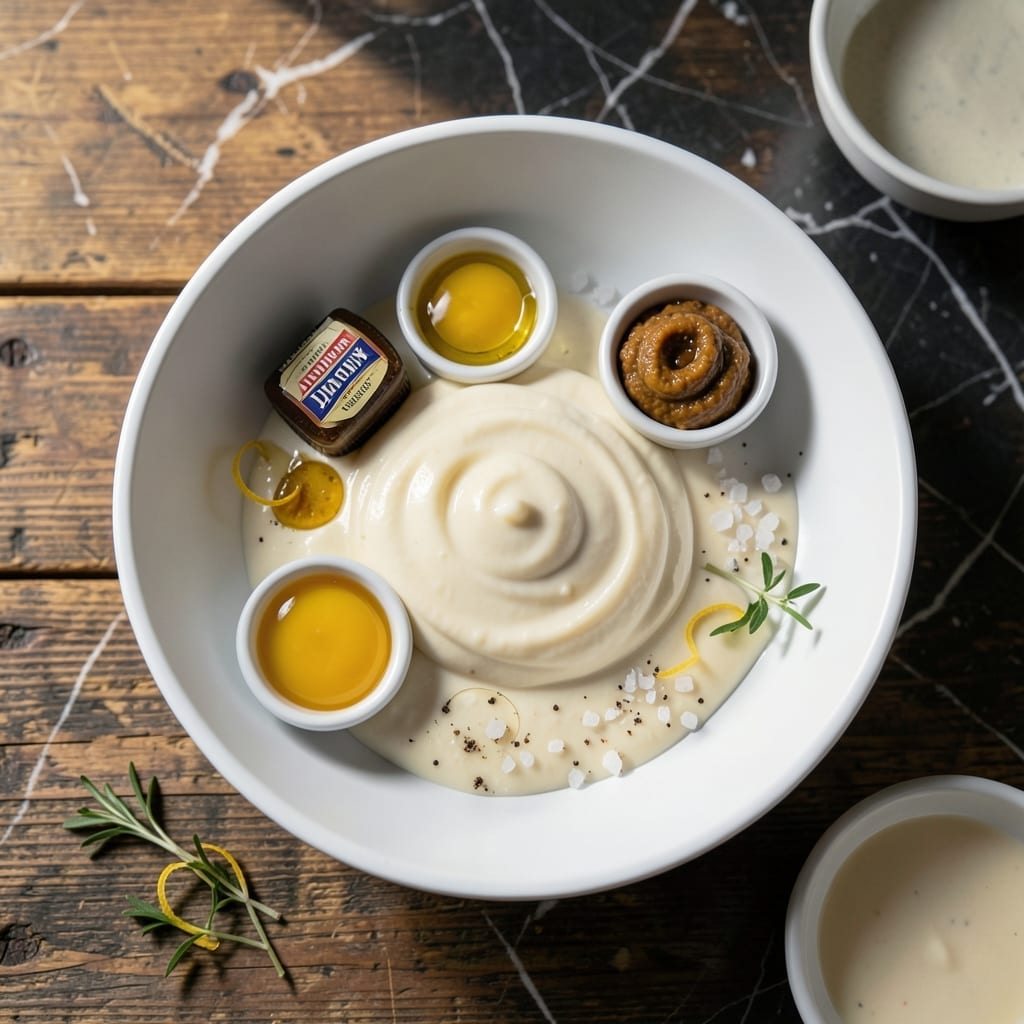
There’s a reason homemade mayonnaise tastes superior to anything store-bought. This classic emulsion combines simple ingredients—egg, oil, and acid—into a creamy, velvety condiment that elevates sandwiches, salads, and dips.
The key lies in slow, steady emulsification. A whisk and a bit of patience transform raw components into a stable, rich sauce with the perfect balance of tang and richness.
Unlike commercial versions, this method gives you full control over texture and flavor. The result is a smooth, luscious mayonnaise with no artificial stabilizers or preservatives.
Once you master the technique, you’ll never go back to the jarred alternative. The difference is undeniable.
Ingredients for Mayonnaise Recipe Alton Brown
Seven simple components transform into a velvety emulsion that puts jarred to shame.
| Ingredient | Amount | Notes |
|---|---|---|
| Large Egg Yolk 🥚 | 1 whole | Room temperature for better emulsion |
| Dijon Mustard 🟡 | 1 tsp | Acts as emulsifier and flavor base |
| White Wine Vinegar 💧 | 1 tbsp | Or substitute lemon juice |
| Neutral-Flavored Oil 🫒 | 1 cup | Avocado or light olive oil preferred |
| Kosher Salt 🧂 | ½ tsp | Diamond Crystal brand recommended |
| Freshly Ground White Pepper ⚪ | ¼ tsp | For clean, subtle heat |
| Lemon Juice 🍋 | 1 tsp | Freshly squeezed for brightness |
The oil quality is paramount for this emulsion. Avocado oil has the highest smoke point and neutral flavor, while light olive oil adds subtle fruitiness. Costco and Trader Joe’s offer excellent options at reasonable prices. Room temperature egg yolk is non-negotiable—cold yolks resist emulsification. For best results, use pasture-raised eggs with vibrant orange yolks, as they contain more emulsifiers.
No Dijon mustard? Dry mustard powder at half the amount works in a pinch. White wine vinegar can be swapped for apple cider vinegar, though the flavor profile shifts slightly. If avoiding raw eggs, pasteurized egg yolks are a safe alternative. The acid component can be entirely lemon juice for a brighter taste—just use 1.5 tbsp total to maintain balance.
Homemade mayo keeps 1 week refrigerated in a sealed jar. The emulsion may separate slightly over time—simply whisk to recombine. For longer storage, freeze in ice cube trays for up to 3 months. Always use a clean, dry spoon to prevent contamination.
Why You’ll Love This Recipe
- 5-Minute Magic: I can make fresh mayo faster than a store run. Just whisk, drizzle, done.
- Tangy Perfection: The Dijon and white wine vinegar give it that bright, zesty kick my sandwiches were missing.
- Endless Uses: It’s my secret weapon for burgers, dips, even salad dressing—no extra prep.
- Penny-Wise Creamy: A single egg yolk and oil stretch into a jar of rich mayo for pennies. Honestly, I’ll never buy store-bought again.
Step-by-Step Instructions for Homemade Mayonnaise
Master the emulsion technique with precision and patience for consistent, creamy results every time.
Step 1: Combine Egg Yolk, Mustard, and Acids
In a medium bowl, whisk together the 1 whole Large Egg Yolk, 1 tsp Dijon Mustard, 1 tbsp White Wine Vinegar, and 1 tsp Lemon Juice. I use a balloon whisk for this—it incorporates more air and creates a better base for the emulsion.
The mustard acts as a natural emulsifier while the acids provide the characteristic tang. Whisk vigorously for 15-20 seconds until the mixture becomes pale and slightly thickened. You should see the whisk leave faint trails in the mixture when lifted.
Step 2: Begin the Emulsion with Slow Oil Addition
With one hand, continue whisking the yolk mixture at a moderate pace. With your other hand, begin adding the 1 cup Neutral-Flavored Oil in a very thin, steady stream. Start with just a few drops at a time—this is critical for establishing the emulsion.
As the mixture begins to thicken and lighten in color, you can increase the oil to a thin stream. The mixture should look like a thick, pale custard. If it begins to separate, stop adding oil and whisk vigorously until it comes back together before continuing.
Step 3: Incorporate Remaining Oil and Seasonings
Once about half the oil has been incorporated and the mixture is significantly thickened, you can add the remaining oil slightly faster. The emulsion should now be stable enough to handle a thin but steady pour.
After all the oil is incorporated, whisk in the 0.5 tsp Kosher Salt and 0.25 tsp Freshly Ground White Pepper. These seasonings enhance the flavor without overpowering the delicate emulsion. Taste and adjust seasoning if needed—remember that flavors will intensify slightly as it rests.
Step 4: Finish and Store the Mayonnaise
Transfer the mayonnaise to a clean jar with a tight-fitting lid. The finished product should be thick, creamy, and pale with a glossy sheen. If it appears too thick, you can whisk in 1 tsp of warm water to adjust the consistency.
Let it rest at room temperature for 10 minutes before refrigerating. This allows the flavors to meld completely. Store in the refrigerator for up to 1 week. The surface may separate slightly over time—simply stir before using to restore the creamy texture.
Pro Tips For Making Mayonnaise Recipe Alton Brown
- Room Temp Eggs: I learned this the hard way—cold egg yolks won’t emulsify as well, so pull them out 30 minutes before starting.
- Slow Oil Drizzle: After burning three batches, I finally figured out that adding oil too fast breaks the emulsion; go drop by drop at first.
- Use a Whisk: Sounds weird, but it works: a balloon whisk gives better control than a fork for blending the yolk and oil.
- Acid Last: My grandmother swore by this, and she was right: add the white wine vinegar after the emulsion forms to avoid curdling.
Best Sauces and Condiments for This mayonnaise recipe alton brown
Classic Pairings
This creamy creation transforms a simple BLT sandwich into something extraordinary. The tangy richness cuts through crisp bacon and fresh lettuce beautifully. I also love it in chicken salad with celery and grapes for added texture.
Dipping Sauces
Mix 2 tbsp of your mayo with 1 tsp sriracha for a spicy dip that’s perfect for fries or onion rings. For a cooler option, blend in 1 tbsp chopped dill and 1 tsp capers to pair with seafood or veggie platters. 🔥
Salad Dressings
Whisk 3 tbsp mayo with 1 tbsp apple cider vinegar and 1 tsp honey for a creamy coleslaw dressing. For a herby twist, add 1 tbsp fresh tarragon and 1 minced garlic clove to dress a crisp green salad.
Burger Enhancements
Spread a generous layer on burger buns before assembling—it adds moisture and richness that ketchup alone can’t match. I also mix in 1 tsp smoked paprika for a subtle BBQ-inspired flavor that pairs perfectly with grilled meats.
Seafood Complements
Tartar sauce is a must with fish and chips. Combine ½ cup mayo, 2 tbsp chopped pickles, 1 tbsp lemon juice, and 1 tsp capers. This version is chunkier and fresher than anything from a bottle. 💫
Deviled Eggs
The base for perfect deviled eggs starts with this mayo. Mix 6 egg yolks with ¼ cup mayo, 1 tsp yellow mustard, and a pinch of paprika. The result is creamy, tangy, and irresistibly smooth.
Nutrition Facts
Frequently Asked Questions
Can I use a whole egg instead of just the yolk?
Yes, but the texture will be lighter and less rich. A whole egg works, though the flavor may be slightly different.
Why did my mayonnaise break?
This happens if oil is added too quickly or the emulsion isn’t stable. Fix it by whisking 1 tsp of hot water into the broken mixture, then slowly reincorporate the separated oil.
Can I make this with olive oil?
Yes, but use light olive oil to avoid an overpowering flavor. Extra virgin will make the mayo bitter and green.
How do I adjust the thickness?
Too thick? Whisk in 1 tsp warm water. Too thin? Slowly add more oil while whisking.

- 6 Egg Cake Recipe with Oil: Light as Air With Buttery Moisture - October 4, 2026
- 4 Bean Casserole Recipe: One-Pan Heartiness With Smoky Paprika Depth - October 4, 2026
- 3-Ingredient Keto Mug Cake Recipe: Microwave Magic in 2 Minutes - October 4, 2026