
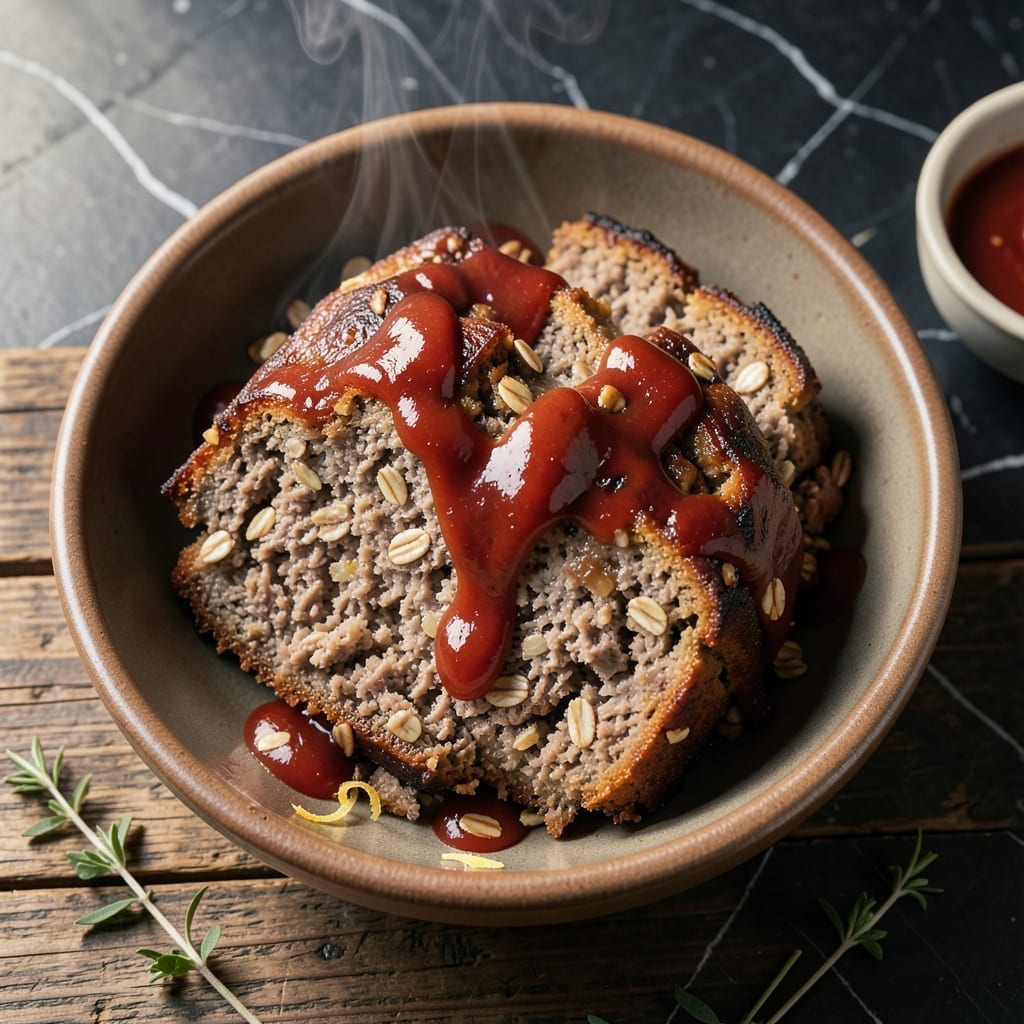
This meatloaf delivers the moist texture and rich flavor that makes it a family favorite. The oatmeal works as both binder and flavor enhancer, creating a tender crumb that never turns dry.
I developed this recipe after years of testing different binders, and oatmeal consistently produces the best results. It absorbs just enough fat to keep the meat juicy while adding subtle nuttiness to the finished dish.
You’ll love how the savory glaze caramelizes during baking, forming a sticky crust over the perfectly seasoned meat. The oatmeal ensures every slice holds together beautifully without being dense.
Serve with mashed potatoes and roasted vegetables for a complete meal that tastes like home. This method guarantees moist meatloaf every time.
Ingredients for Meatloaf Recipe with Oatmeal
Ground beef, oats, and a handful of pantry staples make this a classic.
| Ingredient | Amount | Notes |
|---|---|---|
| Ground Beef 🥩 | 1 ½ lb | 80/20 fat ratio for juiciness |
| Old-Fashioned Oats 🌾 | 1 cup | Uncooked, for binding and texture |
| Onion 🧅 | 1 whole | Medium, finely diced |
| Garlic Cloves 🧄 | 3 cloves | Minced for depth of flavor |
| Large Egg 🥚 | 1 whole | Beaten, binds the mixture |
| Ketchup 🍅 | ½ cup | Divided for glaze and mix |
| Worcestershire Sauce 💧 | 2 tbsp | Adds umami richness |
| Dijon Mustard 🟡 | 1 tbsp | Sharp flavor for balance |
| Dried Thyme 🌿 | 1 tsp | Earthy herb for savory depth |
| Dried Oregano 🍃 | 1 tsp | Complements the beef flavor |
| Salt 🧂 | 1 tsp | Kosher or sea salt preferred |
| Black Pepper 🌶️ | ½ tsp | Freshly ground for best taste |
| Brown Sugar 🟤 | 2 tbsp | For caramelized glaze sweetness |
| Milk 🥛 | ¼ cup | Moistens the oatmeal binder |
The ground beef is key—80/20 fat ratio keeps it juicy, never dry. I grab mine from Costco for bulk savings, but any grocery store works. The oats? Old-fashioned, not quick (they hold up better). Look for thick-cut oats in the baking aisle. If you’re making a double batch, grab the big canister—Quaker Oats is reliable and always in stock.
No Worcestershire? Soy sauce plus a dash of vinegar gets you close. Out of Dijon? Yellow mustard at half the amount works. The glaze can be all ketchup if you’re fresh out of brown sugar (just add a pinch of the dry stuff). If you’re avoiding dairy, unsweetened almond milk swaps in for the regular milk—no texture difference in the final dish.
This keeps beautifully in the fridge for 4-5 days and freezes for 3 months. I always make extra—meatloaf sandwiches the next day are legendary. Store leftovers in an airtight container (or wrap slices individually for easy grab-and-go lunches).
Why You’ll Love This Recipe
- One Bowl Wonder: I just dump the beef, oats, egg, and spices in a bowl, mix, and it’s ready for the oven. No fancy prep or extra dishes.
- Savory Comfort: The oats soak up the juices from the beef and garlic, giving every bite that hearty, homemade taste.
- Feeds the Week: I make it Sunday and we’re set for leftovers—sandwiches, dinners, even breakfast with a fried egg on top.
- Budget Stretcher: Ground beef and oats keep the cost low, and it fills up my family of four with room to spare. Honestly, it’s my go-to when money’s tight.
Step-by-Step Instructions for Meatloaf With Oatmeal
Here’s the method I use for a tender, flavorful dish with a perfect caramelized crust.
Step 1: Prepare the Vegetable and Oat Base
Finely dice the onion and mince the 3 cloves garlic cloves until they’re nearly paste-like. This ensures they’ll melt into the dish without noticeable chunks. In a large bowl, combine the 1 cup old-fashioned oats with the 0.25 cup milk and let it sit for 5 minutes to soften.
The oats will absorb the milk, creating a moist binder that keeps the final result from becoming dense. I’ve found that old-fashioned oats give the best texture—they’re sturdy enough to hold everything together but still tender when cooked.
Step 2: Mix All Ingredients Thoroughly
Add the 1.5 lb ground beef, diced onion, minced garlic, 1 whole large egg, 0.5 cup ketchup, 2 tbsp Worcestershire sauce, 1 tbsp Dijon mustard, 1 tsp dried thyme, 1 tsp dried oregano, 1 tsp salt, and 0.5 tsp black pepper to the bowl with the oatmeal mixture.
Use your hands to gently mix everything together until just combined—overworking will make the final result tough. The mixture should feel slightly sticky but hold together when pressed. The egg and oats work together as the perfect binding system for a moist texture.
Step 3: Shape and Prepare for Baking
Transfer the mixture to a rimmed baking sheet or loaf pan and shape it into a free-form loaf about 9×5 inches. I prefer the baking sheet method as it allows excess fat to drain away while still producing a perfectly shaped result.
In a small bowl, mix the remaining 2 tbsp brown sugar with 2 tbsp of the ketchup from your 0.5 cup allotment to create a glaze. Spread this evenly over the top and sides of the loaf. This glaze will caramelize during baking, creating that signature sweet-savory crust.
Step 4: Bake to Perfection
Preheat your oven to 375°F. Bake the loaf for 50-60 minutes until the internal temperature reaches 160°F and the top is deep brown with a glossy glaze. You’ll know it’s done when the edges have pulled away slightly from the pan and the center feels firm when pressed.
About halfway through baking, I like to brush the top with any remaining glaze that’s pooled around the edges. This ensures every bite has that perfect balance of sweet and savory flavors. The oatmeal binder means you don’t have to worry about it falling apart when you slice it.
Step 5: Rest Before Serving
Remove from the oven and let it rest for 10-15 minutes before slicing. This resting period allows the juices to redistribute throughout the loaf, which is crucial for that promised moist texture. If you cut into it too soon, all those delicious juices will end up on your cutting board instead of in your dish.
Slice into 1-inch thick portions and serve with any pan juices spooned over the top. The combination of the caramelized glaze and the perfectly seasoned interior makes this a meal that disappears quickly from the dinner table.
Pro Tips For Making Meatloaf Recipe With Oatmeal
- Rest Before Slicing: Let the meatloaf rest for 10 minutes after baking—it keeps the juices inside instead of leaking onto the cutting board. I learned this the hard way after serving dry slices more than once.
- Soak the Oats: Mix the old-fashioned oats with the egg and a splash of milk or broth for 5 minutes before combining with the beef. Sounds weird, but it works: the oats soften just enough to bind without a gritty texture.
- Skip Overmixing: Combine the ingredients just until they hold together—overworking the ground beef makes the meatloaf dense and tough. My grandmother swore by this, and she was right.
- Sauté the Aromatics: Cook the onion and garlic in a little oil until soft before adding them to the mix. After burning three batches of raw onion-infused meatloaf, I finally figured out it’s the only way to guarantee mellow, sweet flavor throughout.
Common Mistakes When Making This Dish
Overmixing the Meat
I see this happen most often—people mix the meat mixture too vigorously, which compacts the proteins and results in a dense, dry loaf. Gently combine just until the ingredients are incorporated, no more than 30 seconds with your hands. The oatmeal will bind everything without toughening the beef. 💪
Skipping the Rest Time
Cutting into your meatloaf right out of the oven sends all those flavorful juices running onto the cutting board. Always let it rest for the full 10-15 minutes after baking. This gives the oatmeal time to set fully and the juices to redistribute evenly throughout the loaf.
Ignoring Fat Ratio
Using lean ground beef (90/10 or leaner) might seem healthier, but it leads to dry results. Stick with 80/20 fat ratio for the juiciest texture. The oatmeal absorbs some fat during baking, but you still need enough for moisture and flavor.
Glaze Timing Issues
Applying all the glaze at the beginning can cause it to burn before the loaf finishes cooking. I spread half at the start, then brush on the remaining 2 tbsp of glaze halfway through the 50-60 minute bake time. This creates a perfect caramelized crust without bitterness.
Improper Oatmeal Prep
Using quick oats instead of old-fashioned can make your meatloaf mushy. The larger flakes hold their texture better during baking. Soak them in the ¼ cup milk for 5 minutes first to soften just enough for binding without turning to paste.
Overbaking
Meatloaf continues cooking as it rests, so pull it from the oven when the internal temperature hits 160°F. Going beyond this risks dryness, even with the oatmeal’s moisture-retaining properties. The temperature will rise to 165°F during resting, which is the safe serving temperature.
Nutrition Facts
Frequently Asked Questions
Why use oatmeal instead of breadcrumbs?
Oatmeal creates a moist texture and adds subtle nuttiness, while breadcrumbs can make it dry. It also absorbs fat better, keeping the dish tender.
Can I use quick oats instead?
Old-fashioned oats work best for texture, but quick oats will work in a pinch. Soak them in ¼ cup milk for 5 minutes first to prevent mushiness.
How do I know when it’s done?
Use a meat thermometer—it’s done at 160°F internally. The glaze will be deep brown and the center firm to the touch.
Can I make this ahead?
Yes! Shape the loaf and refrigerate up to 24 hours before baking. Or bake, cool, and refrigerate for 4-5 days.

- 6 Egg Cake Recipe with Oil: Light as Air With Buttery Moisture - October 4, 2026
- 4 Bean Casserole Recipe: One-Pan Heartiness With Smoky Paprika Depth - October 4, 2026
- 3-Ingredient Keto Mug Cake Recipe: Microwave Magic in 2 Minutes - October 4, 2026