
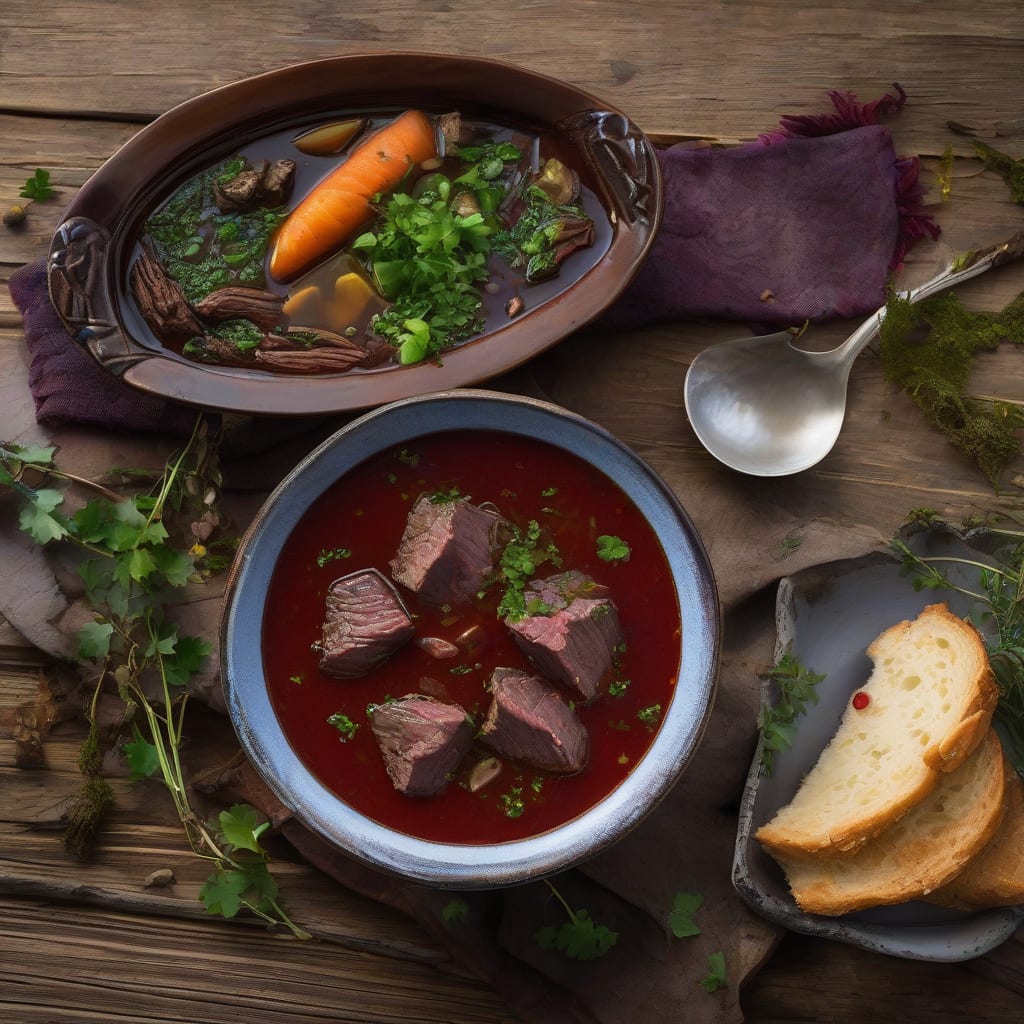
I’m bringing medieval flair to your dinner table with this Dragon Blood Soup recipe, inspired by the hearty stews of Medieval Times. This rich, crimson-hued stew gets its signature color from beets and red wine, creating a dramatic presentation.
With tender chunks of beef, root vegetables, and a depth of flavor that’ll transport you to a medieval banquet, this stew is perfect for a cold evening. Let’s cook it to perfection at 300°F for 2.5 hours, resulting in tender meat and rich flavors.
Ingredients for Medieval Times Dragon Blood Soup
Hearty ingredients come together in this medieval-inspired stew, perfect for cold evenings.
| Ingredient | Amount | Notes |
|---|---|---|
| Beef Chuck Roast 🥩 | 2 lb | Cut into 1-inch cubes |
| Beets 🥕 | 2 whole | Peeled and diced |
| Carrots 🥕 | 4 whole | Peeled and sliced |
| Onion 🧅 | 1 whole | Chopped |
| Garlic Cloves 🧄 | 4 cloves | Minced |
| Red Wine 🍷 | 2 cups | Dry red wine |
| Beef Broth 🍜 | 2 cups | Low sodium |
| Tomato Paste 🍅 | 2 tbsp | Concentrated |
| Fresh Thyme 🌿 | 2 tbsp | Chopped |
| Bay Leaves 🌿 | 2 whole | Dried or fresh |
| Salt 🧂 | 1 tsp | Kosher salt |
| Black Pepper 🌶️ | ½ tsp | Freshly ground |
The beef chuck roast is essential here—its marbling creates that tender, fall-apart texture after 2.5 hours at 300°F. Most grocery stores carry it pre-cubed, or you can buy a whole roast and cube it yourself. I prefer Costco for quantity, but regular supermarket beef works fine too. Look for good marbling when selecting your cut.
No red wine? Beef broth with a splash of balsamic vinegar gets you close to that rich flavor. Fresh thyme is great if you’ve got it, but dried thyme at one-third the amount works too. For tomato paste, those squeeze tubes at Trader Joe’s are perfect—no waste, keeps for months. The beets give this stew its signature color, so don’t skip them.
This stew improves with time—reheats beautifully and tastes even better the next day. It keeps for 4-5 days in the fridge and freezes well for up to 3 months. I portion it into containers so I can grab lunches for the week. Freezing tip: let it cool completely before freezing to prevent ice crystals.
❤️
Why You’ll Love This Recipe
- Quick Prep: I can throw all the ingredients – Beef Chuck Roast, Beets, Carrots, Onion, and Garlic Cloves – into a pot and let it simmer, making it a weeknight-friendly meal that requires minimal effort.
- Beet-Lover’s Dream: The beets give this Medieval Times Dragon Blood Soup its signature deep red color and a sweetness that balances out the savory flavor of the beef, making it ridiculously good.
- Feeds a Crowd: This recipe makes a big batch, so it’s perfect for feeding a crowd or meal prepping for the week – I can easily get 4-5 meals out of it.
- Leftover Magic: The flavors actually get better the next day, so I’ll often make a big pot on Sunday and enjoy the leftovers throughout the week, which is a huge time-saver.
Step-by-Step Instructions for Hearty Medieval Stew Revival
Let’s bring this medieval stew to life with straightforward, tested steps that guarantee a delicious outcome.
Step 1: Brown the Beef Chuck Roast
Heat a large Dutch oven over medium-high heat. Add the 2 lb Beef Chuck Roast cubes in batches to avoid overcrowding, browning them on all sides for about 5 minutes per batch. You want a nice crust on the beef—this adds depth to the stew. Once browned, transfer the beef to a plate and set it aside.
Don’t worry if the beef isn’t cooked through at this point; it will finish cooking later in the stew. The key is getting that good browning, which enhances the flavor. If you notice the pan getting too dry, add a splash of the 2 cups Red Wine to deglaze it.
Step 2: Sauté the Aromatics
In the same pot, reduce the heat to medium and add the 1 whole Onion, chopped, along with the 2 whole Beets, peeled and diced, and the 4 whole Carrots, peeled and sliced. Cook for about 8-10 minutes, stirring occasionally, until the vegetables start to soften and the onion becomes translucent.
Add the 4 cloves Garlic Cloves, minced, and cook for another 1-2 minutes until fragrant. Be careful not to let the garlic burn, as it can quickly become bitter. Stir in the 2 tbsp Tomato Paste and cook for 1 minute, allowing it to darken in color and intensify in flavor.
Step 3: Deglaze and Simmer
Pour in the remaining 2 cups Red Wine, scraping the bottom of the pot to release all the browned bits. This step is crucial for adding richness to the stew. Bring the wine to a simmer and let it reduce by half, about 5 minutes.
Add the 2 cups Beef Broth, 2 tbsp Fresh Thyme, and 2 whole Bay Leaves to the pot. Return the browned beef to the pot, ensuring it’s mostly submerged. If necessary, add a bit more beef broth or water to cover the ingredients. Season with 1 tsp Salt and 0.5 tsp Black Pepper. Bring the mixture to a boil, then reduce the heat to low and let it simmer, covered, for 2 ½ to 3 hours until the beef is tender.
Step 4: Finish and Serve
After 2 ½ hours of simmering, check the beef for tenderness. It should be easily shredded with a fork. Remove the 2 whole Bay Leaves and adjust the seasoning if needed. Let the stew rest for 10-15 minutes before serving to allow the flavors to meld together.
Serve hot, garnished with additional fresh thyme if desired. This hearty stew is perfect for a cold day, offering a rich, satisfying meal that’s sure to please. Enjoy the deep, developed flavors and the tender beef that make this medieval-inspired dish a true comfort food.
👨🍳
Pro Tips For Making Medieval Times Dragon Blood Soup
- Brown the Beef: Get a good sear on that Beef Chuck Roast first – about 2-3 minutes per side over high heat. This step adds depth to the Dragon Blood Soup that you won’t get from just simmering.
- Layer the Aromatics: Don’t just throw all the aromatics in at once; sauté the onions first until they’re translucent, then add the garlic for another minute. This prevents the garlic from burning and gives a sweeter flavor base.
- Simmer Gently: After you’ve added all the ingredients, resist the urge to crank up the heat to get to a boil quickly – a gentle simmer is crucial for tender beef and perfectly cooked vegetables.
- Add Beets Late: Add the beets towards the end of the cooking time, about 30 minutes before serving, so they retain their vibrant color and don’t overcook. This way, you’ll get that signature “dragon blood” color without sacrificing texture.
Essential Equipment for This Dish
Essential Cooking Vessel
A large Dutch oven (at least 7-quart capacity) is crucial for this recipe as it allows for both browning the beef and slow-cooking the stew. I prefer Le Creuset for their even heat distribution, but Lodge cast iron works beautifully too 🔥.
Temperature Control
Having a reliable oven thermometer ensures your stew cooks at the perfect 300°F. I use ThermoWorks for accuracy. If you’re using an electric Dutch oven, make sure it can maintain low temperatures for slow cooking.
Preparation Tools
Good quality knives are essential—you’ll need a sharp chef’s knife for cubing the beef and chopping vegetables. I recommend Wüsthof Classic for their edge retention. A vegetable peeler makes quick work of prepping beets and carrots.
Browning Efficiency
A large wooden spoon or silicone spatula helps manage the browning process. For batches of beef, having a large plate or tray nearby keeps things organized. I like using a silicone-coated tongs for turning the meat.
Simmering Essentials
For the long simmer, a heavy lid on your Dutch oven is crucial to prevent moisture loss. If you have a slow cooker, you can transfer everything after browning and sautéing—just cook on low for 6-8 hours. This is perfect for busy days.
Serving Suggestions
When serving, a ladle helps portion the stew into bowls. I like to garnish with fresh thyme for a pop of color and added flavor. For a rustic touch, serve in bread bowls or with crusty bread on the side.
Nutrition Facts
420kcal
Frequently Asked Questions
What’s the significance of “dragon blood” in this recipe?
The “dragon blood” refers to the deep red color from beets and red wine, giving the stew its medieval-inspired appearance. This color symbolism was often used in historical cooking to create dramatic presentations. The beets provide a natural food coloring while adding earthy flavor.
Can I make this stew in advance?
Yes, this stew is perfect for making ahead. It actually tastes better the next day as the flavors meld together. You can prepare it up to 3 days in advance and store it in the refrigerator. Reheat gently on the stovetop or in the oven at 300°F until warmed through.
What can I substitute for red wine?
If you don’t have red wine, you can substitute it with a mixture of beef broth and 1 tablespoon of balsamic vinegar. This combination provides a similar depth of flavor. For a non-alcoholic version, use additional beef broth with the balsamic vinegar. The acidity helps maintain the stew’s rich flavor profile.
How do I know when the beef is tender enough?
The beef is done when it’s easily shredded with a fork after 2.5 hours of simmering. If it’s still tough, continue cooking in 30-minute increments until tender. The slow cooking process breaks down the connective tissues, making the beef melt-in-your-mouth tender.

- 6 Egg Cake Recipe with Oil: Light as Air With Buttery Moisture - October 4, 2026
- 4 Bean Casserole Recipe: One-Pan Heartiness With Smoky Paprika Depth - October 4, 2026
- 3-Ingredient Keto Mug Cake Recipe: Microwave Magic in 2 Minutes - October 4, 2026