
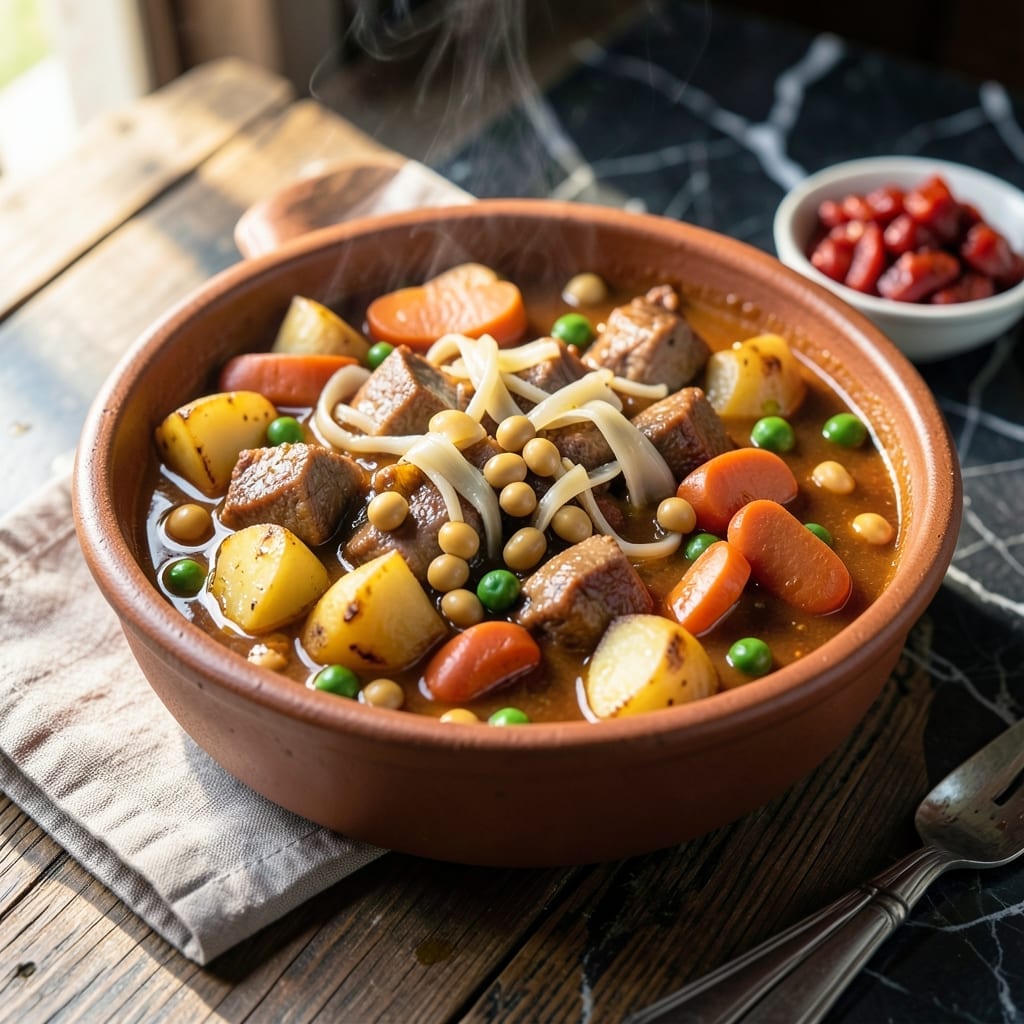
This traditional Filipino stew combines tender beef tripe, pork, and garbanzo beans in a rich tomato-based sauce.
The addition of bagoong (shrimp paste) provides an authentic, savory depth that defines this beloved dish.
Ingredients for Menudo Recipe Filipino Tagalog
A rich stew featuring tripe, pork, and beans in a savory tomato base with authentic bagoong depth.
| Ingredient | Amount | Notes |
|---|---|---|
| Beef Tripe 🥩 | 1 ½ lb | Cleaned, cut into bite-sized pieces |
| Pork Belly 🥓 | ¾ lb | Cut into small cubes |
| Garbanzo Beans 🥜 | 1 can | 15 oz, drained and rinsed |
| Tomato Sauce 🍅 | 2 cups | Thick, pureed variety |
| Bagoong 🦐 | 2 tbsp | Shrimp paste, dissolved in water |
| Potatoes 🥔 | 2 whole | Medium, peeled and diced |
| Carrots 🥕 | 2 whole | Medium, sliced into rounds |
| Red Bell Pepper 🌶️ | 1 whole | Diced into small pieces |
| Onion 🧅 | 1 whole | Large, finely chopped |
| Garlic Cloves 🧄 | 6 cloves | Minced finely |
| Bay Leaf 🍃 | 2 pieces | Dried, whole leaves |
| Ground Black Pepper 🌶️ | 1 tsp | Freshly ground preferred |
| Soy Sauce 💧 | 2 tbsp | Light or all-purpose |
| Water 💧 | 4 cups | For simmering tripe |
| Vegetable Oil 🫒 | 2 tbsp | For sautéing aromatics |
Optimal quality requires fresh beef tripe—ask your butcher to clean it thoroughly (they often do this for free). Pork belly from Asian markets has the right fat ratio for this dish. For the bagoong, Barrio Fiesta or Mama Sita brands offer consistent flavor. Garbanzo beans should be plump and firm, not mushy. Look for San Marzano tomato sauce for superior richness if available.
No shrimp paste? Fish sauce at half the amount provides a similar umami boost. Pork belly can be swapped for pork shoulder, though the texture will differ slightly. Fresh tomatoes work in place of sauce—use 6-8 ripe Roma tomatoes, peeled and crushed. If avoiding gluten, tamari replaces soy sauce seamlessly.
This stew improves overnight—flavors meld for 24-48 hours. Store in airtight containers for up to 5 days refrigerated or 3 months frozen. Tripe freezes well, so buy extra and portion for future batches. Always label with the date.
Why You’ll Love This Recipe
- One Pot Wonder: I toss everything in—tripe, pork belly, garbanzo beans—and let it simmer while I do other things.
- Umami Bomb: The bagoong and tomato sauce create this rich, savory depth that hits just right.
- Feeds a Crowd: I make a big batch for family gatherings, and it’s always the first to disappear.
- Leftovers Magic: Honestly, it tastes even better the next day after the flavors meld overnight.
Step-by-Step Instructions for Menudo
This traditional method ensures the tripe becomes tender while the vegetables maintain their texture.
Step 1: Parboil the Beef Tripe
Rinse the 1.5 lb Beef Tripe thoroughly under cold water to remove any impurities. Place it in a large pot with the 4 cups Water and bring to a boil over high heat. Once boiling, reduce to a simmer and cook for 30 minutes.
This initial parboiling removes the gamey odor and helps tenderize the tripe. You’ll notice the water becoming cloudy as impurities are released. Drain the tripe in a colander and rinse again under cold water to stop the cooking process and remove any residual scum.
Step 2: Sear the Pork Belly and Aromatics
Heat the 2 tbsp Vegetable Oil in a clean, large pot over medium-high heat. Add the 0.75 lb Pork Belly cubes and sear until they develop a light golden-brown crust on all sides, about 5-7 minutes.
Once the pork belly is browned, add the finely chopped Onion and minced Garlic Cloves. Sauté for 2-3 minutes until the onion becomes translucent and the garlic releases its aroma. Be careful not to let the garlic burn, as it can turn bitter.
Step 3: Simmer the Tripe and Pork Belly
Return the parboiled Beef Tripe to the pot with the pork belly and aromatics. Pour in the 2 cups Tomato Sauce, 2 tbsp Soy Sauce, and 1 tsp Ground Black Pepper. Add the 2 pieces Bay Leaf and enough water to just cover the meat.
Bring to a boil, then reduce heat to low. Cover and let it simmer for 1.5 to 2 hours, or until the tripe is fork-tender. Check occasionally and add more water if needed to keep the meat submerged.
Step 4: Add Vegetables and Final Touches
Once the tripe is tender, add the diced Potatoes, sliced Carrots, diced Red Bell Pepper, and 1 can Garbanzo Beans. Stir well to combine and simmer for an additional 20-25 minutes, or until the vegetables are soft but not mushy.
Stir in the 2 tbsp Bagoong, ensuring it is well distributed throughout the stew. Taste and adjust the seasoning if needed. The stew should have a rich, savory flavor with a hint of tanginess from the bagoong.
Remove the bay leaves before serving. The menudo is ready when the potatoes and carrots are tender and the flavors have melded together beautifully.
Pro Tips For Making Menudo Recipe Filipino Tagalog
- Parboil the Tripe: Soak beef tripe in water with a splash of vinegar for 30 minutes, then parboil for 10-15 minutes to remove the strong odor before adding to the menudo. I learned this the hard way—skipping this step makes the whole dish taste bitter. —
- Brown the Pork Well: Sear pork belly in batches until deeply browned—about 5-7 minutes per side. This builds a rich, meaty base that tomato sauce alone can’t achieve. —
- Rinse Your Garbanzos: Drain and rinse canned garbanzo beans thoroughly to remove excess starch, which can make your menudo cloudy. Sounds tedious, but it keeps the sauce clean and vibrant. —
- Add Bagoong Last: Stir in bagoong only during the last 10 minutes of cooking. Adding it too early makes the dish overly salty and can overpower the other flavors. My grandmother swore by this, and she was right.
Wine and Beer Pairings for This Recipe
Beer Pairings
Menudo’s rich, savory flavors shine when paired with a crisp, light beer that cuts through the dish’s hearty broth. Try a San Miguel Pale Pilsen for its clean, slightly bitter finish that complements the tripe and beans. For a bolder match, a Red Horse Beer adds a malty depth that stands up to the stew’s robust seasoning.
Wine Pairings
A medium-bodied red wine like Cabernet Sauvignon enhances the dish’s meaty undertones, while its tannins balance the tangy bagoong. For a lighter option, a chilled Riesling offers a touch of sweetness that contrasts beautifully with the stew’s savory-sour notes.
Non-Alcoholic Options
Sparkling calamansi juice or hibiscus iced tea work wonderfully, as their bright acidity refreshes the palate between bites. A glass of chilled sago’t gulaman can also add a sweet, creamy finish to the meal.
Nutrition Facts

- 6 Egg Cake Recipe with Oil: Light as Air With Buttery Moisture - October 4, 2026
- 4 Bean Casserole Recipe: One-Pan Heartiness With Smoky Paprika Depth - October 4, 2026
- 3-Ingredient Keto Mug Cake Recipe: Microwave Magic in 2 Minutes - October 4, 2026