
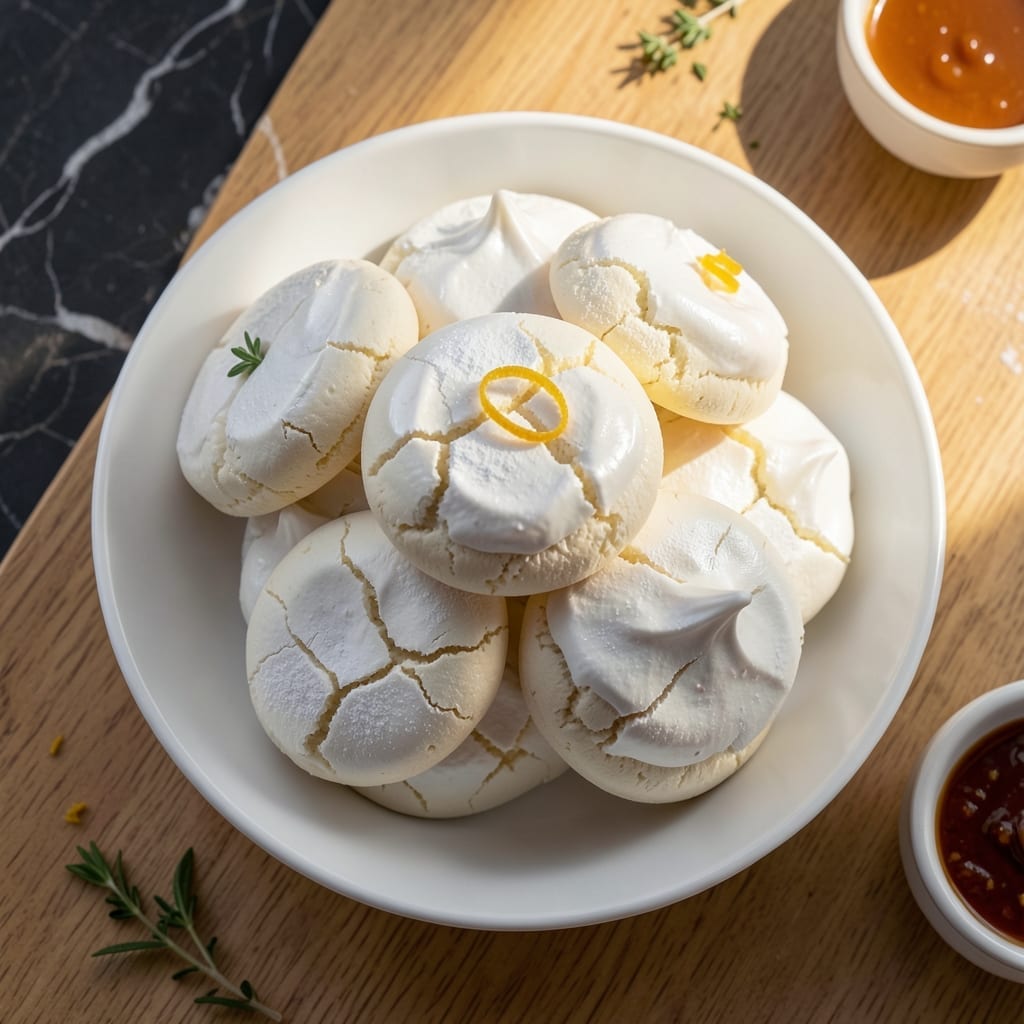
Crafting perfect meringue cookies without cream of tartar is simpler than you think. This method uses a common pantry staple to achieve the same stability and lift you expect from traditional recipes. The result is a batch of light, airy cookies with crisp shells and marshmallow-soft centers.
The vinegar trick replaces cream of tartar by providing the necessary acidity to strengthen egg white proteins. This ensures your meringue holds its shape during baking and develops that signature delicate texture. No special equipment or hard-to-find ingredients required.
With just a handful of basic ingredients and 30 minutes of baking time, you can create these elegant cookies. They’re naturally gluten-free, low in fat, and endlessly customizable with flavors or food coloring.
This approach delivers professional results without the traditional ingredient. The cookies emerge from the oven with a delicate crunch and melt-in-your-mouth interior.
Ingredients for Meringue Cookies Recipe Without Cream of Tartar
Room temperature egg whites and pantry staples create these delicate, airy meringues with ease.
| Ingredient | Amount | Notes |
|---|---|---|
| Large Egg Whites 🥚 | 4 whole | Room temperature essential |
| Granulated Sugar 🍚 | 1 cup | Superfine preferred for smooth texture |
| White Vinegar 🍶 | ½ tsp | Or apple cider vinegar |
| Vanilla Extract 🌿 | ½ tsp | Pure extract for best flavor |
| Salt 🧂 | 0.125 tsp | Fine grain for even distribution |
| Cornstarch 🌾 | ½ tsp | Helps stabilize meringue |
| Food Coloring 🎨 | ¼ tsp | Optional gel-based preferred |
| Cream of Tartar Substitute 🍋 | ½ tsp | Lemon juice as alternative |
The egg whites are everything here. Room temperature is non-negotiable—they whip up faster and hold more air. Use a clean, grease-free bowl (even a speck of yolk or oil can ruin the meringue). I always separate eggs one at a time into a small bowl first, just in case. Organic eggs often have thicker whites, which can be easier to work with.
No white vinegar? Apple cider vinegar or lemon juice work just as well. Superfine sugar dissolves faster, but regular granulated is fine—just let the meringue whip a bit longer. Skip the cornstarch if you don’t have it, but it does help prevent cracking. For coloring, gel food coloring won’t add extra liquid, unlike the liquid kind.
Meringues keep beautifully in an airtight container at room temperature for up to 2 weeks. They’ll soften slightly in humid weather, so store them in a cool, dry place. Freeze for up to 1 month if you need to make them ahead—thaw at room temp before serving.
Why You’ll Love This Recipe
- No Fuss Whipping: I can beat the egg whites and sugar without hunting for cream of tartar—vinegar does the trick just as well.
- Vanilla Clouds: The vanilla extract gives these meringues a warm, sweet flavor that’s light as air.
- Gift-Worthy Batches: They’re my go-to for holiday treats or a last-minute dessert to impress guests.
- Budget Bites: Five simple ingredients I already have in my pantry, and they make dozens of cookies.
Step-by-Step Instructions for Meringue Cookies
This method guarantees light, crisp results without the traditional additive—just patience and precision.
Step 1: Stabilize and Prepare the Egg Whites
Separate the 4 whole Large Egg Whites into a clean, grease-free mixing bowl. Add the 0.5 tsp Cream of Tartar Substitute and 0.125 tsp Salt. The substitute mimics cream of tartar’s acidity, which strengthens protein bonds for stable peaks.
I always wipe my bowl with lemon juice first—any trace of fat will prevent the whites from reaching full volume. Let the whites sit at room temperature for 10 minutes while you prepare other ingredients; cold whites won’t whip properly.
Step 2: Begin Whipping and Gradually Add Sugar
Using a stand mixer with the whisk attachment, beat the egg white mixture on medium speed until frothy. Once soft peaks form, add the 1 cup Granulated Sugar 1 tablespoon at a time, waiting 10-15 seconds between additions.
This slow incorporation prevents deflation and ensures the sugar fully dissolves, creating that signature glossy finish. You’ll notice the volume increase dramatically and the meringue take on a satin sheen—this tells you the sugar is properly incorporated.
Step 3: Achieve Stiff Peaks and Add Flavor
Increase speed to high and whip until you achieve stiff, glossy peaks that hold their shape when the whisk is lifted. This can take 8-12 minutes total from when you started whipping. Watch for the bowl to feel cool to the touch—this indicates the sugar has dissolved.
Gently fold in the 0.5 tsp Vanilla Extract, 0.5 tsp White Vinegar, and 0.5 tsp Cornstarch using a spatula. The vinegar adds stability, while cornstarch absorbs moisture for a crispier texture. If using, add the 0.25 tsp Food Coloring now for even distribution.
Step 4: Pipe and Shape the Cookies
Preheat your oven to 200°F and line a baking sheet with parchment paper. Transfer the meringue to a piping bag fitted with a star tip. Pipe 1.5-inch kisses, pulling upward to create those characteristic swirls.
Here’s the thing—meringue is delicate. Avoid overworking it in the bag, and pipe directly onto the sheet in one continuous motion. Space them 1 inch apart as they won’t spread much during baking.
Step 5: Bake Low and Slow for Perfect Texture
Bake for 1.5 to 2 hours until the cookies are completely dry and crisp. The low temperature slowly evaporates moisture without browning. Rotate the pan halfway through for even drying.
Turn off the oven and let the cookies cool inside with the door slightly ajar for 1 hour. This gradual cooling prevents cracking. They’re done when they sound hollow when tapped and lift cleanly off the parchment. Store in an airtight container once fully cooled.
Pro Tips For Making Meringue Cookies Recipe Without Cream Of Tartar
- Beat Egg Whites First: Start whipping your egg whites on low until frothy, then gradually increase speed—adding sugar too early just weighs them down and you’ll never get those stiff peaks.
- Use Room Temperature Eggs: I learned this the hard way: cold egg whites won’t whip up as much volume, so pull them out of the fridge 30 minutes before starting.
- Skip Greasy Bowls: Even a trace of grease in your bowl can prevent egg whites from stiffening, so wash your mixing bowl with hot soapy water and dry it thoroughly first.
- Add Vinegar Last: Stir in the white vinegar and vanilla only after the sugar is fully incorporated—it stabilizes the meringue without deflating it.
Essential Equipment for Great meringue cookies recipe without cream of tartar
Mixing Mastery
I swear by my KitchenAid stand mixer with whisk attachment for meringues. The consistent speed control helps achieve those perfect stiff peaks without overworking the egg whites. A 5-quart model handles 4 egg whites beautifully.
Baking Essentials
Use a light-colored baking sheet to prevent browning at the low 200°F temperature. I prefer Nordic Ware half-sheet pans. Always line with parchment paper—never wax paper—to prevent sticking and ensure clean release. 💡
Precision Tools
A good piping bag with a star tip (I use Ateco #824) creates those classic swirls. For beginners, a ziplock bag with a corner snipped off works too. A kitchen scale ensures accurate 1 cup sugar measurement.
Cooling Setup
A wire cooling rack allows air circulation as your meringues cool in the turned-off oven. I place mine on the counter to create space. This gradual cooling is crucial to prevent cracking during the final 1 hour rest.
Cleanup Helpers
Have lemon juice and paper towels ready to wipe down your bowl and utensils before starting. Any grease residue can ruin your meringue. I keep a microfiber cloth dedicated just for this purpose. ✨
Optional Extras
For colored meringues, gel food coloring (I love AmeriColor brand) won’t add extra liquid. A rubber spatula helps gently fold in your 0.5 tsp vinegar and flavorings without deflating the mixture.
Nutrition Facts
Frequently Asked Questions
Why use vinegar in meringues?
Vinegar provides the acidity needed to stabilize egg whites, just like cream of tartar. It strengthens protein bonds, helping the meringue hold its shape during baking.
Can I use lemon juice instead?
Yes! 0.5 tsp lemon juice works as a direct substitute for vinegar. Both provide the necessary acidity for stable, glossy meringues.
How do I know when they’re done?
Cookies should be completely dry and sound hollow when tapped. They’ll lift cleanly from the parchment and have a crisp shell with a soft interior.
Why did my meringues crack?
Cracking usually happens from cooling too quickly. Always let them cool gradually in the turned-off oven with the door slightly ajar for 1 hour.

- 6 Egg Cake Recipe with Oil: Light as Air With Buttery Moisture - October 4, 2026
- 4 Bean Casserole Recipe: One-Pan Heartiness With Smoky Paprika Depth - October 4, 2026
- 3-Ingredient Keto Mug Cake Recipe: Microwave Magic in 2 Minutes - October 4, 2026