
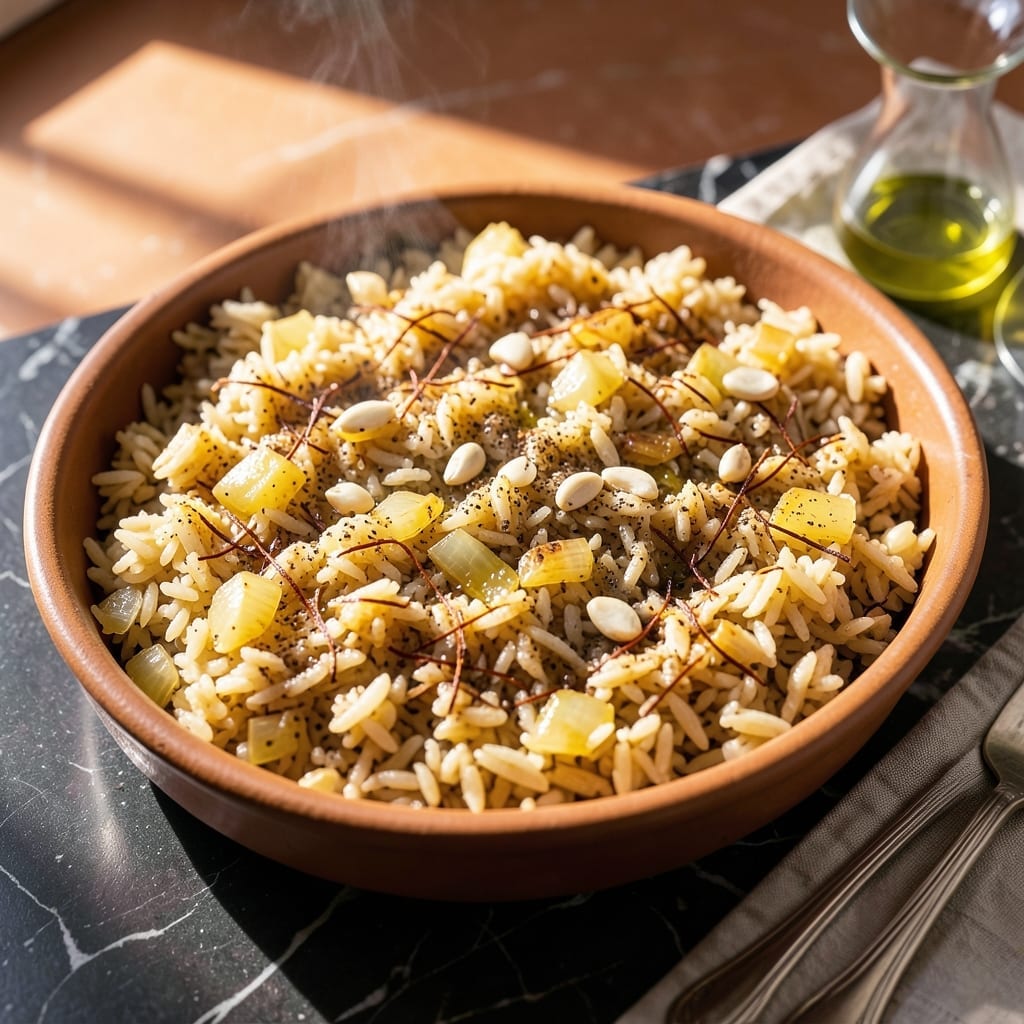
This Mexican rice delivers authentic flavor without relying on tomato sauce for its rich color and taste. The secret lies in saffron and a carefully balanced blend of spices.
I developed this method after realizing many traditional recipes overpower the rice with tomato. Here, the grains stay separate and fluffy while absorbing deep, aromatic flavors.
Each bite offers a perfect balance of earthy saffron, warm cumin, and bright garlic. The rice cooks in broth for maximum flavor infusion.
The result is a vibrant, fragrant side dish that pairs perfectly with any Mexican main course. Ready in 30 minutes with simple ingredients.
Ingredients for Mexican Rice Recipe Without Tomato Sauce
Simple, fragrant ingredients create vibrant rice with no tomato in sight.
| Ingredient | Amount | Notes |
|---|---|---|
| Long-Grain White Rice 🍚 | 2 cups | Rinsed until water runs clear |
| Vegetable Broth 🥣 | 4 cups | Low-sodium preferred for control |
| Saffron Threads 🌼 | ¼ tsp | Crushed between fingers before use |
| Ground Cumin 🌿 | 1 tsp | Toasted lightly for depth |
| Garlic Cloves 🧄 | 4 cloves | Minced finely for even distribution |
| Yellow Onion 🧅 | 1 whole | Finely diced for texture |
| Olive Oil 🫒 | 3 tbsp | Extra-virgin for best flavor |
| Salt 🧂 | 1 tsp | Kosher or sea salt preferred |
| Fresh Cilantro 🌿 | ¼ cup | Chopped, for garnish |
| Lime 🍋 | 1 whole | Juiced and zested for brightness |
| Bay Leaf 🍃 | 1 whole | Removed before serving |
| Ground Coriander 🌿 | ½ tsp | Complements the cumin |
The saffron is non-negotiable for that signature golden hue and earthy depth. Look for Spanish saffron at specialty stores or Penzeys—it’s pricier but worth it. Rinsing the rice removes excess starch, which is key for those separate, fluffy grains. For the broth, Better Than Bouillon vegetable base dissolved in hot water works perfectly if you’re not making stock from scratch.
No saffron? A pinch of turmeric adds color, but the flavor won’t be the same (use sparingly—too much tastes bitter). Swap cumin for ground caraway if that’s what you’ve got. Fresh cilantro can be replaced with parsley, though the flavor profile shifts slightly. For extra richness, toast the rice in oil for a minute before adding liquid—this builds a nutty base layer.
Leftover rice keeps well in the fridge for 4-5 days in an airtight container. Reheat with a splash of water or broth to restore moisture. For freezing, spread cooled rice on a tray first to prevent clumping, then transfer to bags. Good for 3 months.
Why You’ll Love This Recipe
- One Pot Wonder: I love that this comes together in a single pot—just rice, broth, and spices simmering while I do other things.
- Rich & Aromatic: The saffron and cumin give it this deep, warm flavor that’s way more interesting than plain rice. Honestly, the garlic ties it all together.
- Weeknight Hero: It’s my go-to for busy evenings, pairing just as well with tacos as it does with grilled chicken.
- Budget Stretcher: A pound of rice and a few pantry staples feed my family for days, and leftovers reheat beautifully.
Step-by-Step Instructions for Mexican Rice Without Tomato Sauce
This method ensures perfectly fluffy grains with vibrant saffron and citrus notes every time.
Step 1: Toast the Rice and Aromatics
Heat the 3 tbsp olive oil in a large skillet with a tight-fitting lid over medium heat. Add the 2 cups long-grain white rice and cook for 3-4 minutes, stirring frequently, until the grains turn translucent at the edges.
Add the finely diced yellow onion and cook for another 3 minutes until softened and just beginning to turn golden brown. Stir in the minced garlic cloves, 1 tsp ground cumin, and 0.5 tsp ground coriander, cooking for 30 seconds until fragrant.
Step 2: Bloom the Saffron and Add Liquids
Crush the 0.25 tsp saffron threads between your fingers directly into the skillet. This releases the saffron’s vibrant color and aroma. Pour in the 4 cups vegetable broth, 1 whole bay leaf, and 1 tsp salt.
Add the juice and zest from the 1 whole lime. Stir well to combine, scraping up any browned bits from the bottom of the skillet. These bits contain concentrated flavor that will infuse into the rice as it cooks.
Step 3: Simmer Until Liquid is Absorbed
Bring the mixture to a boil over medium-high heat. Once boiling, reduce the heat to low, cover the skillet with the lid, and simmer for 18-20 minutes. Do not stir during this time—this prevents the rice from becoming mushy.
After 15 minutes, check that there is still some liquid visible. If the skillet looks dry, add ¼ cup water and continue cooking. The rice is done when the liquid is fully absorbed and the grains are tender with no chalky center.
Step 4: Rest and Fluff the Rice
Remove the skillet from the heat and let it sit, covered, for 10 minutes. This resting period allows steam to finish cooking the rice evenly and prevents it from sticking to the bottom of the skillet.
Discard the bay leaf. Use a fork to gently fluff the rice, separating the grains without crushing them. This step is crucial for achieving light, individual grains rather than a dense mass.
Step 5: Garnish and Serve
Transfer the rice to a serving dish and sprinkle with the 0.25 cup chopped fresh cilantro. The cilantro adds a bright, fresh contrast to the warm spices and saffron.
Serve immediately while hot. Each grain should be distinct yet infused with the aromatic flavors of saffron, cumin, and lime. The rice will have a subtle golden hue from the saffron and a fluffy texture.
Pro Tips For Making Mexican Rice Recipe Without Tomato Sauce
- Toast the Rice: Cook the rice in oil for 3-4 minutes until golden—this adds a nutty depth that makes up for the lack of tomato sauce. I learned this the hard way when my first batch tasted flat.
- Bloom the Saffron: Crush the saffron threads into the warm broth and let it steep for 10 minutes before adding to the rice. Sounds weird, but it works—this guarantees even color and flavor.
- Skip the Rinsing: Resist the urge to rinse the rice—you want the starch to help absorb the broth and spices. My grandmother swore by this, and she was right.
- Use Hot Broth: Pour in boiling vegetable broth, not cold, to keep the cooking temperature steady. After burning three batches, I finally figured out this was the culprit.
Common Mistakes When Making This Recipe
Overcooking the Rice
One of the most common mistakes is cooking the rice too long or at too high a temperature. I’ve ruined batches by leaving it simmering at medium heat instead of low. The grains turn mushy and lose their distinct texture. Always check for doneness at 18 minutes and adjust as needed. 🔥
Skipping the Rinse
Unrinsed rice releases excess starch, leading to a sticky, clumpy result. I always rinse my 2 cups long-grain white rice until the water runs clear. This simple step ensures fluffy, separate grains every time. It only takes 1-2 minutes but makes a huge difference.
Not Toasting the Rice
Skipping the toasting step robs your dish of depth. I toast the rice in 3 tbsp olive oil for 3-4 minutes until translucent at the edges. This builds a nutty base layer that enhances the saffron and spices. Don’t rush this crucial first step.
Using Cold Broth
Adding cold 4 cups vegetable broth slows the cooking process and can lead to unevenly cooked rice. I always use room temperature or warm broth. This helps maintain a consistent simmer and ensures the rice cooks evenly from start to finish. 💡
Lifting the Lid
Every time you lift the lid, you release steam and lower the temperature. I resist the urge to peek during the 18-20 minute simmer. Trust the process and only check after 15 minutes if you’re concerned about the liquid level.
Overcrowding the Pan
Using a pan that’s too small causes uneven cooking and steaming instead of proper simmering. I use a large skillet with a tight-fitting lid for 2 cups rice. This gives the grains enough space to cook evenly and absorb all the flavors.
Nutrition Facts
Frequently Asked Questions
Can I substitute saffron if it’s too expensive?
Yes, use a pinch of turmeric for color, though the flavor differs. A ½ tsp of turmeric per 2 cups rice works, but avoid overdoing it to prevent bitterness.
Why does my rice turn out mushy?
Likely over-stirring or lifting the lid during cooking. Keep the lid on and avoid stirring after adding liquid for fluffy grains. Simmer at low heat for best results.
How long can I store leftovers?
Store in an airtight container in the fridge for 4-5 days. For longer storage, freeze in a single layer first, then transfer to a bag for up to 3 months.
What can I use instead of vegetable broth?
Chicken or beef broth works well for richer flavor. For a vegan option, use water with a vegetable bouillon cube or miso paste for depth.

- 6 Egg Cake Recipe with Oil: Light as Air With Buttery Moisture - October 4, 2026
- 4 Bean Casserole Recipe: One-Pan Heartiness With Smoky Paprika Depth - October 4, 2026
- 3-Ingredient Keto Mug Cake Recipe: Microwave Magic in 2 Minutes - October 4, 2026