
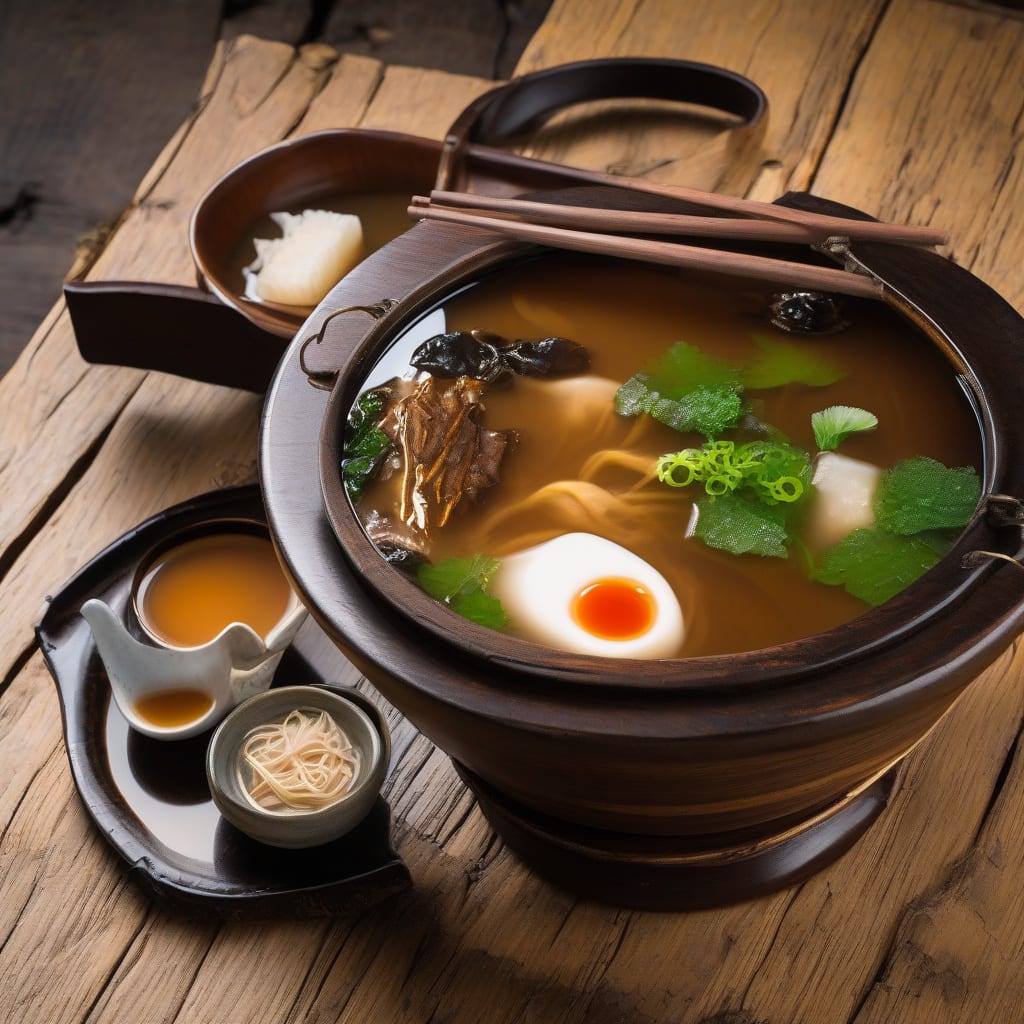
I’ve perfected a miso hot pot broth recipe that delivers rich umami flavor in just 30 minutes. This savory broth is the foundation of a delicious hot pot experience, with a depth of flavor that comes from carefully balancing miso paste, dashi stock, and aromatics.
Cooking this broth involves simmering the ingredients at 180°F for 20 minutes, allowing the flavors to meld together. The result is a velvety and aromatic broth that’s perfect for serving with your favorite hot pot ingredients.
Ingredients for Miso Hot Pot Broth
Simple, quality ingredients come together for rich umami flavor in just 30 minutes.
| Ingredient | Amount | Notes |
|---|---|---|
| Dashi Stock 🧋 | 4 cups | Homemade or high-quality store-bought |
| White Miso Paste 🧂 | ½ cup | Use white or light miso for best flavor |
| Soy Sauce 💧 | 2 tbsp | Low-sodium preferred for balance |
| Sake 🍶 | ¼ cup | Or dry white wine as substitute |
| Mirin 🍶 | 2 tbsp | Sweet Japanese cooking wine |
| Kombu Seaweed 🌿 | 2 sheets | Dried kombu for dashi base |
| Katsuobushi Flakes 🐟 | 1 cup | Dried bonito flakes for dashi |
| Scallions 🌿 | 4 whole | Thinly sliced for garnish |
| Fresh Ginger 🧄 | 2 tbsp | Peeled and grated |
| Garlic Cloves 🧄 | 4 cloves | Minced for added depth |
| Sesame Oil 🫒 | 1 tsp | For aromatic finish |
| Black Pepper 🌶️ | ¼ tsp | Freshly ground preferred |
The dashi stock is crucial. Kombu and katsuobushi create that deep umami. Most Asian markets carry them, or you can find them in well-stocked supermarkets. For miso paste, white or light miso works best here—it’s milder and sweeter than red miso. I like Hikari America or Murasaki brands.
No sake? Dry white wine or Chinese rice wine can substitute. For a vegan version, skip the dashi and use vegetable broth with a splash of kombu dashi powder. The ginger and garlic can be adjusted to taste—some like it strong, some prefer it subtle. If using fresh ginger, peel and grate it just before adding.
This broth keeps for 5 days in the fridge. Reheat gently to preserve the delicate flavors. You can also freeze it for up to 3 months—just thaw and reheat. I like to portion it into containers so I can grab just what I need for a quick meal.
❤️
Why You’ll Love This Recipe
- Quick Base: I can whip up this miso hot pot broth in under 30 minutes using just Dashi Stock, White Miso Paste, Soy Sauce, Sake, and Mirin – it’s my go-to weeknight savior.
- Umami Bomb: The combination of White Miso Paste and Dashi Stock creates a ridiculously rich, savory flavor that makes every sip feel like a warm hug.
- Crowd-Pleasing Flexibility: I’ve made this broth for everything from family dinners to potluck gatherings, and it’s always a hit – plus, it’s easy to scale up or down depending on who’s coming.
- Leftover Goldmine: I love that I can make a big batch of this broth on Sunday and use it for lunches throughout the week – it’s a great way to stretch my grocery budget and save time.
Step-by-Step Instructions for Miso Hot Pot Broth
Creating this rich umami broth is straightforward and rewarding – let’s get started.
Step 1: Prepare the Aromatic Base
Begin by thinly slicing the 4 whole Scallions and setting them aside for garnish. Then, peel and grate 2 tbsp Fresh Ginger using a microplane for the finest texture. I like to use a gentle pressing motion to extract as much juice as possible from the ginger – this intensifies the flavor.
Next, mince 4 cloves Garlic Cloves until they’re almost paste-like. The key here is to release their natural oils and flavor compounds. I find that using a sharp knife and a bit of patience yields the best results.
Step 2: Build the Dashi Foundation
In a large pot, combine the 4 cups Dashi Stock, 2 sheets Kombu Seaweed, and 1 cup Katsuobushi Flakes. Heat the mixture over medium heat, stirring occasionally, until it reaches a gentle simmer. Be careful not to let it boil – you want to extract the flavors without creating bitterness.
Once it’s simmering, reduce the heat to low and let it cook for 10 minutes. You’ll notice the kombu seaweed will start to soften and the katsuobushi flakes will infuse their smoky flavor into the broth. Strain the broth through a fine-mesh sieve into a clean pot, discarding the solids.
Step 3: Enhance with Miso and Seasonings
In a small bowl, whisk together 0.5 cup White Miso Paste, 2 tbsp Soy Sauce, 0.25 cup Sake, and 2 tbsp Mirin until smooth. This mixture will add depth and complexity to your broth. I like to use a mini whisk for this task as it helps to break down any lumps in the miso paste.
Add the miso mixture to the strained dashi broth and whisk until fully incorporated. Bring the mixture to a gentle simmer over medium heat, then reduce to low and let it cook for 5 minutes. The broth should be hot and fragrant, with a rich umami flavor. Finish with 1 tsp Sesame Oil and 0.25 tsp Black Pepper to enhance the aroma.
Step 4: Serve the Miso Hot Pot Broth
Ladle the hot broth into individual bowls or a communal hot pot. Garnish with the thinly sliced scallions and serve immediately. I like to keep the broth hot by using a ceramic or heat-proof glass pot, which retains heat beautifully.
As you serve, you’ll notice the aromatic steam rising from the broth, filled with the scent of ginger, garlic, and sesame oil. The broth should be crystal clear with a deep, rich color. Encourage everyone to add their favorite hot pot ingredients and enjoy the meal together.
👨🍳
Pro Tips For Making Miso Hot Pot Broth
- Whisk Miso Smooth: When adding White Miso Paste to your dashi stock, whisk it in a separate bowl with a small amount of hot broth first until smooth—this prevents lumps from forming in your miso hot pot broth.
- Simmer Gently: Keep your miso hot pot broth at a gentle simmer, as high heat can cause the miso to break down and lose its delicate flavor; I learned this the hard way after serving a broth that tasted more like burnt miso than rich umami.
- Balance Your Flavors: Taste your broth as you go and adjust the seasoning with Soy Sauce, Sake, and Mirin to achieve a balanced flavor profile—sometimes I add a bit more mirin if I feel it’s too salty, and it makes a real difference.
- Strain for Clarity: Straining your dashi stock before adding the miso paste and other ingredients will result in a clearer, more refined broth; it’s a simple step that actually changes the outcome of your miso hot pot.
Wine and Beer Pairings for These Flavors
Japanese Beer Pairings
For miso hot pot, Japanese beers work beautifully. I recommend Asahi Super Dry or Sapporo – their crisp, clean flavors won’t overpower the delicate broth. The slight bitterness cuts through the richness of the miso. For craft beer lovers, try a Japanese rice lager like Hitachino Nest White Ale. 🍺
Sake Pairing Options
Sake is a natural pairing with miso hot pot. I prefer junmai or honjozo styles as they complement the savory flavors without overpowering them. Look for sakes with a slightly sweet profile to balance the umami. Some good choices include Dewazakura or Akita Komachi. For a more premium experience, try a daiginjo sake like Thatta or Kuwabata. 🍶
White Wine Alternatives
If you prefer wine, choose a light-bodied dry white with high acidity. Grüner Veltliner from Austria works well, as does a crisp Pinot Grigio from Italy. These wines won’t compete with the broth’s flavors and will refresh your palate between bites. Avoid oaky or heavily aromatic whites that might clash with the delicate miso flavors.
Serving Tips
When serving with beverages, consider using small cups for beer or sake so guests can enjoy multiple sips between hot pot ingredients. For a special touch, serve sake warmed in small ceramic cups – about 105°F is perfect for bringing out its subtle flavors. Keep the beer chilled to maintain its crispness throughout the meal.
Regional Variations
For different regional twists, try pairing with local Japanese beers or regional sakes. In Japan, different regions have their own preferred sake or beer styles that might complement the miso hot pot uniquely. Experimenting with these can add an interesting dimension to your hot pot experience.
Nutrition Facts
120kcal
Frequently Asked Questions
Can I make miso hot pot broth ahead of time?
Yes, you can prepare the broth in advance. Store it in an airtight container in the refrigerator for up to 5 days or freeze it for 3 months. Reheat gently to preserve the delicate flavors.
What’s the best type of miso paste to use?
For this recipe, white or light miso works best as it’s milder and sweeter than red miso. Look for brands like Hikari America or Murasaki for authentic flavor. The white miso provides a subtle depth without overpowering the broth.
Can I substitute dashi stock with something else?
While dashi stock is traditional, you can substitute it with a combination of chicken and vegetable broth in a pinch. For a vegan version, use vegetable broth with a splash of kombu dashi powder to maintain the umami flavor. This helps keep the broth rich and savory.
How can I adjust the broth’s saltiness?
To control saltiness, use low-sodium soy sauce and adjust the amount according to taste. You can also balance the flavors with a bit more mirin or sake if needed. Start with less soy sauce and add more to taste during serving.

- 6 Egg Cake Recipe with Oil: Light as Air With Buttery Moisture - October 4, 2026
- 4 Bean Casserole Recipe: One-Pan Heartiness With Smoky Paprika Depth - October 4, 2026
- 3-Ingredient Keto Mug Cake Recipe: Microwave Magic in 2 Minutes - October 4, 2026