
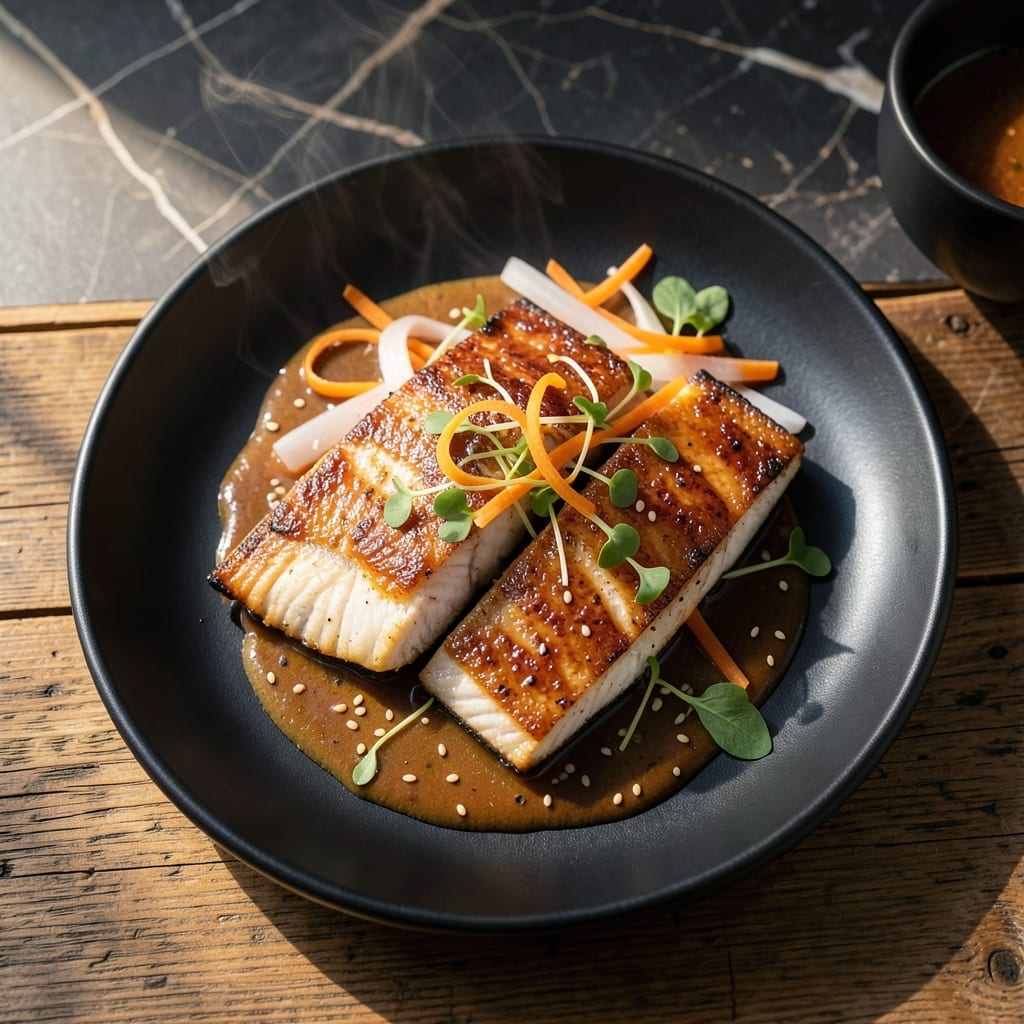
This recipe brings Japanese restaurant quality to your home kitchen with minimal effort. The key is marinating the sea bass in a white miso glaze that caramelizes beautifully under the broiler.
I developed this method after years of trial and error, focusing on achieving that signature buttery texture that melts in your mouth. The miso marinade tenderizes the fish while adding complex umami flavors.
What emerges from the oven is perfectly cooked sea bass with a glossy, caramelized exterior and flaky, moist interior. The miso creates a delicate balance of sweet, salty, and savory notes that complement the natural richness of the fish.
Serve immediately with steamed rice and blanched vegetables for a complete meal. The presentation alone will impress any dinner guest.
Ingredients for Miso Sea Bass
A handful of Japanese pantry staples transforms sea bass into restaurant-quality perfection.
| Ingredient | Amount | Notes |
|---|---|---|
| Sea Bass Fillets 🐟 | 1 ½ lb | Skin-on, about 1-inch thick |
| White Miso Paste 🍜 | ½ cup | Also called shiro miso |
| Mirin 🍶 | 3 tbsp | Sweet rice wine for cooking |
| Soy Sauce 🫙 | 2 tbsp | Low-sodium preferred |
| Sake 🍷 | 2 tbsp | Dry Japanese rice wine |
| Granulated Sugar 🥄 | 1 tbsp | Balances miso salinity |
| Fresh Ginger 🌿 | 1 tbsp | Peeled and finely grated |
| Garlic Cloves 🧄 | 2 cloves | Minced to fine paste |
| Vegetable Oil 🫒 | 1 tbsp | High-smoke point for pan-searing |
| Lemon 🍋 | 1 whole | Zested and juiced for garnish |
| Green Onions 🧅 | 3 whole | Thinly sliced for garnish |
| Sesame Seeds 🌰 | 1 tsp | Toasted for garnish |
The sea bass is non-negotiable here—look for wild-caught Chilean or Japanese varieties at Whole Foods or a trusted seafood counter. The miso should be white (shiro miso), which is milder and sweeter than red. I grab mine from Asian markets—it’s cheaper and fresher than the tiny jars at regular grocery stores. Mirin and sake are in the same aisle, usually near the rice vinegars.
No white miso? Yellow miso works in a pinch (cut back on sugar slightly). Skip the red miso—it’s too intense. Out of mirin? 1 tbsp sugar + 2 tbsp dry sherry mimics it. Sake can be swapped for dry white wine. The ginger and garlic are flexible—pre-ground in a jar is fine if you’re in a rush (but fresh tastes brighter). For the garnish, cilantro or mint can replace green onions.
The miso marinade keeps in the fridge for 3 days if you want to prep ahead. Sea bass is best cooked the same day you buy it, but it’ll hold 24 hours wrapped tightly in paper towels. Leftovers? Reheat gently in a skillet—microwaving dries it out. Always serve with steamed rice to soak up that glossy glaze.
Why You’ll Love This Recipe
- 5-Minute Marinade: I mix the miso, mirin, and sake in one bowl, coat the bass, and it’s ready for the pan—no fuss, no long soak.
- Umami Bomb: White miso plus soy sauce gives that deep, salty-sweet punch that makes the fish taste like it came from a high-end sushi bar.
- Dinner Party Star: I’ve served this to picky eaters and foodies alike, and everyone asks for the recipe.
- Next-Day Luxury: Leftovers taste even better cold, flaking into salads or rice bowls for an effortless lunch.
Step-by-Step Instructions for Miso Sea Bass
Here’s the method that delivers that buttery texture you’re after with perfect Japanese style.
Step 1: Prepare the Miso Marinade
In a medium bowl, whisk together the 0.5 cup white miso paste, 3 tbsp mirin, 2 tbsp soy sauce, 2 tbsp sake, and 1 tbsp granulated sugar until smooth. The sugar helps balance the miso’s saltiness while the mirin and sake add depth.
Add the 1 tbsp fresh ginger and 2 cloves garlic cloves (minced to a fine paste) to the mixture. Stir well to combine—you should have a thick, glossy paste. This marinade will transform the sea bass into that restaurant-quality dish.
Step 2: Marinate the Sea Bass
Pat the 1.5 lb sea bass fillets dry with paper towels to ensure the marinade adheres properly. Place the fillets in a shallow dish and spread the miso mixture evenly over the skinless side, pressing gently to coat.
Cover and refrigerate for at least 30 minutes (I prefer 2 hours for maximum flavor penetration). The miso will caramelize beautifully during cooking, creating that signature sticky glaze. Don’t exceed 4 hours of marinating, as the enzymes in the miso can start to break down the fish.
Step 3: Pan-Sear the Fillets
Heat the 1 tbsp vegetable oil in a large non-stick skillet over medium-high heat until shimmering. Carefully place the marinated fillets in the pan, miso-side down. The marinade will sizzle immediately—this is the caramelization process beginning.
Cook undisturbed for 4-5 minutes until the miso forms a deep, glossy crust and the edges of the fillets turn opaque. Flip gently and cook for another 3-4 minutes until the fish flakes easily with a fork. The sea bass should reach an internal temperature of 145°F.
Step 4: Garnish and Serve
While the fish cooks, thinly slice the 3 whole green onions and zest the 1 whole lemon. Transfer the cooked fillets to serving plates, miso-side up. The glaze should be shiny and slightly sticky to the touch.
Garnish with the green onions, lemon zest, a squeeze of lemon juice, and the 1 tsp sesame seeds. The acidity from the lemon cuts through the richness of the miso, while the sesame seeds add a subtle nutty crunch. Serve immediately while the glaze is still warm and gooey.
Pro Tips For Making Miso Sea Bass
- Pat Fillets Dry: I learned this the hard way—moisture on the sea bass prevents the miso glaze from sticking properly. Use paper towels to dry the fillets thoroughly before marinating.
- Marinate Overnight: White miso needs time to work its magic. Give the sea bass at least 4 hours (or overnight) in the miso, mirin, and sake mix for deeper flavor.
- Skip Boiling the Marinade: Resist the urge to reduce the leftover marinade into a sauce—raw fish juices make it unsafe. Instead, set aside a small portion of the marinade before adding the fish.
- Broil for Crisp Edges: After baking, a quick 2-3 minutes under the broiler gives the miso sea bass that restaurant-quality caramelized crust. Watch closely to avoid burning.
Common Mistakes When Making Perfect Results
Over-Marinating the Fish
While proper marinating is crucial, leaving the sea bass in the miso mixture for more than 4 hours can ruin the texture. The enzymes in miso start breaking down the delicate fish proteins, turning your beautiful fillets mushy. I learned this the hard way with a 6-hour marinade that ended in disappointment. 💡
Skipping the Pat-Dry Step
Moisture is the enemy of good caramelization. If you don’t thoroughly pat the fillets dry before marinating, the miso glaze won’t adhere properly or develop that signature sticky crust. Use 2-3 paper towels and press firmly on each side.
High Heat Cooking
Miso burns easily due to its sugar content. Cooking over medium-high heat is perfect, but anything hotter will scorch the marinade before the fish cooks through. If you see black spots forming quickly, lower the heat immediately.
Immediate Flipping
Resist the urge to peek or flip too soon. The miso needs 4-5 minutes of undisturbed cooking to form that beautiful caramelized crust. Premature flipping results in a pale, uneven glaze and fish that sticks to the pan.
Using Cold Fish
Take your fillets out of the fridge 15-20 minutes before cooking. Cold fish cooks unevenly and can cause the miso to burn on the outside while the inside remains raw. Room temperature sea bass ensures even cooking and perfect texture.
Neglecting Garnishes
The acidity from lemon and the freshness of green onions aren’t just decorative—they’re essential to balance the richness. Skip these, and your dish will taste one-dimensional. I always keep extra lemon wedges on the side for those who want more brightness. ✨
Nutrition Facts
Frequently Asked Questions
Can I use a different type of fish?
Yes! Try cod, halibut, or black bass as excellent substitutes. Just adjust cooking time slightly for thicker fillets, ensuring they reach 145°F internally.
How do I prevent the miso from burning?
Cook on medium-high heat and don’t flip too soon. Let the glaze caramelize for 4-5 minutes undisturbed before turning.
What if I don’t have white miso?
Yellow miso works well, though it’s slightly stronger. Red miso is too intense. For best results, stick to white or yellow varieties.
Can I make this ahead of time?
The miso marinade keeps for 3 days refrigerated. Marinate fish for up to 4 hours before cooking for optimal texture.

- 6 Egg Cake Recipe with Oil: Light as Air With Buttery Moisture - October 4, 2026
- 4 Bean Casserole Recipe: One-Pan Heartiness With Smoky Paprika Depth - October 4, 2026
- 3-Ingredient Keto Mug Cake Recipe: Microwave Magic in 2 Minutes - October 4, 2026