
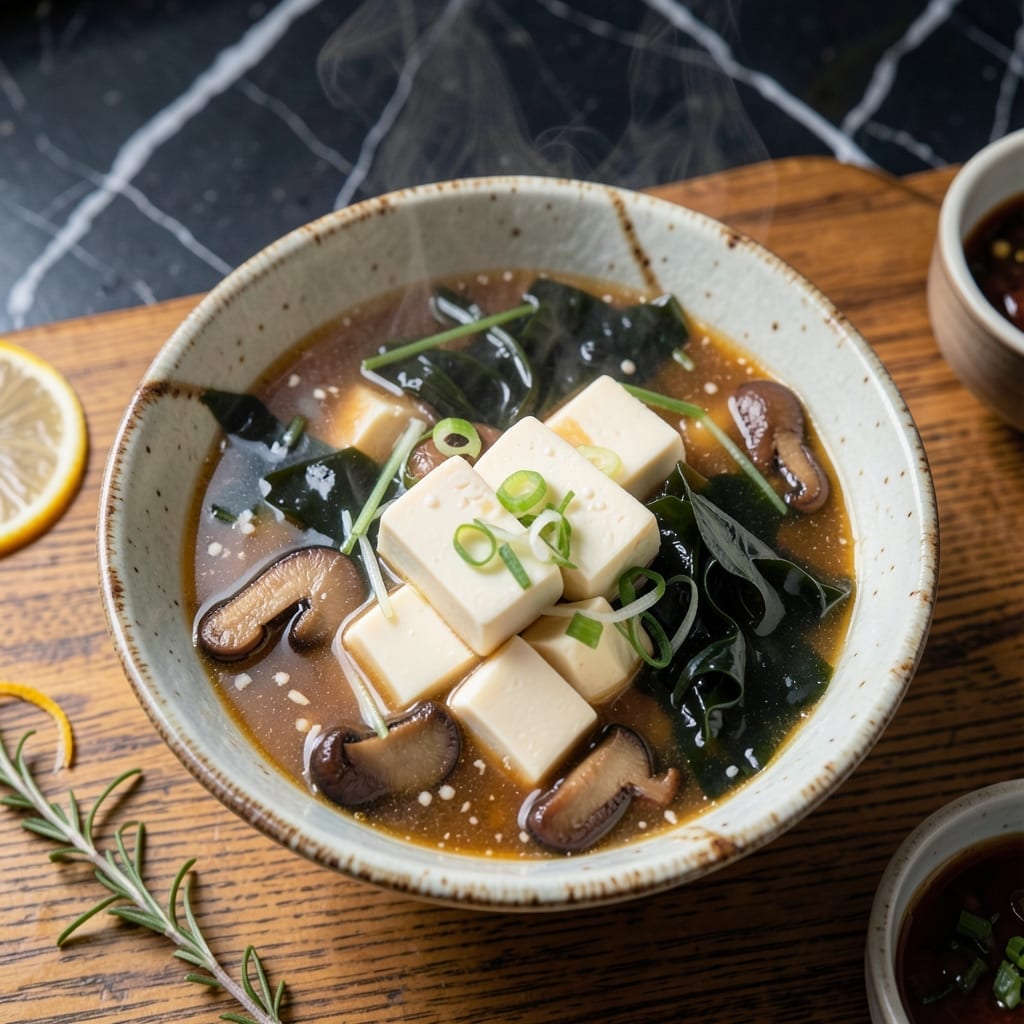
This traditional miso soup achieves deep umami flavor without relying on dashi broth. The secret lies in using kombu and shiitake mushrooms to create a rich, savory base.
I developed this method after years of experimenting with plant-based alternatives. The kombu provides natural glutamates while the mushrooms add meaty depth, replicating authentic Japanese flavors.
What results is a comforting bowl with silken tofu, seaweed, and green onions suspended in a savory broth. The umami intensity rivals any traditional version.
Perfect for cold days or as a light starter. Here’s how to make this authentic version at home.
Ingredients for Miso Soup Recipe No Dashi
Traditional Japanese flavors without dashi—just kombu, mushrooms, and pantry staples.
| Ingredient | Amount | Notes |
|---|---|---|
| Dried Kombu Seaweed 🌊 | ½ oz | Rinsed, cut into strips |
| Dried Shiitake Mushrooms 🍄 | ½ oz | Rehydrated, sliced |
| Silken Tofu 🧈 | 14 oz | Cubed, drained gently |
| White Miso Paste 🥣 | ⅓ cup | Fermented, gluten-free if needed |
| Green Onions 🧅 | 4 whole | Thinly sliced, green parts only |
| Wakame Seaweed 🌊 | ¼ oz | Dried, rehydrated in warm water |
| Soy Sauce 🫒 | 1 tbsp | Low-sodium preferred |
| Rice Vinegar 🍚 | 1 tsp | For brightness |
| Sesame Oil 🫒 | 1 tsp | Toasted, for finishing |
| Garlic Cloves 🧄 | 2 cloves | Minced finely |
| Fresh Ginger 🌿 | 1 tbsp | Grated, peeled |
| Water 💧 | 6 cups | Filtered or spring |
The kombu and shiitake mushrooms are non-negotiable for authentic umami depth. Whole Foods or Asian markets carry the best dried varieties—look for thick, glossy kombu and plump, fragrant shiitakes. Mitoku or Eden Foods are reliable brands for miso paste. Freshness matters: old kombu loses its glutamates, and stale miso tastes flat (not sharp). I rehydrate my mushrooms in the morning so they’re ready by dinner.
No kombu? Add a piece of nori to the broth, but it won’t be as rich. Out of shiitake? Cremini or portobello work in a pinch (dried is best). For a gluten-free version, chickpea miso replaces white miso seamlessly. The tofu must be silken—firm tofu lacks the delicate texture. Mori-Nu is my go-to brand for shelf-stable silken tofu.
Broth keeps 3 days refrigerated, but the seaweed and tofu are best added fresh. Freeze the broth base for up to 1 month—just reheat gently and finish with fresh ingredients. Kombu and dried mushrooms store indefinitely in a cool, dark place (no fridge needed).
Why You’ll Love This Recipe
- No-Fuss Broth: I skip the dashi and let kombu and shiitake do the work—just soak, simmer, and strain.
- Umami Bomb: White miso plus those mushrooms? Deep, savory richness in every spoonful.
- Weeknight Hero: I make a big batch Sunday and reheat portions all week—tofu stays silky, flavor only gets better.
- Pantry MVP: Dried kombu and shiitake last forever, and a tub of miso stretches for months. Honestly, it’s cheaper than takeout.
Step-by-Step Instructions for Miso Soup Without Dashi
This method builds deep umami flavor without traditional dashi, using accessible ingredients.
Step 1: Rehydrate and Prepare the Seaweed and Mushrooms
Combine the 6 cups water, 0.5 oz dried kombu seaweed, and 0.5 oz dried shiitake mushrooms in a saucepan. Heat over medium-high until the liquid nearly reaches a boil, then remove from heat. Let steep for 15-20 minutes until the seaweed and mushrooms soften completely.
This steeping process extracts maximum umami from both ingredients, creating a rich base that replaces dashi. The water should take on a light amber color and subtle oceanic aroma. Remove the kombu strips, then slice the rehydrated shiitake mushrooms into thin strips.
Step 2: Infuse the Broth with Aromatics
Return the saucepan to medium heat and add the 2 cloves garlic cloves and 1 tbsp fresh ginger. Simmer the broth for 5 minutes to allow the aromatics to infuse. The garlic should release its pungent scent while the ginger adds warmth and complexity.
Strain the broth through a fine-mesh sieve into a clean pot to remove the solids. This ensures a smooth, refined soup base. Return the strained broth to medium-low heat to maintain a gentle simmer for the next steps.
Step 3: Dissolve the Miso and Season the Broth
In a small bowl, whisk together the 0.33 cup white miso paste with 2-3 tablespoons of the warm broth until smooth. This tempering prevents clumping when added to the hot liquid. Pour the miso mixture back into the pot and stir well to incorporate.
Add the 1 tbsp soy sauce and 1 tsp rice vinegar, stirring to combine. Taste and adjust seasoning if needed, though the miso and soy sauce should provide sufficient saltiness. The broth should have a balanced, savory depth with a slight tang from the vinegar.
Step 4: Add Tofu, Seaweed, and Finish
Gently stir in the 14 oz silken tofu cubes and 0.25 oz wakame seaweed. Simmer for 2-3 minutes until the tofu is heated through and the wakame has rehydrated and expanded. Avoid boiling vigorously, as this can break apart the delicate tofu.
The wakame should become tender and bright green, while the tofu absorbs the surrounding flavors. Remove from heat and stir in the 1 tsp sesame oil, which adds a nutty finish to the soup.
Step 5: Garnish and Serve Immediately
Ladle the soup into bowls and garnish with the 4 whole green onions, thinly sliced. The green onions add freshness and a mild bite that complements the rich, umami-packed broth.
Serve immediately while hot, as the wakame and tofu are best enjoyed fresh. Each bowl should offer a harmonious balance of silky tofu, tender seaweed, and a deeply flavorful broth that rivals traditional dashi-based versions.
Pro Tips For Making Miso Soup Recipe No Dashi
- Cold Soak Kombu: Cover dried kombu with cold water and let it sit for 30 minutes—I learned this the hard way after boiling it directly and getting slimy soup instead of clean, rich broth.
- Slice Shiitakes Thin: Rehydrate dried shiitakes, then slice them paper-thin so they release maximum umami into the broth without chewy bits.
- Temper the Miso: Mix the white miso paste with a ladle of warm (not boiling) broth first to prevent clumping and keep the enzymes alive.
- Add Tofu Last: Gently fold in silken tofu just before serving so it stays intact and absorbs the hot broth without breaking apart.
Creative Variations of This Dish
Spicy Miso Variation
Add 1 tbsp gochujang or 1 tsp sriracha to the miso paste before dissolving in broth. This Korean-inspired twist brings heat while maintaining the umami depth. Balance with 1 tsp honey if desired. 🌶️
Creamy Coconut Style
Replace 1 cup water with 1 can coconut milk for a richer, slightly sweet version. The coconut pairs beautifully with shiitake mushrooms. Add 1 tsp lime juice at the end for brightness.
Vegetable-Packed Bowl
Add 1 cup spinach or ½ cup shredded carrots during the final 2 minutes of cooking. Baby bok choy also works wonderfully—just separate the leaves and add them last. Extra veggies make this a heartier meal.
Miso Ramen Fusion
Use this broth as a base for ramen by adding 2 oz ramen noodles per bowl. Cook noodles separately and add to the broth. Top with soft-boiled egg and corn kernels for a complete meal. 💛
Garlic Lover’s Boost
Double the garlic to 4 cloves and add 1 tbsp garlic chili oil at the end. This creates a pungent, aromatic version that garlic enthusiasts will adore. Garnish with extra chopped scallions.
Cold Miso Soup
Chill the prepared soup completely and serve cold during summer. Add ½ cup cucumber (julienned) and 1 tbsp rice vinegar for a refreshing twist. Perfect for hot days when you want miso’s depth without heat.
Nutrition Facts
Frequently Asked Questions
Can I use regular tofu instead of silken?
Silken tofu is ideal for its delicate texture, but firm tofu works in a pinch. Cut into smaller cubes and add 1 minute later to prevent breaking. The flavor will still shine.
How do I make it gluten-free?
Use gluten-free soy sauce (tamari) and check your miso label—some contain barley. Chickpea miso is a great gluten-free alternative with similar depth.
Why is my broth not flavorful enough?
Steep the kombu and mushrooms longer (up to 30 minutes) or add 1 tsp soy sauce. Using more shiitakes also boosts umami significantly.
Can I make this ahead?
Prepare the broth base 2 days ahead, but add tofu and wakame fresh. Reheat gently—boiling makes tofu rubbery. Store in an airtight container.

- 6 Egg Cake Recipe with Oil: Light as Air With Buttery Moisture - October 4, 2026
- 4 Bean Casserole Recipe: One-Pan Heartiness With Smoky Paprika Depth - October 4, 2026
- 3-Ingredient Keto Mug Cake Recipe: Microwave Magic in 2 Minutes - October 4, 2026