
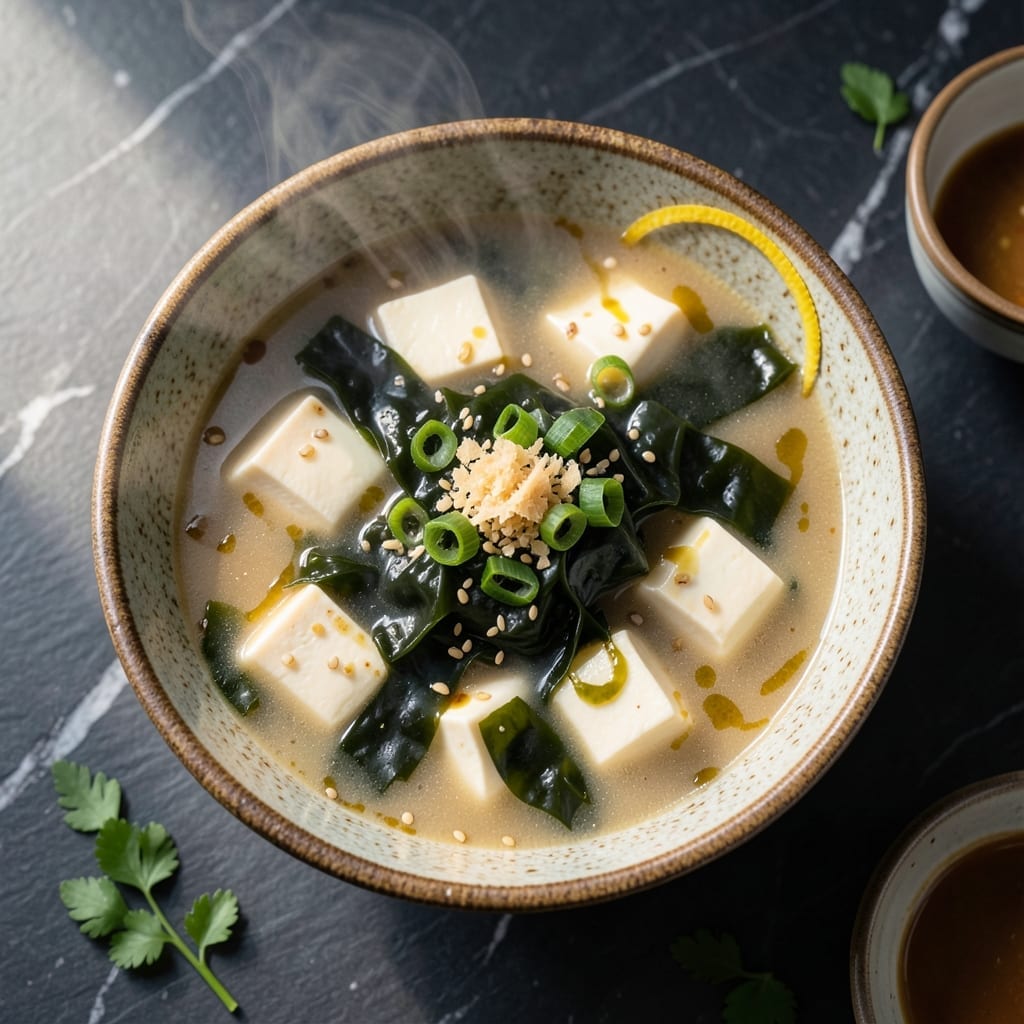
This vegan miso soup delivers a depth of flavor that rivals traditional versions. The umami-rich broth comes from carefully selected ingredients that create authentic taste without compromise.
Silken tofu adds protein and a delicate texture, while the simple preparation ensures a restaurant-quality result in under 20 minutes. Every spoonful offers comforting warmth and balanced flavor.
Ingredients for Miso Soup Recipe Vegan
Silken tofu, umami-rich broth, and authentic Japanese flavors come together in this dish.
| Ingredient | Amount | Notes |
|---|---|---|
| White Miso Paste 🥣 | ½ cup | Fermented, organic preferred |
| Silken Tofu 🧈 | 14 oz | Firm or extra-firm, cubed |
| Vegetable Broth 🍲 | 6 cups | Low-sodium or homemade |
| Wakame Seaweed 🌊 | ¼ cup | Dried, rehydrated |
| Scallions 🧅 | 4 whole | Thinly sliced, green parts only |
| Garlic Cloves 🧄 | 3 cloves | Minced finely |
| Fresh Ginger 🌿 | 1 tbsp | Grated or minced |
| Soy Sauce 🫒 | 2 tbsp | Low-sodium or tamari |
| Rice Vinegar 🍚 | 1 tbsp | Unseasoned variety |
| Sesame Oil 🫒 | 1 tsp | Toasted for aroma |
| Shiitake Mushrooms 🍄 | 4 whole | Fresh or dried, sliced |
| Red Pepper Flakes 🌶️ | ¼ tsp | Optional for heat |
| Nori Sheets 🌊 | 2 sheets | Thinly sliced for garnish |
The miso paste is non-negotiable—Miso Master or South River Miso brands deliver consistent quality. Whole Foods or Asian specialty markets will have the best selection. Look for white miso labeled as shiro miso for the mildest, most versatile flavor. The silken tofu should be shelf-stable or refrigerated, but avoid the vacuum-sealed kind as it’s often too firm for this application.
No wakame? Dulse or kombu works in a pinch, though the texture differs slightly. Tamari can replace soy sauce at a 1:1 ratio, and if you’re gluten-free, ensure your miso is certified. Fresh ginger is ideal, but ground ginger at half the amount saves time. The shiitake mushrooms add depth—dried and rehydrated are actually more flavorful than fresh.
Store miso paste in the fridge in an airtight container for up to 6 months. Tofu stays fresh for 1 week unopened, but use opened packages within 3 days. The broth can be prepped ahead and reheated gently—just don’t boil it after adding miso, or it’ll lose its delicate flavor.
Why You’ll Love This Recipe
- Ready in 15: I can have this steaming bowl on the table faster than ordering takeout—just whisk miso into hot broth and add tofu.
- Umami Bomb: The white miso and wakame seaweed create that deep, savory flavor I crave without any meat.
- Weeknight MVP: Honestly, it’s my go-to for busy evenings when I need something warm and filling in a flash.
- Budget Keeper: A little miso paste goes a long way, and silken tofu is cheap—this feeds me for days without breaking the bank.
Step-by-Step Instructions for Miso Soup
Master this traditional technique for a deeply flavorful broth with perfect texture every time.
Step 1: Prepare the Aromatic Base
Begin by heating the sesame oil in a large pot over medium heat. Add the minced garlic cloves and grated fresh ginger, stirring constantly for 30-45 seconds until fragrant but not browned.
Next, add the sliced shiitake mushrooms and cook for 3-4 minutes until they begin to soften and release their moisture. This builds the foundational umami depth that defines a proper miso base. The mushrooms should be tender but still holding shape.
Step 2: Build the Broth Foundation
Pour in the 6 cups vegetable broth and increase heat to medium-high. Add the 2 tbsp soy sauce and 1 tbsp rice vinegar, then bring to a gentle simmer. The liquid should reach just below boiling point—look for small bubbles around the edges of the pot.
Once simmering, reduce heat to medium-low and add the 0.25 cup wakame seaweed. Let it cook for 5 minutes until the seaweed rehydrates and unfurls. The broth will darken slightly as the seaweed infuses its oceanic essence.
Step 3: Incorporate the Miso and Tofu
Remove the pot from heat and let it sit for 2 minutes to cool slightly. This prevents the miso from overheating, which would kill its beneficial probiotics and mute its flavor. In a small bowl, whisk the 0.5 cup white miso paste with ½ cup of the warm broth until smooth.
Pour the miso mixture back into the pot and stir gently to combine. Add the cubed 14 oz silken tofu and the 0.25 tsp red pepper flakes (if using). The tofu should warm through without breaking apart—3-4 minutes of gentle heat is ideal.
Step 4: Finish and Garnish
Taste and adjust seasoning if needed, though the miso and soy sauce typically provide sufficient saltiness. The broth should be rich and savory with a balance of earthy, salty, and slightly tangy notes.
Ladle the soup into bowls and garnish with the thinly sliced scallions and nori sheets. The scallions add a fresh, crisp contrast, while the nori contributes a subtle briny depth. Serve immediately while the tofu is still silky and the aromas are at their peak.
Pro Tips For Making Miso Soup Recipe Vegan
- Dissolve Miso First: Mix the white miso paste with a ladle of warm (not boiling) broth before adding it to the pot—I learned this the hard way after finding clumps floating in my soup.
- Skip Boiling Miso: Add the miso mixture off the heat or on very low simmer; boiling kills its delicate probiotics and dulls the flavor.
- Soak Wakame Briefly: Rehydrate the wakame seaweed in cold water for 5-7 minutes, then drain and chop—it’ll expand more than you expect and stay tender.
- Warm the Tofu: Cube the silken tofu and let it sit in warm water for a few minutes before adding; this prevents it from cooling down the soup and helps it absorb flavor better.
Common Mistakes When Making miso soup recipe vegan
🔥 Using Boiling Water for Miso Paste
Adding miso paste to boiling water destroys its delicate probiotics and dulls its rich, savory flavor. High heat can also cause the enzymes to break down, leaving your soup less aromatic.
Fix: Always dissolve miso paste in warm (not boiling) water or broth, ideally below 115°F (46°C), to preserve its health benefits and taste.
🍳 Overcooking the Tofu
Silken tofu is delicate and can turn rubbery or break apart if simmered too long. Adding it too early also causes it to absorb too much salt from the broth, making it overly firm.
Fix: Gently stir in cubed silken tofu at the very end, just before serving, so it stays soft and creamy.
⏰ Skipping the Dashi Base
Miso alone won’t deliver the deep umami flavor traditional miso soup is known for. Without a proper dashi (vegan or traditional), your broth may taste flat and one-dimensional.
Fix: Use a vegan dashi made from kombu (dried kelp) and shiitake mushrooms for an authentic, rich base.
🎯 Over-Salting the Broth
Miso paste is already salty, and adding extra salt can make your soup unpleasantly briny. This is a common issue, especially if you’re using store-bought vegan dashi.
Fix: Taste as you go and start with half the recommended miso paste, adjusting to your preference.
Nutrition Facts

- 6 Egg Cake Recipe with Oil: Light as Air With Buttery Moisture - October 4, 2026
- 4 Bean Casserole Recipe: One-Pan Heartiness With Smoky Paprika Depth - October 4, 2026
- 3-Ingredient Keto Mug Cake Recipe: Microwave Magic in 2 Minutes - October 4, 2026