
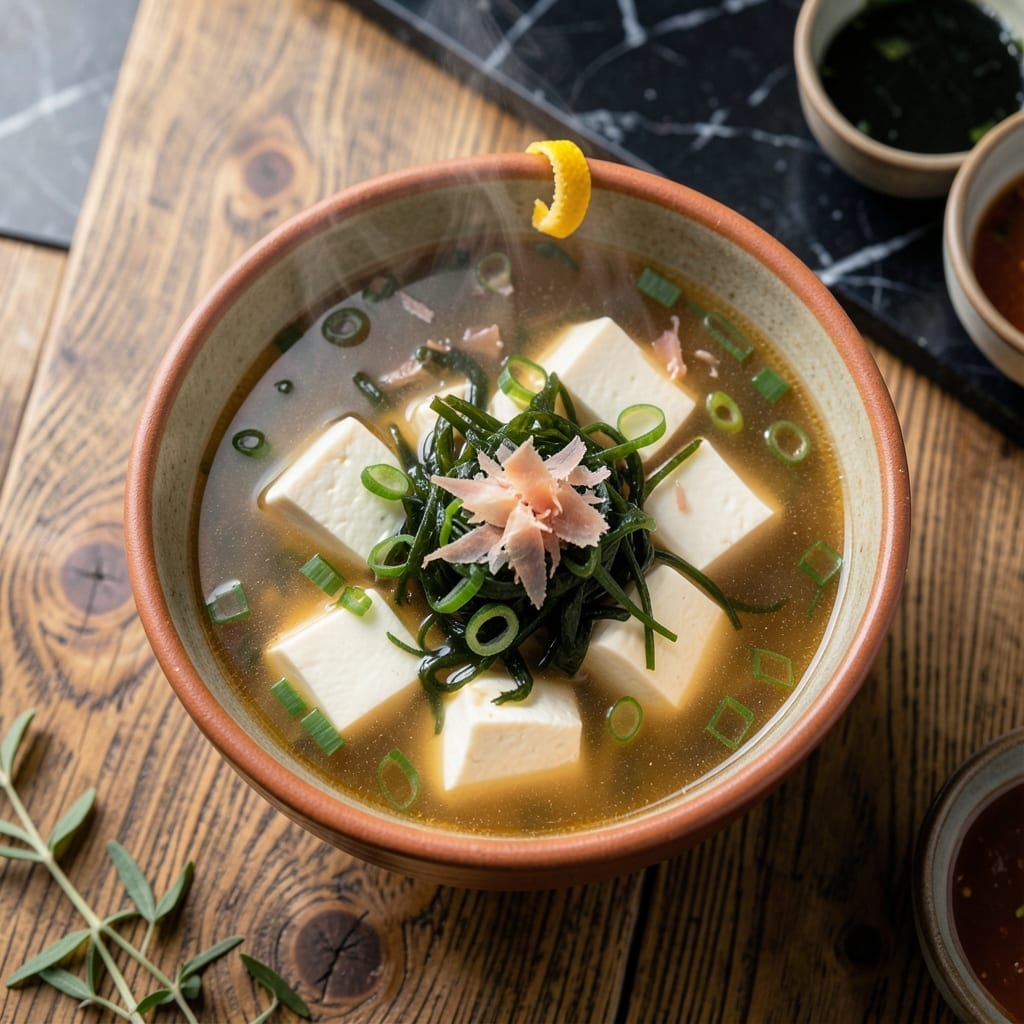
There’s a quiet elegance to authentic miso soup that transforms a simple bowl into a culinary experience. This recipe honors traditional Japanese techniques while making them accessible for home cooks.
The foundation lies in proper dashi preparation—simmered with care to extract deep umami without bitterness. Each ingredient serves a purpose, from the fermented miso paste to the delicate tofu and green onions.
What emerges is a harmonious balance of savory, slightly salty broth with silky tofu and fresh garnishes. The result is comforting yet refined, proving that simplicity often delivers the most authentic flavors.
Serve as a starter or light meal. Here’s how to bring this Japanese classic to your table with precision and respect for tradition.
Ingredients for Miso Soup Recipe with Dashi
Traditional Japanese ingredients create authentic depth in every comforting, umami-rich bowl of this dish.
| Ingredient | Amount | Notes |
|---|---|---|
| Dashi Stock 🍜 | 4 cups | Traditional kombu and bonito base |
| White Miso Paste 🍛 | ½ cup | Fermented, unpasteurized preferred |
| Silken Tofu 🧈 | 14 oz | Firm or extra-firm, cubed |
| Green Onions 🌱 | 4 whole | Thinly sliced for garnish |
| Dried Kombu Seaweed 🌊 | 1 piece | 4×6 inch sheet for dashi |
| Dried Bonito Flakes 🐟 | ½ cup | For authentic dashi flavor |
| Wakame Seaweed 🌿 | ¼ cup | Dried, rehydrated in broth |
| Soy Sauce 🫒 | 1 tbsp | Low-sodium for balance |
| Mirin 🍶 | 1 tbsp | Sweet cooking wine |
| Sesame Oil 🫒 | ½ tsp | Toasted for aroma |
| Fresh Ginger 🌿 | 1 piece | 1-inch knob, sliced |
| Garlic Cloves 🧄 | 2 cloves | Lightly crushed |
| Red Miso Paste 🍛 | 2 tbsp | Optional for deeper flavor |
The dashi is non-negotiable for authenticity. Kombu and bonito flakes form the foundation—look for Japanese or Korean markets for the highest quality. I source mine from Mitsua or Kikkoman brands when available. The miso paste should be unpasteurized and refrigerated (check the label). Silken tofu adds that signature velvety texture, and Nasoya or House Foods are reliable brands.
No bonito flakes? Dried shiitake mushrooms steeped in hot water make a vegetarian dashi alternative. Short on time? Instant dashi granules (like Hondashi) work in a pinch but lack complexity. For the tofu, extra-firm holds its shape better than soft. The wakame seaweed can be omitted if unavailable (or substitute dried nori cut into strips).
Store dashi ingredients in airtight containers—kombu keeps 6 months, bonito flakes 3 months. Prepared dashi stays fresh for 3-4 days refrigerated. Miso paste lasts 1 year unopened, 3 months after opening (the color darkens but flavor remains).
Why You’ll Love This Recipe
- 20-Minute Meal: I can have this steaming bowl ready before the rice cooker finishes. Just whisk miso into hot dashi, add tofu, and scatter green onions.
- Umami Bomb: The dashi and white miso create this deep, savory richness that makes every sip feel like a warm hug.
- Meal Prep Hero: I make a big batch on Sunday—reheats beautifully all week for lunches or a quick dinner starter.
- Pantry Friendly: Between us, kombu and dashi powder last forever in my cupboard, so I’m never without the base for this.
Step-by-Step Instructions for Miso Soup With Dashi
Follow this traditional method to achieve authentic Japanese flavor with perfect balance and depth.
Step 1: Prepare the Dashi Base
Begin by gently wiping the 1 piece Dried Kombu Seaweed with a damp cloth to remove any surface debris. Place it in a saucepan with the 4 cups Dashi Stock and heat over medium-low heat for 8-10 minutes until small bubbles form at the edges—do not boil.
Just before boiling, remove the kombu to prevent bitterness. Add the 0.5 cup Dried Bonito Flakes and immediately turn off the heat. Let steep for 10 minutes, then strain through a fine-mesh sieve. This creates a clean, umami-rich foundation for your soup.
Step 2: Infuse Aromatics and Rehydrate Seaweed
Return the strained dashi to the saucepan and add the 1 piece Fresh Ginger (sliced) and 2 cloves Garlic Cloves (lightly crushed). Simmer for 3-4 minutes on low heat to infuse the broth with subtle warmth and complexity.
Stir in the 0.25 cup Wakame Seaweed and let it rehydrate for 5 minutes off the heat. The wakame should expand and become tender but retain a slight bite. Remove and discard the ginger and garlic before proceeding.
Step 3: Dissolve the Miso Paste
In a small bowl, combine the 0.5 cup White Miso Paste with 2 tablespoons of the warm dashi. Whisk until completely smooth—this prevents clumping when added to the broth. For a deeper, more complex flavor, also whisk in the 2 tbsp Red Miso Paste.
Pour the dissolved miso mixture back into the saucepan with the remaining dashi. Add the 1 tbsp Soy Sauce, 1 tbsp Mirin, and 0.5 tsp Sesame Oil. Stir gently to combine, but avoid boiling to preserve the miso’s delicate flavors and probiotics.
Step 4: Add Tofu and Final Touches
Cut the 14 oz Silken Tofu into ½-inch cubes and add them to the soup. Warm through over low heat for 2-3 minutes—do not let it simmer vigorously. The tofu should remain tender and just heated through.
Taste and adjust seasoning if needed, though the miso and dashi should provide sufficient depth. The soup should have a balanced umami flavor with a hint of sweetness from the mirin and a subtle aroma from the sesame oil.
Step 5: Garnish and Serve Immediately
Ladle the soup into bowls and garnish with the 4 whole Green Onions, thinly sliced. Serve immediately while hot, as miso soup is best enjoyed fresh. Each bowl should feature a harmonious blend of silky tofu, rehydrated wakame, and fragrant broth.
The green onions add a crisp, fresh contrast to the rich, savory base. Ensure every serving gets an even distribution of tofu and wakame for a complete experience of textures and flavors.
Pro Tips For Making Miso Soup Recipe With Dashi
- Dissolve Miso Off Heat: I learned this the hard way—adding miso paste directly to boiling dashi kills its probiotics and dulls the flavor. Mix it with a ladle of warm stock first, then stir back into the pot.
- Skip Boiling Tofu: Silken tofu turns rubbery if boiled. Add it to the soup just before serving, letting it warm through in 1-2 minutes—enough to take the chill off without breaking it apart.
- Wipe Kombu First: Sounds weird, but it works: lightly wiping the dried kombu with a damp cloth removes any surface grit without washing away its natural glutamates, which are key for that deep umami base.
- Use Fresh Dashi: After burning three batches of instant dashi, I finally figured out fresh dashi makes a real difference. Simmer kombu and bonito flakes for 10 minutes, then strain—no shortcuts here.
Wine and Beer Pairings for This Recipe
Japanese Sakes
For an authentic pairing, try junmai sake—its clean, slightly sweet profile complements the umami without overpowering. I love Dassai 39 or Hakkaisan served chilled at 45-50°F. The rice notes echo the soup’s fermented depth beautifully. 🍶
Crisp White Wines
A dry Pinot Grigio from Italy or Sauvignon Blanc from New Zealand works wonders. Their bright acidity cuts through the richness while respecting the delicate flavors. Avoid oaky Chardonnays that clash with the miso’s saltiness.
Light Beers
Japanese lagers like Asahi Super Dry or Sapporo are perfect—their crisp, clean finish refreshes your palate. For craft options, a pilsner with subtle hop bitterness balances the soup’s savory notes. 🍺
Green Tea Option
For a non-alcoholic choice, sencha green tea served hot or iced complements the umami wonderfully. Its grassy, slightly astringent profile mirrors traditional Japanese pairings. Brew at 175°F for 2 minutes to avoid bitterness.
Nutrition Facts
Frequently Asked Questions
Can I use store-bought dashi instead of making it?
Yes, instant dashi granules like Hondashi work in a pinch. Use 1 tsp per cup of hot water. While convenient, homemade offers more depth and complexity.
Why shouldn’t I boil the miso?
Boiling destroys miso’s delicate flavors and probiotics. Always dissolve it in warm broth off the heat, then add to the soup just before serving.
How do I prevent tofu from breaking apart?
Use extra-firm tofu and cut into ½-inch cubes. Add it gently to the warm broth and avoid stirring vigorously.
Can I make this vegan?
Replace bonito flakes with dried shiitake mushrooms for dashi. Use vegan miso and ensure your mirin is fish-free.

- 6 Egg Cake Recipe with Oil: Light as Air With Buttery Moisture - October 4, 2026
- 4 Bean Casserole Recipe: One-Pan Heartiness With Smoky Paprika Depth - October 4, 2026
- 3-Ingredient Keto Mug Cake Recipe: Microwave Magic in 2 Minutes - October 4, 2026