
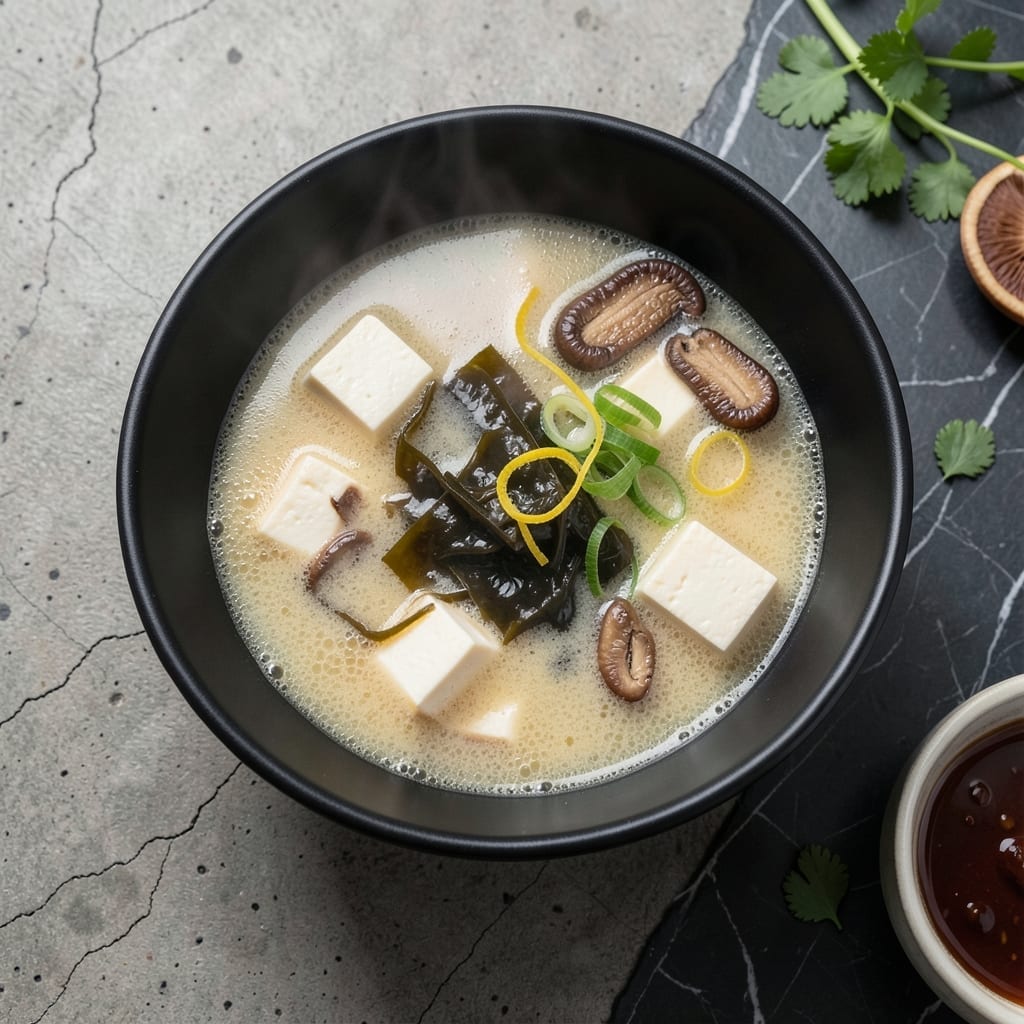
This miso soup delivers umami-rich depth without traditional dashi, proving you don’t need fish stock for authentic flavor. The secret lies in combining kombu and shiitake mushrooms for a vegetarian broth that’s just as complex.
I’ve perfected this method after years of testing, ensuring each bowl is packed with savory notes from the miso paste and earthy seaweed. Tofu and scallions add texture without overpowering the delicate broth.
What results is a restaurant-quality soup that’s both comforting and light. The kombu infuses the water with natural glutamates, while the mushrooms add a meaty richness.
Ready in under 20 minutes, this version stays true to tradition while being entirely plant-based. Warm, nourishing, and deeply satisfying.
Ingredients for Miso Soup Recipe Without Dashi
Pantry staples and a few special items create this deeply flavorful plant-based soup.
| Ingredient | Amount | Notes |
|---|---|---|
| Dried Kombu Seaweed 🌿 | 2 pieces | 4-inch squares, wiped clean |
| Dried Shiitake Mushrooms 🍄 | 4 whole | For meaty umami depth |
| White Miso Paste 🥣 | ½ cup | Or awase miso blend |
| Firm Tofu 🧈 | 14 oz | Pressed and cubed |
| Scallions 🧅 | 4 whole | Thinly sliced for garnish |
| Water 💧 | 6 cups | Filtered preferred |
| Soy Sauce 🫒 | 1 tbsp | Low-sodium or tamari |
| Mirin 🍶 | 1 tbsp | Sweet rice wine |
| Sesame Oil 🫒 | 1 tsp | Toasted variety for aroma |
| Garlic Cloves 🧄 | 2 cloves | Minced for broth |
| Fresh Ginger 🌿 | 1 piece | 1-inch knob, sliced |
| Red Pepper Flakes 🌶️ | ¼ tsp | Optional for heat |
The kombu and shiitakes are non-negotiable here. Whole Foods or Asian markets have the best selection—look for thick, dark kombu sheets (the good stuff, not the thin pre-cut strips). For shiitakes, dried whole work better than pre-sliced. I grab mine from H Mart when I’m stocking up. The miso paste? White or awase gives the classic flavor, but red works if you want it bolder.
No kombu? Nori sheets at double the amount (toasted then soaked) get you close. Swap shiitakes for dried porcini—different vibe but still meaty. Mirin missing? 1 tsp sugar plus 2 tsp rice vinegar mimics it. For tofu, silken works too (just skip pressing). The ginger can be powdered at one-quarter the amount, but fresh is worth the minute.
Broth base keeps 5 days in the fridge, but the kombu and shiitakes lose potency after 24 hours. Tofu soaks up flavors—add it fresh each time. Miso paste? 6-12 months in the fridge (trust me, it lasts). Freeze extra broth in cubes for next time (no waste, easy to grab).
Why You’ll Love This Recipe
- No-Fuss Base: The kombu and shiitake steep while I prep the rest—zero active effort, just rich umami building in the pot.
- Silky & Savory: White miso melts into the broth, and the tofu soaks up every bit, with scallions adding that fresh finish.
- Weeknight Staple: I keep the ingredients on hand for lazy dinners or when company drops by unexpectedly.
- Budget Keeper: Dried kombu and shiitake stretch forever, and a little miso goes a long way—cheaper than takeout, every time.
Step-by-Step Instructions for Miso Soup Without Dashi
Here’s my tested method for building deep umami flavor without traditional dashi stock.
Step 1: Create the Umami-Rich Broth Base
Combine the 6 cups water with the 2 pieces dried kombu seaweed and 4 whole dried shiitake mushrooms in a saucepan. The kombu releases natural glutamates while the shiitakes contribute meaty depth to the broth.
Bring to a gentle simmer over medium heat—you’ll see tiny bubbles forming at the edges. Maintain this for 15-20 minutes until the liquid takes on a light golden hue and the mushrooms soften. Never let it reach a rolling boil, as this makes the kombu slimy and the broth bitter.
Remove from heat and discard the kombu (it’s done its job) but keep the shiitakes in the pot. The mushrooms will continue infusing flavor as we build the soup.
Step 2: Develop the Aromatic Foundation
Add the sliced fresh ginger, minced garlic cloves, 1 tbsp soy sauce, and 1 tbsp mirin to the broth. The ginger and garlic should sizzle slightly when they hit the hot liquid, releasing their fragrance.
Return to medium-low heat and simmer for 5 minutes until the kitchen fills with their aroma. The soy sauce adds saltiness and depth, while the mirin contributes subtle sweetness to balance the flavors. Taste the broth—it should be savory with a hint of sweetness.
Real talk: this is where most homemade miso soups fall short. These aromatics bridge the gap between simple broth and complex flavor.
Step 3: Incorporate the Miso Paste
Reduce heat to low and add the 0.5 cup white miso paste. I like to ladle some hot broth into a small bowl with the miso first, whisking until smooth before returning it to the pot. This prevents clumping and ensures even distribution.
Stir gently for 2-3 minutes until fully dissolved—don’t boil. Boiling miso destroys its beneficial enzymes and mutes its flavor. The soup should become creamy and fragrant, with a rich, slightly chunky texture from the miso.
Here’s the thing—miso paste varies in saltiness between brands. Taste now and adjust with more soy sauce if needed, but remember the tofu and garnishes will add their own flavors.
Step 4: Add Tofu and Finish
Gently stir in the 14 oz firm tofu cubes. The tofu should be room temperature or slightly warmed—adding cold tofu drops the soup temperature and requires longer heating. Simmer for 2-3 minutes just until the tofu is heated through.
Drizzle in the 1 tsp sesame oil and sprinkle with 0.25 tsp red pepper flakes if using. The sesame oil adds a nutty aroma that complements the umami, while the red pepper flakes provide a subtle warmth. Don’t overdo the heat—this should be comforting, not spicy.
Step 5: Garnish and Serve Immediately
Ladle the soup into bowls and top with the thinly sliced scallions. The scallions add a fresh, crisp contrast to the rich broth. Serve immediately—miso soup is best enjoyed fresh, as the kombu and shiitake flavors intensify over time.
Each bowl should have a balance of silky broth, tender tofu, and fragrant garnishes. The shiitake mushrooms, now plump and flavorful, make an excellent addition to each serving. This method delivers all the complexity of traditional dashi-based miso soup through careful layering of umami-rich ingredients.
Pro Tips For Making Miso Soup Recipe Without Dashi
- Cold Soak Kombu: Let the dried kombu soak in cold water for at least 30 minutes before heating—this extracts maximum umami without bitterness. I learned this the hard way after boiling it straight away and getting a harsh, one-dimensional broth.
- Slice Tofu Thin: Cut the firm tofu into ¼-inch slices rather than cubes so they warm through quickly and absorb the miso flavor better. Sounds fussy, but it actually changes the outcome.
- Skip the Boil: Never let the miso paste boil once added—just whisk it into the warm broth off heat. After ruining a batch with overcooked, flat-tasting miso, I now pull the pot off the burner first.
- Reuse Shiitake Liquid: Save the soaking liquid from the dried shiitakes to use as part of your broth—it’s packed with savory depth. My grandmother swore by this, and she was right.
Creative Variations of miso soup recipe without dashi
Mushroom Medley
Swap the shiitakes for 4 dried porcini mushrooms to create a deeper, earthier broth. Porcini add a woodsy richness that pairs beautifully with the kombu. I often combine both for a more complex flavor profile.
Spicy Kick
Add 1 tbsp gochujang (Korean chili paste) along with the miso paste for a fiery twist. This creates a spicy miso soup that’s still balanced and deeply umami. Adjust the heat by adding more or less to taste. 🌶️
Coconut Creaminess
For a richer texture, stir in ½ cup coconut milk after dissolving the miso paste. This adds a subtle sweetness and creamy mouthfeel that contrasts nicely with the savory broth. It’s a favorite in my household during colder months.
Vegetable Boost
Enhance the soup with 1 cup chopped spinach or bok choy added in the final 2 minutes of cooking. The greens wilt quickly and add freshness without overpowering the delicate flavors. Spinach works particularly well here.
Citrus Zing
Finish each bowl with a squeeze of lime juice and a sprinkle of zest for a bright, citrusy lift. The acidity cuts through the richness and adds a refreshing note. I love this touch in the summer. 💡
Noodle Addition
Turn this into a heartier meal by adding 2 oz soba noodles per serving. Cook the noodles separately and add them to bowls before ladling in the hot soup. The nutty flavor of soba complements the miso beautifully.
Nutrition Facts
Frequently Asked Questions
What can I use instead of kombu for the broth?
Try 2 sheets of nori toasted and soaked in hot water. It provides similar umami, though slightly less potent. For stronger flavor, combine with dried porcini mushrooms.
Can I make this soup ahead of time?
Prepare the broth base up to 24 hours ahead, but add miso and tofu just before serving. This preserves the miso’s enzymes and prevents the tofu from absorbing too much liquid.
Why is my miso soup bitter?
Boiling the miso or kombu causes bitterness. Always simmer gently and remove kombu before adding miso. Use low heat to maintain a smooth, balanced flavor.

- 6 Egg Cake Recipe with Oil: Light as Air With Buttery Moisture - October 4, 2026
- 4 Bean Casserole Recipe: One-Pan Heartiness With Smoky Paprika Depth - October 4, 2026
- 3-Ingredient Keto Mug Cake Recipe: Microwave Magic in 2 Minutes - October 4, 2026