
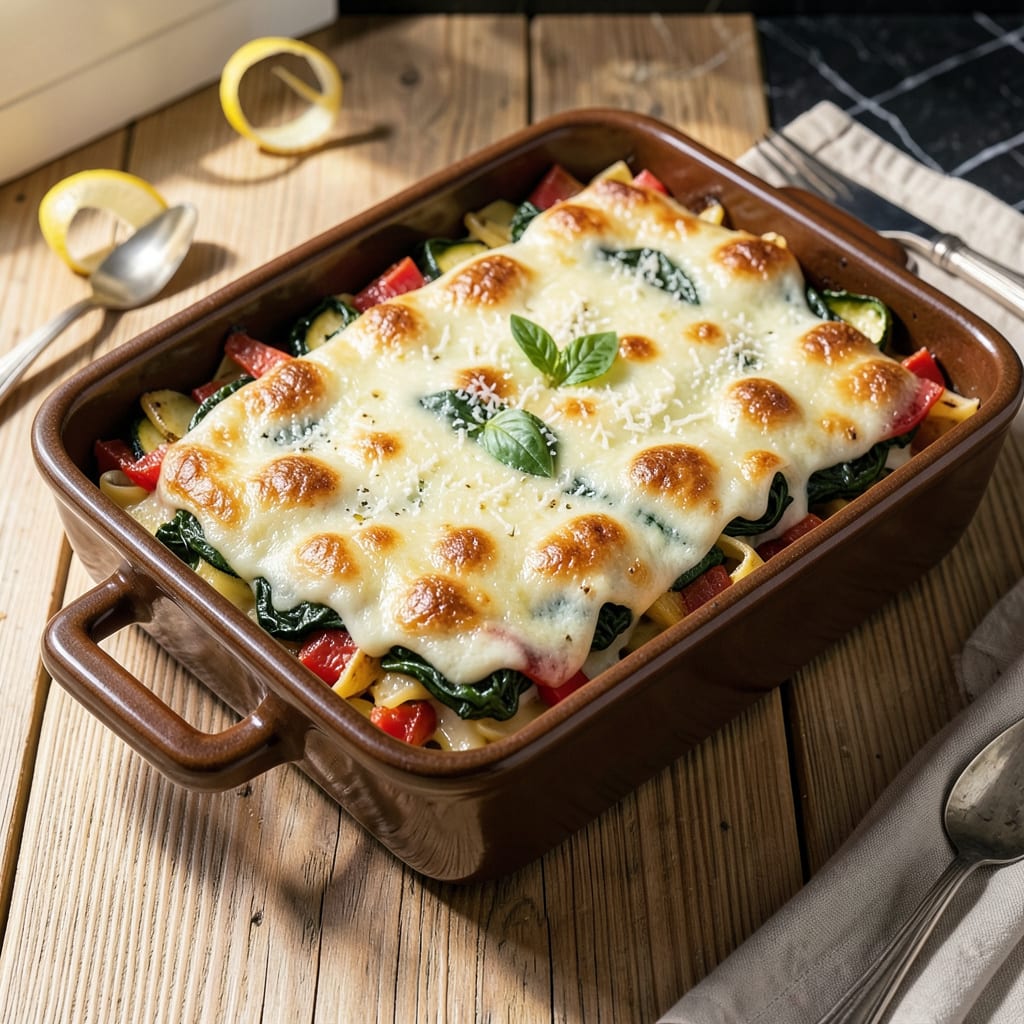
This vegetable-packed lasagna embodies the heart of Moosewood’s philosophy—wholesome ingredients layered with rich flavors and satisfying textures. The combination of fresh spinach, creamy ricotta, and seasonal vegetables creates a dish that’s as nourishing as it is comforting. Every bite delivers the warmth of traditional lasagna with a plant-based twist.
The secret lies in balancing the layers: tender noodles, herbed ricotta, and a robust tomato sauce infused with garlic and basil. Baked until golden and bubbling, this lasagna proves that vegetarian cooking can be deeply satisfying. Perfect for family dinners or meal prep, it reheats beautifully while maintaining its structure and flavor.
Ingredients for Moosewood Lasagna
This vegetable-forward lasagna combines seasonal produce with artisanal cheeses for Moosewood-inspired comfort in every layered bite.
| Ingredient | Amount | Notes |
|---|---|---|
| Lasagna Noodles 🍝 | 12 sheets | Oven-ready or traditional boiled |
| Whole-Milk Ricotta Cheese 🧀 | 15 oz | Fresh, full-fat preferred |
| Fresh Spinach 🍃 | 10 oz | Baby leaves, thoroughly washed |
| Zucchini 🥒 | 2 whole | Medium-sized, thinly sliced |
| Red Bell Pepper 🌶️ | 1 whole | Diced into 1/4-inch pieces |
| Yellow Onion 🧅 | 1 whole | Finely diced, about 1 cup |
| Garlic Cloves 🧄 | 4 cloves | Minced to fine consistency |
| San Marzano Canned Tomatoes 🍅 | 28 oz | Crushed, with basil preferred |
| Tomato Paste 🍅 | 2 tbsp | Double-concentrated variety |
| Dried Basil 🌿 | 1 tbsp | Or 3 tbsp fresh chopped |
| Dried Oregano 🌿 | 1 tsp | Mediterranean variety preferred |
| Kosher Salt 🧂 | 1 ½ tsp | Diamond Crystal brand recommended |
| Freshly Ground Black Pepper 🌶️ | ½ tsp | Medium-coarse grind optimal |
| Extra-Virgin Olive Oil 🫒 | 3 tbsp | First cold-press quality |
| Whole-Milk Mozzarella Cheese 🧀 | 8 oz | Low-moisture, freshly shredded |
| Parmesan Cheese 🧀 | ½ cup | Parmigiano-Reggiano, finely grated |
The ricotta foundation requires full-fat, whole-milk ricotta for optimal creaminess and structure. Optimal brands include Calabro or Sorrento, available at specialty grocers or Whole Foods. For the spinach, baby leaves provide superior texture compared to mature varieties. Select firm zucchini with vibrant green skin—approximately 6-8 inches in length. The San Marzano tomatoes must be DOP-certified for authentic flavor; Century or La Valle are recommended brands.
Dairy substitutions require careful consideration: part-skim ricotta alters texture, while pre-shredded mozzarella contains anti-caking agents that inhibit melting. For tomato variations, fire-roasted crushed tomatoes add depth, though they impart a smokier profile. Fresh herbs may replace dried at three times the volume, though moisture content requires sauce reduction adjustments. Mushrooms or eggplant can supplement the vegetable layers for added umami complexity.
Assemble components within 2 hours of baking to prevent noodle drying. Prepared lasagna maintains integrity for 3 days refrigerated or 3 months frozen. For freezing, wrap individual portions in parchment then foil to prevent freezer burn. Reheat covered at 350°F for 30 minutes, uncovering for final 10 minutes to restore crispness. The dish benefits from 24-hour resting to allow flavors to meld completely.
Why You’ll Love This Recipe
- No-Boil Noodles: I skip the pre-boiling step entirely—just layer dry lasagna sheets straight from the box with the ricotta-spinach mix. The zucchini and peppers release enough moisture to soften them perfectly while baking.
- That Creamy-Veggie Balance: Here’s what sold me—the whole-milk ricotta melts into this luxurious base, but the spinach and roasted red peppers cut through with freshness. No heavy meat sauce needed when the veggies bring this much bright, herby flavor.
- My Freezer Lifesaver: Honestly, I double the batch every time. One pan for tonight, one wrapped tight for those “nothing’s defrosted” emergencies. The zucchini holds up surprisingly well—no sad, watery leftovers here.
- Stealthy Veggie Load: Between us, my kid still thinks this is “regular” lasagna. The grated zucchini disappears into the ricotta, and the bell peppers add sweetness without the usual pushback. A full pound of spinach vanishes too—no complaints, just clean plates.
Step-by-Step Instructions for Moosewood Lasagna
This layered approach ensures perfectly balanced flavors and textures in every bite.
Step 1: Prepare the Vegetable Filling
Heat the 3 tablespoons extra-virgin olive oil in a large skillet over medium heat. Add the finely diced yellow onion and cook for 4-5 minutes until translucent and softened. Stir in the minced garlic cloves and cook for 30 seconds until fragrant but not browned.
Add the diced red bell pepper and thinly sliced zucchini to the skillet. Cook for 6-8 minutes, stirring occasionally, until the vegetables are tender but still retain some texture. Season with 1.5 teaspoons kosher salt and 0.5 teaspoon freshly ground black pepper.
Stir in the 10 ounces fresh spinach and cook just until wilted, about 2 minutes. Remove from heat and set aside. This vegetable mixture forms the hearty, flavorful base layer of your lasagna.
Step 2: Create the Tomato Sauce
In the same skillet, add the 2 tablespoons tomato paste and cook for 1 minute, stirring constantly. This step intensifies the tomato flavor and removes any raw taste from the paste.
Pour in the 28 ounces San Marzano canned tomatoes, breaking them up with a wooden spoon. Add the 1 tablespoon dried basil and 1 teaspoon dried oregano. Simmer the sauce over medium-low heat for 15-20 minutes, stirring occasionally, until it thickens slightly and develops a rich, concentrated flavor.
Taste and adjust seasoning if needed. The sauce should be well-balanced with a bright tomato flavor and aromatic herbs. Remove from heat and set aside to cool slightly before assembling.
Step 3: Prepare the Cheese Mixture
In a medium bowl, combine the 15 ounces whole-milk ricotta cheese with 0.5 cup Parmesan cheese. Mix well until smooth and fully incorporated. This creamy mixture will add richness and body to each layer of the lasagna.
The ricotta should be fresh and full-fat for optimal texture. If your ricotta appears grainy, pass it through a fine-mesh sieve before mixing to achieve a smoother consistency in the final dish.
Step 4: Assemble the Lasagna Layers
Preheat your oven to 375°F. In a 9×13-inch baking dish, spread a thin layer of the tomato sauce on the bottom. Arrange 4 sheets lasagna noodles in a single layer, slightly overlapping if necessary. Spread one-third of the ricotta mixture over the noodles, followed by one-third of the vegetable filling.
Repeat this layering process two more times, using 4 sheets lasagna noodles for each layer. For the final layer, use the remaining 4 sheets lasagna noodles, then top with the remaining tomato sauce. Sprinkle the 8 ounces freshly shredded whole-milk mozzarella cheese evenly over the top.
Step 5: Bake to Golden Perfection
Cover the baking dish tightly with aluminum foil and bake for 30 minutes. This initial covered baking allows the lasagna to cook through without drying out. Then, remove the foil and bake for an additional 15-20 minutes until the top is golden brown and bubbly.
Let the lasagna rest for 10-15 minutes before slicing. This resting period allows the layers to set, making it easier to serve neat portions. The internal temperature should reach 165°F for food safety. Serve warm with additional grated Parmesan if desired.
Dietary Considerations for This moosewood lasagna
Vegetarian Adaptations
This lasagna is naturally vegetarian, but I always double-check my Parmesan cheese to ensure it’s made with vegetarian rennet. Brands like BelGioioso or Organic Valley are reliable choices. The ricotta cheese should also be verified for animal-derived enzymes if strict vegetarianism is important to you. 🌱
Gluten-Free Options
For gluten-free versions, I recommend Barilla gluten-free lasagna noodles or Jovial brown rice noodles. Both hold up well during baking without becoming mushy. Be sure to check all packaged ingredients like tomato paste and canned tomatoes for hidden gluten—some brands add wheat as a thickener.
Vegan Modifications
To make this vegan, replace the ricotta cheese with 15 ounces firm tofu blended with 2 tbsp nutritional yeast, 1 tbsp lemon juice, and 1 tbsp olive oil. For the mozzarella topping, Miyoko’s vegan mozzarella melts beautifully. The Parmesan can be substituted with Follow Your Heart vegan Parmesan.
Lower-Fat Variations
For a lighter version, I use part-skim ricotta and low-moisture part-skim mozzarella. The texture changes slightly—less creamy—but the flavor remains robust. You can also reduce the olive oil to 2 tbsp in the vegetable sauté without sacrificing much flavor. The key is balancing reductions to maintain the dish’s integrity.
Nut-Free Considerations
While this recipe is naturally nut-free, always verify your cheese brands are processed in nut-free facilities if allergies are a concern. I’ve found Organic Valley and 365 by Whole Foods cheeses to be safe choices. For extra caution, prepare the dish in a thoroughly cleaned workspace to avoid cross-contamination.
Sodium Reduction Tips
To cut back on sodium, I use no-salt-added canned tomatoes and reduce the kosher salt to 1 tsp. The Parmesan already contributes saltiness, so taste before adding extra. Fresh herbs like basil and oregano can be increased to 2 tbsp each to compensate for reduced salt while keeping flavors vibrant. ✨
Nutrition Facts

- 6 Egg Cake Recipe with Oil: Light as Air With Buttery Moisture - October 4, 2026
- 4 Bean Casserole Recipe: One-Pan Heartiness With Smoky Paprika Depth - October 4, 2026
- 3-Ingredient Keto Mug Cake Recipe: Microwave Magic in 2 Minutes - October 4, 2026