
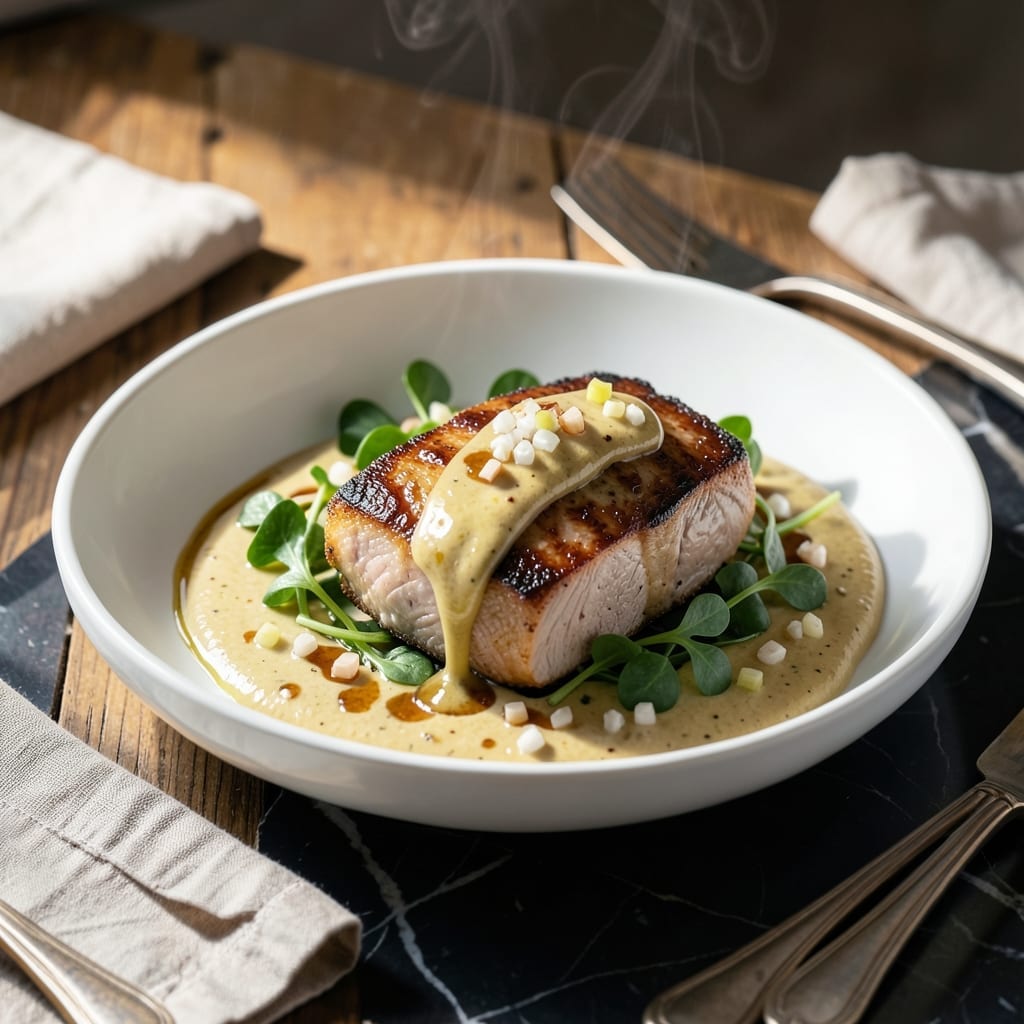
This mustard sauce transforms ordinary pork into something extraordinary with its perfect balance of tang and creaminess. The Dijon base provides depth without overpowering the dish.
I developed this recipe to complement roasted or grilled pork, creating a sauce that’s rich yet bright. A touch of honey rounds out the sharpness, while cream adds luxurious body.
The beauty lies in its versatility—drizzle it over tenderloin, use it as a marinade, or serve as a dipping sauce. It comes together in 10 minutes with pantry staples.
Store leftovers in the fridge for up to 5 days, where the flavors continue to meld and intensify.
Ingredients for Mustard Sauce Recipe for Pork
Ten ingredients craft this velvety sauce with bold Dijon character and creamy richness.
| Ingredient | Amount | Notes |
|---|---|---|
| Dijon Mustard 🟡 | ½ cup | High-quality French brand preferred |
| Honey 🍯 | 2 tbsp | Pure, unprocessed for best flavor |
| Heavy Cream 🥛 | ¾ cup | Full-fat for luxurious texture |
| White Wine Vinegar 🍷 | 2 tbsp | Bright acidity balance |
| Shallot 🧅 | 1 whole | Finely minced for subtle depth |
| Garlic Cloves 🧄 | 2 cloves | Minced to release full flavor |
| Unsalted Butter 🧈 | 2 tbsp | For rich, velvety finish |
| Dry White Wine 🍷 | ¼ cup | Crisp variety enhances tang |
| Kosher Salt 🧂 | ½ tsp | Diamond Crystal preferred for consistency |
| Freshly Ground Black Pepper 🌶️ | ¼ tsp | Coarse grind for texture |
The Dijon mustard is non-negotiable here. Maille or Grey Poupon deliver the depth this sauce requires—avoid generic brands with dull, flat flavor. Whole Foods or Williams Sonoma carry premium options. Heavy cream should be full-fat; the reduced version lacks the body needed to balance the mustard’s intensity. For the wine, any dry white like Sauvignon Blanc works beautifully (or whatever you have open).
No shallots? Red onion at half the quantity works, though it’s slightly sharper. Skip the wine and use extra vinegar plus a splash of water—the acidity remains but loses complexity. Vegan swap? Replace heavy cream with full-fat coconut milk and butter with olive oil. Honey can become maple syrup, though the floral notes differ slightly.
This sauce keeps beautifully in the fridge for 5 days—the flavors deepen over time. Reheat gently to avoid curdling the cream. Freezing isn’t recommended; the cream may separate. Always bring ingredients to room temperature before combining for a silky-smooth emulsion.
Why You’ll Love This Recipe
- 5-Minute Mix: I just whisk the Dijon, honey, and cream together—no fancy steps, and it’s ready before the pork finishes resting.
- Sweet & Tangy Magic: The honey mellows the Dijon’s bite while the vinegar adds this bright pop that cuts through rich pork beautifully.
- Dinner or Leftovers: It’s just as good drizzled over roasted pork tenderloin as it is stirred into next-day sandwiches.
- Pantry Staples: I always have shallots, mustard, and vinegar on hand, so this sauce saves me from last-minute grocery runs.
Step-by-Step Instructions for Mustard Sauce
This refined technique ensures a velvety, balanced sauce with sophisticated depth and tang.
Step 1: Sauté Aromatics in Butter
Heat a medium saucepan over medium heat and melt the 2 tbsp Unsalted Butter. Add the 1 whole Shallot, finely minced, and cook for 2-3 minutes until translucent and fragrant. The shallot should soften without browning—this builds a subtle, sweet foundation.
Add the 2 cloves Garlic Cloves, minced, and cook for an additional 30 seconds until aromatic. Be careful not to let the garlic burn, as it will impart a bitter flavor. The butter should foam lightly but not brown at this stage.
Step 2: Deglaze with Wine and Vinegar
Pour in the 0.25 cup Dry White Wine and 2 tbsp White Wine Vinegar, scraping the bottom of the pan to release any browned bits. This deglazing step incorporates all the flavorful fond into the sauce, adding complexity.
Simmer for 3-4 minutes until the liquid reduces by about half. You’ll notice the sharp aroma of the vinegar softening as it cooks down. The mixture should look slightly syrupy but not dry.
Step 3: Incorporate Mustard and Honey
Reduce heat to low and whisk in the 0.5 cup Dijon Mustard until fully combined. The sauce will thicken slightly as the mustard emulsifies with the liquid. Add the 2 tbsp Honey and stir until dissolved completely.
This balance of tangy mustard and sweet honey creates the signature flavor profile. Taste at this point—the sauce should have a bold, tangy-sweet base with a smooth, slightly thick consistency.
Step 4: Finish with Heavy Cream
Slowly pour in the 0.75 cup Heavy Cream while whisking constantly to prevent curdling. The sauce will lighten in color and take on a luxurious, velvety texture. Maintain low heat to avoid breaking the emulsion.
Season with 0.5 tsp Kosher Salt and 0.25 tsp Freshly Ground Black Pepper, then simmer for 2-3 minutes until the sauce coats the back of a spoon. The final consistency should be thick enough to cling to pork but still fluid enough to drizzle.
Taste and adjust seasoning if needed, though the Dijon and honey should provide most of the flavor complexity. Serve immediately over grilled or roasted pork for the best results.
Pro Tips For Making Mustard Sauce Recipe For Pork
- Temper the Cream: Always whisk a spoonful of hot vinegar-shallot mixture into the cold heavy cream before adding it all to the pan—I learned this the hard way after watching my sauce split twice.
- Mince the Shallot Fine: Those paper-thin shallot pieces cook down in 30 seconds flat, but chunky bits stay crunchy and ruin the sauce’s silky texture.
- Skip the Boil: Once the cream hits the pan, keep it at a gentle simmer; a rolling boil turns your glossy mustard sauce into a grainy, split mess.
- Balance with Vinegar: Taste before serving, and if the honey overpowers, a splash more white wine vinegar cuts through it—sounds weird, but it works.
Common Mistakes When Making This Dish
Overheating the Cream
Never let your sauce boil after adding the 0.75 cup Heavy Cream. High heat will cause the cream to separate, leaving you with a broken, grainy texture. Keep it at a gentle simmer on low heat while whisking constantly. I learned this the hard way my first attempt. 🌡️
Skipping the Deglaze
Always deglaze the pan with 0.25 cup Dry White Wine and 2 tbsp White Wine Vinegar after cooking the aromatics. This step lifts all the flavorful browned bits, adding depth to your sauce. Skipping it means missing out on complex layers of flavor.
Using Low-Quality Mustard
Generic mustard lacks the depth and complexity of premium Dijon Mustard. Stick with brands like Maille or Grey Poupon for that rich, tangy base. The sauce simply won’t taste the same with a budget substitute.
Rushing the Shallots
Cook the 1 whole Shallot until fully translucent—this takes 2-3 minutes on medium heat. Undercooked shallots will leave a harsh, raw flavor. Patience here builds the sweet, aromatic foundation for your sauce.
Adding Cold Ingredients
Bring all ingredients to room temperature before combining, especially the cream. Cold cream added to hot liquid can cause curdling. I always set my dairy out 30 minutes before starting. ✨
Over-Salting Early
Wait to season with 0.5 tsp Kosher Salt until the end. The Dijon Mustard and reduction process concentrate flavors, so you might need less salt than expected. Taste first, then adjust.
Nutrition Facts
Frequently Asked Questions
Can I substitute regular mustard?
Dijon is ideal for its sharp, complex flavor. Regular yellow mustard will taste flat and one-dimensional. For best results, use Maille or Grey Poupon Dijon.
How do I fix a broken sauce?
If the cream separates, immediately remove from heat. Whisk in 1 tsp cold water or butter to re-emulsify. Low, gentle heat prevents this issue.
Can I make this ahead?
The sauce keeps for 5 days refrigerated. Reheat gently on low heat while whisking. Flavors deepen over time, making it even tastier.
What can I use instead of wine?
Replace 0.25 cup Dry White Wine with equal parts vinegar and water. Chicken broth works too, though the acidity will differ slightly.

- 6 Egg Cake Recipe with Oil: Light as Air With Buttery Moisture - October 4, 2026
- 4 Bean Casserole Recipe: One-Pan Heartiness With Smoky Paprika Depth - October 4, 2026
- 3-Ingredient Keto Mug Cake Recipe: Microwave Magic in 2 Minutes - October 4, 2026